How Mint Oils for Oral Care Improve Flavor and Fresh Breath
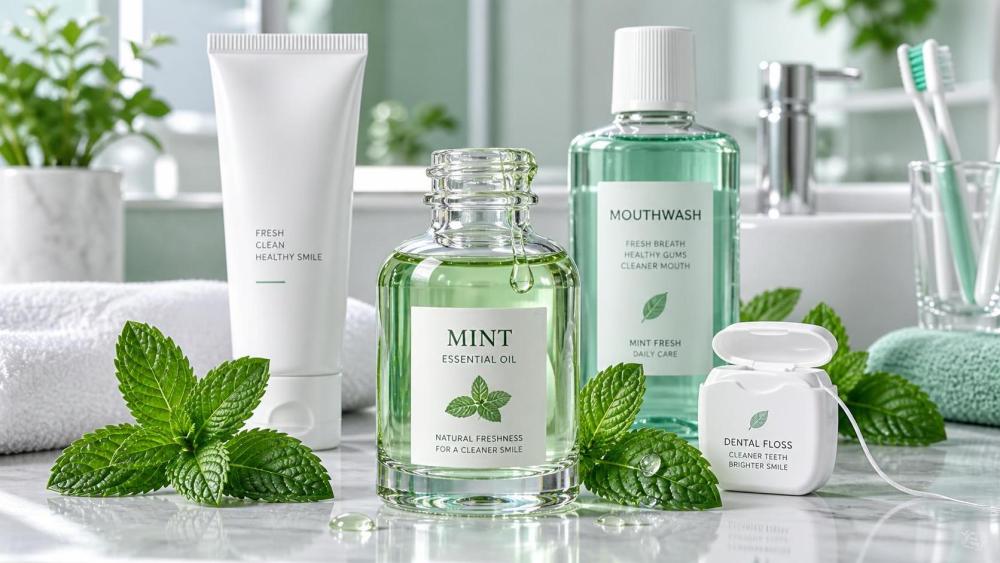
A familiar burst of coolness after brushing can make the whole mouth feel cleaner—even before a person can explain why. That sensation is closely tied to mint oils for oral care. Used in toothpaste, mouthwash, dental floss, chewing gum, lozenges, and breath sprays, these aromatic ingredients do far more than add a recognizable flavor. They influence how freshness is perceived, how long a pleasant aroma lingers, and whether a daily oral care routine feels satisfying enough to repeat.
For many consumers, “minty” simply means fresh. In product development, however, mint is a broad sensory category. Peppermint oil, spearmint oil, cornmint oil, and carefully balanced mint flavor blends each create a different combination of cooling, sweetness, herbal character, sharpness, and aroma persistence. Understanding those differences can make it easier to read oral care labels, compare products, and choose a flavor profile that fits personal preferences.
Why Fresh Breath Is About More Than a Strong Flavor
Fresh breath is partly a sensory experience and partly an oral hygiene concern. Brushing, flossing, cleaning the tongue, staying hydrated, and receiving regular dental care are the foundations of managing breath odor. Mint oils do not replace those habits or treat the underlying causes of persistent bad breath. What they do provide is an immediate flavor and aroma experience that makes the mouth feel refreshed after use.
That distinction matters. A very intense mint mouthwash may feel powerful because it produces a strong cooling effect, but that feeling alone does not indicate how well plaque has been removed or whether a person has addressed gum health, dry mouth, dietary factors, or other causes of odor. The best oral care routine combines effective cleaning with a taste experience pleasant enough to encourage consistent use.
Mint oils are especially valuable because aroma travels quickly from the mouth to the nose while chewing, brushing, rinsing, or speaking. The result is a recognizable “clean breath” impression. A well-designed formula does not need to feel painfully sharp to feel fresh; it needs a balanced release of minty top notes, cooling character, and a finish that remains pleasant rather than medicinal.
What Are Mint Oils for Oral Care?
Mint oils are volatile aromatic oils obtained from mint plants or represented through flavor compositions inspired by mint profiles. In oral care, natural mint oils may be used alone or combined with other flavor materials to create a stable, consistent sensory experience. The most common mint families include peppermint, spearmint, and cornmint.
- Peppermint oil is often associated with a bright, brisk, cooling profile. It can feel crisp and clean, making it popular in traditional toothpaste and mouthwash flavors.
- Spearmint oil usually has a softer, sweeter, greener character. Consumers who find peppermint too sharp may prefer spearmint-based products.
- Cornmint oil is valued for its strong mint identity and cooling contribution. It may appear in flavor systems where a pronounced fresh sensation is desired.
- Mint blends combine different oils and supporting flavor ingredients to soften bitterness, extend freshness, or create profiles such as “sweet mint,” “herbal mint,” or “wintergreen-style mint.”
The oil itself is only one part of the finished product. Toothpaste, for example, contains abrasives, humectants, surfactants, binders, active ingredients, sweeteners, preservatives, and water. Mouthwash may contain water, solubilizers, flavor components, humectants, and oral-care actives. The mint profile must remain stable and appealing within that larger formula.
The Cooling Sensation: Why Mint Feels So Refreshing
One reason mint is so closely linked with oral freshness is its cooling sensation. Certain mint constituents, particularly menthol-related components, can stimulate sensory receptors associated with coolness. The mouth may feel fresher even when its actual temperature has not changed.
This effect is useful because oral care is a highly sensory category. Consumers judge a toothpaste not only by how their teeth feel after brushing, but also by foam, texture, sweetness, aftertaste, and the “clean finish” left behind. Cooling notes can make a rinse feel more complete and can help counter the lingering taste of food, coffee, garlic, or tobacco.
Still, more cooling is not always better. An overly aggressive flavor can be uncomfortable for people with sensitive mouths, children who dislike strong products, or consumers who associate intense burning with irritation rather than cleanliness. Flavor formulators therefore work to balance cooling strength with sweetness, herbal character, and acceptable aftertaste.
How Mint Flavor Performs in Different Oral Care Products
The same mint oil can perform very differently depending on where it is used. A toothpaste is brushed and spat out. A mouthwash swishes across the mouth. Gum is chewed for an extended period, while a breath spray is expected to deliver an almost immediate aromatic lift. Each application asks the flavor system to do something different.
Toothpaste: Clean, balanced, and compatible with daily use
In toothpaste, mint must work alongside abrasives and foaming agents that can change how flavor is perceived. A flavor that smells appealing in a bottle may taste weak, bitter, or overly sharp once blended into a paste. The aim is often a clean opening note, moderate cooling while brushing, and a fresh aftertaste that does not clash with breakfast or coffee.
Many everyday toothpastes use peppermint-forward profiles because they communicate traditional cleanliness. Spearmint or sweet-mint versions may be preferred by consumers who want a less intense routine. Whitening, sensitivity, and gum-care toothpastes may also use distinctive mint blends to create a recognizable product identity while maintaining a familiar fresh-breath signal.
Mouthwash: Aroma release and a lingering finish
Mouthwash exposes flavor to the entire mouth in a short period. Since the liquid is diluted by saliva and then expelled, the mint character needs to be noticeable quickly. At the same time, it should not leave an unpleasant bitterness or harsh burn.
Alcohol-free mouthwashes may need especially careful flavor balancing because the absence of alcohol changes the way aromatic ingredients disperse and how consumers perceive intensity. Solubilizers and other formulation aids can help distribute oil-based flavor ingredients evenly through a water-based product, supporting a more consistent taste from the first use to the last.
Chewing gum and breath products: Freshness that unfolds over time
In gum, the challenge is duration. A burst of mint at the first chew is welcome, but consumers also expect some freshness to remain after several minutes. Encapsulation and carrier systems may be used in certain products to manage flavor release, protecting delicate aroma ingredients during processing and releasing them more gradually during chewing.
Breath sprays, mints, and lozenges have another job: they must provide a fast, clear flavor impression in a small serving. Here, a clean aromatic lift can be as important as cooling. A harsh formula may feel dramatic at first but can become unpleasant if used repeatedly throughout the day.
Natural Does Not Automatically Mean Identical
Consumers often look for “natural mint oil” on labels, and botanical ingredients can bring an appealing connection to familiar plants. Yet natural oils vary with plant variety, growing conditions, harvest timing, extraction methods, and storage. For a consumer product used every day, consistent flavor from one tube or bottle to the next is important.
This is why oral care manufacturers pay attention to specification, sensory quality, oxidation stability, purity expectations, and documentation. A mint oil may be natural in origin, but it still needs to be suitable for the intended application and used in accordance with relevant safety and flavor regulations. Quality control is not just a technical detail; it affects whether a favorite toothpaste continues to taste like the product consumers expect.
Industry knowledge platforms such as FCAS follow flavor and fragrance ingredients in the context of formulation behavior, sourcing, stability, and application fit. For consumers, the practical lesson is simple: a trustworthy oral care product depends on the whole formula, not on one appealing ingredient claim alone.
Reading Labels Without Overthinking Them
Ingredient lists can be useful, but they rarely tell the full flavor story. “Flavor,” “aroma,” “natural flavor,” or similar terms may cover a blend rather than a single mint oil. This is normal. Oral care flavor systems are often designed as combinations because one material may provide cooling while another adds sweetness, rounds out herbal notes, or masks the bitterness of functional ingredients.
Rather than trying to identify every flavor component, look for cues that match your needs:
- If you enjoy a classic, icy clean feeling, peppermint-forward products may suit you.
- If strong toothpaste makes your eyes water or leaves a burning sensation, try softer spearmint or mild-mint options.
- If you dislike sweet aftertastes, seek products described as crisp, herbal, or clean rather than sweet mint.
- If you have known sensitivities or frequent mouth irritation, choose carefully and discuss recurring symptoms with a dental professional rather than simply switching flavors repeatedly.
For children, flavor preference can strongly influence brushing habits. Mild mint or fruit-mint products may help make brushing less of a daily argument. Adults should still use age-appropriate products and follow usage instructions, especially for toothpastes containing fluoride or other active ingredients.
A Common Misunderstanding: Minty Breath Versus Oral Health
A minty taste can offer confidence before a meeting, after a meal, or during a long day away from home. But persistent bad breath deserves more attention than another breath spray. It may be linked to plaque buildup, gum problems, dry mouth, cavities, tonsil issues, certain foods, smoking, medications, or health conditions that require professional assessment.
If breath odor continues despite regular brushing, flossing, tongue cleaning, and hydration, a dentist can help identify potential oral causes. Strong mint oils may temporarily cover odor, but masking is not the same as resolving the source. This is not a reason to avoid mint products; it is a reason to place them in the right role within a complete routine.
Choosing the Freshness Experience You Will Actually Use
The most effective oral care product is often the one a person enjoys using consistently. Some people want an intense morning wake-up sensation. Others prefer a gentle, low-burn toothpaste before bed. Someone managing dry mouth may value a mild formula that does not feel overly astringent, while a frequent coffee drinker may reach for gum with a longer-lasting mint profile.
Mint oils for oral care help create these different experiences. They give toothpaste its recognizable clean personality, help mouthwash leave a refreshing finish, and make gum or breath products feel immediately useful. Their value lies not in a promise of instant oral health, but in the way they support comfort, confidence, flavor enjoyment, and regular habits.
When choosing a product, think beyond the strongest possible mint. Consider whether the flavor feels balanced, whether the product is comfortable to use, whether it fits your oral care needs, and whether you will reach for it every day. A well-made mint profile turns a basic routine into a small moment of renewal—one that leaves the mouth feeling clean, cool, and ready for what comes next.
Related News
 Antioxidants & Natural PreservativesWhat Quality Checks Matter When Sourcing Butylparaben for Personal CareButylparaben for personal care sourcing guide: compare assay, impurities, physical performance, documentation, traceability, and supplier quality to reduce formulation risk.MORE+
 Nano-microcapsule FormulationsHow Encapsulated Flavors Protect Taste During Processing and StorageEncapsulated Flavors protect taste from heat, oxygen, moisture, and storage loss. Explore smarter release, carrier selection, and processing strategies.MORE+
 Chelated Trace Element FertilizersHow Greenhouse Fertigation Systems Reduce Water and Fertilizer WasteGreenhouse fertigation systems reduce water and fertilizer waste with precise dosing, uniform irrigation, drainage monitoring, and smarter crop-zone control. Learn practical strategies.MORE+
 Supercritical CO2 Essential OilsHow Natural Essential Oil Blends Improve Consistent Product FragranceNatural essential oil blends help brands achieve consistent, appealing fragrance across batches. Explore smart blend design, stability testing, and product compatibility strategies.MORE+
 Non-ionic Surfactants & DefoamersHow to Choose Non Ionic Low Foaming Surfactants for CIP CleaningNon ionic low foaming surfactants for CIP cleaning: learn how to balance wetting, foam control, compatibility, and rinseability for reliable cleaning performance.MORE+
 Nano-microcapsule FormulationsHow Food Grade Cyclodextrin Complexes Protect Sensitive FlavorsFood grade cyclodextrin inclusion complexes help protect sensitive flavors from oxidation, evaporation, and processing loss while supporting controlled release and consistent sensory quality.MORE+
 Polymer-Coated Water Soluble NPKHow Fertilizer Coating Polymers Improve NPK Granule ReleaseFertilizer coating polymers for NPK granules improve controlled nutrient release, reduce loss risks, and enhance product consistency. Discover key selection and process insights.MORE+
 Chelated Trace Element FertilizersWhat Diammonium Phosphate Means for Crop Nutrition PlanningDiammonium Phosphate: learn how DAP supports early phosphorus access, nitrogen budgeting, smart placement, and balanced crop nutrition planning.MORE+
 Maillard Reaction Savory FlavorsHow to Assess a Flavor Bases Supplier List for Reliable SourcingGlobal Fine Chemicals & Agrochemical Intelligence Network flavor bases supplier list: assess specs, samples, supply risk, and true cost to source with confidence.MORE+
 Hydrocolloids & EmulsifiersHow Konjac Gum Powder Improves Texture in Low-Calorie FoodsKonjac gum powder improves body, stability, and mouthfeel in low-calorie foods. Discover practical tips for smoother sauces, beverages, and reduced-fat formulations.MORE+
 Supercritical CO2 Essential OilsWhat to Check Before Choosing a Botanical Essential Oils ManufacturerChoose a botanical essential oils manufacturer with confidence. Explore key checks for purity, traceability, compliance, batch consistency, and reliable supply.MORE+
 Microencapsulated FragrancesHow Fragrance Carriers for Detergents Improve Scent PerformanceFragrance carriers for detergents improve stability, fabric deposition, and long-lasting scent. Explore practical solutions for better wash-to-wear fragrance performance.MORE+
 Antioxidants & Natural PreservativesWhen Propyl Gallate Antioxidant Is the Right Choice for Oil StabilityPropyl gallate antioxidant: learn when it is the right choice for oil stability, shelf-life protection, processing compatibility, and smarter formulation decisions.MORE+
 Antioxidants & Natural PreservativesHow Potassium Sorbate Extends Shelf Life in Food and Beverage ProductsPotassium Sorbate helps food and beverage brands control yeast and mold spoilage. Explore pH, dosage, processing, and packaging strategies for reliable shelf life.MORE+
 Antioxidants & Natural PreservativesHow to Source Bulk Herbal Extracts With Reliable Quality ControlBulk herbal extracts sourcing guide: compare suppliers, verify traceability, review CoAs, and build reliable quality controls for safer, consistent purchasing.MORE+
 Antioxidants & Natural PreservativesWhat to Check Before Sourcing Butylparaben for Personal Care FormulasButylparaben for personal care sourcing guide: check market eligibility, purity, supplier controls, formula compatibility, packaging, and total risk before buying.MORE+
 Targeted Bio-pesticides & APIsChoosing Microbial Fungicides for Foliar Diseases in Integrated Crop ProgramsMicrobial fungicides for foliar diseases: learn how to match biology, formulation, tank compatibility, and timing for stronger integrated crop protection.MORE+
 Targeted Bio-pesticides & APIsHow Microbial Insecticides Control Caterpillars With Lower Crop Residue RiskMicrobial insecticides for caterpillars help protect crops with targeted early-larval control and lower residue-management pressure. Learn timing, coverage, compliance, and scouting essentials.MORE+
 Microencapsulated FragrancesHow to Add Encapsulated Laundry Fragrances Without Weakening Wash ResultsEncapsulated laundry fragrances: learn how to boost long-lasting scent while protecting cleaning power, stability, foam control, and fabric care.MORE+
 Supercritical CO2 Essential OilsHow Aroma Ingredients Shape Lasting and Skin-Safe Personal Care ProductsAroma ingredients for personal care: discover how to achieve lasting scent, formulation stability, skin safety, and confident product performance.MORE+
 Targeted Bio-pesticides & APIsInsecticides Explained Through Labels, Active Ingredients, and SafetyInsecticides explained through labels, active ingredients, formulations, and safety. Learn how to compare products, manage risk, and make informed crop protection decisions.MORE+
 Heavy-duty Industrial DegreasersHow to Select Parts Wash Cleaners for Automotive ComponentsParts wash cleaners for automotive components: learn how to match chemistry, materials, rinsing, safety, and waste controls for reliable cleaning results.MORE+
 Chelated Trace Element FertilizersHow Precision Fertigation Systems Improve Water and Nutrient ControlPrecision fertigation systems improve water and nutrient control with accurate dosing, uniform irrigation, smart monitoring, and reduced waste. Discover how to optimize crop performance.MORE+
 Hydrocolloids & EmulsifiersHow Bulk Price Factors Affect Hydrocolloid Stabilizer Blend SourcingHydrocolloid stabilizer blends bulk price: compare dosage efficiency, quality consistency, logistics, and documentation to reduce total sourcing costs.MORE+
 Zero-Calorie Sweeteners & AcidulantsHow to Choose a Natural Sweeteners Supplier for Clean-Label ProductsNatural sweeteners supplier selection guide for clean-label products: compare formulation fit, traceability, documentation, and supply reliability.MORE+
 Non-ionic Surfactants & DefoamersWhat Cationic Surfactants Do and Where They Are UsedCationic Surfactants deliver antimicrobial action, conditioning, antistatic control, and surface treatment benefits. Explore key uses, compatibility, and safe selection tips.MORE+
 Targeted Bio-pesticides & APIsHow to Evaluate Pesticide Suspension Concentrates for Field StabilityPesticide Suspension Concentrates: learn how to evaluate field stability, redispersibility, dilution, tank-mix compatibility, and spray safety for reliable performance.MORE+
 Hydrocolloids & EmulsifiersHow Hydrocolloid Systems for Meat Products Improve Texture and YieldHydrocolloid systems for meat products improve yield, texture, water retention, and slicing quality. Explore practical formulation strategies for stable, high-performing meat products.MORE+
 Microencapsulated FragrancesHow Laundry Fragrances for Liquid Detergents Improve Scent LongevityLaundry fragrances for liquid detergents: discover how fragrance design, deposition, and encapsulation create lasting fabric freshness and stronger product appeal.MORE+
 Nano-microcapsule FormulationsChoosing Fragrance Preparations That Perform Well in Personal WashFragrance preparations for personal wash: learn how to select options that protect clarity, stability, foam, scent performance, and packaging compatibility.MORE+
 Controlled-Release ThermodynamicsModified Cyclodextrins Explained for Controlled Fragrance ReleaseModified cyclodextrins enable controlled fragrance release, odor control, and volatile-note protection. Explore how they optimize performance in detergents, fabric care, and more.MORE+
 Microencapsulated FragrancesHow Fragrance Delivery Systems Improve Fabric Softener LongevityFragrance delivery systems for fabric softeners improve scent longevity through smart protection, reliable deposition, and controlled release for lasting freshness.MORE+
 Supercritical CO2 Essential OilsHow to Evaluate a Natural Cardamom Oil Supplier for Reliable SupplyNatural cardamom oil supplier evaluation guide: verify botanical origin, purity, batch consistency, documentation, packaging, and delivery reliability for confident sourcing.MORE+
 Maillard Reaction Savory FlavorsHow Ethyl Maltol Purity Testing Supports Flavor Safety ComplianceEthyl Maltol purity testing strengthens flavor safety compliance through identity checks, impurity profiling, supplier verification, and audit-ready documentation.MORE+
 Microencapsulated FragrancesEssential Oil Extracts Compared for Fragrance and Wellness UsesEssential Oil Extracts compared for fragrance and wellness: explore scent profiles, extraction methods, stability, safety, and sourcing insights for smarter formulation choices.MORE+
 Zero-Calorie Sweeteners & AcidulantsWhat Drives Zero Calorie Sweeteners Bulk Price in 2026Zero calorie sweeteners bulk price in 2026: compare specifications, dosage, quality, freight, and supply risk to make smarter sourcing decisions.MORE+
 EPA FIFRA & FDA GRAS RegsSynthetic Food Preservatives Rules That Support Safer FormulasSynthetic Food Preservatives: learn the rules for safer formulas, compliant use levels, validated shelf life, labeling, and reliable microbial control.MORE+
 Micelle Fluidics & ChelationHow Anionic Industrial Dispersants Improve Coating StabilityAnionic industrial dispersants improve coating stability, pigment wetting, viscosity control, gloss, and storage performance. Learn how to select and test the right solution.MORE+
 Supercritical CO2 Essential OilsHow to Choose Eucalyptus Oil Grades for Clean, Consistent ProductsChoose the right Eucalyptus Oil grade with confidence. Compare cineole content, purity, origin, processing, documentation, and application fit for consistent products.MORE+
 Micelle Fluidics & ChelationWhat Are Cationic Surfactants and Where Are They Commonly Used?Cationic Surfactants deliver powerful surface affinity for disinfection, fabric softening, hair conditioning, antistatic control, and industrial treatments. Explore key uses and selection factors.MORE+