How Aroma Ingredients Shape Lasting and Skin-Safe Personal Care Products
A fragrance that smells excellent in the lab can still fail as a personal care ingredient if it fades too quickly, separates in the base, discolors after storage, or creates an avoidable skin-sensitization concern. For technical evaluators, aroma ingredients for personal care should be assessed as formulation inputs with sensory, toxicological, physical, and documentation requirements, not simply as odor profiles.
The practical target is not maximum fragrance intensity. It is a controlled sensory experience that remains acceptable through manufacturing, filling, transport, storage, and consumer use while fitting the intended exposure pattern. A rinse-off shampoo, an alcohol-based body mist, a leave-on facial serum, and a deodorant stick place very different demands on the same aroma material.
Lasting scent begins with the right evaporation profile
Fragrance perception changes because aroma molecules evaporate at different rates. Highly volatile materials create the immediate opening impression, but they can disappear soon after application. Less volatile materials remain longer and often provide body, warmth, or a lingering dry-down. A technically sound fragrance system combines materials across this evaporation range rather than relying on a single strong top note.
That balance must match the product format. In a hand wash or shower gel, the first moments of use and the scent left on wet skin may matter more than long wear. In a body lotion, consumers may expect the fragrance to remain noticeable for longer, but the fragrance must also remain compatible with the emulsion and the leave-on exposure pattern. In hair care, deposition onto hair fibers, surfactant level, rinse behavior, and residual conditioning agents can influence perceived longevity as much as the fragrance composition itself.
One frequent evaluation error is to assess scent persistence only from a fragrance blotter. A blotter is useful for comparing the basic scent evolution of materials, but it does not reproduce dilution in a surfactant system, loss during heating, interaction with an emulsion, rinse-off, or absorption into a package. Product-level evaluation must therefore follow the expected manufacturing and use conditions.
The formula changes how aroma ingredients behave
Aroma ingredients do not remain chemically or physically isolated after they enter a personal care base. Their solubility, partitioning, oxidation sensitivity, and affinity for other components can change fragrance strength, appearance, viscosity, foam, and preservation performance.
Water-based products may require a fragrance system that can be dispersed or solubilized without creating haze, oil droplets, or instability. Adding more solubilizer is not always the answer: it may change clarity, skin feel, foam, or the fragrance profile itself. Oil-rich balms and anhydrous products may accommodate lipophilic materials well, yet can expose oxidation-sensitive ingredients to air trapped in the package headspace. Emulsions introduce another question: whether the fragrance remains distributed in the intended phase and whether it disrupts the emulsifier system over time.
Surfactant-rich cleansers deserve separate attention. Certain fragrance compositions can reduce viscosity, alter micellar structure, reduce foam quality, or create cloudiness after temperature cycling. A shampoo that is stable before fragrance addition may require adjustment after fragrance is introduced. Technical teams should avoid treating fragrance as a late-stage cosmetic addition when it affects the physical balance of the entire system.
Skin safety is not determined by whether an ingredient is natural
A natural extract, essential oil, or botanical distillate can be attractive from a sensory and marketing perspective, but natural origin does not automatically mean lower irritation or sensitization risk. Likewise, a synthetic aroma chemical is not inherently unsuitable. Safety assessment depends on identity, composition, impurities, intended concentration, exposure route, frequency of use, product type, and the total fragrance load in the finished product.
Complex natural materials require particular care because their composition can vary with botanical source, extraction method, season, processing, and supplier controls. Variability can affect both odor consistency and the presence of components relevant to safety review. For this reason, a technical evaluation should request more than a general product name or a declaration of natural origin.
For leave-on products, products intended for sensitive skin, and products used on areas with frequent exposure, it is prudent to set a higher evidence threshold than for a conventional rinse-off product. This does not mean every product must be fragrance-free. It means the fragrance choice and use level need to be defensible in relation to the product's exposure conditions and the claims being considered.
Documentation is part of ingredient quality
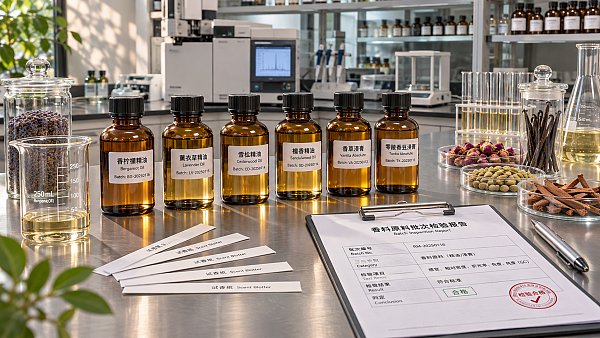
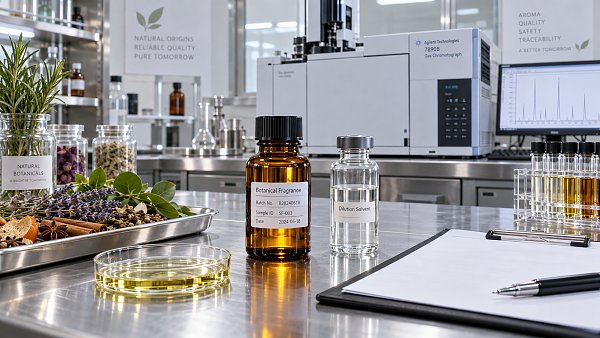
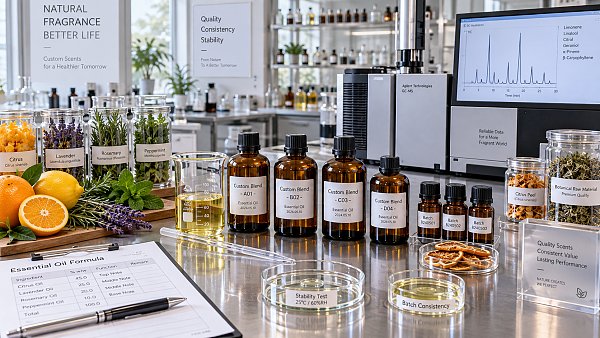
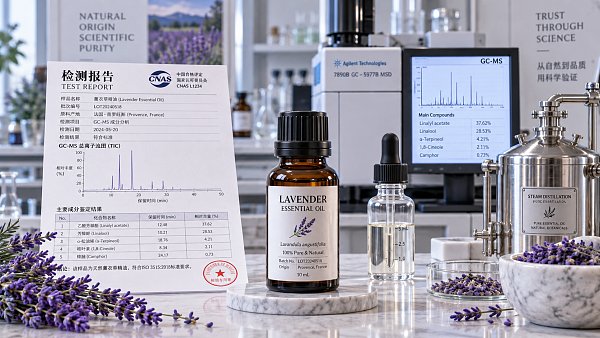
A suitable supplier package should make it possible to identify the material clearly, review its safety-relevant composition, understand handling requirements, and assess batch consistency. In practice, technical teams commonly need a current safety data sheet, technical specification, allergen or declarable-component information where relevant, certificate of analysis, storage guidance, and information on solvents, carriers, stabilizers, or antioxidants used in the supplied fragrance material.
This documentation supports several decisions at once: formulation design, product labeling, occupational handling, stability planning, supplier approval, and regulatory review. A material can have a compelling odor profile but still be a poor procurement choice when its identity is unclear, composition changes without notification, or the available documentation cannot support the intended market and product category.
FCAS covers fragrance ingredients, natural extracts, encapsulated fragrance systems, carriers, and related specialty chemicals through an application-focused lens. For an evaluator, that framing is useful because material selection needs to connect sensory performance with formulation compatibility, safety information, packaging, and supply reliability.
Oxidation is a major cause of scent drift and avoidable risk
Many aroma ingredients are sensitive to oxygen, light, heat, trace metals, or reactive components in the base. Oxidation can flatten fresh notes, create off-odors, shift color, and generate degradation products with a different skin-safety profile from the original material. Citrus-like, green, herbal, and unsaturated materials often require especially careful stability planning, although any fragrance composition can change under unfavorable storage conditions.
The solution is not simply to add an antioxidant to every formula. The selected protection strategy must fit the base and packaging. A product may benefit from a more oxidation-resistant fragrance design, an appropriate antioxidant system, lower headspace exposure, opaque or light-protective packaging, controlled processing temperatures, or compatibility screening with the final container. The final pack matters because some aroma materials can be absorbed by, migrate into, or interact with plastics, liners, pumps, and seals.
Accelerated stability work is useful when interpreted as a comparison tool rather than a shortcut for real-world certainty. Evaluate the final formula in the final package, then compare odor, color, clarity, viscosity, phase appearance, and package condition against a retained control. Sensory evaluation should include both the bulk product and the actual consumer delivery format: lather for a cleanser, spray plume for a mist, and skin dry-down for a lotion.
Encapsulation can extend perception, but it changes the evaluation problem
Encapsulated fragrance systems can help protect selected volatile notes and release fragrance during rubbing, drying, combing, or other use-related triggers. They may be valuable in fabric-contacting products, hair products, deodorant formats, and certain rinse-off systems where a free fragrance would dissipate too quickly.
However, encapsulation is not a universal solution for fragrance longevity. The capsule shell, particle behavior, release trigger, compatibility with surfactants or emulsions, deposition efficiency, visual appearance, and finished-product feel all need to be considered. A system that performs well in a conditioner may be unsuitable for a transparent facial gel or a fine-mist spray. Evaluation should include whether the release profile matches consumer use, not merely whether the fragrance remains detectable in the container.
A practical evaluation sequence prevents late reformulation
Fragrance selection is most efficient when the technical screen starts before a final scent direction has been locked. The following sequence keeps sensory preference connected to formulation and safety requirements.
- Define the exposure scenario. Establish whether the product is leave-on or rinse-off, the intended use area, application frequency, product format, and the desired fragrance experience.
- Screen the supplied material. Review ingredient identity, carrier system, safety-related declarations, handling information, consistency controls, and storage expectations before extensive formulation work.
- Test in the actual base. Check solubility or dispersion, odor profile, appearance, viscosity, foam where applicable, and interaction with the preservation and emulsification system.
- Evaluate aged product in its final package. Observe odor change, color, separation, precipitation, leakage, package deformation, or material uptake under conditions relevant to distribution and storage.
- Review the finished-product safety position. Assess the full formula, intended use, fragrance concentration, and required product information together rather than treating fragrance safety as a separate checkbox.
What technical teams often miss during selection
The least expensive fragrance concentrate may create higher total cost if it requires extra solubilization, destabilizes a base, causes repeated rework, or cannot be supported by consistent documentation. Conversely, a highly stable material may not be the right choice if it leaves an overly persistent note in a product intended to feel light and quickly rinsed away. “Long-lasting” must be defined by the product experience, not by a maximum-duration target.
Another common mistake is to approve a scent from an early prototype and assume later base adjustments will not affect it. Changes in surfactant concentration, oil phase, pH, preservative system, processing temperature, or packaging can all alter scent release and stability. Fragrance approval should be repeated after material or process changes that could affect the final product.
Finally, technical teams should distinguish between a pleasant odor and a reliable aroma system. Reliable aroma ingredients for personal care are those supported by a formulation-fit assessment, an exposure-appropriate safety review, stable sensory performance, and supplier documentation that allows the decision to be maintained across batches and markets. That standard gives product development teams a stronger basis for creating personal care products that still smell intentional and remain suitable for use at the end of their shelf life.
Facing technical bottlenecks in manufacturing or looking for more efficient industrial solutions? Leave your details below and let the engineering experts at FCAS solve them for you.
We respect your privacy. Your information is strictly confidential.
Related News
 Supercritical CO2 Essential OilsWhat Should You Check When Choosing a CO2 Essential Oils Supplier?Choosing a CO2 essential oils supplier? Learn how to assess sourcing, batch testing, documentation, and delivery to secure quality and reliable supply.MORE+
 Supercritical CO2 Essential OilsWhat Affects the Botanical Oleoresins Bulk Price?Botanical oleoresins bulk price depends on sourcing, strength, extraction and freight. Learn how to compare supplier quotes and reduce total costs.MORE+
 Supercritical CO2 Essential OilsHow Are Food Grade Essential Oil Extracts Made with CO2?Discover how food grade essential oil extracts are made with CO2, what shapes their flavor, and how to assess safety and suitability for food applications.MORE+
 Supercritical CO2 Essential OilsWhat to Check When Buying Aroma Ingredients WholesaleBuying aroma ingredients wholesale? Discover how to assess quality, supplier reliability, documentation and landed cost before placing your order.MORE+
 Supercritical CO2 Essential OilsHow to Choose Citrus Oils for Beverages Without CloudingChoose citrus oils for beverages with confidence. Compare delivery systems and stability tests to prevent clouding while preserving fresh citrus flavor.MORE+
 Supercritical CO2 Essential OilsWhat to Check When Choosing a CO2 Botanical Extracts ManufacturerChoosing a CO2 botanical extracts manufacturer? Discover how to assess quality, traceability, compliance and true costs before you commit.MORE+
 Supercritical CO2 Essential OilsHow Can You Verify Quality Controls at a CO2 Extracts Factory?Evaluate a co2 extracts factory with confidence. Learn how to verify batch testing, traceability, and quality controls to reduce sourcing risks and choose a reliable supplier.MORE+
 Supercritical CO2 Essential OilsWhat Determines Essential Oil Blend Bulk Prices Beyond Order Size?Explore essential oil blends bulk price factors beyond volume, from botanical quality to testing and freight. Learn how to compare suppliers and uncover the true cost before buying.MORE+
 Supercritical CO2 Essential OilsHow Do Extraction Methods and Grades Affect Oleoresin Bulk Prices?Compare oleoresins bulk price by extraction method, grade, and potency. Discover how to evaluate supplier quotes, verify quality, and lower costs at the right application dose.MORE+
 Supercritical CO2 Essential OilsWhat Should You Ask a Citrus Oils Supplier About CO2 Extraction?Choosing a citrus oils supplier? Discover what to ask about CO2 extraction, purity, testing, and cost to verify quality, avoid costly mistakes, and buy with confidence.MORE+
 Supercritical CO2 Essential OilsWhat Determines the Bulk Price of CO2 Botanical Extracts Before Shipping?Compare co2 botanical extracts bulk price drivers before shipping, from yield and potency to testing and packaging. Learn how to assess supplier quotes and buy with confidence.MORE+
 Supercritical CO2 Essential OilsHow to Verify the Purity of High Cineole Eucalyptus Oil With GC-MSVerify high cineole eucalyptus oil with GC-MS. Learn how to confirm identity, measure cineole accurately, and spot quality risks before approving your next batch.MORE+
 Supercritical CO2 Essential OilsHow Does Supercritical CO2 Extraction Affect Bulk Tea Tree Oil?Discover how supercritical CO2 extraction affects bulk tea tree oil composition, stability, and formulation performance—and what to check before approving a bulk replacement.MORE+
 Supercritical CO2 Essential OilsHow Do CO2 Botanical Extract Certifications Affect Sourcing Costs?CO2 botanical extracts supplier certifications can raise prices but lower sourcing costs. Learn how to verify coverage, compare total costs, and pay only for credentials that add value.MORE+
 Supercritical CO2 Essential OilsHow to Evaluate a Natural Aroma Chemicals Supplier for QualityNatural aroma chemicals supplier evaluation made practical: assess quality, traceability, odor consistency, documentation, packaging, and total delivered cost before you buy.MORE+
 Supercritical CO2 Essential OilsHow to Verify CO2 Botanical Extract Supplier CertificationsCO2 botanical extracts supplier certifications: learn how to verify certificates, site scope, batch traceability, and process controls before approving suppliers.MORE+
 Supercritical CO2 Essential OilsHow Oleoresins Bulk Price Changes with Crop Quality and SupplyOleoresins bulk price insights: learn how crop quality, extraction yield, grade availability and supply risks shape costs—compare supplier offers with confidence.MORE+
 Supercritical CO2 Essential OilsHow Natural Essential Oil Blends Improve Consistent Product FragranceNatural essential oil blends help brands achieve consistent, appealing fragrance across batches. Explore smart blend design, stability testing, and product compatibility strategies.MORE+
 Supercritical CO2 Essential OilsWhat to Check Before Choosing a Botanical Essential Oils ManufacturerChoose a botanical essential oils manufacturer with confidence. Explore key checks for purity, traceability, compliance, batch consistency, and reliable supply.MORE+
 Supercritical CO2 Essential OilsHow Aroma Ingredients Shape Lasting and Skin-Safe Personal Care ProductsAroma ingredients for personal care: discover how to achieve lasting scent, formulation stability, skin safety, and confident product performance.MORE+
 Supercritical CO2 Essential OilsHow to Evaluate a Natural Cardamom Oil Supplier for Reliable SupplyNatural cardamom oil supplier evaluation guide: verify botanical origin, purity, batch consistency, documentation, packaging, and delivery reliability for confident sourcing.MORE+
 Supercritical CO2 Essential OilsHow to Choose Eucalyptus Oil Grades for Clean, Consistent ProductsChoose the right Eucalyptus Oil grade with confidence. Compare cineole content, purity, origin, processing, documentation, and application fit for consistent products.MORE+
 Supercritical CO2 Essential OilsHow Food Grade Citrus Oils Improve Flavor in Beverage FormulationsFood grade citrus oils help beverage formulators create brighter, more authentic flavor. Learn how to select, stabilize, dose, and protect citrus oils for lasting appeal.MORE+
 Supercritical CO2 Essential OilsWhy Citrus Terpene Fragrances Are Growing in Home Care ProductsCitrus terpene fragrances are transforming home care products with fresh, trusted cleaning cues. Explore performance, stability, compliance, sourcing, and cost factors for smarter fragrance selection.MORE+
 Supercritical CO2 Essential OilsHow to Choose Ginger Oil for Beverages With a Clean Flavor ProfileGinger oil for beverages: learn how to select a clean, bright, stable profile that performs through processing, shelf life, and every sip.MORE+
 Supercritical CO2 Essential OilsCO2 Essential Oil Extracts for Functional Foods and Clean LabelsDiscover CO2 essential oil extracts for functional foods: clean-label potential, botanical flavor innovation, formulation insights, and smarter sourcing strategies.MORE+
 Supercritical CO2 Essential OilsHow to Use Cardamom Oil for Flavoring Without Overpowering FoodsCardamom oil for flavoring: learn dilution, dispersion, blending, and process tips to create balanced beverages, bakery, and desserts without overpowering taste.MORE+
 Supercritical CO2 Essential OilsWhat to Evaluate When Sourcing Custom Essential Oil BlendsCustom essential oil blends: discover how to evaluate formulation fit, quality consistency, compliance, total cost, and supply reliability for confident sourcing decisions.MORE+
 Supercritical CO2 Essential OilsHow to Verify Purity and Sourcing of Cosmetic Grade Lavender OilCosmetic grade lavender oil: learn how to verify botanical origin, batch-specific purity, GC-MS reports, sourcing, storage, and safe cosmetic use before you buy.MORE+
 Supercritical CO2 Essential OilsWhat to Evaluate Before Choosing an Aromatic Extracts FactoryChoose the right aromatic extracts factory with expert guidance on traceability, extraction methods, batch consistency, documentation, and reliable supply.MORE+
 Supercritical CO2 Essential OilsAre CO2 Botanical Extracts More Stable Than Solvent Extracts?Are CO2 botanical extracts more stable than solvent extracts? Compare oxidation risk, packaging, and formulation factors to make smarter sourcing decisions.MORE+
 Supercritical CO2 Essential OilsWhy High Terpinen Tea Tree Oil Quality Depends on Chemotype and TestingHigh terpinen tea tree oil quality starts with verified chemotype, full GC/MS testing, oxidation control, and traceable storage—learn how to choose reliable oil.MORE+
 Supercritical CO2 Essential OilsHow Mint Oils for Oral Care Improve Flavor and Fresh BreathMint oils for oral care create cooling flavor, lasting freshness, and a better daily brushing experience. Explore peppermint, spearmint, and smart product choices.MORE+
 Supercritical CO2 Essential OilsWhat to Evaluate Before Choosing an Essential Oil Blends ManufacturerEssential oil blends manufacturer selection guide: evaluate quality, traceability, compliance, formula performance, and supply reliability to source with confidence.MORE+
 Supercritical CO2 Essential OilsHow to Evaluate a Natural Aroma Chemicals Manufacturer for Reliable SupplyNatural aroma chemicals manufacturer evaluation guide: verify traceability, batch consistency, compliance, application support, capacity, and total cost to secure reliable supply.MORE+
 Supercritical CO2 Essential OilsWhat Should You Know About Natural Aroma Chemicals and Their UsesNatural Aroma Chemicals: explore how to select, test, and formulate natural aroma ingredients for fragrances, food, personal care, and home care products.MORE+
 Supercritical CO2 Essential OilsWhen Oil Soluble Essential Oil Extracts Work Best in FormulationsOil soluble essential oil extracts work best in anhydrous beauty, fragrance, food, and cleaning formulas. Explore compatibility, stability, and application tips.MORE+
 Supercritical CO2 Essential OilsWhy Solvent Free Aromatic Extracts Matter for Clean Label Fragrance FormulasSolvent free aromatic extracts are reshaping clean label fragrance formulas by improving transparency, sensory appeal, and sourcing credibility. Learn why they matter now.MORE+
 Supercritical CO2 Essential OilsWhy Citrus Oils Matter in Clean Label Food and Wellness TrendsCitrus Oils drive clean label food and wellness innovation with fresh flavor, natural appeal, and versatile formulation value. Explore why buyers and brands are paying closer attention.MORE+
 Supercritical CO2 Essential OilsWhy Steam Distilled Clove Oil Is Gaining Ground in Natural FormulationsSteam distilled clove oil is gaining attention for its natural appeal, eugenol profile, and formulation versatility. Discover why buyers value it across personal care, fragrance, and home care.MORE+