
CO2 Essential Oil Extracts for Functional Foods and Clean Labels
Functional food teams are being asked to solve several problems at once: create a recognizable natural story, deliver a stable sensory experience, meet increasingly detailed label expectations, and still protect margins at commercial scale. In that setting, CO2 essential oil extracts for functional foods have moved beyond a niche flavor-house topic. They are becoming part of a wider discussion about clean-label formulation, botanical differentiation, and how manufacturers translate plant-based ingredients into credible product value.
These extracts can offer concentrated aroma profiles and, depending on the botanical and extraction conditions, a broader range of volatile and lipophilic constituents than some conventional essential oils. Yet “CO2 extracted” is not automatically a guarantee of better taste, stronger functionality, or easier regulatory approval. For business decision-makers, the real question is more practical: where does the extract create enough sensory, formulation, or brand value to justify the added work of qualification?
Why CO2 extraction is gaining attention in functional food development
Carbon dioxide extraction uses CO2 under controlled pressure and temperature to separate desirable compounds from botanical material. In supercritical or subcritical conditions, CO2 can behave as an efficient solvent for many non-polar and moderately polar plant compounds. After extraction, it is depressurized and removed, leaving the botanical extract behind without the residual solvent concerns associated with some organic-solvent processes.
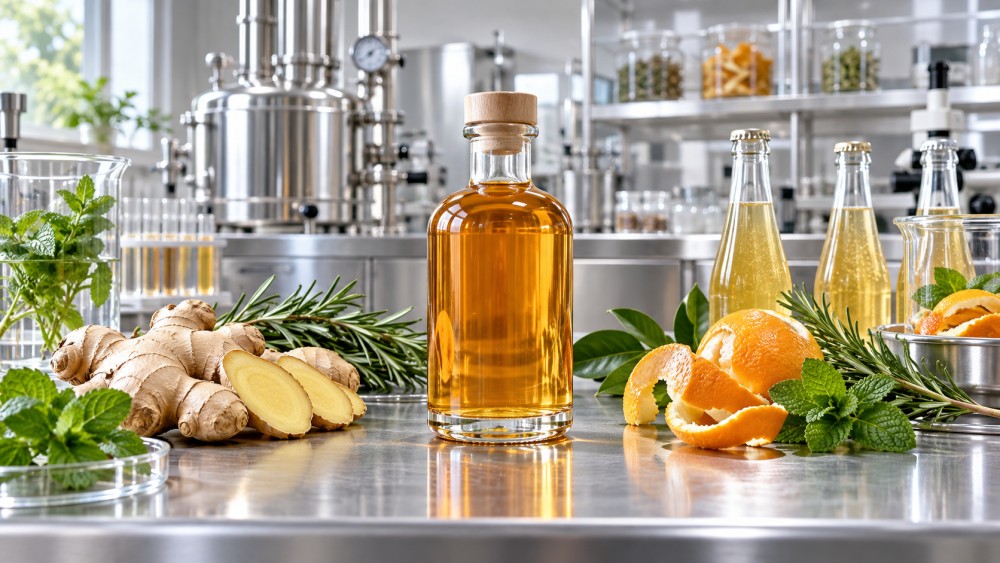
For functional food manufacturers, this technical distinction matters because extraction conditions influence the ingredient’s aroma, color, wax content, oxidation sensitivity, and composition. A CO2 extract from ginger, rosemary, peppermint, citrus peel, turmeric, cardamom, black pepper, or herbs may retain sensory nuances that are reduced, altered, or selectively lost in steam-distilled oil. The result is often described as “truer to the plant,” although that phrase should be treated as a sensory observation rather than a universal specification.
The market interest also reflects a broader repositioning of flavor. In many functional beverages, nutrition bars, dairy alternatives, gummies, powdered supplements, and better-for-you snacks, flavor is no longer merely a masking tool. It is part of the product’s wellness narrative. A ginger-forward shot, a botanical sparkling drink, or a rosemary-citrus snack may use flavor cues to communicate freshness, natural origin, energy, comfort, or sophistication before the consumer reads the full ingredient panel.
That does not mean every botanical claim should be implied by an aroma ingredient. It means that extraction technology, botanical identity, and finished-product positioning must be aligned from the beginning.
The clean-label opportunity is real—but it is not a single claim
“Clean label” remains commercially influential, but it is not a standardized global legal definition. Consumers may interpret it as fewer ingredients, familiar plant names, no artificial flavoring, minimal processing, or a transparent sourcing story. Procurement and regulatory teams, meanwhile, must deal with a more precise reality: applicable flavor regulations, food additive rules, natural flavor definitions, allergen considerations, contaminant controls, and country-specific labeling language.
CO2 essential oil extracts can support a clean-label direction when their origin, processing route, and intended labeling status are properly understood. The wording “CO2 extract,” however, does not by itself answer whether an ingredient may be declared as a natural flavor, spice extract, botanical preparation, or another category in a specific market. Classification can depend on the source material, composition, use level, local legal framework, and whether the material is used primarily for flavoring or for another technological purpose.
This is where promising concepts often slow down. Marketing may see a compelling story around “botanical CO2 extract,” while regulatory colleagues need a complete file: botanical name and plant part, extraction method, carrier system if present, specification, safety documentation, compositional data, contaminant testing, and intended use conditions. The strongest product teams bring those conversations together early rather than attempting to repair the claim architecture after pilot production.
What buyers should look for beyond a beautiful aroma
A small sample evaluated in a flavor lab can be captivating. Commercial sourcing requires a wider lens. The best extract for a brand is not necessarily the most intense or exotic one; it is the one that stays commercially workable across batches, geographies, product formats, and production schedules.
Botanical identity and raw-material variability
Botanical extracts are shaped by cultivar, origin, harvest time, drying conditions, storage, and seasonal weather. A supplier should clearly identify the botanical species, plant part, and sourcing region where relevant. Ginger rhizome, for example, is not interchangeable with ginger leaf; citrus peel composition can vary materially among varieties and processing streams.
Decision-makers should ask how batch-to-batch variation is monitored and what sensory and analytical release limits are used. A chromatographic fingerprint can be useful, but it should not be viewed in isolation. For flavor-critical applications, organoleptic evaluation remains essential because a profile can meet a basic analytical range while still feel noticeably different in a finished beverage or confectionery system.
Extraction fraction and physical behavior
Not all CO2 extracts behave like conventional essential oils. Some are light, mobile liquids; others are viscous, waxy, or semi-solid materials containing heavier fractions. These characteristics influence dosing, pumping, pre-dilution, emulsification, and dispersion. An extract that works neatly in an oil-based nutrition bar may create ring formation, haze, or separation in a clear beverage.
Suppliers may offer standardized or fractionated versions designed for easier handling and more predictable sensory delivery. Those options can be useful, but they should be assessed honestly against the clean-label brief. A standardized product may contain a carrier or a defined blending component. That is not inherently negative; it simply changes the documentation and label review required.
Safety, contaminants, and documentation readiness
Natural origin does not eliminate quality risk. Depending on the botanical, buyers may need to evaluate pesticide residues, heavy metals, microbiological limits, polycyclic aromatic hydrocarbons, mycotoxins, residual processing aids, and naturally occurring compounds with use restrictions or safety relevance. Citrus-derived materials, for instance, may require attention to oxidation products and certain naturally present constituents. Spices and herbs can bring their own contaminant profile based on agricultural and post-harvest conditions.
A commercially prepared supplier dossier should make it easier to review certificates of analysis, safety data, allergen statements, GMO status where requested, country of origin, shelf-life conditions, and traceability practices. If a supplier can only provide a generic aroma description and a basic specification, the buyer may be assuming too much downstream risk.
Formulation is where the commercial promise is tested
CO2 essential oil extracts for functional foods often perform differently once they meet proteins, sweeteners, acids, minerals, fibers, and processing stress. The same peppermint CO2 extract can feel bright and cooling in a sugar-based gummy, harsh in a high-protein shake, and muted in a fiber-rich powder. A turmeric CO2 extract may create desirable warmth in a savory matrix but require careful dosage management in a fruit beverage.
For beverage developers, solubility is usually the first practical barrier. Lipophilic extracts can need an emulsion system, a suitable carrier, or a beverage-compatible natural flavor preparation to prevent floating oil, turbidity shifts, and inconsistent dosing. High-acid environments can be favorable for certain flavor directions but may also magnify sharp or spicy notes. Heat treatment, oxygen exposure, light, and headspace conditions need to be considered over the intended shelf life.
In bars, bakery, and snacks, the central issue may be flavor retention through heating and storage. Volatile top notes can fade, while heavier or bitter notes become more apparent over time. In encapsulated powders and supplements, the extract must be assessed against carrier choice, moisture uptake, reconstitution behavior, and the possibility of aroma release when a sachet is opened.
There is also a common misconception that a more concentrated extract automatically reduces total cost. Cost-in-use depends on more than dose rate. It includes pre-blending needs, processing losses, rejection risk, sensory correction work, shelf-life performance, and whether the ingredient helps reduce dependence on several other flavor materials. A slightly higher-priced extract may be commercially sensible if it simplifies a formula or creates a more distinctive and stable profile. Conversely, a highly concentrated material can become expensive if it requires complicated handling or repeated flavor adjustment.
Where the strongest application demand is likely to emerge
The most attractive opportunities are usually products where botanical character already feels authentic to the consumer and where the ingredient can do more than provide a generic aroma.
- Functional beverages and wellness shots: Ginger, citrus, mint, rosemary, and spice extracts can strengthen botanical cues in products positioned around refreshment, digestion-oriented occasions, or daily routines. Flavor balance is critical because functional actives often bring bitterness, mineral notes, or astringency.
- Nutrition and meal-replacement formats: Cocoa, coffee, cardamom, vanilla-adjacent botanical profiles, mint, and spice extracts can help soften protein off-notes. The formulation team should verify compatibility with sweeteners and high-protein systems rather than relying on aroma tests alone.
- Gummies and chewable supplements: These formats provide a useful platform for concentrated botanical flavor, but heat exposure and interactions with acids, gelatin, pectin, and sweetener systems require careful trials.
- Premium snacks and savory functional foods: Black pepper, rosemary, oregano, ginger, and citrus CO2 extracts can bring recognizable culinary depth, particularly where brands want shorter, more understandable flavor descriptions.
- Dairy alternatives and cultured products: Botanical extracts may help build freshness or complexity, but fat content, fermentation notes, and oxidation management can significantly affect performance.
In each category, the commercial goal should be defined before extract selection. Is the extract meant to deliver a signature note, mask an unpleasant active, support a natural flavor declaration, replace part of a conventional flavor compound, or reinforce a botanical brand story? These are different jobs, and they may call for different extraction fractions or flavor systems.
A smarter sourcing conversation: four questions to ask suppliers
Rather than asking only for a price and sample, procurement and R&D teams can create a more productive qualification process with a few focused questions.
- What exactly is being supplied? Confirm the Latin botanical name, plant part, extraction mode, fraction type, any added carrier, and the intended food-use category.
- How is consistency controlled? Request information on sensory standards, key-marker ranges, lot release procedures, and how the supplier manages seasonal raw-material variation.
- What evidence supports market access? Review technical specifications, safety and regulatory documentation, contaminant controls, and label guidance for the target countries.
- What happens when demand scales? Explore lead times, origin dependence, inventory planning, packaging formats, storage conditions, and the supplier’s ability to support repeat production rather than one-off development samples.
These questions are particularly important for global brands. A formulation that launches successfully in one region can face delays elsewhere when labeling rules, permitted uses, documentation expectations, or supply routes differ. Early alignment between sourcing, regulatory, quality, and commercial teams is often less glamorous than product ideation, but it is what keeps a promising botanical concept from becoming a costly reformulation project.
The market is moving from “natural” as a label claim to “natural” as an evidence-based system
The future of CO2 essential oil extracts in functional foods will not be decided by novelty alone. Buyers are becoming more disciplined. They want botanical materials that can support a recognizable consumer story while meeting the realities of manufacturing, compliance, sensory consistency, and supply continuity.
That creates room for extract suppliers that can explain not only what their materials smell like, but how they behave in real applications. It also favors food manufacturers that treat extraction technology as one component of a broader ingredient strategy, rather than a shortcut to clean-label credibility.
For decision-makers monitoring the functional ingredients market, the key signal is clear: CO2 extracts are increasingly relevant where a product needs concentrated botanical character and a transparent ingredient narrative. Their value is highest when technical qualification is as rigorous as the marketing ambition. Platforms such as FCAS can help teams compare extraction approaches, application requirements, regulatory considerations, and supply-chain factors before the product brief turns into a purchase commitment.
Related News
 Antioxidants & Natural PreservativesWhat Quality Checks Matter When Sourcing Butylparaben for Personal CareButylparaben for personal care sourcing guide: compare assay, impurities, physical performance, documentation, traceability, and supplier quality to reduce formulation risk.MORE+
 Nano-microcapsule FormulationsHow Encapsulated Flavors Protect Taste During Processing and StorageEncapsulated Flavors protect taste from heat, oxygen, moisture, and storage loss. Explore smarter release, carrier selection, and processing strategies.MORE+
 Chelated Trace Element FertilizersHow Greenhouse Fertigation Systems Reduce Water and Fertilizer WasteGreenhouse fertigation systems reduce water and fertilizer waste with precise dosing, uniform irrigation, drainage monitoring, and smarter crop-zone control. Learn practical strategies.MORE+
 Supercritical CO2 Essential OilsHow Natural Essential Oil Blends Improve Consistent Product FragranceNatural essential oil blends help brands achieve consistent, appealing fragrance across batches. Explore smart blend design, stability testing, and product compatibility strategies.MORE+
 Non-ionic Surfactants & DefoamersHow to Choose Non Ionic Low Foaming Surfactants for CIP CleaningNon ionic low foaming surfactants for CIP cleaning: learn how to balance wetting, foam control, compatibility, and rinseability for reliable cleaning performance.MORE+
 Nano-microcapsule FormulationsHow Food Grade Cyclodextrin Complexes Protect Sensitive FlavorsFood grade cyclodextrin inclusion complexes help protect sensitive flavors from oxidation, evaporation, and processing loss while supporting controlled release and consistent sensory quality.MORE+
 Polymer-Coated Water Soluble NPKHow Fertilizer Coating Polymers Improve NPK Granule ReleaseFertilizer coating polymers for NPK granules improve controlled nutrient release, reduce loss risks, and enhance product consistency. Discover key selection and process insights.MORE+
 Chelated Trace Element FertilizersWhat Diammonium Phosphate Means for Crop Nutrition PlanningDiammonium Phosphate: learn how DAP supports early phosphorus access, nitrogen budgeting, smart placement, and balanced crop nutrition planning.MORE+
 Maillard Reaction Savory FlavorsHow to Assess a Flavor Bases Supplier List for Reliable SourcingGlobal Fine Chemicals & Agrochemical Intelligence Network flavor bases supplier list: assess specs, samples, supply risk, and true cost to source with confidence.MORE+
 Hydrocolloids & EmulsifiersHow Konjac Gum Powder Improves Texture in Low-Calorie FoodsKonjac gum powder improves body, stability, and mouthfeel in low-calorie foods. Discover practical tips for smoother sauces, beverages, and reduced-fat formulations.MORE+
 Supercritical CO2 Essential OilsWhat to Check Before Choosing a Botanical Essential Oils ManufacturerChoose a botanical essential oils manufacturer with confidence. Explore key checks for purity, traceability, compliance, batch consistency, and reliable supply.MORE+
 Microencapsulated FragrancesHow Fragrance Carriers for Detergents Improve Scent PerformanceFragrance carriers for detergents improve stability, fabric deposition, and long-lasting scent. Explore practical solutions for better wash-to-wear fragrance performance.MORE+
 Antioxidants & Natural PreservativesWhen Propyl Gallate Antioxidant Is the Right Choice for Oil StabilityPropyl gallate antioxidant: learn when it is the right choice for oil stability, shelf-life protection, processing compatibility, and smarter formulation decisions.MORE+
 Antioxidants & Natural PreservativesHow Potassium Sorbate Extends Shelf Life in Food and Beverage ProductsPotassium Sorbate helps food and beverage brands control yeast and mold spoilage. Explore pH, dosage, processing, and packaging strategies for reliable shelf life.MORE+
 Antioxidants & Natural PreservativesHow to Source Bulk Herbal Extracts With Reliable Quality ControlBulk herbal extracts sourcing guide: compare suppliers, verify traceability, review CoAs, and build reliable quality controls for safer, consistent purchasing.MORE+
 Antioxidants & Natural PreservativesWhat to Check Before Sourcing Butylparaben for Personal Care FormulasButylparaben for personal care sourcing guide: check market eligibility, purity, supplier controls, formula compatibility, packaging, and total risk before buying.MORE+
 Targeted Bio-pesticides & APIsChoosing Microbial Fungicides for Foliar Diseases in Integrated Crop ProgramsMicrobial fungicides for foliar diseases: learn how to match biology, formulation, tank compatibility, and timing for stronger integrated crop protection.MORE+
 Targeted Bio-pesticides & APIsHow Microbial Insecticides Control Caterpillars With Lower Crop Residue RiskMicrobial insecticides for caterpillars help protect crops with targeted early-larval control and lower residue-management pressure. Learn timing, coverage, compliance, and scouting essentials.MORE+
 Microencapsulated FragrancesHow to Add Encapsulated Laundry Fragrances Without Weakening Wash ResultsEncapsulated laundry fragrances: learn how to boost long-lasting scent while protecting cleaning power, stability, foam control, and fabric care.MORE+
 Supercritical CO2 Essential OilsHow Aroma Ingredients Shape Lasting and Skin-Safe Personal Care ProductsAroma ingredients for personal care: discover how to achieve lasting scent, formulation stability, skin safety, and confident product performance.MORE+
 Targeted Bio-pesticides & APIsInsecticides Explained Through Labels, Active Ingredients, and SafetyInsecticides explained through labels, active ingredients, formulations, and safety. Learn how to compare products, manage risk, and make informed crop protection decisions.MORE+
 Heavy-duty Industrial DegreasersHow to Select Parts Wash Cleaners for Automotive ComponentsParts wash cleaners for automotive components: learn how to match chemistry, materials, rinsing, safety, and waste controls for reliable cleaning results.MORE+
 Chelated Trace Element FertilizersHow Precision Fertigation Systems Improve Water and Nutrient ControlPrecision fertigation systems improve water and nutrient control with accurate dosing, uniform irrigation, smart monitoring, and reduced waste. Discover how to optimize crop performance.MORE+
 Hydrocolloids & EmulsifiersHow Bulk Price Factors Affect Hydrocolloid Stabilizer Blend SourcingHydrocolloid stabilizer blends bulk price: compare dosage efficiency, quality consistency, logistics, and documentation to reduce total sourcing costs.MORE+
 Zero-Calorie Sweeteners & AcidulantsHow to Choose a Natural Sweeteners Supplier for Clean-Label ProductsNatural sweeteners supplier selection guide for clean-label products: compare formulation fit, traceability, documentation, and supply reliability.MORE+
 Non-ionic Surfactants & DefoamersWhat Cationic Surfactants Do and Where They Are UsedCationic Surfactants deliver antimicrobial action, conditioning, antistatic control, and surface treatment benefits. Explore key uses, compatibility, and safe selection tips.MORE+
 Targeted Bio-pesticides & APIsHow to Evaluate Pesticide Suspension Concentrates for Field StabilityPesticide Suspension Concentrates: learn how to evaluate field stability, redispersibility, dilution, tank-mix compatibility, and spray safety for reliable performance.MORE+
 Hydrocolloids & EmulsifiersHow Hydrocolloid Systems for Meat Products Improve Texture and YieldHydrocolloid systems for meat products improve yield, texture, water retention, and slicing quality. Explore practical formulation strategies for stable, high-performing meat products.MORE+
 Microencapsulated FragrancesHow Laundry Fragrances for Liquid Detergents Improve Scent LongevityLaundry fragrances for liquid detergents: discover how fragrance design, deposition, and encapsulation create lasting fabric freshness and stronger product appeal.MORE+
 Nano-microcapsule FormulationsChoosing Fragrance Preparations That Perform Well in Personal WashFragrance preparations for personal wash: learn how to select options that protect clarity, stability, foam, scent performance, and packaging compatibility.MORE+
 Controlled-Release ThermodynamicsModified Cyclodextrins Explained for Controlled Fragrance ReleaseModified cyclodextrins enable controlled fragrance release, odor control, and volatile-note protection. Explore how they optimize performance in detergents, fabric care, and more.MORE+
 Microencapsulated FragrancesHow Fragrance Delivery Systems Improve Fabric Softener LongevityFragrance delivery systems for fabric softeners improve scent longevity through smart protection, reliable deposition, and controlled release for lasting freshness.MORE+
 Supercritical CO2 Essential OilsHow to Evaluate a Natural Cardamom Oil Supplier for Reliable SupplyNatural cardamom oil supplier evaluation guide: verify botanical origin, purity, batch consistency, documentation, packaging, and delivery reliability for confident sourcing.MORE+
 Maillard Reaction Savory FlavorsHow Ethyl Maltol Purity Testing Supports Flavor Safety ComplianceEthyl Maltol purity testing strengthens flavor safety compliance through identity checks, impurity profiling, supplier verification, and audit-ready documentation.MORE+
 Microencapsulated FragrancesEssential Oil Extracts Compared for Fragrance and Wellness UsesEssential Oil Extracts compared for fragrance and wellness: explore scent profiles, extraction methods, stability, safety, and sourcing insights for smarter formulation choices.MORE+
 Zero-Calorie Sweeteners & AcidulantsWhat Drives Zero Calorie Sweeteners Bulk Price in 2026Zero calorie sweeteners bulk price in 2026: compare specifications, dosage, quality, freight, and supply risk to make smarter sourcing decisions.MORE+
 EPA FIFRA & FDA GRAS RegsSynthetic Food Preservatives Rules That Support Safer FormulasSynthetic Food Preservatives: learn the rules for safer formulas, compliant use levels, validated shelf life, labeling, and reliable microbial control.MORE+
 Micelle Fluidics & ChelationHow Anionic Industrial Dispersants Improve Coating StabilityAnionic industrial dispersants improve coating stability, pigment wetting, viscosity control, gloss, and storage performance. Learn how to select and test the right solution.MORE+
 Supercritical CO2 Essential OilsHow to Choose Eucalyptus Oil Grades for Clean, Consistent ProductsChoose the right Eucalyptus Oil grade with confidence. Compare cineole content, purity, origin, processing, documentation, and application fit for consistent products.MORE+
 Micelle Fluidics & ChelationWhat Are Cationic Surfactants and Where Are They Commonly Used?Cationic Surfactants deliver powerful surface affinity for disinfection, fabric softening, hair conditioning, antistatic control, and industrial treatments. Explore key uses and selection factors.MORE+







































