How to Select Air Freshener Fragrances That Last in Car Fresheners
For procurement teams, selecting air freshener fragrances for car fresheners involves more than choosing an appealing scent from a fragrance strip. A sample may smell vivid when first opened yet lose its character quickly in a hot vehicle, become harsh in a small cabin, or react poorly with the gel, paper, polymer, or liquid carrier used in production.
The real buying question is not simply, “Which fragrance smells best?” It is, “Which fragrance system will provide the intended sensory experience throughout the product’s usable life, under actual storage and in-car conditions?” Answering that question requires buyers to consider fragrance composition, volatility, carrier compatibility, release technology, packaging, climate exposure, documentation, and supplier consistency together.
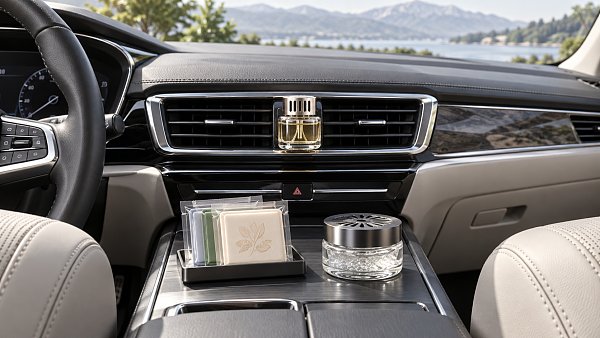
For a hanging card, vent clip, gel can, membrane pouch, reed-style diffuser, or spray format, a fragrance that lasts is rarely the result of one powerful ingredient. It is usually the outcome of a balanced formula and a well-matched delivery system.
Start with the product format, not the scent name
“Ocean,” “new car,” “vanilla,” “citrus,” and “fresh linen” describe a marketing direction, not a sourcing specification. The same fragrance family can perform very differently depending on how it is delivered. Before requesting samples, procurement and product teams should define the air freshener format, target market, expected service life, cabin environment, and desired scent intensity curve.
A fragrance designed for a spray can prioritize immediate bloom and a clean dry-down. A vent clip needs controlled diffusion under moving air. A paper hanging freshener must survive fragrance loading, pouch sealing, transport, and gradual evaporation after opening. Gel and polymer formats require careful consideration of solubility, migration, color stability, and interaction with the base material.
It is useful to brief suppliers with practical details such as:
- Freshener format and substrate or carrier system
- Target fragrance load and unit size
- Desired in-car life after opening
- Whether the product will be used in hot, humid, cold, or highly variable climates
- Preferred scent profile at opening, mid-life, and end-of-life
- Packaging type, including foil pouch, blister, bottle, or refill cartridge
- Key regulatory markets and labeling expectations
This step prevents a common procurement mistake: comparing fragrance samples only on blotter strips. Blotter evaluation is useful for creative direction, but it cannot reliably predict performance in the finished car freshener.
What “long-lasting” actually means in a vehicle
Car interiors are demanding fragrance environments. Cabin temperatures can rise sharply when a vehicle is parked in direct sunlight. Ventilation changes constantly. Fabric, plastic, leather, rubber, and upholstery may absorb or distort certain notes. A fragrance that performs gently in a controlled room may diffuse much faster in a closed vehicle exposed to heat.
Lasting power depends largely on volatility: the speed at which fragrance materials evaporate into the air. Highly volatile notes create the immediate impression many consumers enjoy, especially sparkling citrus, light green accords, crisp aldehydic notes, and some aquatic effects. However, if a composition relies too heavily on fast-evaporating materials, it may smell impressive at first and fade sooner than expected.
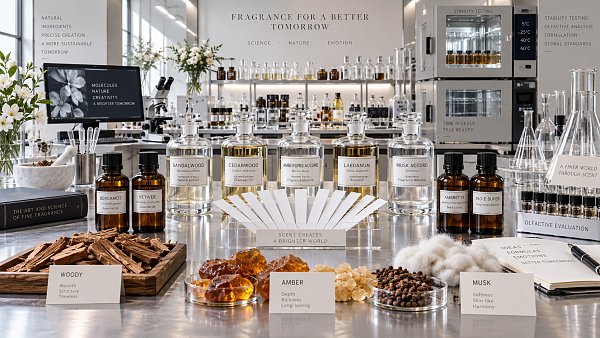
More substantive materials support persistence. Woody, musky, amber-like, balsamic, powdery, and certain fruity or floral materials often remain noticeable longer, although their behavior depends on the fragrance architecture and product matrix. A lasting fragrance is not necessarily heavy or overly sweet. Skilled fragrance development balances top-note impact with a stable heart and base, so the scent evolves rather than collapsing after the initial release.
Buyers should ask fragrance suppliers to explain the intended evaporation profile in plain technical language. Is the formula designed for strong first impression, steady background fragrance, or delayed long-term release? Is the end-of-life scent still representative of the concept, or does it become disproportionately woody, musky, or solvent-like? These questions are particularly relevant where brand claims imply continuous freshness.
Evaluate the fragrance and carrier as one system
In car air fresheners, the carrier is not a passive container. It strongly influences diffusion rate, fragrance retention, leakage risk, and consumer perception. A fragrance oil may be suitable for one format and unsuitable for another even when the scent itself is well received.
For liquid systems, fragrance solubility in the selected solvent or carrier should be verified at normal and elevated storage temperatures. Haze, phase separation, sediment, or clouding can create avoidable quality concerns. In gels and solids, the fragrance may soften the matrix, migrate into packaging, or change the product’s appearance over time.
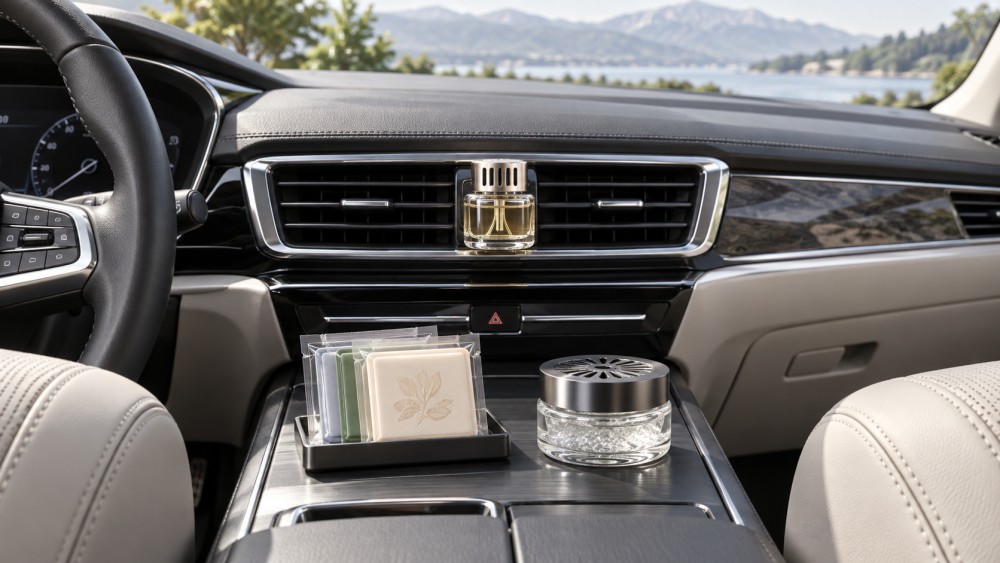
Packaging compatibility deserves equal attention. Certain fragrance ingredients can interact with plastics, inks, adhesives, seals, and coatings. A scent that is stable in a glass sample bottle may behave differently in a polyethylene bottle, PVC clip, laminated pouch, or printed paperboard pack. Procurement specifications should therefore include the final or representative packaging materials wherever possible.
Use performance testing that reflects the buying decision
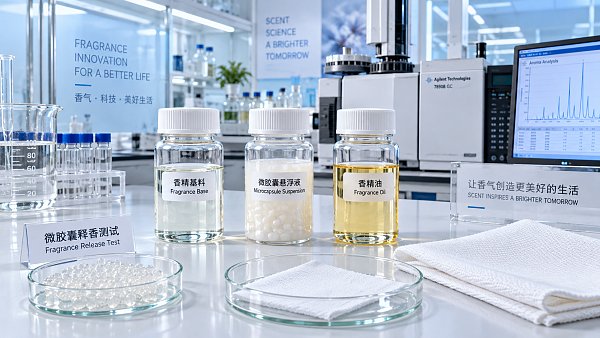
Supplier samples should move through a staged assessment rather than a one-time smelling session. The most useful evaluation combines sensory review with physical stability checks.
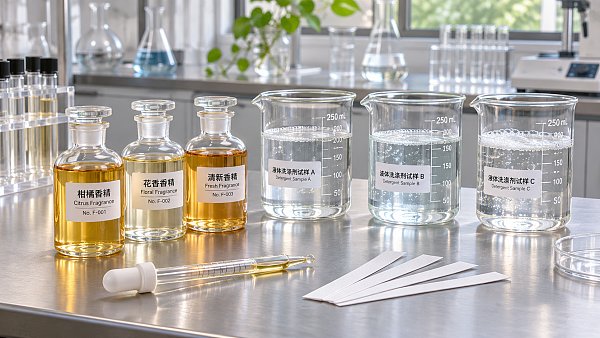
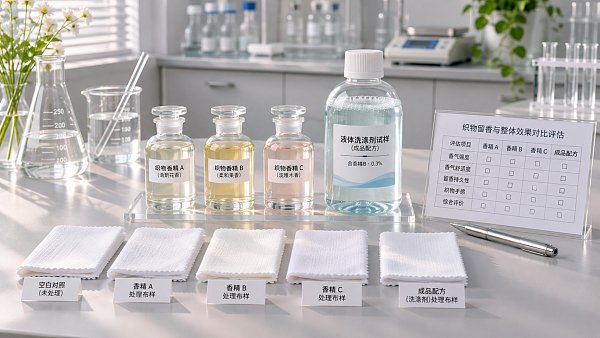
Begin with a blind comparison of candidate fragrances in the intended base. Record opening strength, character accuracy, perceived quality, and any off-notes. Then repeat the assessment after controlled storage. Heat exposure is especially important for automotive products because it can accelerate evaporation, oxidation, color changes, and packaging interaction.
A practical internal test plan may include ambient storage, elevated-temperature storage, cold exposure where relevant, and repeated temperature cycling. The purpose is not to recreate every real-world condition perfectly; it is to identify formulations that are unusually sensitive before they reach commercial production.
For each sample, teams can assess:
- Fragrance intensity immediately after activation or opening
- Consistency of scent over time rather than only initial strength
- Color, clarity, gel structure, and visible migration
- Leakage, seal integrity, and fragrance loss through packaging
- Changes in substrate, clip, membrane, wick, or housing materials
- Consumer-relevant concerns such as harshness, excessive sweetness, or lingering off-notes
Testing should also distinguish between fragrance longevity and product longevity. A gel may remain visibly present while no longer giving a meaningful scent. Conversely, a low-intensity formula may still be technically active but fall below what consumers consider noticeable. Establishing an acceptable end-of-life sensory threshold helps align supplier discussions with the actual product promise.
A fragrance brief should include sensory direction and commercial boundaries
Procurement teams often receive broad requests such as “make it fresh,” “create a premium scent,” or “develop a stronger new-car fragrance.” Such directions are understandable, but they leave too much room for interpretation. A stronger sourcing brief improves sample quality and reduces rework.
Describe the desired atmosphere rather than relying only on a category name. For example, a clean citrus fragrance may be intended to feel dry and modern, bright and youthful, or soft and spa-like. A new-car concept may lean toward clean leather, airy woods, subtle musk, or a more technical interior accord. These are different olfactive directions with different raw-material structures and cost implications.
At the same time, give suppliers clear commercial boundaries: target cost range, expected annual volume, preferred origin options if relevant, restricted material requirements, and required documentation. A fragrance house can propose more realistic alternatives when it knows whether the product is a value-focused mass-market freshener, an aftermarket accessory, a dealership gift, or a premium refill system.
Questions that reveal supplier capability
When sourcing air freshener fragrances for car fresheners, buyers should look beyond the fragrance sample itself. Reliable supply depends on formulation control, raw-material availability, technical support, and documentation discipline.
Useful supplier questions include:
- Has this fragrance or a similar system been evaluated in the same type of car freshener format?
- Which notes or materials are most likely to change under heat or extended storage?
- What recommended fragrance dosage range applies to the proposed carrier?
- Are there known compatibility concerns with common plastics, gels, adhesives, or porous substrates?
- Can the supplier provide safety documentation, allergen information where applicable, and transport guidance?
- How is batch-to-batch sensory consistency managed?
- What is the lead time for repeat orders, and which raw materials present supply risk?
- Can the supplier support reformulation if regulations or restricted-substance requirements change?
A supplier does not need to disclose proprietary composition to answer these questions meaningfully. What matters is whether its technical team can discuss risk, application behavior, and realistic limits instead of treating every fragrance as interchangeable.
Do not confuse high dosage with durable performance
Increasing fragrance concentration may make a product smell stronger at the start, but it does not automatically make it last longer. In some systems, excessive loading can accelerate release, cause sweating or leakage, overwhelm the cabin, or create a less pleasant dry-down. It can also increase material costs without solving the underlying mismatch between fragrance profile and carrier.
A better approach is to optimize the complete release system. This may involve a more substantive fragrance structure, a different solvent balance, encapsulation or adsorption technology where appropriate, adjusted substrate loading, improved pouch barrier properties, or a redesigned diffuser opening. Each option has different cost, manufacturing, and regulatory implications, so it should be evaluated against the product’s intended position.
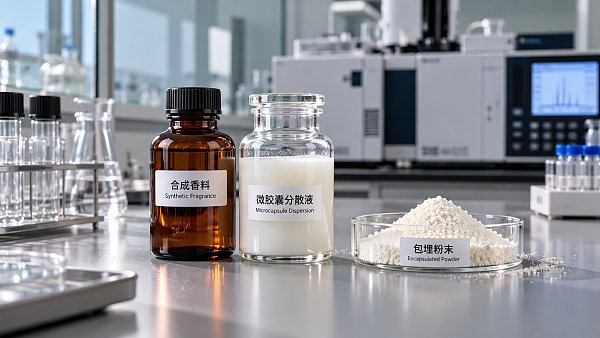
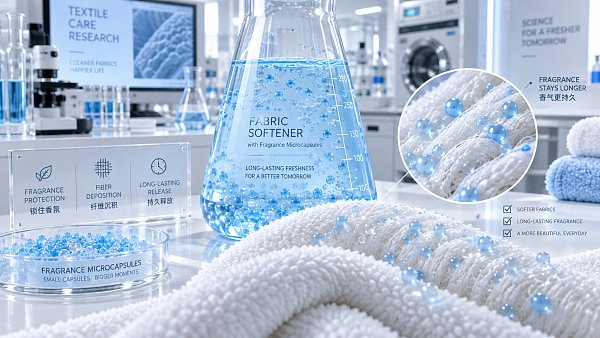
Encapsulated fragrance systems can be valuable in some applications because they protect certain notes and support controlled release. They are not, however, a universal answer. Particle size, suspension stability, processing conditions, release trigger, and compatibility with the delivery format all need review. For a simple hanging card, a well-balanced conventional fragrance and suitable barrier packaging may provide a more practical result than a complex technology package.
Build the purchasing specification around repeatability
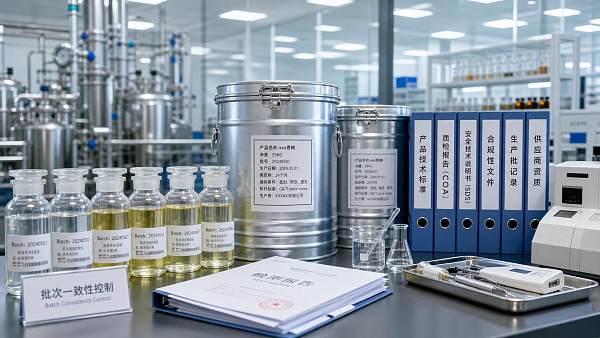
Once a fragrance is selected, the commercial specification should capture more than a name and approved sample code. Include sensory reference expectations, physical appearance, recommended dosage range, carrier compatibility, storage conditions, packaging requirements, documentation package, and change-notification procedures.
Where possible, retain an approved control sample under appropriate conditions and define how sensory deviations will be assessed. Fragrance is inherently subjective, yet that does not mean quality control must be vague. A shared reference, clear acceptance criteria, and structured communication between procurement, formulation, quality, and supplier teams make repeat ordering far more manageable.
For global sourcing, also consider transit duration, container temperatures, regional warehousing, and local climate. A fragrance that survives a short domestic supply chain may need different protection when shipped internationally or stored for extended periods before conversion into finished goods.
The best choice is the scent that stays true
A successful automotive fragrance does not need to dominate the cabin from the first minute. It should fit the product format, remain pleasant in a confined space, and retain the identity consumers expected when they first opened the pack. For buyers, that means assessing performance across time rather than selecting solely by a memorable first impression.
By combining sensory evaluation with carrier testing, heat stability review, packaging checks, documentation assessment, and supplier capability questions, procurement teams can source fragrance solutions with fewer surprises. In a category where consumers notice both the first burst and the final fade, consistency is often the most valuable fragrance attribute of all.
Facing technical bottlenecks in manufacturing or looking for more efficient industrial solutions? Leave your details below and let the engineering experts at FCAS solve them for you.
We respect your privacy. Your information is strictly confidential.
Related News
 Microencapsulated FragrancesHow Can Citrus Terpene Fragrances Stay Fresh in Formulations?Keep citrus terpene fragrances fresh for longer. Explore practical formulation, packaging, and testing strategies to protect their vibrant scent.MORE+
 Microencapsulated FragrancesHow Fragrance Encapsulation Systems for Detergents WorkDiscover how fragrance encapsulation systems for detergents protect perfume, deposit on fabric, and release scent—and learn how to choose the right system.MORE+
 Microencapsulated FragrancesHow to Choose a Reliable Fragrance Carriers SupplierChoose a reliable fragrance carriers supplier with confidence. Compare formulation fit, quality controls, documentation, supply risks, and total cost.MORE+
 Microencapsulated FragrancesHow Can Microencapsulation Help Essential Oil Blends Last Longer?Essential Oil Blends can retain their aroma longer with the right microencapsulation strategy. Explore carrier choices, release mechanisms, and stability testing.MORE+
 Microencapsulated FragrancesHow to Choose a Fragrance Capsules Manufacturer for Your ProductChoose the right fragrance capsules manufacturer with practical tips on formulation testing, quality specifications, compliance, and supply reliability.MORE+
 Microencapsulated FragrancesHow to Choose Fragrance Bases for Consistent Product ScentFragrance Bases can make or break scent consistency. Learn how to compare performance, stability, supplier controls and true cost before you buy.MORE+
 Microencapsulated FragrancesHow to Choose an Encapsulated Perfumes ManufacturerChoose an encapsulated perfumes manufacturer with confidence. Compare fragrance performance, true costs, quality, compliance, and supply reliability.MORE+
 Microencapsulated FragrancesHow to Choose a Fabric Fragrances ManufacturerChoose a fabric fragrances manufacturer with confidence. Learn how to compare scent performance, quality controls, documentation, costs, and supply reliability.MORE+
 Microencapsulated FragrancesHow to Keep Encapsulated Perfumes for Fabric Care Fresh LongerKeep encapsulated perfumes for fabric care fresh longer with practical storage, handling, formulation and testing tips that help preserve lasting fragrance.MORE+
 Microencapsulated FragrancesHow to Choose Home Fragrances for Room Sprays That LastDiscover how to choose home fragrances for room sprays that last, with practical tips on scent longevity, formula compatibility, and testing.MORE+
 Microencapsulated FragrancesHow to Choose Bulk Cyclodextrins for Fragrance EncapsulationChoose bulk cyclodextrins for fragrance encapsulation with confidence. Compare formulation fit, scent retention, supplier quality, and total cost.MORE+
 Microencapsulated FragrancesHow to Choose Stable Synthetic Aroma Chemicals for EncapsulationChoose stable synthetic aroma chemicals for encapsulation with confidence. Learn how to assess compatibility, verify supplier quality, and protect aroma through storage and release.MORE+
 Microencapsulated FragrancesHow Do You Evaluate a Fragrance Encapsulation Systems Manufacturer?Evaluate a fragrance encapsulation systems manufacturer for compatibility, scent retention, quality, and compliance. Discover key checks to reduce risk and choose the right supplier.MORE+
 Microencapsulated FragrancesHow Does Microencapsulation Affect the Release of Fine Fragrances?Fine Fragrances meet controlled release: discover how microencapsulation shapes scent longevity, aroma balance, and performance—and what to test before choosing a system.MORE+
 Microencapsulated FragrancesHow Do Fragrance Bases Affect Scent Release After Encapsulation?Discover how Fragrance Bases shape scent release after encapsulation. Explore volatility, shell compatibility, and testing strategies to improve lasting aroma and product performance.MORE+
 Microencapsulated FragrancesHow Microencapsulation Helps Personal Care Fragrances Last LongerPersonal Care Fragrances can last longer with microencapsulation. Discover how controlled release, formula compatibility, and testing help deliver a lasting scent experience.MORE+
 Microencapsulated FragrancesHow to Select Air Freshener Fragrances That Last in Car FreshenersDiscover how to select air freshener fragrances for car fresheners with lasting appeal, balancing scent performance, carrier compatibility, heat stability, and packaging.MORE+
 Microencapsulated FragrancesHow Encapsulated Perfumes for Fabric Care Improve Scent LongevityEncapsulated perfumes for fabric care extend scent longevity through controlled release, fiber deposition, and smarter formulation—discover how to create lasting fragrance experiences.MORE+
 Microencapsulated FragrancesHow Fragrance Carriers for Detergents Improve Scent PerformanceFragrance carriers for detergents improve stability, fabric deposition, and long-lasting scent. Explore practical solutions for better wash-to-wear fragrance performance.MORE+
 Microencapsulated FragrancesHow to Add Encapsulated Laundry Fragrances Without Weakening Wash ResultsEncapsulated laundry fragrances: learn how to boost long-lasting scent while protecting cleaning power, stability, foam control, and fabric care.MORE+
 Microencapsulated FragrancesHow Laundry Fragrances for Liquid Detergents Improve Scent LongevityLaundry fragrances for liquid detergents: discover how fragrance design, deposition, and encapsulation create lasting fabric freshness and stronger product appeal.MORE+
 Microencapsulated FragrancesHow Fragrance Delivery Systems Improve Fabric Softener LongevityFragrance delivery systems for fabric softeners improve scent longevity through smart protection, reliable deposition, and controlled release for lasting freshness.MORE+
 Microencapsulated FragrancesEssential Oil Extracts Compared for Fragrance and Wellness UsesEssential Oil Extracts compared for fragrance and wellness: explore scent profiles, extraction methods, stability, safety, and sourcing insights for smarter formulation choices.MORE+
 Microencapsulated FragrancesHow Aroma Chemicals Shape Lasting Fine Fragrance PerformanceAroma chemicals for fine fragrance enhance longevity, diffusion, and signature retention. Discover how smart material selection creates stable, premium scent performance.MORE+
 Microencapsulated FragrancesHow Encapsulated Laundry Fragrances Improve Scent LongevityEncapsulated laundry fragrances deliver controlled scent release for longer-lasting freshness on fabrics. Discover how they improve deposition, durability, and re-bloom.MORE+
 Microencapsulated FragrancesHow to Select Perfume Ingredients for Long-Lasting FragrancePerfume Ingredients guide: learn how to select balanced, long-lasting fragrance materials for fine fragrance, personal care, laundry, and home care products.MORE+
 Microencapsulated FragrancesHow Fragrance Encapsulates Extend Scent Performance in Household ProductsFragrance encapsulates for household products deliver longer-lasting scent in laundry, fabric care, and cleaners. Discover release triggers, formula compatibility, and practical selection tips.MORE+
 Microencapsulated FragrancesWater Soluble Air Freshener Fragrances That Prevent CloudinessWater soluble air freshener fragrances: learn how to prevent cloudiness with smarter fragrance selection, solubilizers, water quality, and stability testing.MORE+
 Microencapsulated FragrancesHow Cyclodextrin Inclusion Complexes for Fragrances Improve Scent LongevityCyclodextrin inclusion complexes for fragrances enhance scent longevity through controlled release, improved stability, and application-specific performance. Discover how to optimize lasting aroma.MORE+
 Microencapsulated FragrancesHow Microencapsulated Fragrance Systems Improve Long-Lasting ScentMicroencapsulated fragrance systems protect scent, control release triggers, and deliver longer-lasting fragrance across laundry, personal care, and cleaning products.MORE+
 Microencapsulated FragrancesHow Aroma Chemicals Shape Consistent Fragrance PerformanceAroma Chemicals shape fragrance stability, diffusion, solubility, and lasting sensory appeal. Explore practical strategies for reliable performance across product formulas.MORE+
 Microencapsulated FragrancesWhat to Look for in a Scratch and Sniff Fragrances ManufacturerScratch and sniff fragrances manufacturer guide: evaluate encapsulation, print compatibility, compliance documents, quality control, and total sourcing cost for reliable sensory campaigns.MORE+
 Microencapsulated FragrancesWhat a Reliable Perfume Compounds Manufacturer Should Offer in 2026Perfume compounds manufacturer selection in 2026 demands more than scent creativity. Learn how to assess consistency, compliance, scalability, and supply reliability before you buy.MORE+
 Microencapsulated FragrancesHow Fragrance Capsules for Detergents Improve Scent LongevityFragrance capsules for detergents help protect perfume during washing and release scent gradually, keeping clothes fresher longer. Learn how they work and why they’re worth choosing.MORE+
 Microencapsulated FragrancesWhy Terpene Fragrances Supplier Options Matter in Premium Scent DevelopmentTerpene fragrances supplier selection shapes premium scent quality, stability, compliance, and scale. Discover how to choose the right partner for safer, more consistent fragrance development.MORE+