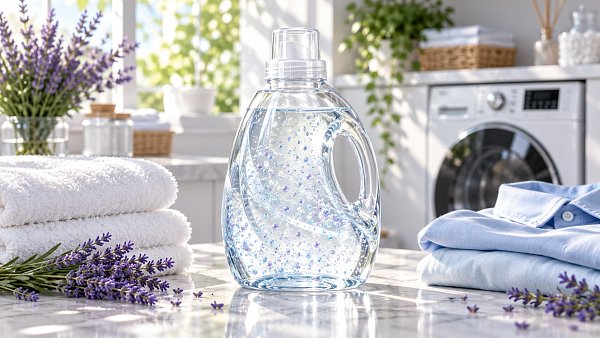
For product managers, laundry fragrances for liquid detergents are more than a sensory feature. They influence consumer preference, differentiation, repeat purchase, and perceived product quality.
Long-lasting scent is not created by adding more perfume oil. It depends on fragrance architecture, surfactant compatibility, deposition, encapsulation, wash conditions, fabric type, and storage stability.
The central commercial question is whether a fragrance system can provide a recognizable bottle scent, survive washing, deposit efficiently, and release pleasantly during drying, storage, and wear.
Product teams should therefore evaluate laundry fragrance performance as a formulation and business decision, balancing sensory impact, cost, claims, safety, manufacturing practicality, and regional consumer expectations.
Why Scent Longevity Matters for Liquid Detergent Product Strategy
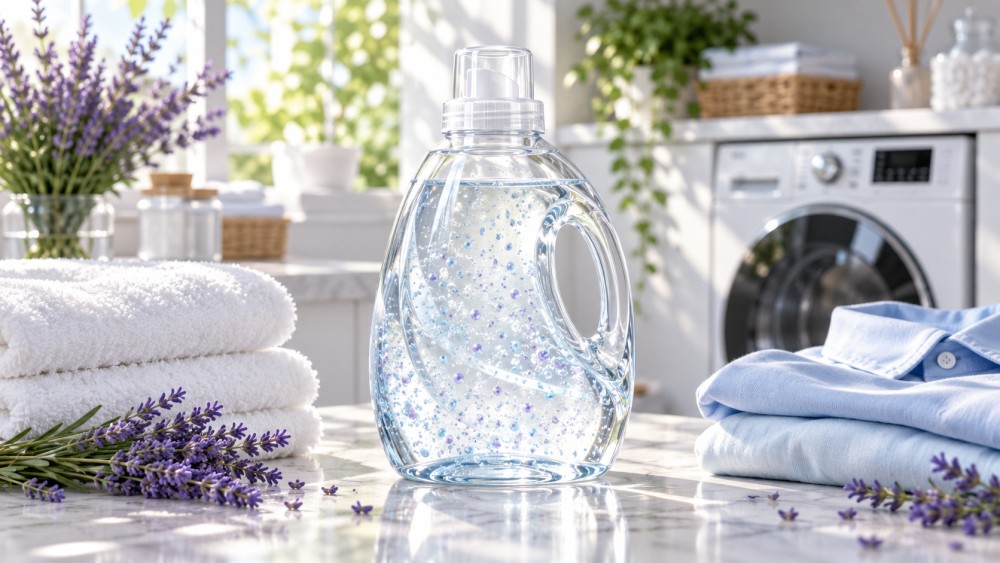
Consumers often judge liquid detergent performance before they can assess technical cleaning results. A clean, persistent fragrance can signal freshness, care, effectiveness, and premium product quality.
For product managers, scent longevity supports category differentiation where many detergent formulas deliver broadly similar cleaning performance. It can create a clearer reason for consumers to repurchase.
However, a powerful fragrance in the bottle does not automatically translate into long-lasting scent on dried garments. The wash process removes many volatile fragrance components.
A successful fragrance system must manage several sensory moments: opening the bottle, pouring, washing, drying, storing garments, and wearing fabrics after laundering.
Each moment may require a different balance of top notes, middle notes, base notes, hydrophobic ingredients, encapsulated materials, and deposition-supporting formulation components.
Premium positioning frequently depends on scent consistency. Consumers notice when fragrance intensity changes between production batches, storage periods, package formats, or detergent variants.
Long-lasting laundry fragrances for liquid detergents can also support line extension. Familiar scent signatures help brands connect detergents with fabric conditioners, home care products, and personal care ranges.
The objective is not maximum fragrance intensity at every point. The stronger business outcome is a controlled, pleasant, recognizable experience that meets expected value without causing sensory fatigue.
How Fragrance Composition Determines What Remains on Fabric
Fragrance longevity begins with ingredient selection. Highly volatile materials provide immediate freshness, but they evaporate quickly during washing, rinsing, drying, and subsequent fabric handling.
Top notes may create a bright first impression through citrus, green, fruity, marine, or aldehydic effects. They are valuable, but rarely sufficient for lasting fabric scent.
Middle notes build the product's identity and emotional character. Floral, clean, aromatic, herbal, and soft powdery elements often remain perceptible longer than highly volatile notes.
Base notes generally provide persistence. Musks, woody materials, amber-like ingredients, balsamic notes, and selected long-lasting aroma chemicals can support scent retention after laundering.
Ingredient substantivity is especially important. Substantive fragrance materials show greater affinity for textile fibers and may remain on fabrics after detergent solution and rinse water are removed.
Fragrance houses may design accords specifically for detergent applications rather than adapting fine-fragrance compositions. Laundry environments impose stronger constraints from surfactants, water, heat, and rinsing.
Product managers should request more than an attractive fragrance evaluation. They should ask suppliers for evidence on wash performance, dry-down behavior, fabric retention, and stability in the target base.
A balanced fragrance brief should specify desired intensity at each consumer touchpoint. This helps perfumers avoid overinvesting in opening impact when post-wash perception is the commercial priority.
Why the Liquid Detergent Base Can Strengthen or Weaken Fragrance Performance
The detergent matrix strongly affects how fragrance behaves before and during use. Fragrance oils must remain stable, visually acceptable, and evenly distributed throughout the product shelf life.
Liquid detergents commonly contain anionic, nonionic, amphoteric, or blended surfactants. These systems can solubilize fragrance materials, alter volatility, and influence their release during washing.
Excessive solubilization may improve bottle clarity while reducing fragrance deposition on fabric. The formulation challenge is finding adequate stability without making fragrance unavailable for textile transfer.
Surfactant type, concentration, electrolyte level, pH, solvents, hydrotropes, polymers, enzymes, preservatives, and optical brighteners can all affect fragrance compatibility and sensory results.
Clouding, separation, sedimentation, viscosity changes, discoloration, and fragrance loss are not merely technical issues. They can create consumer complaints and increase returns or reformulation costs.
Fragrance ingredients may also interact with packaging. Some materials can absorb into plastic, migrate through certain container systems, or change the perceived scent after prolonged storage.
Teams should test candidate fragrances in the actual commercial detergent base, not only in laboratory solvent systems. Results from simplified models often fail to predict retail performance.
Early compatibility screening reduces development risk. It identifies whether a preferred scent requires an adjusted solubilizer, fragrance dosage, polymer system, package choice, or manufacturing sequence.
When Encapsulation Technology Creates a Real Performance Advantage
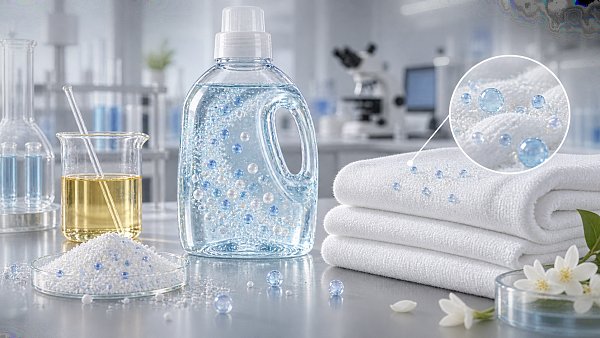
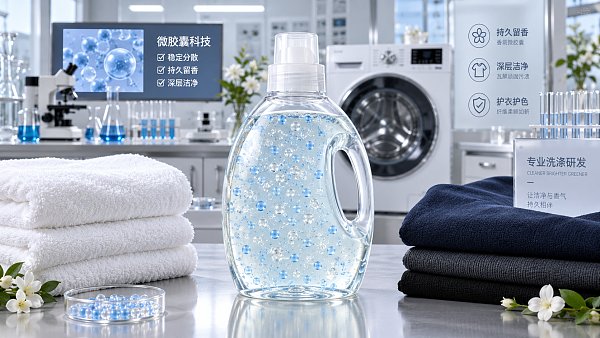
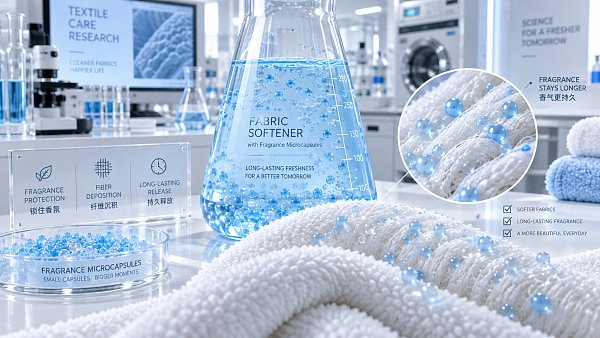
Encapsulation can improve scent longevity by protecting selected fragrance materials during storage and washing, then releasing them later through friction, moisture, heat, or fabric movement.
Microcapsules are widely used in premium laundry products because they can extend fragrance perception beyond the wash cycle. Their commercial value depends on reliable deposition and release.
Not every fragrance benefit requires encapsulation. A well-designed free fragrance system may deliver effective drying and storage scent at lower cost and with simpler processing requirements.
Encapsulation becomes more relevant when the product promise emphasizes all-day freshness, scent release during wear, closet freshness, or a differentiated long-lasting fragrance claim.
Product managers should assess capsule shell chemistry, particle size, loading level, dispersion stability, deposition behavior, release trigger, and compatibility with the detergent's surfactant system.
Capsules must survive manufacturing shear and maintain stable suspension during transport. Poorly managed systems can settle, rupture prematurely, agglomerate, or create inconsistent dose delivery.
Regulatory and environmental considerations are equally important. Material selection should account for market-specific requirements concerning polymer particles, biodegradability expectations, labeling, and wastewater concerns.
The best investment decision compares sensory improvement against cost per wash, production complexity, claims support, supply reliability, and the likelihood that target consumers will notice the benefit.
How Fabric Deposition and Wash Conditions Affect Consumer Experience
Fragrance retention is influenced by how much perfume reaches the textile surface. Deposition depends on fragrance hydrophobicity, polymer interactions, surfactant behavior, water hardness, and rinse conditions.
Cotton, polyester, blended fabrics, towels, sportswear, and delicate synthetics do not retain fragrance equally. A formula that performs well on cotton may differ on polyester-rich loads.
Polyester often retains hydrophobic fragrance materials effectively, while cotton can release fragrance differently as moisture changes. Product claims should reflect the fabrics common in target markets.
Water temperature also matters. Warmer cycles can increase fragrance volatility and soil removal, whereas cooler cycles may preserve some fragrance materials but alter cleaning and deposition dynamics.
Consumer dosage behavior creates another variable. Under-dosing may reduce fragrance delivery, while over-dosing can create excessive odor, residue concerns, and reduced rinse performance.
Front-loading and top-loading machines expose formulas to different dilution patterns, wash times, mechanical forces, and rinse volumes. Testing should represent the relevant appliance landscape.
Hard water minerals may change surfactant efficiency and deposition behavior. Regional product development should not assume that sensory performance transfers directly across different water conditions.
A meaningful performance program measures scent at controlled intervals: wet wash, line dry, machine dry, twenty-four hours, several days of storage, and fabric movement during simulated wear.
What Product Managers Should Ask Fragrance and Formulation Suppliers
Supplier discussions should start with the commercial objective, not simply a request for a stronger scent. Clear goals produce more useful fragrance recommendations and fewer development iterations.
Ask whether the fragrance was evaluated in a comparable liquid detergent system. Relevant evidence includes physical stability, color behavior, odor evolution, wash retention, and packaging compatibility.
Request information about recommended dosage ranges and the sensory difference between minimum, target, and maximum levels. This supports cost modeling and prevents unrealistic performance expectations.
For encapsulated systems, ask how capsules behave under manufacturing shear, storage, transport vibration, and temperature cycling. Stable laboratory samples are not enough for commercial validation.
Documentation should cover allergen-related requirements, regional chemical compliance, safety data, restricted substances, transport classification, and any sustainability or biodegradability claims associated with the material.
Supply continuity deserves early attention. A fragrance may be technically successful yet commercially risky if key raw materials have limited availability, volatile pricing, or long replenishment lead times.
Product teams should also understand intellectual property boundaries. Signature fragrances, encapsulation systems, and supplier-developed accords may involve exclusivity, use limitations, or customer-specific arrangements.
Finally, establish a shared sensory vocabulary. Terms such as fresh, clean, soft, premium, natural, and long-lasting can mean different things without defined consumer references and evaluation criteria.
How to Build a Practical Evaluation and Decision Framework
A disciplined evaluation process helps teams avoid choosing fragrance solely through bottle smelling. The preferred sample should perform across technical, sensory, commercial, and regulatory criteria.
Begin with a consumer-facing scent brief. Define target user, price tier, market, usage occasion, desired mood, scent intensity, competitive references, and expected duration after washing.
Next, screen fragrance candidates in the real detergent base under accelerated and ambient storage conditions. Monitor appearance, viscosity, pH, color, separation, and fragrance character over time.
Conduct controlled wash tests using representative fabrics, appliances, water conditions, load sizes, dosage levels, and drying methods. Repeat tests to identify batch-to-batch variability.
Use trained panel assessment alongside consumer validation. Expert panels can detect technical differences, while consumers reveal whether the difference is meaningful enough to influence product preference.
Financial evaluation should include fragrance cost per bottle, cost per wash, encapsulation cost, process adjustments, expected price premium, promotional support, and potential repeat-purchase effect.
Risk assessment should include stability failures, raw-material substitutions, regulatory change, package interaction, consumer sensitivity concerns, and claim substantiation requirements before market launch.
Document the final decision in a cross-functional scorecard. This gives procurement, R&D, quality, regulatory, marketing, and manufacturing teams a consistent basis for approval decisions.
Choosing the Right Scent Longevity Strategy
Long-lasting laundry fragrances for liquid detergents deliver value when they are designed as part of the full formulation system, rather than treated as an isolated perfume addition.
For value-tier products, a carefully selected substantive fragrance may provide sufficient performance. The focus should be clean dry-down, bottle stability, controlled cost, and reliable sensory consistency.
For mid-tier products, optimized surfactant compatibility and deposition-supporting technologies can improve post-wash perception without requiring a complex encapsulation platform or excessive fragrance loading.
For premium products, fragrance encapsulation may justify its cost when it creates a clearly perceptible benefit during wear, storage, and garment handling that consumers recognize and value.
The strongest product concepts connect scent performance with a credible consumer promise. Claims should be supported by test design that reflects real washing behavior and local market conditions.
Product managers should prioritize repeatable performance over dramatic initial impressions. A stable, recognizable fragrance experience protects brand trust more effectively than short-lived bottle intensity.
In practical terms, success comes from aligning fragrance composition, detergent base, deposition behavior, encapsulation choice, manufacturing controls, and regulatory readiness around a defined product position.
When those elements are evaluated together, fragrance becomes a measurable source of differentiation, supporting better consumer experience, clearer portfolio strategy, and more confident formulation investment decisions.