How Encapsulated Perfumes for Fabric Care Improve Scent Longevity
How Encapsulated Perfumes for Fabric Care Improve Scent Longevity
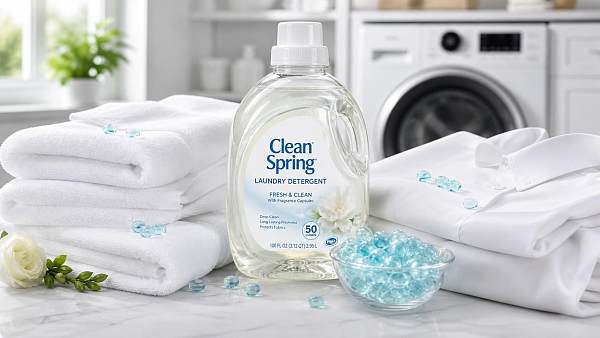
A fabric care fragrance has to survive a difficult journey. It may enter a detergent or softener concentrate, sit in a warehouse, pass through a wash cycle with surfactants and heat, rinse away with most of the liquor, and then compete with moisture, textile fibers, and ambient odors after drying. A pleasant perfume at the point of manufacture is therefore not the same thing as a fragrance that remains noticeable when a consumer opens a wardrobe, puts on a shirt, or rubs a towel several days later.
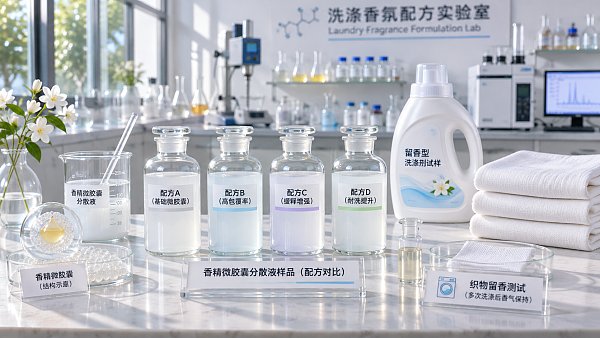
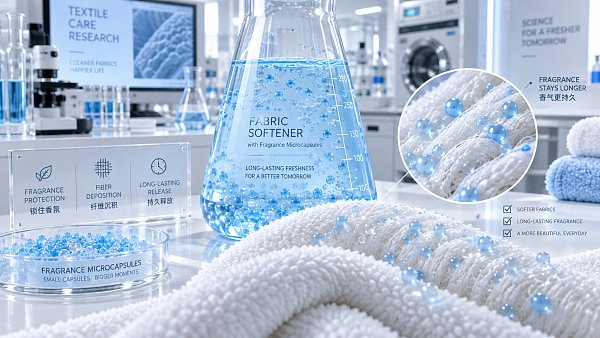
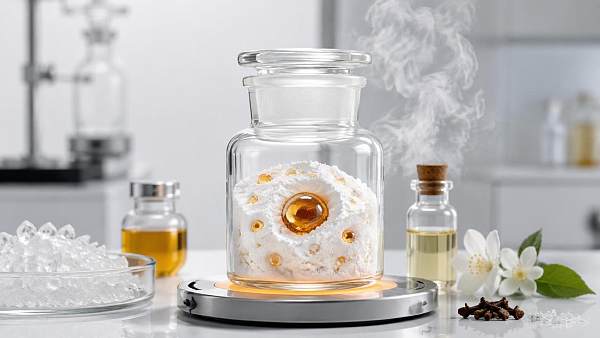
Encapsulated perfumes for fabric care address this gap by physically protecting part of the fragrance load and releasing it later through friction, moisture, pressure, heat, or gradual shell diffusion. The objective is not simply to make a product smell stronger. A well-designed encapsulated fragrance system helps maintain a recognizable scent profile across use stages: in the package, during washing, after line drying or tumble drying, and during wear.
For technical evaluation teams, the central question is more demanding: does the capsule deliver a controlled and repeatable sensory benefit without destabilizing the base formulation, impairing cleaning performance, creating unacceptable residue, or introducing compliance and supply-chain concerns? That question cannot be answered by capsule loading or a supplier fragrance strip alone.
Why conventional perfume fades so quickly
Most fragrance compositions contain volatile materials by design. Top notes create immediate impact, but they also evaporate rapidly. Even less volatile components can be lost through solubilization in surfactant micelles, exposure to oxidants, alkaline conditions, processing heat, or repeated contact with water. In heavy-duty detergents, the environment can be particularly unforgiving: high surfactant levels, builders, enzymes, polymers, and sometimes bleaching systems all affect how perfume ingredients partition, degrade, or deposit.
Fabric softeners often offer a more favorable deposition environment because cationic softening systems can deposit onto negatively charged textile surfaces. Yet even there, free perfume alone tends to give a strong “wet product” or “fresh from the wash” impression rather than a durable in-use experience. Consumers may interpret that decline as weak product quality, even when the cleaning or softening function is technically sound.
The practical value of encapsulation lies in separating protection from release. Aroma materials are held inside a shell or matrix during processing and washing, then made available later when fabrics are handled. This changes the time profile of fragrance perception. Rather than releasing most of the perfume in the first minutes after washing, the formulation retains a portion for later scent bursts.
What happens inside a fragrance capsule
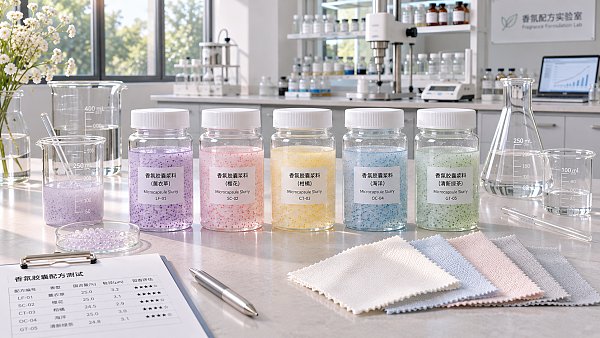
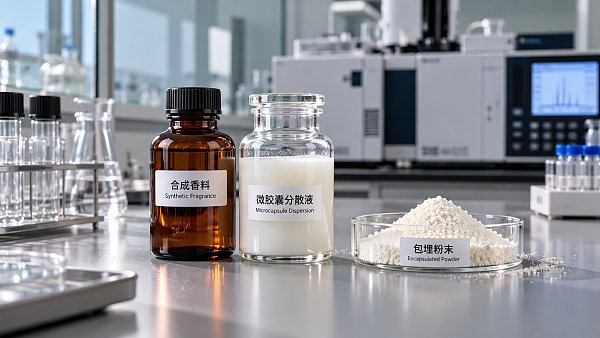
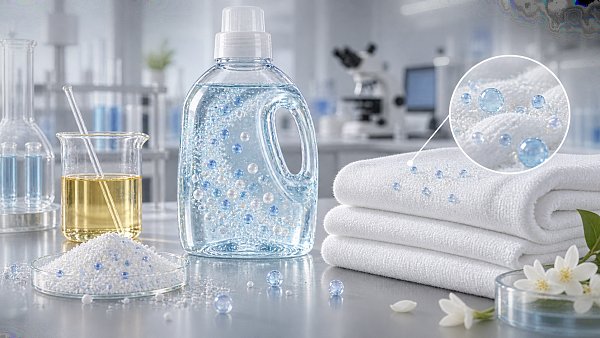
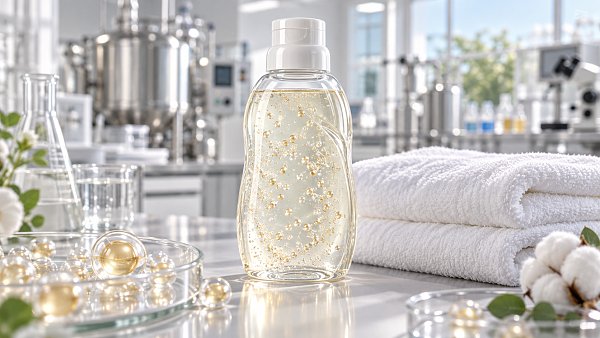
In a typical microencapsulated perfume system, a fragrance oil core is surrounded by a polymeric shell. The shell is engineered to survive the conditions it will encounter before use while remaining susceptible to an intended trigger. Depending on capsule design and the application, release can occur through shell rupture, gradual diffusion through the wall, abrasion during garment movement, compression during folding, or moisture-assisted changes at the fabric surface.
The mechanism sounds straightforward, but the trade-offs are real. A very robust shell may survive production and washing well, yet release too little fragrance during wear. A more fragile shell can provide an immediate sensory lift but may break during pumping, filling, transport, or product mixing. The best structure is rarely the strongest capsule in isolation; it is the capsule whose survival and release profile match the actual product format and use pattern.

Capsule size also matters, although there is no universal “best” particle size. It influences suspension behavior, visibility, deposition, sensory perception, filtration requirements, and the likelihood of breakage under shear. Larger particles can be more easily ruptured by friction, but may be more noticeable in certain transparent or low-viscosity products. Smaller particles may distribute more uniformly but can demand tighter control over shell integrity and analytical characterization.
The perfume itself is part of the delivery system, not merely the cargo. Highly volatile top notes may provide an attractive burst after rupture but contribute less to prolonged background scent. Less volatile ingredients can support persistence, while the oil’s polarity and interaction with the shell influence retention and leakage. Technical teams should evaluate the capsule and fragrance accord together. Switching the perfume oil late in development can materially change capsule performance.
Deposition on fibers is the point where performance is won or lost
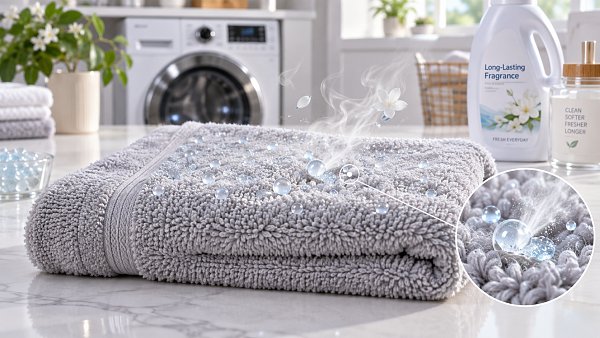
A capsule that remains intact in a bottle but rinses completely away is not delivering fabric benefit. For this reason, deposition behavior deserves at least as much attention as shell chemistry. In fabric softeners, the affinity of the delivery system for the softener matrix and for textile surfaces can support carryover into the rinse stage. In detergents, achieving meaningful deposition is usually more difficult because anionic surfactants and wash conditions may favor removal rather than retention.
Deposition polymers, cationic or otherwise substantivity-promoting materials, can be used to improve capsule attachment. Their suitability depends on the entire formula. A polymer that improves fragrance deposition may affect viscosity, phase stability, foam, rinsing, or compatibility with enzymes, optical brighteners, anti-redeposition agents, and preservatives. The correct technical question is not “does the polymer deposit capsules?” but “does the full system keep capsules suspended, stable, and available for deposition over its intended shelf life?”
Fabric type changes the answer as well. Cotton, polyester, blends, towels, sportswear, and delicate textiles present different surface properties and use conditions. A fragrance experience that performs convincingly on cotton terry may feel less persistent on low-surface-energy synthetic fabrics. Evaluations based on one fabric substrate can be useful for screening, but they should not be treated as a complete representation of household use.
Formulation compatibility is usually the hidden development risk
Encapsulated perfumes are particulate ingredients, so they must be handled differently from a free perfume oil. Excessive shear from certain mixing conditions, recirculation loops, high-pressure transfer, restrictive valves, or unsuitable pumps can damage capsules before the product reaches the consumer. This risk is often discovered too late, when a formula that looked acceptable at laboratory scale loses its long-lasting fragrance benefit after pilot or production processing.
pH, ionic strength, solvent content, surfactant selection, electrolyte level, preservative system, and storage temperature can all influence shell stability or capsule suspension. A low-viscosity product may permit sedimentation or creaming; a highly structured product may trap particles but create processing challenges. Freeze-thaw exposure and elevated-temperature storage are also worth assessing where regional distribution conditions make them plausible. These are not just routine stability checks. They help reveal whether the expected release profile is being altered before consumers use the product.
Packaging deserves similar attention. Compatibility testing should consider adsorption to plastic, capsule settling near dosing chambers, blockage risk in dispensing systems, and whether the consumer can reasonably redistribute a settled product by normal handling. For unit-dose laundry formats, capsule survival during film contact, moisture exposure, and compression requires separate consideration from a liquid softener or detergent.
How to evaluate scent longevity without relying on a single test
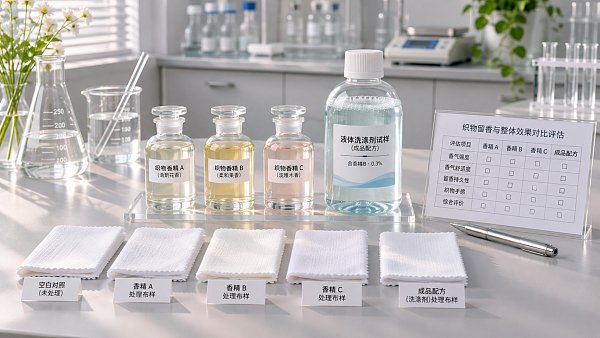
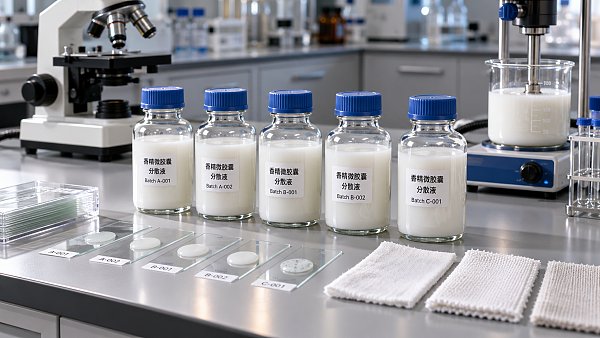
A useful evaluation program follows the product’s actual lifecycle. Start with the concentrate: check physical stability, odor change, capsule integrity, and particle distribution after relevant storage conditions. Then examine wash-stage behavior using representative water hardness, dosage, wash temperature, fabric load, and rinse conditions. Finally, assess dry fabric after controlled aging and after mechanical stimulation.
Sensory assessment remains essential because instrumental data cannot fully predict perceived fragrance quality. A panel can compare odor intensity and character immediately after drying, after storage, and after standardized rubbing or handling. The panel should distinguish between a strong initial perfume and a delayed release effect. If the scent becomes harsh, unbalanced, or too intermittent after rupture, the formula may technically release fragrance but still fail the intended consumer experience.
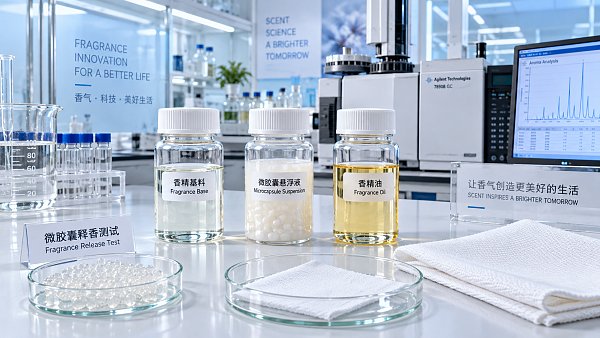
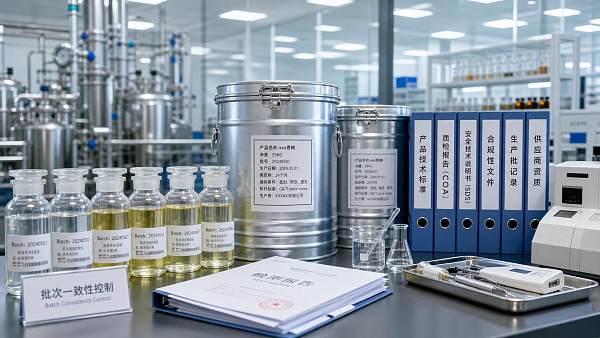
Analytical tools can complement sensory work. Depending on the development question, teams may use microscopy or particle-size methods to track capsule condition, and headspace or chromatographic approaches to monitor selected fragrance markers. These methods are valuable for comparison, troubleshooting, and batch consistency. They should not be used as a shortcut for real-use sensory validation, since headspace concentration and perceived odor are related but not identical.
Safety, documentation, and environmental review cannot be added at the end
Fragrance encapsulation is also a regulatory and stewardship issue. The fragrance mixture, shell materials, residual process components, impurities, and intended use level all need appropriate review for the markets in which the finished fabric care product will be sold. Fragrance safety frameworks, regional chemical requirements, labeling obligations, and restrictions on particular materials can change over time. Technical teams should verify the current requirements applicable to their product category rather than relying on outdated supplier declarations.
Environmental assessment has become more prominent, particularly for polymer-containing delivery technologies. It is not enough to describe a system as “encapsulated” or “biodegradable” without understanding the basis for that claim, the relevant test context, and local regulatory definitions. Buyers should request clear information on composition boundaries, intended environmental profile, safety documentation, and handling recommendations. Where proprietary details limit disclosure, the supplier should still provide enough technical and regulatory evidence to support a defensible internal assessment.
This is one reason platforms such as the Global Fine Chemicals & Agrochemical Intelligence Network (FCAS) are useful beyond simple ingredient discovery. In fragrances, surfactants, and formulation additives, the commercial decision is rarely based on a single specification. Application behavior, documentation readiness, transport conditions, packaging, batch consistency, and the ability to support technical troubleshooting all affect whether a material is viable at scale.
A better specification starts with the desired consumer moment
When selecting encapsulated perfumes for fabric care, begin with the moment the scent is supposed to matter. Is the desired effect a noticeable burst while folding laundry, a subtle background scent in stored garments, or release during movement and wear? Those objectives lead to different choices in perfume composition, shell robustness, deposition strategy, and test design.
A technically credible brief should define the base product, expected manufacturing shear, wash conditions, target fabrics, fragrance character, storage expectations, and relevant market documentation needs. It should also state what failure looks like: sedimentation, loss of sensory effect after storage, visible residue, weak deposition, excessive burst release, or incompatibility with the detergent system. That level of clarity makes supplier discussions more productive and prevents teams from selecting a capsule solely because it performs well in a generic demonstration.
Long-lasting scent is not created by encapsulation alone. It comes from the interaction of perfume design, shell technology, process control, fabric deposition, real-use release, and responsible material selection. The strongest development programs treat those elements as one system—and test the system under conditions close enough to reality to expose its compromises before launch.
Facing technical bottlenecks in manufacturing or looking for more efficient industrial solutions? Leave your details below and let the engineering experts at FCAS solve them for you.
We respect your privacy. Your information is strictly confidential.
Related News
 Microencapsulated FragrancesHow Can Citrus Terpene Fragrances Stay Fresh in Formulations?Keep citrus terpene fragrances fresh for longer. Explore practical formulation, packaging, and testing strategies to protect their vibrant scent.MORE+
 Microencapsulated FragrancesHow Fragrance Encapsulation Systems for Detergents WorkDiscover how fragrance encapsulation systems for detergents protect perfume, deposit on fabric, and release scent—and learn how to choose the right system.MORE+
 Microencapsulated FragrancesHow to Choose a Reliable Fragrance Carriers SupplierChoose a reliable fragrance carriers supplier with confidence. Compare formulation fit, quality controls, documentation, supply risks, and total cost.MORE+
 Microencapsulated FragrancesHow Can Microencapsulation Help Essential Oil Blends Last Longer?Essential Oil Blends can retain their aroma longer with the right microencapsulation strategy. Explore carrier choices, release mechanisms, and stability testing.MORE+
 Microencapsulated FragrancesHow to Choose a Fragrance Capsules Manufacturer for Your ProductChoose the right fragrance capsules manufacturer with practical tips on formulation testing, quality specifications, compliance, and supply reliability.MORE+
 Microencapsulated FragrancesHow to Choose Fragrance Bases for Consistent Product ScentFragrance Bases can make or break scent consistency. Learn how to compare performance, stability, supplier controls and true cost before you buy.MORE+
 Microencapsulated FragrancesHow to Choose an Encapsulated Perfumes ManufacturerChoose an encapsulated perfumes manufacturer with confidence. Compare fragrance performance, true costs, quality, compliance, and supply reliability.MORE+
 Microencapsulated FragrancesHow to Choose a Fabric Fragrances ManufacturerChoose a fabric fragrances manufacturer with confidence. Learn how to compare scent performance, quality controls, documentation, costs, and supply reliability.MORE+
 Microencapsulated FragrancesHow to Keep Encapsulated Perfumes for Fabric Care Fresh LongerKeep encapsulated perfumes for fabric care fresh longer with practical storage, handling, formulation and testing tips that help preserve lasting fragrance.MORE+
 Microencapsulated FragrancesHow to Choose Home Fragrances for Room Sprays That LastDiscover how to choose home fragrances for room sprays that last, with practical tips on scent longevity, formula compatibility, and testing.MORE+
 Microencapsulated FragrancesHow to Choose Bulk Cyclodextrins for Fragrance EncapsulationChoose bulk cyclodextrins for fragrance encapsulation with confidence. Compare formulation fit, scent retention, supplier quality, and total cost.MORE+
 Microencapsulated FragrancesHow to Choose Stable Synthetic Aroma Chemicals for EncapsulationChoose stable synthetic aroma chemicals for encapsulation with confidence. Learn how to assess compatibility, verify supplier quality, and protect aroma through storage and release.MORE+
 Microencapsulated FragrancesHow Do You Evaluate a Fragrance Encapsulation Systems Manufacturer?Evaluate a fragrance encapsulation systems manufacturer for compatibility, scent retention, quality, and compliance. Discover key checks to reduce risk and choose the right supplier.MORE+
 Microencapsulated FragrancesHow Does Microencapsulation Affect the Release of Fine Fragrances?Fine Fragrances meet controlled release: discover how microencapsulation shapes scent longevity, aroma balance, and performance—and what to test before choosing a system.MORE+
 Microencapsulated FragrancesHow Do Fragrance Bases Affect Scent Release After Encapsulation?Discover how Fragrance Bases shape scent release after encapsulation. Explore volatility, shell compatibility, and testing strategies to improve lasting aroma and product performance.MORE+
 Microencapsulated FragrancesHow Microencapsulation Helps Personal Care Fragrances Last LongerPersonal Care Fragrances can last longer with microencapsulation. Discover how controlled release, formula compatibility, and testing help deliver a lasting scent experience.MORE+
 Microencapsulated FragrancesHow to Select Air Freshener Fragrances That Last in Car FreshenersDiscover how to select air freshener fragrances for car fresheners with lasting appeal, balancing scent performance, carrier compatibility, heat stability, and packaging.MORE+
 Microencapsulated FragrancesHow Encapsulated Perfumes for Fabric Care Improve Scent LongevityEncapsulated perfumes for fabric care extend scent longevity through controlled release, fiber deposition, and smarter formulation—discover how to create lasting fragrance experiences.MORE+
 Microencapsulated FragrancesHow Fragrance Carriers for Detergents Improve Scent PerformanceFragrance carriers for detergents improve stability, fabric deposition, and long-lasting scent. Explore practical solutions for better wash-to-wear fragrance performance.MORE+
 Microencapsulated FragrancesHow to Add Encapsulated Laundry Fragrances Without Weakening Wash ResultsEncapsulated laundry fragrances: learn how to boost long-lasting scent while protecting cleaning power, stability, foam control, and fabric care.MORE+
 Microencapsulated FragrancesHow Laundry Fragrances for Liquid Detergents Improve Scent LongevityLaundry fragrances for liquid detergents: discover how fragrance design, deposition, and encapsulation create lasting fabric freshness and stronger product appeal.MORE+
 Microencapsulated FragrancesHow Fragrance Delivery Systems Improve Fabric Softener LongevityFragrance delivery systems for fabric softeners improve scent longevity through smart protection, reliable deposition, and controlled release for lasting freshness.MORE+
 Microencapsulated FragrancesEssential Oil Extracts Compared for Fragrance and Wellness UsesEssential Oil Extracts compared for fragrance and wellness: explore scent profiles, extraction methods, stability, safety, and sourcing insights for smarter formulation choices.MORE+
 Microencapsulated FragrancesHow Aroma Chemicals Shape Lasting Fine Fragrance PerformanceAroma chemicals for fine fragrance enhance longevity, diffusion, and signature retention. Discover how smart material selection creates stable, premium scent performance.MORE+
 Microencapsulated FragrancesHow Encapsulated Laundry Fragrances Improve Scent LongevityEncapsulated laundry fragrances deliver controlled scent release for longer-lasting freshness on fabrics. Discover how they improve deposition, durability, and re-bloom.MORE+
 Microencapsulated FragrancesHow to Select Perfume Ingredients for Long-Lasting FragrancePerfume Ingredients guide: learn how to select balanced, long-lasting fragrance materials for fine fragrance, personal care, laundry, and home care products.MORE+
 Microencapsulated FragrancesHow Fragrance Encapsulates Extend Scent Performance in Household ProductsFragrance encapsulates for household products deliver longer-lasting scent in laundry, fabric care, and cleaners. Discover release triggers, formula compatibility, and practical selection tips.MORE+
 Microencapsulated FragrancesWater Soluble Air Freshener Fragrances That Prevent CloudinessWater soluble air freshener fragrances: learn how to prevent cloudiness with smarter fragrance selection, solubilizers, water quality, and stability testing.MORE+
 Microencapsulated FragrancesHow Cyclodextrin Inclusion Complexes for Fragrances Improve Scent LongevityCyclodextrin inclusion complexes for fragrances enhance scent longevity through controlled release, improved stability, and application-specific performance. Discover how to optimize lasting aroma.MORE+
 Microencapsulated FragrancesHow Microencapsulated Fragrance Systems Improve Long-Lasting ScentMicroencapsulated fragrance systems protect scent, control release triggers, and deliver longer-lasting fragrance across laundry, personal care, and cleaning products.MORE+
 Microencapsulated FragrancesHow Aroma Chemicals Shape Consistent Fragrance PerformanceAroma Chemicals shape fragrance stability, diffusion, solubility, and lasting sensory appeal. Explore practical strategies for reliable performance across product formulas.MORE+
 Microencapsulated FragrancesWhat to Look for in a Scratch and Sniff Fragrances ManufacturerScratch and sniff fragrances manufacturer guide: evaluate encapsulation, print compatibility, compliance documents, quality control, and total sourcing cost for reliable sensory campaigns.MORE+
 Microencapsulated FragrancesWhat a Reliable Perfume Compounds Manufacturer Should Offer in 2026Perfume compounds manufacturer selection in 2026 demands more than scent creativity. Learn how to assess consistency, compliance, scalability, and supply reliability before you buy.MORE+
 Microencapsulated FragrancesHow Fragrance Capsules for Detergents Improve Scent LongevityFragrance capsules for detergents help protect perfume during washing and release scent gradually, keeping clothes fresher longer. Learn how they work and why they’re worth choosing.MORE+
 Microencapsulated FragrancesWhy Terpene Fragrances Supplier Options Matter in Premium Scent DevelopmentTerpene fragrances supplier selection shapes premium scent quality, stability, compliance, and scale. Discover how to choose the right partner for safer, more consistent fragrance development.MORE+