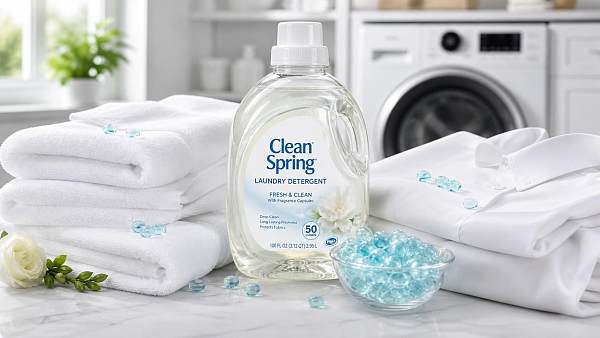
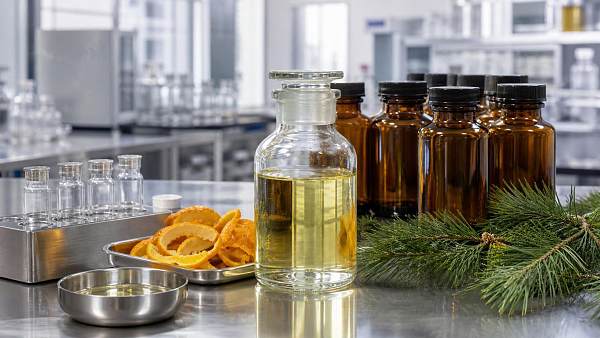
Microencapsulation can extend fragrance perception, but longer-lasting scent does not automatically mean faithful olfactory performance. For technical evaluators, release timing and aroma balance matter equally.
Capsule design changes how fragrance reaches the air: through gradual diffusion, mechanical rupture, or other application-dependent triggers. Each route creates different intensity and persistence profiles.
Shell chemistry, particle size, fragrance–wall interactions, and formulation conditions determine whether encapsulation protects the intended composition or selectively delays particular ingredients enough to change its character.
The practical decision is whether an encapsulated system delivers the desired scent, at the required moment, after realistic storage and use, without compromising product compatibility.
How Do Capsules Change Fragrance Release?

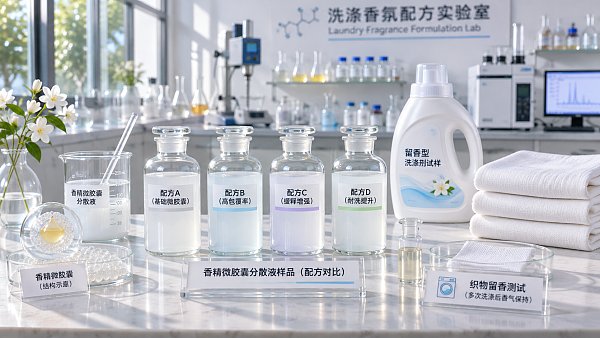
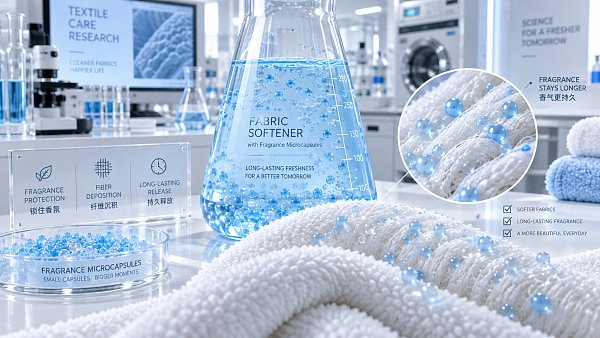
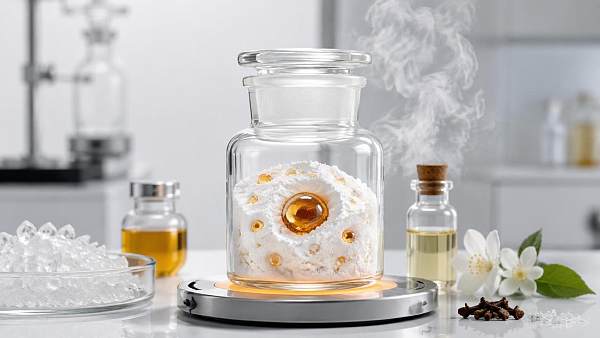
Microencapsulation places fragrance inside a surrounding wall or within a protective matrix. Reservoir capsules and matrix particles can behave differently, even when their ingredient lists appear similar.
In reservoir systems, fragrance molecules may partition into the shell and diffuse outward. Release depends on wall permeability, shell thickness, concentration gradients, and surrounding conditions.
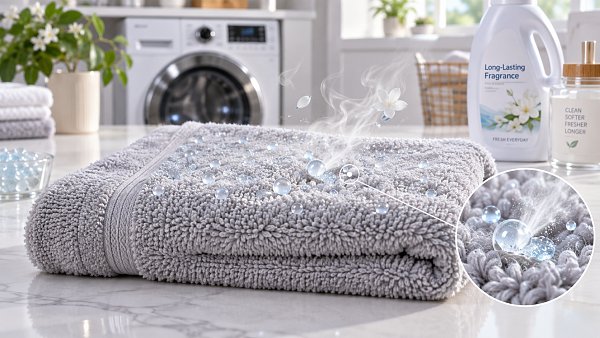
Mechanical rupture creates another release pathway. Rubbing, pressure, or abrasion can break susceptible capsules, exposing fragrance that subsequently evaporates according to its composition and environment.
Some systems respond to moisture, temperature, or changes in the surrounding medium. These responses require specific material designs; they should never be assumed from “microencapsulated” labeling alone.
Most commercial systems show overlapping behaviors: limited leakage during storage, some passive diffusion during use, and additional release when sufficient mechanical force reaches deposited capsules.
Consequently, encapsulation can delay initial evaporation, preserve a fragrance reservoir, or produce intermittent scent bursts. It does not automatically provide a constant release rate.
For fine fragrances, evaluators should distinguish three outcomes: fragrance retained inside capsules, fragrance released into the environment, and fragrance actually perceived by a human assessor.
High retention indicates reservoir preservation, but it cannot establish sensory performance. A capsule that never releases under intended conditions may protect fragrance while contributing little perceptible value.
Will the Released Scent Still Match the Original Fragrance?
A fine fragrance contains ingredients with different vapor pressures, polarities, molecular sizes, and odor thresholds. Encapsulation can change their relative release rates and perceived balance.
Ingredients partition differently between the fragrance core, capsule wall, and external formulation. Selective migration can alter both the remaining encapsulated fragrance and the surrounding product.
Highly volatile top notes may benefit from reduced early loss, yet strong retention can also suppress the opening impression that makes the composition recognizable initially.
Less volatile ingredients may persist after release, but their behavior depends on shell affinity, substrate binding, and the surrounding solvent system, alongside their inherent volatility.
Mechanical rupture can release a concentrated mixture, although the airborne composition still evolves through evaporation. Releasing the core together does not guarantee an unchanged sensory profile.
Evaluate recognizable character, note balance, intensity, and off-notes separately. A stronger scent score can conceal reduced freshness, excessive sweetness, or loss of a defining accord.
Compare encapsulated and unencapsulated versions over time using both sensory assessment and chemical analysis. Neither a single panel score nor total fragrance recovery establishes fidelity.
Which Capsule Properties Control the Release Profile?
Shell chemistry controls permeability, mechanical behavior, and compatibility with fragrance ingredients. Polymer family names alone provide insufficient information about crosslinking, wall structure, or actual performance.
A less permeable shell may improve storage retention while reducing passive scent expression. Greater mechanical strength can protect capsules during processing but increase the force needed for activation.
Wall thickness affects diffusion distance and rupture behavior, but it interacts with capsule diameter, wall defects, and material properties. Thickness should not be evaluated in isolation.
Smaller capsules generally have greater surface area relative to their contents. However, leakage cannot be predicted from size alone without considering shell structure and thickness.
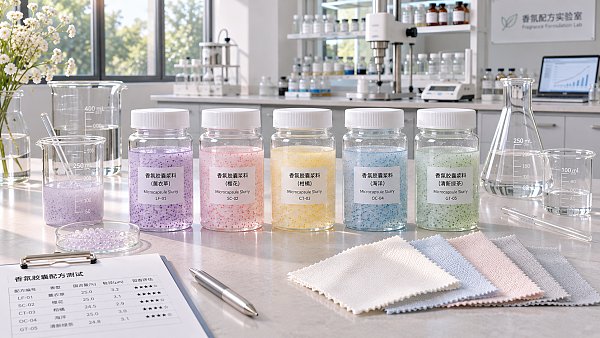
Particle size distribution also influences appearance, sprayability, deposition, and tactile feel. A broad distribution may produce inconsistent activation or leave an unacceptable coarse particle fraction.
Fragrance loading determines how much oil a capsule system carries. Distinguish loading within the particles from fragrance concentration in the commercial slurry and finished product.
For purchasing comparisons, request capsule solids, encapsulated fragrance content, free fragrance content, and measurement methods. Equal slurry dosage rarely guarantees equal delivery of fragrance oil.
Does the System Fit the Intended Fine Fragrance Application?
Evidence from fabric conditioners or laundry products does not establish suitability for alcoholic perfume. Solvent composition, application method, deposition, and consumer expectations differ substantially between categories.
In hydroalcoholic fine fragrances, ethanol may alter shell swelling, ingredient partitioning, or leakage. Compatibility depends on the specific capsule chemistry and the complete solvent mixture.
Capsule dispersions can also affect clarity, sedimentation, spray pattern, and nozzle reliability. These properties may determine feasibility before any improvement in scent longevity becomes commercially relevant.
For creams, lotions, or other opaque products, visual constraints may be less restrictive. However, emulsifiers, oils, preservatives, and rheology modifiers can still change capsule stability.
Deposition matters because capsules must remain where activation occurs. High fragrance retention in the container offers limited benefit if most capsules fail to reach the intended substrate.
On skin, friction, skin lipids, moisture, and application density influence release. On textiles, fiber composition, surface treatments, handling, and laundering can produce different performance patterns.
Test capsules in the complete formulation and intended packaging. Results from water dispersions or laboratory films should support screening, rather than substitute for application validation.
Which Tests Demonstrate Useful Release Performance?
A useful test program separates storage protection, application survival, passive release, triggered release, and sensory quality. Combining everything into one longevity claim obscures the mechanism.
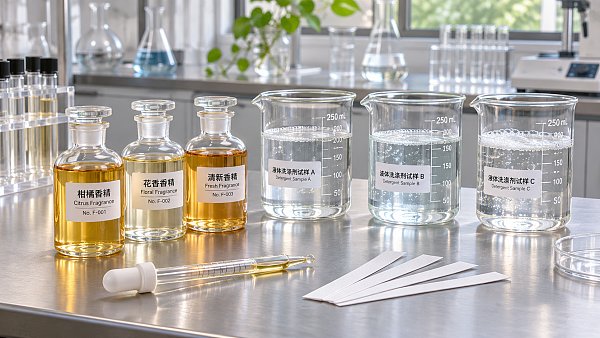
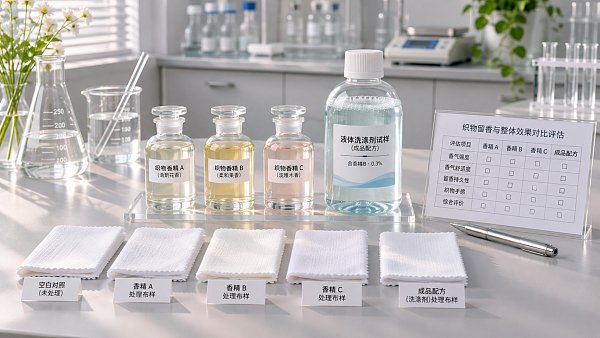
Start with an unencapsulated reference and an encapsulated version containing matched total fragrance oil. Report any free fragrance added alongside capsules because it affects initial intensity.
Where possible, include a blank capsule control to identify odor, texture, or appearance effects from the carrier system. Keep application quantity and substrate preparation consistent.
The following measurements answer different technical questions. Select methods around the intended product claim, then define acceptance criteria before comparing suppliers or adjusting capsule dosage.
Measure before activation and immediately afterward, then follow the subsequent decay. A brief intensity spike may be useful, but it does not establish sustained release.
Control temperature, humidity, airflow, application amount, and assessment timing. These variables influence evaporation and perception sufficiently to obscure differences between capsule designs during comparative testing.
Use independent replicates and report variability. If differences fall within method or panel variability, treat supplier rankings as inconclusive until further evidence resolves the uncertainty.
How Should Stability and Manufacturing Be Evaluated?
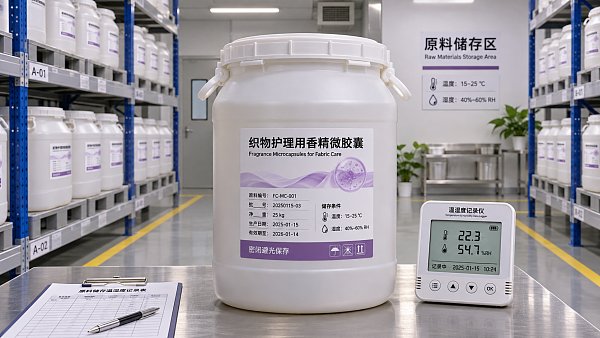
Evaluate realistic storage conditions alongside justified accelerated conditions. Elevated temperature can reveal vulnerabilities, but it may also change release mechanisms and cannot automatically predict shelf life.
Track leakage, fragrance composition, odor character, particle distribution, viscosity, phase separation, and package performance. A visually stable formulation can still lose important fragrance components over time.
Manufacturing shear may damage capsules before filling. Assess mixing sequence, agitation intensity, transfer pumps, filtration, and filling equipment using conditions representative of the proposed production process.
Sampling before and after critical operations helps locate damage. Microscopy can reveal structural changes, while free fragrance measurements show whether those changes correspond to core leakage.
Packaging adds another exposure pathway through ingredient sorption, permeation, and dispensing stress. Evaluate the final pack because bulk formulation stability cannot establish compatibility with every component.
Repeat release and sensory testing after aging. Fresh-product performance has limited decision value if stored capsules activate differently or the fragrance develops an altered character.
What Should Technical Evaluators Request From Suppliers?
Request documentation that connects material specifications to application performance: shell identity, particle distribution, fragrance loading, carrier composition, recommended processing limits, and evidence from relevant formulation conditions.
Ask suppliers to define claimed longevity explicitly. Duration on a test strip, retention inside capsules, and consumer perception after rubbing describe different endpoints and require different evidence.
Review residual monomers, impurities, sensitization information, and applicable fragrance restrictions. Encapsulation does not by itself establish lower exposure, reduced allergenicity, or suitability for leave-on use.
Confirm the regulatory status of the capsule material for the intended market and application. Relevant environmental obligations can depend on polymer characteristics, particle form, and jurisdiction.
Biodegradability claims need identified test methods and conditions. Bio-based content, water solubility, and biodegradation describe different properties and should not be treated as interchangeable evidence.
Compare cost at the dose that achieves the target sensory result after aging. Price per kilogram of slurry does not capture active loading, processing losses, or performance variability.
When Is Microencapsulation the Right Choice?
Microencapsulation is valuable when a protected fragrance reservoir and a relevant release trigger improve the intended experience. Its benefits depend on the complete delivery system.
For immediate scent expression, passive diffusion must provide sufficient intensity. For later reactivation, capsules must survive preparation and deposition, then release under realistic user contact.
For technical evaluators, selection should rest on three demonstrated outcomes: acceptable fragrance identity, reliable release after storage, and compatibility with the finished formulation and packaging.
A system deserves further development when it improves the desired scent experience at an acceptable dose and cost. Longer retention alone is insufficient evidence of success.