What to Consider When Developing Flavor Bases for Food Applications
Start With the Application, Not the Flavor List
For project leaders, the central question is not simply whether a flavor smells appealing in a sample bottle. It is whether it performs reliably in the intended food system.
Can flavor bases be customized for specific food applications? Absolutely. However, a flavor base designed for a carbonated beverage may fail completely in bakery, dairy, sauces, or snacks.
Every food category creates its own technical environment. Water activity, fat content, sugar level, acidity, salt, protein, heating conditions, packaging, and shelf-life expectations all influence perception.
A project brief should therefore define the finished product before the flavor house begins selecting compounds, extracts, carriers, masking materials, or delivery technologies.
Project managers should request a clear product profile covering flavor direction, target consumer, serving format, processing route, nutritional positioning, geographic market, and expected shelf life.
A statement such as “create a stronger strawberry flavor” is too broad for efficient development. It does not define whether freshness, sweetness, jamminess, creaminess, or cooked notes matter most.
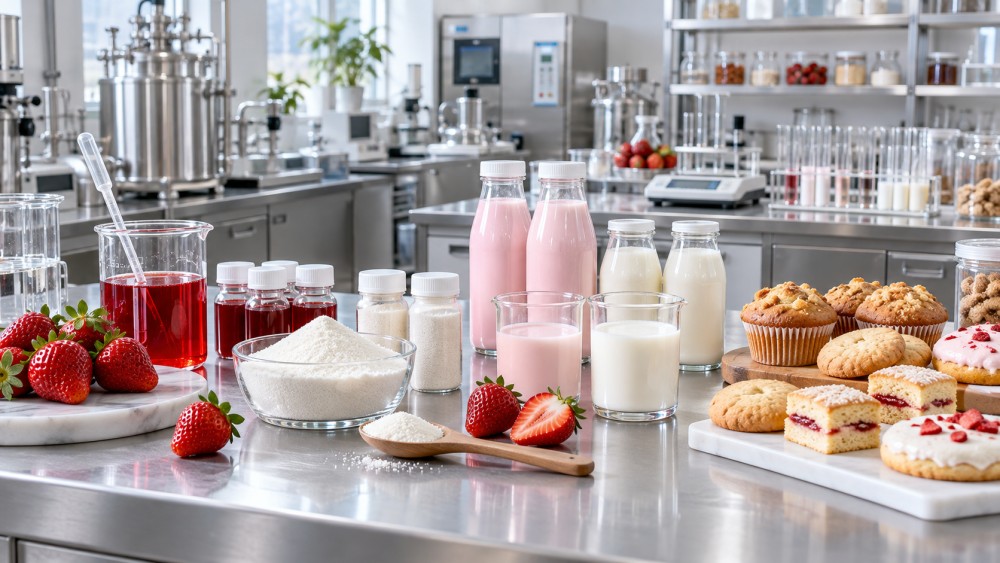
Better briefs describe a commercial objective. For example, a dairy beverage may need a natural-tasting strawberry profile that survives pasteurization and masks protein-related off-notes.
That level of specificity helps technical teams choose appropriate raw materials and reduces late-stage reformulation caused by misunderstandings between marketing, formulation, procurement, and production teams.
Translate Sensory Goals Into Measurable Development Criteria
Flavor development becomes easier to manage when sensory language is converted into decision criteria. Project leaders should distinguish between aroma, taste impact, mouthfeel associations, and aftertaste.
A flavor base can have an excellent top note during opening but lack body after dilution. Another may taste full initially yet leave an undesirable chemical or bitter finish.
Define which sensory attributes are essential, desirable, and unacceptable. This creates a practical evaluation framework instead of allowing feedback to depend only on personal preferences.
For beverages, top-note freshness and immediate aroma release may be critical. For baked goods, warm character, retention after heating, and lingering flavor can carry greater value.
Dairy applications often require balance between fruity or vanilla notes and the richness of milk fat. Protein beverages may additionally need masking against chalky, bitter, or metallic notes.
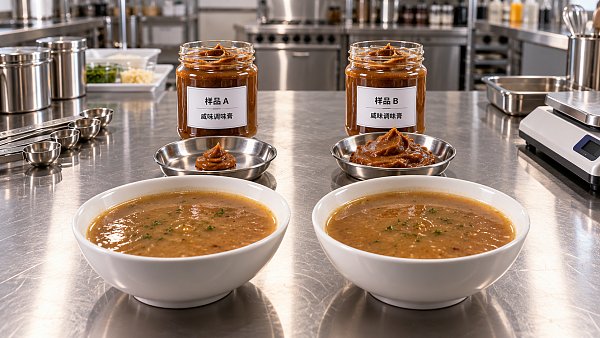
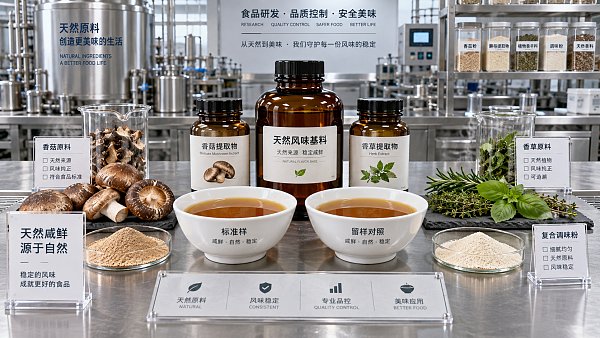
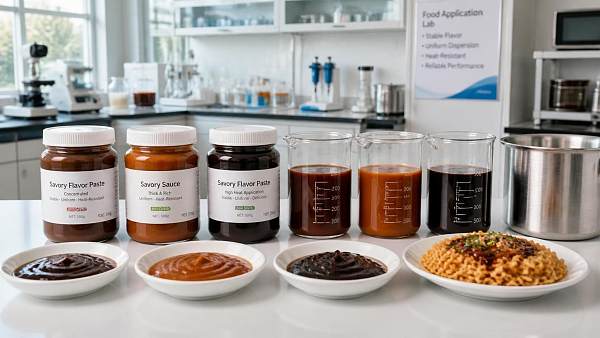
Savory products require another approach. Sauces, soups, seasonings, and plant-based foods may need flavor bases that build cooked character, roundness, umami perception, or roasted depth.
Use trained panels when the project has meaningful commercial risk. Internal teams can screen early options, but structured sensory evaluation improves comparability before a formula reaches customer testing.
Projects should also assess flavor performance at realistic use levels. A flavor that seems impressive at a high concentration may become weak, unbalanced, or cost-prohibitive in production.
Test Compatibility With the Complete Formula
Flavor bases do not operate independently. Their behavior changes when exposed to sweeteners, acids, fats, proteins, salts, hydrocolloids, preservatives, colors, and functional ingredients.
Compatibility testing should begin early, especially where the finished formulation contains plant proteins, high-intensity sweeteners, mineral fortification, caffeine, botanical extracts, or active nutrition ingredients.
Protein systems can bind volatile compounds and reduce aroma release. Fat systems can retain lipophilic flavor components, changing both intensity and the timing of flavor perception.
Acidification may brighten certain fruit profiles, but it can also change stability. Low-pH beverages need flavor systems that remain consistent without producing unexpected chemical notes.
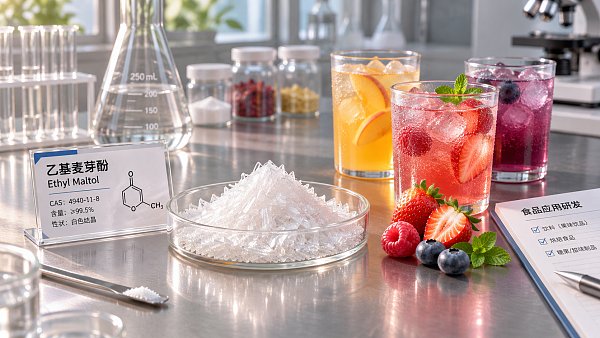
Sweetener selection matters considerably. Sugar, stevia, sucralose, erythritol, monk fruit, and blended systems create different sweetness curves and may require different masking strategies.
Salt can suppress bitterness in savory foods, yet it may also amplify particular aroma impressions. A flavor base should be evaluated within the final sodium-reduction strategy.
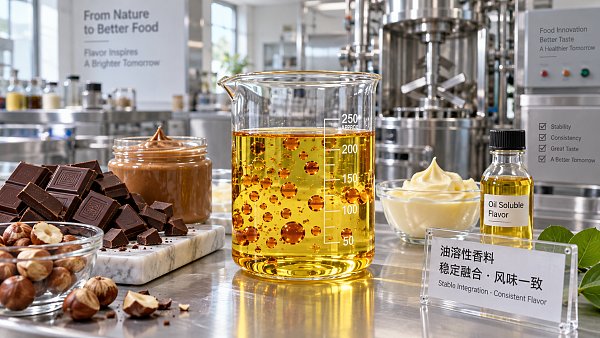
Emulsions create additional technical questions. Oil-soluble materials need appropriate dispersion, while clouding agents, emulsifiers, and homogenization conditions can influence sensory release and visual appearance.
Packaging components also deserve attention. Some volatile flavor materials can migrate into plastics, closures, or liners, reducing impact and potentially changing the product profile over time.
Match the Flavor Base to Processing Stress
Processing conditions are often where promising flavor concepts become commercial failures. Heat, pressure, oxygen exposure, shear, drying, freezing, and holding time can alter volatile ingredients.
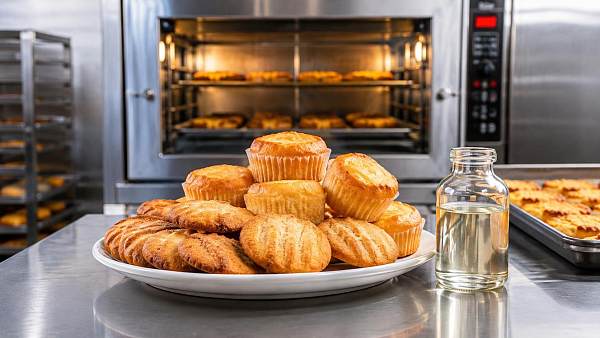
Bakery applications expose flavors to high temperatures and extended heating. A delicate citrus top note may disappear, while certain cooked or caramelized notes can become overly dominant.
Flavor systems for bakery may require heat-stable compositions, encapsulation, or a deliberate balance of top, middle, and base notes that develops after baking rather than before.
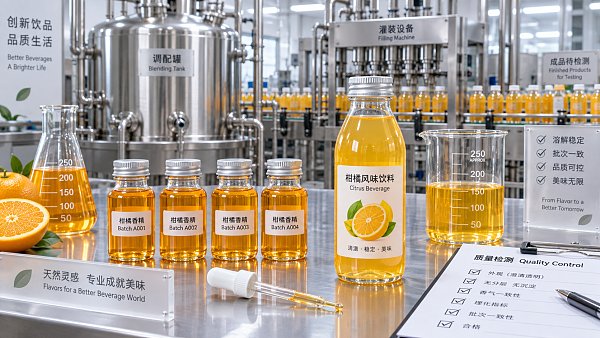
Beverage projects require attention to pasteurization, hot filling, aseptic processing, carbonation, and dilution. Each condition can affect flavor intensity, aroma release, and ingredient stability.
In dairy, ultra-high-temperature processing can flatten fruit notes or create cooked milk interactions. Pilot-scale validation is therefore more useful than relying solely on bench-top evaluations.
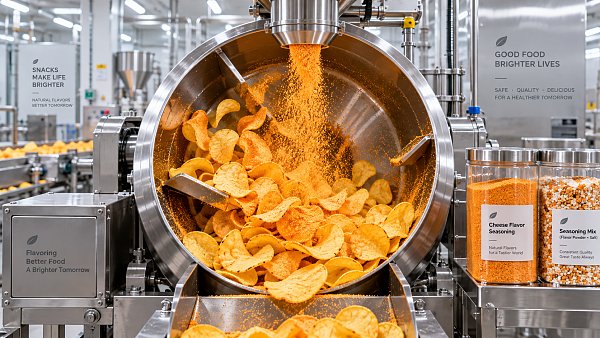
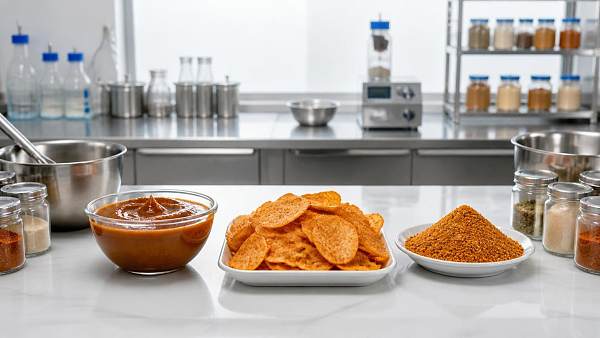
Extruded snacks create severe thermal and mechanical stress. Powder flavor systems may need to be applied after extrusion, while seasoning adhesion and carrier selection become important variables.
Frozen products bring different risks. Low temperatures can mute flavor perception, making a formula that tastes balanced at room temperature seem weak when served frozen.
Project teams should document the actual manufacturing sequence, including heating profiles, mixing order, hold times, filling temperature, and cleaning procedures before approving a flavor base.
Choose Delivery Format and Carrier With Production in Mind
The physical form of a flavor base affects manufacturing efficiency, handling safety, dosage precision, stability, transportation, and total formulation cost. It should be selected deliberately.
Liquid flavors are often convenient for beverages, dairy products, sauces, and wet mixes. They can disperse quickly, but solvent choice and storage conditions require careful consideration.
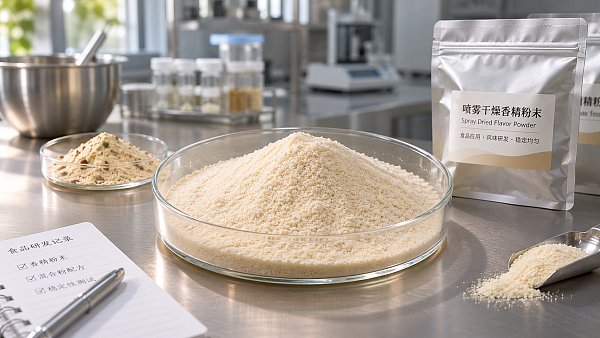
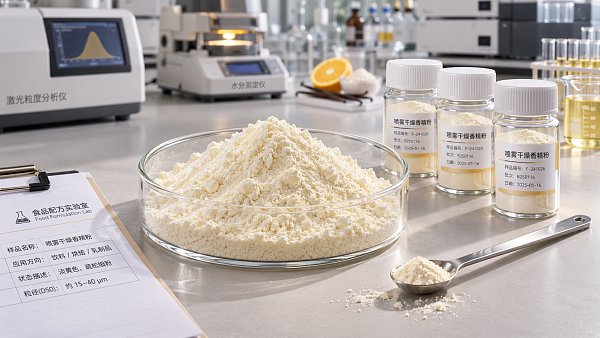
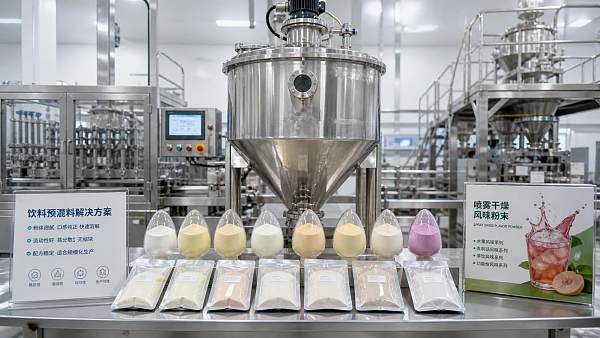
Powder flavors are useful in dry mixes, seasonings, bakery premixes, snack coatings, and instant beverages. Their flowability, dusting behavior, and moisture sensitivity must be evaluated.
Encapsulated flavors can protect sensitive volatile compounds during storage or processing. They may also provide controlled release, but their cost and release profile should fit the application.
Carrier materials influence both technical performance and labeling. Maltodextrin, gum systems, starches, oils, propylene glycol, ethanol, and other carriers have different regulatory and sensory implications.
For clean-label projects, carrier choices can be commercially significant. A technically effective solution may be unsuitable if it conflicts with retailer policies or consumer-facing label objectives.
Production teams should assess dosing equipment capability. A highly viscous liquid, a hygroscopic powder, or a low-dose potent flavor may require special controls to maintain batch consistency.
Packaging must protect the selected delivery format from oxygen, moisture, light, and temperature variation. A stable flavor base can still fail when stored in unsuitable containers.
Build Regulatory, Labeling, and Documentation Requirements Into the Brief
Regulatory review should not be postponed until commercialization. Flavor customization can involve natural claims, allergen considerations, solvent restrictions, regional approvals, and documentation obligations.
The definition of “natural flavor” differs by jurisdiction and intended claim. Project managers should confirm target-market requirements before approving ingredient combinations or promotional language.
Some food applications require specific statements regarding allergens, genetically modified sources, solvents, processing aids, or substances of concern. These details affect sourcing and customer approval timelines.
Ask suppliers for complete technical documentation early. Typical requirements include specifications, certificates of analysis, safety data, allergen declarations, origin information, shelf-life guidance, and regulatory statements.
Traceability is equally important for global food supply chains. Buyers need to understand batch identification, change-control procedures, manufacturing location, and notification practices for raw-material substitutions.
Documentation quality is a practical indicator of supplier readiness. A supplier that cannot provide consistent information may create delays during customer audits, market entry, or incident investigations.
For multinational launches, evaluate whether one flavor base can serve all target markets. A single global solution may reduce complexity, but local compliance differences can require regional versions.
Involving regulatory and quality teams at the concept stage prevents expensive revisions. Their participation should be built into the project plan rather than treated as a final approval gate.
Evaluate Cost as Total Commercial Value, Not Price Per Kilogram
Flavor cost should be assessed according to use rate, yield, sensory impact, waste, manufacturing efficiency, shelf-life performance, and commercial positioning rather than purchase price alone.
A lower-cost flavor may require a higher dosage, additional masking ingredients, or more reformulation work. Its apparent saving can disappear when evaluated across the finished product.
Conversely, a higher-value flavor base may improve differentiation, reduce batch variation, support premium positioning, or enable a cleaner label that benefits the commercial proposition.
Project leaders should calculate cost per finished serving or kilogram of food. This is usually more meaningful than comparing flavor quotations based only on price per kilogram.
Consider the cost of failures as well. Delayed launches, rejected batches, customer complaints, reformulation, emergency sourcing, and unsellable inventory can exceed ingredient savings quickly.
Supply reliability is part of the value equation. A flavor base dependent on scarce natural extracts or volatile aroma chemicals may need dual sourcing or approved alternative specifications.
Ask suppliers about raw-material availability, lead times, minimum order quantities, production capacity, and change-control processes. These factors matter especially for scaled or seasonal food programs.
Commercial evaluation should include a defined acceptance threshold. Teams need agreement on what sensory improvement, label benefit, or process advantage justifies a higher-cost option.
Use a Stage-Gated Development Process to Reduce Launch Risk
A disciplined stage-gated process helps project managers control cost and uncertainty. It ensures that flavor options are tested against business requirements before resources are committed to scale-up.
The first stage should align stakeholders on the product brief. Marketing, research and development, procurement, quality, regulatory, operations, and suppliers should share the same priorities.
The second stage screens several flavor directions in laboratory prototypes. Teams should compare options against a benchmark product, target profile, budget range, and labeling requirements.
The third stage validates shortlisted systems under realistic processing conditions. This is where heat stability, interaction effects, dosage tolerance, and manufacturability should be assessed objectively.
The fourth stage includes accelerated and real-time shelf-life testing. Flavor changes may not appear immediately, particularly in products exposed to oxygen, light, temperature fluctuations, or packaging interaction.
Before launch, conduct production-scale trials using actual equipment and operators. Scale-up can change mixing efficiency, flavor dispersion, processing residence time, and final sensory performance.
Decision records should capture why a flavor base was selected. This protects institutional knowledge and helps future teams understand tradeoffs involving cost, sensory quality, compliance, and supply.
Post-launch monitoring completes the process. Customer feedback, complaint patterns, supplier changes, and sensory drift should trigger review before they become material commercial problems.
Conclusion: Customization Works When It Solves a Defined Product Problem
Can flavor bases be customized for specific food applications? Yes, and customization is most valuable when it addresses a clearly defined sensory, technical, regulatory, or commercial requirement.
For project leaders, the strongest flavor development decisions begin with the finished product context. The selected base must perform in the complete formula, not only in supplier samples.
Successful projects balance sensory appeal with process resistance, documentation readiness, supply reliability, appropriate delivery format, and total commercial cost. These factors should be evaluated together.
When teams use precise briefs, realistic trials, and cross-functional approval criteria, flavor bases become more than aroma ingredients. They become practical tools for product consistency, differentiation, and launch confidence.
Facing technical bottlenecks in manufacturing or looking for more efficient industrial solutions? Leave your details below and let the engineering experts at FCAS solve them for you.
We respect your privacy. Your information is strictly confidential.
Related News
 Maillard Reaction Savory FlavorsHow Does an Ethyl Maltol Factory Control Product Quality?How does an ethyl maltol factory ensure consistent quality? Explore testing, contamination controls, traceability, and key questions to ask suppliers.MORE+
 Maillard Reaction Savory FlavorsHow Spray Dried Flavors Retain Flavor in Dry Food MixesDiscover how Spray Dried Flavors preserve aroma in dry food mixes, and learn how formulation, storage and packaging influence flavor quality.MORE+
 Maillard Reaction Savory FlavorsHow High Purity Ethyl Maltol Enhances Flavor in FoodDiscover how high purity ethyl maltol enhances sweet, fruity and caramel notes, and explore practical tips for food formulation and sourcing.MORE+
 Maillard Reaction Savory FlavorsHow to Choose Spray Dried Flavors for Better Powder StabilityChoose Spray Dried Flavors with confidence. Compare carriers, moisture behavior, particle properties, and packaging to improve powder stability and flavor retention.MORE+
 Maillard Reaction Savory FlavorsHow Do Savory Flavor Paste Prices Affect Your Cost per Serving?Compare flavor pastes price by validated dose, landed cost, and usable recovery—not price per kilogram alone. Discover how to lower cost per serving without compromising flavor.MORE+
 Maillard Reaction Savory FlavorsWhat Should You Check Before Choosing a Flavor Paste Exporter?Choosing a flavor pastes exporter? Discover how to verify food safety, compliance, product performance, and landed costs to avoid costly mistakes and secure reliable supply.MORE+
 Maillard Reaction Savory FlavorsWhat to Consider When Developing Flavor Bases for Food ApplicationsCan flavor bases be customized for specific food applications? Explore sensory targets, processing stability, compliance, and cost-effective development strategies.MORE+
 Maillard Reaction Savory FlavorsHow Oil Soluble Aroma Ingredients Improve Flavor ConsistencyOil soluble aroma ingredients improve flavor consistency in fat-based foods by enhancing distribution, stability, and controlled aroma release. Discover practical selection tips.MORE+
 Maillard Reaction Savory FlavorsWhat to Check Before Choosing Flavor Bases Wholesale for BeveragesFlavor bases wholesale guide for beverage buyers: evaluate taste, stability, documentation, dosage costs, and supplier reliability before scaling production.MORE+
 Maillard Reaction Savory FlavorsHow to Assess a Flavor Bases Supplier List for Reliable SourcingGlobal Fine Chemicals & Agrochemical Intelligence Network flavor bases supplier list: assess specs, samples, supply risk, and true cost to source with confidence.MORE+
 Maillard Reaction Savory FlavorsHow Ethyl Maltol Purity Testing Supports Flavor Safety ComplianceEthyl Maltol purity testing strengthens flavor safety compliance through identity checks, impurity profiling, supplier verification, and audit-ready documentation.MORE+
 Maillard Reaction Savory FlavorsHow to Evaluate an Ethyl Maltol Supplier for Reliable Flavor QualityChoose an ethyl maltol supplier with confidence. Learn how to assess sensory consistency, purity, documentation, compliance, and supply reliability for dependable flavor quality.MORE+
 Maillard Reaction Savory FlavorsHow Aroma Ingredients for Baked Goods Shape Fresh-Baked AppealAroma ingredients for baked goods help create authentic fresh-baked appeal. Explore heat stability, sensory balance, sourcing, and formulation tips for better bakery products.MORE+
 Maillard Reaction Savory FlavorsHow to Select Liquid Flavorings for Consistent Beverage ProfilesLiquid Flavorings guide for consistent beverage profiles—compare stability, dosage, carriers, processing performance, and supplier reliability for better product results.MORE+
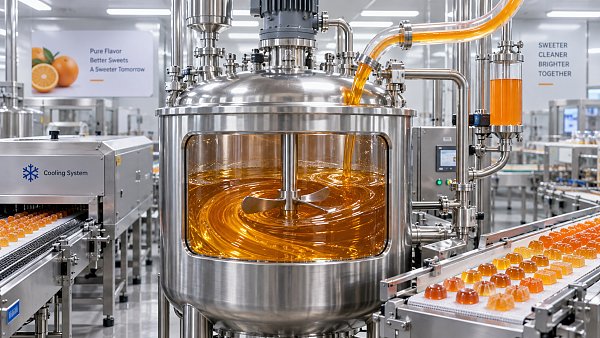
 Maillard Reaction Savory FlavorsHow Flavoring Preparations for Confectionery Stay Stable in ProductionFlavoring preparations for confectionery: learn how to protect aroma, ensure even dispersion, control heat exposure, and achieve consistent production quality.MORE+
 Maillard Reaction Savory FlavorsHow Powder Flavors Improve Consistency in Snack SeasoningPowder flavors for snack seasoning improve blend uniformity, adhesion, aroma release, and shelf-life stability. Learn how to control key process variables.MORE+
 Maillard Reaction Savory FlavorsHow Natural Flavor Bases Create Consistent Savory Food ProfilesNatural flavor bases help create consistent savory food profiles. Learn how sensory testing, processing control, and storage practices protect flavor quality.MORE+
 Maillard Reaction Savory FlavorsHow High Color Oleoresins Improve Consistency in Savory Food FormulationsHigh color oleoresins improve savory food consistency through precise dosing, stable dispersion, and heat-aware processing. Discover practical formulation controls.MORE+
 Maillard Reaction Savory FlavorsWhy Do Food Flavorings Change Taste During Long-Term Storage?Why do food flavorings change taste after prolonged storage? Discover how oxidation, heat, packaging, and ingredient interactions affect flavor stability.MORE+
 Maillard Reaction Savory FlavorsEthyl Maltol in Food Formulations for Balanced Sweet Aroma ProfilesEthyl Maltol helps food formulators create balanced sweet aroma profiles. Explore dosage control, sensory performance, quality assurance, and compliance insights.MORE+
 Maillard Reaction Savory FlavorsHow Concentrated Flavor Pastes Solve Batch-to-Batch Flavor VariationConcentrated flavor pastes help manufacturers reduce batch-to-batch variation with precise dosing, reliable dispersion, and stronger sensory consistency.MORE+
 Maillard Reaction Savory FlavorsHow Reaction Flavors Create Richer Taste in Baked and Savory FoodsReaction Flavors bring roasted, toasted, and savory depth to bakery, snacks, sauces, and plant-based foods. Learn how to select profiles that perform after processing.MORE+
 Maillard Reaction Savory FlavorsCan Flavor Bases Withstand High-Temperature Baking Without Losing Flavor?Can flavor bases withstand high temperature baking? Discover how heat, moisture, encapsulation, and formula design affect flavor retention in baked goods.MORE+
 Maillard Reaction Savory FlavorsWhat Determines Flavoring Preparations Bulk Price in 2026Flavoring preparations bulk price in 2026 depends on formula, dosage, logistics, compliance, and supplier reliability. Learn how to compare total cost and reduce sourcing risk.MORE+
 Maillard Reaction Savory FlavorsWhy Food Grade Flavor Pastes Help Build Stable Savory ProfilesFood grade flavor pastes help manufacturers build stable savory profiles with better dispersion, heat retention, and dosing control—ideal for sauces, snacks, meats, and ready meals.MORE+
 Maillard Reaction Savory FlavorsHow Microencapsulated Flavors for Chewing Gum Extend TasteMicroencapsulated flavors for chewing gum help extend taste by improving flavor retention, controlling release, and supporting longer-lasting sensory performance from processing to chew.MORE+
 Maillard Reaction Savory FlavorsWhy Spray Dried Flavors Fit Modern Beverage Premix DevelopmentSpray dried flavors for beverage premixes help brands improve stability, dosing, and dry blending efficiency. See why they fit faster launches and scalable modern premix production.MORE+
 Maillard Reaction Savory FlavorsFlavor Bases for Sauces, Snacks, and Seasonings: How to Match Base Notes to Product FormatFlavor Bases guide for sauces, snacks, and seasonings—learn how to match base notes to each format for better stability, flavor release, and product performance.MORE+