What to Check Before Choosing Flavor Bases Wholesale for Beverages
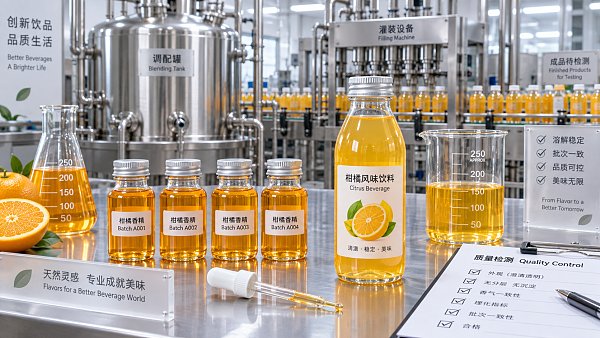
Buying flavor bases in wholesale volumes is a formulation decision disguised as a purchasing decision. A base that performs well in a supplier sample can still create problems after scale-up: muted top notes after pasteurization, haze in a clear drink, separation during storage, inconsistent sensory impact between batches, or a label that does not fit the target market.
For beverage procurement teams, the first filter should be whether the flavor base can perform in the finished beverage and production process, not whether its quoted price is attractive. Unit price matters, but it is rarely the largest cost when a flavor causes reformulation work, production holds, rejected batches, or an avoidable change in consumer perception.
The most useful wholesale evaluation therefore connects four questions: Does the flavor deliver the intended sensory profile in the real formula? Will it remain stable through processing and shelf life? Can the supplier document what the product contains and how it is controlled? And can the business receive the same material reliably at commercial scale?
Start with the finished beverage, not the flavor description
Terms such as “natural citrus,” “tropical blend,” “cream profile,” or “berry base” describe a direction, not a procurement specification. Two bases with similar names can behave very differently once sweetness, acid, carbonation, protein, minerals, preservatives, and processing conditions are introduced.
Before requesting samples or quotations, procurement should align with R&D and quality teams on a concise application brief. It should state the beverage format, target dosage range, sweetness system, pH range, processing route, packaging type, intended shelf life, and the sensory role expected from the flavor. A base intended to provide the primary identity of a still juice drink should be assessed differently from one intended to add a light top note to a carbonated beverage.
The brief should also distinguish between the aroma perceived on opening and the flavor experienced during consumption. Some profiles are highly appealing in the headspace but fade quickly on the palate. Others survive processing but leave a heavy, candy-like, bitter, dry, or artificial impression when used at commercial dosage. This distinction becomes especially important when a beverage has reduced sugar, high acidity, plant proteins, caffeine, electrolytes, vitamins, or strong botanical ingredients. Those components can expose weaknesses that are not apparent in a simple water evaluation.
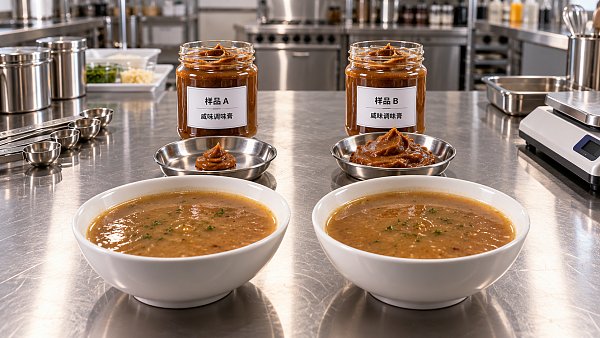
For a wholesale purchase, request evaluation samples at the likely production dosage, not only at a supplier-recommended rate. Test a small range around that dosage. The lowest acceptable use level may offer a better commercial result than a lower-priced base requiring a substantially higher inclusion rate. Cost per finished litre is more meaningful than cost per kilogram of flavor base.
Check solubility and physical stability in the actual system
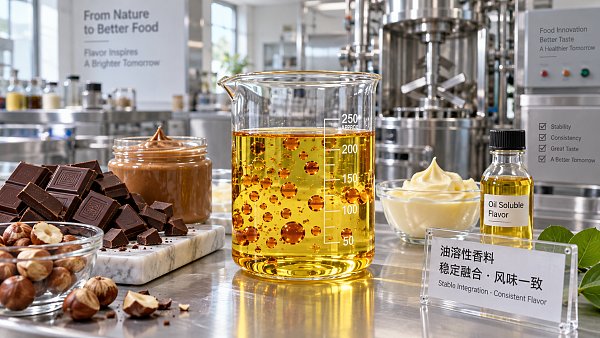
A beverage flavor base may be oil-soluble, water-dispersible, emulsified, or supplied in another carrier system. That format influences clarity, appearance, dosing, mixing time, and stability. A product that is technically dispersible may still form a visible ring, floating droplets, cloud changes, sediment, or variable flavor release under the conditions of a specific beverage.
Clear beverages deserve particular scrutiny. Even a low level of poorly matched oil-phase material can create haze or surface separation. Conversely, a clouding flavor base may be acceptable or even useful in a juice-style or opaque beverage, provided the visual appearance remains consistent from filling to the end of shelf life.
Ask the supplier to explain the flavor base format rather than relying on a generic statement that it is “suitable for beverages.” Procurement does not need the supplier’s proprietary formula, but it does need enough information to assess compatibility, including the carrier type, whether emulsifiers or weighting agents are present, expected dispersion conditions, and any known limitations in high-acid, high-mineral, alcoholic, dairy, or protein-containing systems.
Physical stability should be checked after the beverage is prepared using the intended production sequence. Mixing order can alter the result. Adding a flavor base before acidification may behave differently from adding it after the syrup is prepared. A laboratory trial should examine immediate appearance as well as changes after holding, temperature cycling where relevant, and contact with the selected packaging.
Packaging is often overlooked in early screening. Certain aroma compounds can interact with closures, liners, plastics, or headspace conditions, changing the perceived flavor over time. A base that appears stable in a glass trial bottle may not produce the same result in PET, aluminium cans, multilayer cartons, or another commercial package. The question is not simply whether the base is stable in bulk; it is whether the finished drink keeps its intended profile in the pack consumers will buy.
Match the base to heat, acid, and process exposure
Heat treatment is one of the most common reasons that a promising flavor base underperforms at launch. Pasteurization, hot fill, UHT processing, and other thermal steps can reduce volatile top notes, alter balance, or create a flatter overall profile. A supplier may offer a heat-stable version of a profile, but “heat stable” should not be treated as a universal claim. Stability depends on time, temperature, pH, oxygen exposure, the rest of the formula, and the sensory standard expected for the finished product.
Acid stability also requires a specific discussion. Many fruit beverages operate in an acidic range, but the response of a flavor base can still vary with the acid type, acid level, sweetener system, and presence of minerals. In a beverage with a sharp citric or malic acid profile, a delicate fruit note may require different balancing than it would in neutral water. In a reduced-sugar drink, sweetness modifiers or high-intensity sweeteners can lengthen or distort the flavor finish, making a base that worked in a full-sugar prototype unsuitable without adjustment.
Buyers should ask for recommended process conditions and then verify them in their own pilot runs. Useful questions include:
- At what stage should the flavor base be added?
- Does the supplier recommend a temperature limit or maximum hold time before filling?
- Has the base been designed for hot fill, pasteurization, aseptic processing, or cold-filled beverages?
- Are there known incompatibilities with acids, preservatives, sweeteners, minerals, dairy components, or proteins?
- What sensory changes should be expected after thermal processing and storage?
These questions are more productive than asking whether a flavor is “high quality.” A supplier that can respond clearly with application-specific guidance is generally easier to work with during scale-up than one offering only broad product descriptions.
Evaluate consistency as a sensory and operational requirement
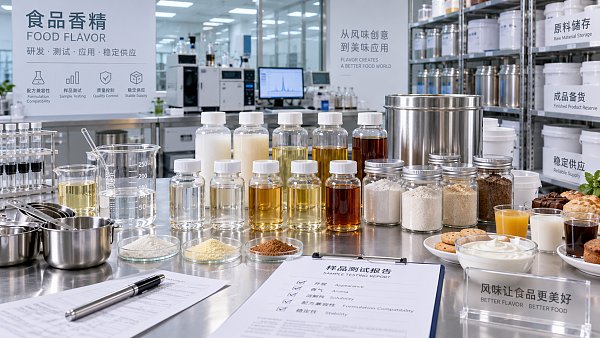
Flavor base quality cannot be judged only by a certificate of analysis. Analytical controls are important, but beverage manufacturers also need sensory consistency. Natural extracts, essential oils, and complex flavor mixtures can show variation in raw material character even when the supplier meets defined specifications. That variation may be manageable if the supplier has a controlled sensory matching process and communicates how it maintains the agreed profile.
For recurring wholesale supply, ask how the supplier defines the reference standard for the product. Is each batch checked against a retained sensory standard? Are color, density, refractive index, or other routine physical checks included where appropriate? What happens if a new production batch is close to specification analytically but differs noticeably in sensory character?
A written specification should be clear enough to support incoming inspection and complaint handling. It should identify the product code, sensory description, physical form, recommended storage conditions, shelf life, batch traceability, and relevant parameters for the supplied format. Procurement teams should also establish what documentation accompanies each shipment and whether changes to raw materials, carrier systems, manufacturing sites, or specification limits require notification.
This is particularly important when the beverage has a narrow flavor tolerance. In a simple lemonade or flavored water, consumers may notice a small change in freshness or peel character. In a heavily flavored energy drink, minor variation may be masked, but interactions with sweeteners and functional ingredients may still make consistency difficult. The needed control level should reflect the sensitivity of the formula, not a generic supplier category.
Review documentation before commercial approval
Documentation should be reviewed early, before a base becomes embedded in product development. Delaying this work can leave a beverage team with a preferred sensory option that cannot be used in the intended market or conflicts with label, allergen, or internal ingredient policies.
The document set varies by market and beverage category, but procurement commonly needs an up-to-date specification, safety data where applicable, allergen statement, composition or declaration information appropriate to the commercial relationship, country-of-origin information when required, storage guidance, shelf-life statement, and a certificate of analysis for supplied batches. Claims such as natural, organic, non-GMO, halal, kosher, vegan, or free-from should be supported by documentation relevant to the purchaser’s intended use rather than accepted from marketing language alone.
It is also important to understand how the flavor base will appear in the ingredient declaration and whether the desired product positioning is achievable. The answer can depend on local food rules, the nature of the flavoring preparation, and the other ingredients in the beverage. Regulatory and labeling teams should review this before packaging artwork or customer commitments are finalized.
Allergen review is not limited to a simple yes-or-no declaration. A buyer should understand whether allergens are intentionally present, whether there is a meaningful cross-contact consideration in the supplier’s manufacturing environment, and whether the supplier’s statement applies to the exact grade and site being purchased. Similar care is needed for ingredients that may conflict with a retailer policy, export-market requirement, or internal restricted-substance list.
Compare quoted cost on a usable basis
Wholesale pricing should be compared through a landed, formulation-adjusted view. A lower-price flavor base can lose its advantage if it requires a higher use level, additional emulsifier support, longer mixing time, special storage, or a higher safety stock position. A higher-priced base may lower total beverage cost if its dosage is lower, its processing behavior is more predictable, and fewer adjustments are required across production sites.
MOQ is often treated as a commercial detail, yet it can shape product strategy. A distinctive flavor base with a large minimum order may be reasonable for a high-volume core SKU but unsuitable for a limited release, regional launch, or test market. Buyers should match commitment volume to realistic consumption, remaining shelf life at receipt, and the possibility that the formula will change after consumer testing.
Assess the supplier’s ability to support repeat supply
Choosing a flavor supplier for wholesale business is partly a supplier qualification exercise. The relevant question is whether the supplier can provide the specified material repeatedly, with controlled quality and usable communication, rather than whether it can send an appealing first sample.
Review manufacturing location, quality systems, batch traceability, complaint process, change-control practice, and backup arrangements for critical raw materials or production steps. For imported materials, also consider shipping conditions, customs documentation, temperature exposure during transit, and the practical lead time from order release to warehouse receipt. Some flavor materials are sensitive to prolonged heat or poor sealing, so transport and storage instructions should be compatible with the buyer’s logistics environment.
For high-volume or business-critical beverages, a qualified second source may be appropriate. However, two bases with the same flavor name should not be assumed interchangeable. A backup source requires its own formula trial, sensory assessment, regulatory review, and controlled approval process. Keeping a second source on paper without validating it can create more risk than resilience.
Move from sample approval to controlled commercialization
The strongest purchasing decision is built in stages. First screen flavor bases against the beverage brief and documentation requirements. Then test the short list in the complete formula under realistic processing conditions. Compare sensory quality after processing and during a defined storage assessment, not only on the day the sample is mixed. Once a preferred base is identified, confirm commercial dosage, pack format, specification, change-notification expectations, and supply terms before issuing a long-term purchasing commitment.
Flavor bases bought wholesale should earn approval through beverage performance, not through a favorable sample aroma or a low quote alone. When procurement, formulation, quality, and regulatory reviewers agree on the conditions that matter before selection, the resulting supply decision is more likely to protect taste consistency, production efficiency, and the commercial life of the beverage.
Facing technical bottlenecks in manufacturing or looking for more efficient industrial solutions? Leave your details below and let the engineering experts at FCAS solve them for you.
We respect your privacy. Your information is strictly confidential.
Related News
 Maillard Reaction Savory FlavorsHow Does an Ethyl Maltol Factory Control Product Quality?How does an ethyl maltol factory ensure consistent quality? Explore testing, contamination controls, traceability, and key questions to ask suppliers.MORE+
 Maillard Reaction Savory FlavorsHow Spray Dried Flavors Retain Flavor in Dry Food MixesDiscover how Spray Dried Flavors preserve aroma in dry food mixes, and learn how formulation, storage and packaging influence flavor quality.MORE+
 Maillard Reaction Savory FlavorsHow High Purity Ethyl Maltol Enhances Flavor in FoodDiscover how high purity ethyl maltol enhances sweet, fruity and caramel notes, and explore practical tips for food formulation and sourcing.MORE+
 Maillard Reaction Savory FlavorsHow to Choose Spray Dried Flavors for Better Powder StabilityChoose Spray Dried Flavors with confidence. Compare carriers, moisture behavior, particle properties, and packaging to improve powder stability and flavor retention.MORE+
 Maillard Reaction Savory FlavorsHow Do Savory Flavor Paste Prices Affect Your Cost per Serving?Compare flavor pastes price by validated dose, landed cost, and usable recovery—not price per kilogram alone. Discover how to lower cost per serving without compromising flavor.MORE+
 Maillard Reaction Savory FlavorsWhat Should You Check Before Choosing a Flavor Paste Exporter?Choosing a flavor pastes exporter? Discover how to verify food safety, compliance, product performance, and landed costs to avoid costly mistakes and secure reliable supply.MORE+
 Maillard Reaction Savory FlavorsWhat to Consider When Developing Flavor Bases for Food ApplicationsCan flavor bases be customized for specific food applications? Explore sensory targets, processing stability, compliance, and cost-effective development strategies.MORE+
 Maillard Reaction Savory FlavorsHow Oil Soluble Aroma Ingredients Improve Flavor ConsistencyOil soluble aroma ingredients improve flavor consistency in fat-based foods by enhancing distribution, stability, and controlled aroma release. Discover practical selection tips.MORE+
 Maillard Reaction Savory FlavorsWhat to Check Before Choosing Flavor Bases Wholesale for BeveragesFlavor bases wholesale guide for beverage buyers: evaluate taste, stability, documentation, dosage costs, and supplier reliability before scaling production.MORE+
 Maillard Reaction Savory FlavorsHow to Assess a Flavor Bases Supplier List for Reliable SourcingGlobal Fine Chemicals & Agrochemical Intelligence Network flavor bases supplier list: assess specs, samples, supply risk, and true cost to source with confidence.MORE+
 Maillard Reaction Savory FlavorsHow Ethyl Maltol Purity Testing Supports Flavor Safety ComplianceEthyl Maltol purity testing strengthens flavor safety compliance through identity checks, impurity profiling, supplier verification, and audit-ready documentation.MORE+
 Maillard Reaction Savory FlavorsHow to Evaluate an Ethyl Maltol Supplier for Reliable Flavor QualityChoose an ethyl maltol supplier with confidence. Learn how to assess sensory consistency, purity, documentation, compliance, and supply reliability for dependable flavor quality.MORE+
 Maillard Reaction Savory FlavorsHow Aroma Ingredients for Baked Goods Shape Fresh-Baked AppealAroma ingredients for baked goods help create authentic fresh-baked appeal. Explore heat stability, sensory balance, sourcing, and formulation tips for better bakery products.MORE+
 Maillard Reaction Savory FlavorsHow to Select Liquid Flavorings for Consistent Beverage ProfilesLiquid Flavorings guide for consistent beverage profiles—compare stability, dosage, carriers, processing performance, and supplier reliability for better product results.MORE+
 Maillard Reaction Savory FlavorsHow Flavoring Preparations for Confectionery Stay Stable in ProductionFlavoring preparations for confectionery: learn how to protect aroma, ensure even dispersion, control heat exposure, and achieve consistent production quality.MORE+
 Maillard Reaction Savory FlavorsHow Powder Flavors Improve Consistency in Snack SeasoningPowder flavors for snack seasoning improve blend uniformity, adhesion, aroma release, and shelf-life stability. Learn how to control key process variables.MORE+
 Maillard Reaction Savory FlavorsHow Natural Flavor Bases Create Consistent Savory Food ProfilesNatural flavor bases help create consistent savory food profiles. Learn how sensory testing, processing control, and storage practices protect flavor quality.MORE+
 Maillard Reaction Savory FlavorsHow High Color Oleoresins Improve Consistency in Savory Food FormulationsHigh color oleoresins improve savory food consistency through precise dosing, stable dispersion, and heat-aware processing. Discover practical formulation controls.MORE+
 Maillard Reaction Savory FlavorsWhy Do Food Flavorings Change Taste During Long-Term Storage?Why do food flavorings change taste after prolonged storage? Discover how oxidation, heat, packaging, and ingredient interactions affect flavor stability.MORE+
 Maillard Reaction Savory FlavorsEthyl Maltol in Food Formulations for Balanced Sweet Aroma ProfilesEthyl Maltol helps food formulators create balanced sweet aroma profiles. Explore dosage control, sensory performance, quality assurance, and compliance insights.MORE+
 Maillard Reaction Savory FlavorsHow Concentrated Flavor Pastes Solve Batch-to-Batch Flavor VariationConcentrated flavor pastes help manufacturers reduce batch-to-batch variation with precise dosing, reliable dispersion, and stronger sensory consistency.MORE+
 Maillard Reaction Savory FlavorsHow Reaction Flavors Create Richer Taste in Baked and Savory FoodsReaction Flavors bring roasted, toasted, and savory depth to bakery, snacks, sauces, and plant-based foods. Learn how to select profiles that perform after processing.MORE+
 Maillard Reaction Savory FlavorsCan Flavor Bases Withstand High-Temperature Baking Without Losing Flavor?Can flavor bases withstand high temperature baking? Discover how heat, moisture, encapsulation, and formula design affect flavor retention in baked goods.MORE+
 Maillard Reaction Savory FlavorsWhat Determines Flavoring Preparations Bulk Price in 2026Flavoring preparations bulk price in 2026 depends on formula, dosage, logistics, compliance, and supplier reliability. Learn how to compare total cost and reduce sourcing risk.MORE+
 Maillard Reaction Savory FlavorsWhy Food Grade Flavor Pastes Help Build Stable Savory ProfilesFood grade flavor pastes help manufacturers build stable savory profiles with better dispersion, heat retention, and dosing control—ideal for sauces, snacks, meats, and ready meals.MORE+
 Maillard Reaction Savory FlavorsHow Microencapsulated Flavors for Chewing Gum Extend TasteMicroencapsulated flavors for chewing gum help extend taste by improving flavor retention, controlling release, and supporting longer-lasting sensory performance from processing to chew.MORE+
 Maillard Reaction Savory FlavorsWhy Spray Dried Flavors Fit Modern Beverage Premix DevelopmentSpray dried flavors for beverage premixes help brands improve stability, dosing, and dry blending efficiency. See why they fit faster launches and scalable modern premix production.MORE+
 Maillard Reaction Savory FlavorsFlavor Bases for Sauces, Snacks, and Seasonings: How to Match Base Notes to Product FormatFlavor Bases guide for sauces, snacks, and seasonings—learn how to match base notes to each format for better stability, flavor release, and product performance.MORE+