How to Assess a Flavor Bases Supplier List for Reliable Sourcing
A flavor bases supplier list becomes useful only after it is separated into viable sourcing options, qualified alternates, and names that require more evidence. A low quoted price or a familiar flavor description does not establish interchangeability. Flavor bases can differ in carrier system, concentration, processing tolerance, allergen status, declaration support, lead time, and sensory behavior after dilution or thermal treatment. Those differences affect production yield, label review, inventory exposure, and the cost of reformulating an established product.
Start by defining the flavor base that is actually being sourced. “Strawberry,” “vanilla,” “smoke,” or “citrus” are sensory directions, not complete technical specifications. The request should state the intended food matrix, format, dosage range, process conditions, shelf-life expectation, target market, and any ingredient restrictions. A beverage base that performs well in an acidic, clear drink may fail in a dairy system, a high-fat filling, or a baked product. Likewise, an oil-soluble flavor cannot be assessed against a water-dispersible alternative merely because both have a similar top-note profile.
Turn a Long List into Comparable Supplier Groups
Before requesting samples, divide the list according to product relevance and source capability. Some suppliers formulate finished flavor bases for a defined application; others distribute materials or offer a broad catalogue without application-specific adjustment. Both can have a place in a supply plan, but they should not be evaluated as though they deliver the same level of formulation control.
A useful first screen is whether each candidate can supply the required physical format and commercial configuration. Record whether the base is liquid, powder, emulsion, encapsulated material, or paste; whether it uses alcohol, propylene glycol, vegetable oil, sugar, gum, starch, or another carrier; and whether the offered pack size fits expected consumption. A technically acceptable flavor supplied only in oversized packs can create aging, oxidation, storage, and working-capital problems. Conversely, very small packs can raise handling burden and unit logistics cost when production volume increases.
Do not rank candidates solely by the number of flavor names in their catalogue. A narrow supplier with a stable citrus emulsion suitable for one beverage line can be more relevant than a broad catalogue whose samples are supplied without process guidance, batch ranges, or clear carrier disclosure. The list should remain broad at the market-scanning stage, then become narrower as application evidence is collected.
Read the Specification as a Formulation Document
A flavor base specification should answer more than whether the material smells or tastes appropriate. It should identify the product code, physical appearance, recommended storage conditions, shelf life, lot identification, and relevant analytical or sensory controls. The useful level of detail varies by format, but vague statements such as “standard quality” or “food grade” do not establish a workable release basis.
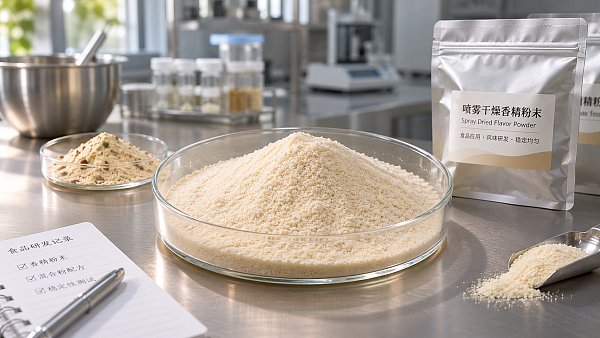
For liquid flavors, density and refractive index can help identify batch-to-batch consistency when they are relevant to the formula. They should not be treated as proof of identical sensory performance. Two liquids can show similar density while using different aroma balances or different proportions of volatile notes. For powders, moisture, bulk density, particle behavior, and flow characteristics affect dosing and dispersion. A flavor powder that bridges in a feeder or forms visible specks in a dry blend can generate losses that are not visible in a bench-top tasting.
Carrier choice deserves particular attention. A water-based system may be suitable for low-alcohol beverages but may introduce stability challenges in oil-rich fillings. An oil-based flavor base can work well in confectionery or fat-containing products, yet become difficult to disperse in a clear beverage. Alcohol-containing materials require review against the finished formula and destination-market requirements. Encapsulated flavors introduce another set of questions: release temperature, resistance to mechanical mixing, particle integrity, and whether the encapsulant changes mouthfeel or appearance.
Ask for a complete enough composition statement to evaluate restrictions without demanding protected formula details. The objective is to understand functional categories, carriers, relevant allergens, animal-derived or fermentation-derived considerations where applicable, and any ingredients that require special declaration review. A supplier that cannot clarify the functional composition of a base leaves unresolved risk for labeling and formulation teams.
Sample in the Finished System, Not Only from the Bottle
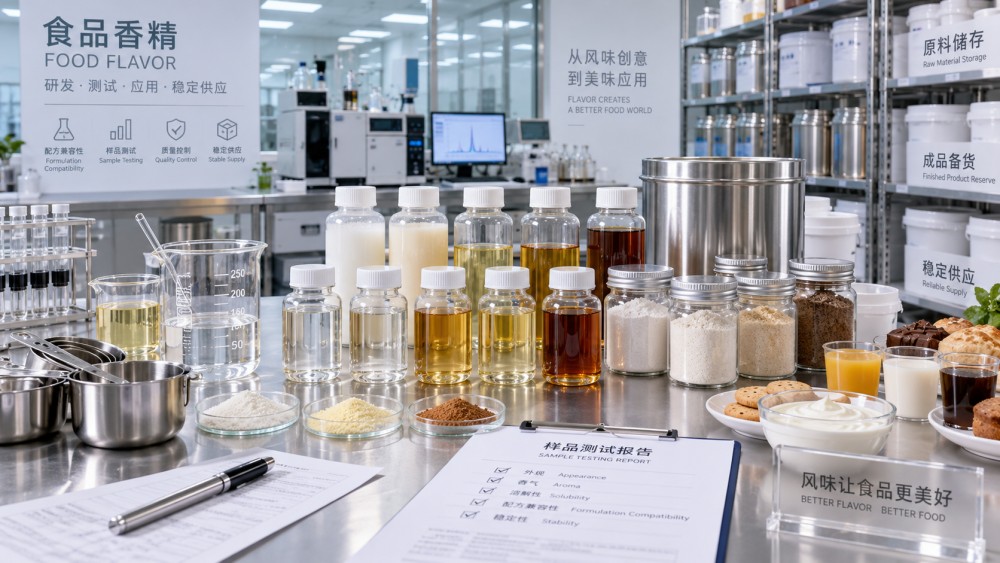
Sensory comparison is often the most visible part of flavor-base selection, yet it is also where misleading conclusions arise. Direct smelling, tasting in water, or comparing undiluted liquids can rapidly eliminate unsuitable options, but none of these methods predicts finished-product performance on its own. Flavor perception changes with sweetness, acidity, salt, fat, protein, carbonation, heat, and interaction with other aroma materials.
Set a written sample protocol before samples arrive. Use the same dosage basis, base formula, mixing sequence, holding time, and processing conditions for every candidate. If the commercial product undergoes pasteurization, baking, retort treatment, extrusion, freezing, or prolonged storage, include the relevant exposure in the evaluation. A flavor that initially appears stronger may simply have a sharper top note and fade earlier than a less intense alternative. A second assessment after processing and a further assessment after defined storage reveal far more than a single fresh sample review.
When comparing an incumbent flavor with an alternative, distinguish between sensory matching and dosage economics. A lower-priced material that requires a significantly higher inclusion level may cost more per finished unit. The reverse can also be true: a higher-priced concentrate may reduce dose, freight, warehouse volume, and batch handling. Cost should be normalized to the approved dosage in the finished product, then adjusted for expected yield loss, rework exposure, and disposal risk from short shelf life.
Record observations in practical terms: initial aroma, flavor onset, middle profile, aftertaste, heat retention, off-note development, haze, sediment, foam change, and phase separation. This creates a decision record that can be revisited when a later production-scale result differs from the bench result. “Closest match” is insufficient when different evaluators are referring to different product stages.
Documentation Should Match the Sourcing Risk
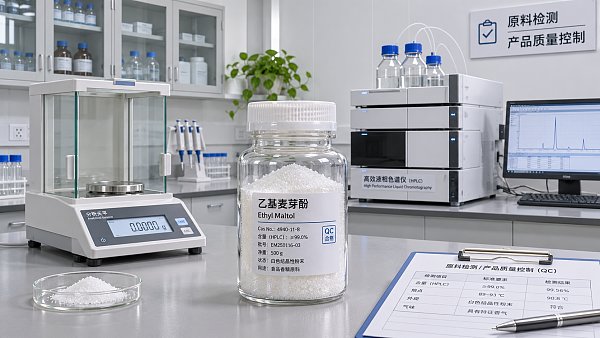
A reliable supplier list contains evidence, not just contact details. At minimum, each active candidate should be linked to a current specification, safety information where relevant, allergen statement, country-of-origin information when needed, shelf-life and storage guidance, and a sample certificate of analysis or lot document. The document set must correspond to the exact product code under review. Generic statements covering an entire flavour portfolio can conceal meaningful differences between bases.
Review whether the supplier controls changes in raw materials, carriers, processing aids, manufacturing location, and specification limits. The practical question is not whether a change will ever occur; flavor formulas and raw-material availability can change. The question is whether notification arrives early enough to permit a repeat trial, artwork review, and release decision before a replacement lot is used.
Traceability should be considered in both directions. A lot number should connect the delivered material to production records, and the receiving site should be able to identify every finished batch using that lot. For multi-component flavor bases, the ability to investigate a sensory deviation depends on retained samples, batch records, and a clear route for technical follow-up. Slow or ambiguous responses during a complaint investigation increase operational cost even when the original material price was attractive.
Assess Supply Security Through the Actual Route to Site
Supply reliability is often overstated when it is reduced to stock availability at the time of quotation. The meaningful route includes production scheduling, internal release, packing, export documentation where applicable, freight booking, customs handling, delivery appointment, and site receiving. A flavor base with volatile components or temperature-sensitive emulsions also needs storage conditions that remain realistic throughout that route.
Ask whether supply is produced to stock, made after order confirmation, or allocated through a forecast. Each model has different implications. Made-to-order supply may offer fresher material and formulation flexibility, but it requires a disciplined forecast and sufficient safety stock. Stocked material can shorten replenishment time, although the remaining shelf life must be checked before accepting a shipment. A supplier’s stated lead time has limited value if it excludes laboratory release, packaging availability, or transport preparation.
Packaging is a technical control point, not a clerical detail. Light-sensitive or oxidation-prone materials may require opaque containers, suitable headspace management, or specific closure systems. Emulsions can be affected by freezing or prolonged heat exposure. Powdered flavors may pick up moisture after repeated opening. Confirm the container material, tamper evidence, pallet configuration, labeling, and whether partial containers can be resealed without compromising the remaining material.
Use Price Analysis That Reflects the Approved Formula
Quoted price per kilogram is only a starting figure. Build a landed and usable cost view around the approved flavor system. Include dosage, pack utilization, freight and handling, customs-related costs where applicable, expected remaining shelf life on arrival, trial consumption, and the cost of holding a contingency lot. This avoids selecting a nominally cheaper offer that creates higher waste or repeated changeovers.
There is also a difference between a price reduction and a formulation substitution. A supplier may offer a flavor base at a lower rate because it uses a different carrier, lower concentration, a narrower raw-material basket, or a product designed for another application. Such an offer deserves a fresh technical assessment rather than a routine commercial comparison. The visible aroma can be close while the behavior in a finished product is materially different.
For recurring demand, compare pricing alongside notice periods, order flexibility, minimum batch commitments, and the treatment of formula changes. A fixed price with restrictive volume terms can be less useful than a slightly higher price paired with manageable release quantities. The contract discussion should follow technical approval, so commercial terms are attached to an unambiguous product code and specification revision.
Maintain an Approved List That Can Survive a Disruption
The final flavor bases supplier list should identify primary sources, technically reviewed alternatives, and unqualified market contacts separately. An approved alternative is not merely a company capable of producing a similar flavor. It is a defined product code that has been assessed in the intended formula, with accepted dosage, documents, pack format, and ordering conditions recorded.
Keep the approval record specific enough to prevent accidental substitution. Include the sensory reference, dosage range, carrier system, storage limit, document revision, approved manufacturing site if relevant, and the conditions that triggered approval. A substitute approved for a baked biscuit should not automatically be released for a dairy drink or a sugar-free confectionery line.
Review the list when formulas change, demand moves outside the forecast range, repeated lots show sensory drift, or a supplier changes a document, site, pack, or lead-time commitment. That discipline keeps the list connected to real manufacturing conditions rather than allowing it to become a static directory. Reliable sourcing follows from evidence that the flavor base performs, arrives, and remains controllable after the initial sample has been accepted.
Related News
 Supercritical CO2 Essential OilsHow Are Food Grade Essential Oil Extracts Made with CO2?Discover how food grade essential oil extracts are made with CO2, what shapes their flavor, and how to assess safety and suitability for food applications.MORE+
 Ultra-pure Semiconductor CleanersHow to Choose Electronic Cleaning Chemicals for Corrosion ProtectionElectronic cleaning chemicals corrosion protection starts with the right selection. Discover how to assess compatibility, residues, drying, and safety.MORE+
 Microencapsulated FragrancesHow Can Microencapsulation Help Essential Oil Blends Last Longer?Essential Oil Blends can retain their aroma longer with the right microencapsulation strategy. Explore carrier choices, release mechanisms, and stability testing.MORE+
 Synthesis CAPEX & Yield ROIWhat Affects the Triple Superphosphate Bulk Price?Explore what affects triple superphosphate bulk price, from raw materials and freight to quality and demand, and learn how to compare offers with confidence.MORE+
 Antioxidants & Natural PreservativesHow Do Food Preservation Ingredients Extend Shelf Life?Food Preservation Ingredients extend shelf life by slowing microbial growth and oxidation. Discover how to select and validate the right solution for your product.MORE+
 EPA FIFRA & FDA GRAS RegsEPA Issues Cancellation Order Affecting Certain Pesticide RegistrationsEPA pesticide registration cancellations may affect select products and supply chains. Learn what businesses should verify before making purchasing decisions.MORE+
 Chelated Trace Element FertilizersHow to Apply Single Superphosphate for Sulfur Deficient SoilLearn how to apply single superphosphate for sulfur deficient soil, calculate the right rate, and balance phosphorus needs for healthier crops.MORE+
 Heavy-duty Industrial DegreasersHow to Choose Parts Wash Cleaners for Spray WashersChoose parts wash cleaners for spray washers with confidence. Compare cleaning power, material compatibility, foam control, safety, and supplier support.MORE+
 Polymer-Coated Water Soluble NPKHow to Use Calcium Nitrate Fertilizer in Drip IrrigationCalcium Nitrate Fertilizer in drip irrigation: learn how to calculate doses, mix stock solutions, prevent clogged emitters, and support healthy crops.MORE+
 Micelle Fluidics & ChelationHow Venturi Fertigation Systems Control Fertilizer InjectionDiscover how venturi fertigation systems control fertilizer injection, and learn how pressure, sizing, and calibration affect dosing accuracy.MORE+
 Nano-microcapsule FormulationsHow to Choose a Capsule Suspension Pesticides SupplierChoose a capsule suspension pesticides supplier with confidence. Compare formulation quality, regulatory documentation, delivery reliability and total costs.MORE+
 Polymer-Coated Water Soluble NPK2026 Fertilizer Price Swings Shape 2027 Planting Decisions2026 fertilizer price swings are shaping 2027 planting decisions. Explore nutrient cost pressures and practical strategies for planning purchases.MORE+
 EPA FIFRA & FDA GRAS RegsEPA Reviews Glyphosate Safety, With Decision Expected in Early 2027EPA glyphosate safety review: Discover what the decision expected in early 2027 could mean for health, the environment, and businesses.MORE+
 Targeted Bio-pesticides & APIsHow Are Fungicide APIs Used in Crop Protection Products?Fungicide APIs for crop protection power disease control products. Discover how formulation, application and resistance management affect results.MORE+
 Ultra-pure Semiconductor CleanersWhat Affects the Bulk Price of Semiconductor Process Cleaners?Semiconductor process cleaners bulk price depends on purity, packaging, logistics, and more. Discover how to compare quotes and control costs.MORE+
 Microencapsulated FragrancesHow to Choose a Fragrance Capsules Manufacturer for Your ProductChoose the right fragrance capsules manufacturer with practical tips on formulation testing, quality specifications, compliance, and supply reliability.MORE+
 Targeted Bio-pesticides & APIsHow to Evaluate Quality Control at a Botanical Insecticides FactoryEvaluate a botanical insecticides factory with practical checks for sourcing, testing, batch traceability and stability. Learn how to identify quality risks before choosing a supplier.MORE+
 Herbicides & Plant Growth RegulatorsHow Do Herbicide Intermediates Affect Production Yield?Discover how Herbicide Intermediates influence production yield, from impurity control to product recovery, and learn how to evaluate suppliers with confidence.MORE+
 EPA FIFRA & FDA GRAS RegsEPA Seeks Comment on Voluntary Pesticide Registration CancellationsEPA pesticide registration cancellations are open for public comment. Discover what the proposed changes could mean for product uses, compliance and supply.MORE+
 Polymer-Coated Water Soluble NPKRecord Fertilizer Prices Could Shape 2027 US Corn and Soybean Planting DecisionsRecord fertilizer prices could influence 2027 US corn and soybean planting decisions. Explore the potential impact on farm budgets and acreage.MORE+
 Non-ionic Surfactants & DefoamersChoosing Low Residue Surfactants for Hard Surface CleaningLow residue surfactants for hard surface cleaning: discover how to compare cleaning performance, rinseability, residue testing, and total cost.MORE+
 Ultra-pure Semiconductor CleanersHow to Evaluate Low Ionic Electronic Grade Cleaners for ChipmakingDiscover how to evaluate low ionic electronic grade cleaners for chipmaking, from surface residue and material compatibility to supplier qualification.MORE+
 Zero-Calorie Sweeteners & AcidulantsHow to Use High Sweetness Sucralose in Reduced-Sugar DrinksDiscover how to use high sweetness sucralose in reduced-sugar drinks, with practical tips for balancing taste, mouthfeel, stability, and compliance.MORE+
 Herbicides & Plant Growth RegulatorsHow to Choose Crop Protection Chemicals for Effective Weed ControlChoose Crop Protection Chemicals with confidence. Discover how to match herbicides to weeds, crop stages, field conditions, and resistance risks for effective control.MORE+
 Hydrocolloids & EmulsifiersHow Do Hydrocolloid Gums Improve Texture and Stability in Foods?Discover how hydrocolloid gums improve food texture and stability, and learn how to choose the right gum for your formulation.MORE+
 Polymer-Coated Water Soluble NPKUSDA Announces $1.34 Billion Investment to Expand Domestic Fertilizer SupplyUSDA’s $1.34 billion fertilizer investment targets eight domestic projects. Discover what the plans could mean for suppliers, buyers and future sourcing.MORE+
 Non-ionic Surfactants & DefoamersEPA Adopts Human Airway Tissue Method for Surfactant Inhalation Risk AssessmentEPA surfactant inhalation risk assessment may use human airway tissue. Explore potential impacts for industrial cleaners and the details still to verify.MORE+
 Polymer-Coated Water Soluble NPKHow to Choose a Potassium Sulfate Fertilizer SupplierChoose a potassium sulfate fertilizer supplier with confidence. Compare product quality, delivered costs, reliability, and contract terms before you buy.MORE+
 Micelle Fluidics & ChelationHow to Use Cocamidopropyl Betaine for Hand Soap FormulasDiscover how to use cocamidopropyl betaine for hand soap, balance surfactants, adjust pH and viscosity, and troubleshoot common formulation issues.MORE+
 Antioxidants & Natural PreservativesWhat Drives Antioxidant Blends Bulk Price Changes?Discover what drives antioxidant blends bulk price changes, from ingredient costs to delivery terms, and learn how to compare quotes for better value.MORE+
 Non-ionic Surfactants & DefoamersWhy Do Low Foam Linear Alcohol Ethoxylates Still Cause Foam?Why do low foam linear alcohol ethoxylates still foam? Discover common causes and practical troubleshooting tips to restore consistent performance.MORE+
 Maillard Reaction Savory FlavorsHow Does an Ethyl Maltol Factory Control Product Quality?How does an ethyl maltol factory ensure consistent quality? Explore testing, contamination controls, traceability, and key questions to ask suppliers.MORE+
 Herbicides & Plant Growth RegulatorsBayer Launches First Group 12 Pre-Emergence Herbicide Convintro in the USBayer's Convintro brings a Group 12 pre-emergence herbicide option to US corn and soybean growers. Explore its potential role and key purchasing considerations.MORE+
 Herbicides & Plant Growth RegulatorsCalifornia Report Shows Continued Decline in High-Risk Pesticide UseCalifornia pesticide use reportedly declined 28% for carcinogen-classified products. Explore what this could mean for suppliers, buyers and market access.MORE+
 Controlled-Release ThermodynamicsHow to Select a Microcrystalline Cellulose Excipient for TabletsChoose the right microcrystalline cellulose excipient for tablets. Compare MCC grades, processing properties, and supplier documentation with this practical guide.MORE+
 Targeted Bio-pesticides & APIsHow Microbial Insecticides for Public Health Control MosquitoesDiscover how microbial insecticides for public health control mosquito larvae, and learn how to choose formulations and improve field results.MORE+
 Non-ionic Surfactants & DefoamersHow to Measure Foam Control Efficiency in Cleaning DefoamersMeasure cleaning defoamers foam control efficiency with practical tests, dose-response analysis, and plant trials to find the right solution for your process.MORE+
 Hydrocolloids & EmulsifiersHow to Use Hydrocolloid Stabilizer Blends for SaucesDiscover how to use hydrocolloid stabilizer blends for sauces to improve texture, prevent separation, and achieve consistent results from trial to production.MORE+
 Maillard Reaction Savory FlavorsHow Spray Dried Flavors Retain Flavor in Dry Food MixesDiscover how Spray Dried Flavors preserve aroma in dry food mixes, and learn how formulation, storage and packaging influence flavor quality.MORE+
 Micelle Fluidics & ChelationHow to Evaluate an Industrial Dispersants ManufacturerEvaluate an industrial dispersants manufacturer with confidence. Learn how to assess formulation performance, batch consistency, quality controls and supply risk.MORE+