How Do Savory Flavor Paste Prices Affect Your Cost per Serving?
A lower flavor pastes price does not necessarily reduce the cost of a soup, sauce, or ready meal. A paste that costs less per kilogram may need a higher dose, leave more residue in its packaging, or require recipe adjustments to reach the approved flavor. The useful comparison is landed cost at the validated dose per saleable serving, not the quotation alone.
When purchasing teams compare savory flavor pastes, the first task is to establish equivalent performance in the finished product. Then account for delivery costs, usable material, production yield, and any changes elsewhere in the recipe. Without that common basis, a cheaper purchase can increase food cost or introduce variability that production must correct.
Start with the serving, then work back to the quotation
The relevant serving is the quantity actually sold or served after normal processing. For a packaged sauce, this could be the declared pack portion; for a foodservice soup, it should be a controlled serving weight. Using an uncooked batch weight for one supplier and a finished-product weight for another makes the comparison unreliable.
A practical batch-based calculation is:
Paste cost per saleable serving = landed paste cost per kilogram × kilograms issued to the batch ÷ number of saleable servings produced.
This method works when batch records capture material issued, including paste that does not reach the finished food. For early quotation comparisons, before production records are available, use:
Estimated paste cost per serving = landed cost per kilogram × required paste kilograms per serving ÷ usable recovery fraction.
Here, required paste means the amount that must enter the food to achieve the approved result. Usable recovery is the proportion of purchased paste that reaches that application after relevant handling losses. Keep the boundaries clear: if the dose already includes dispensing losses, do not divide by recovery again.
Finished-product rejection and yield loss also affect cost. Either reflect them in the number of saleable servings or model them separately, but not both. A transparent calculation is more useful than a detailed spreadsheet that quietly counts the same loss twice.
Make suppliers quote against the same application brief
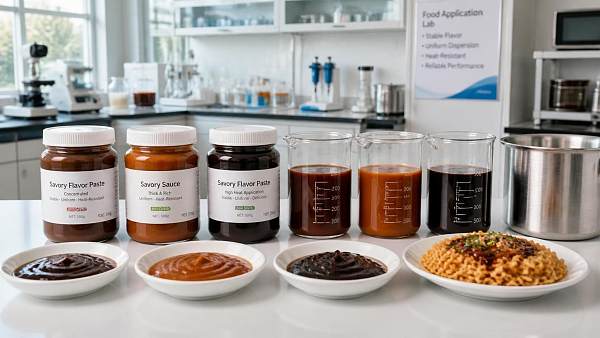
“Savory flavor paste” can describe products with substantially different functions. One may provide a concentrated roasted-meat note; another may supply a broader seasoning base containing salt, fat, extracts, and carriers. Comparing their kilogram prices without understanding those roles is like comparing a concentrate with a ready-to-use blend.
Before requesting revised prices, define the finished application, target sensory profile, processing conditions, and formulation restrictions. Give suppliers enough information to recommend a realistic starting dose rather than a general range detached from your product.
Solids content or the concentration of a named component can help explain differences, but neither proves sensory equivalence. Two pastes with similar specifications may deliver different flavor profiles, while a stronger aroma does not necessarily provide the required savory taste or balance.
Validate dosage in the food you actually sell
The recommended use rate is a trial starting point, not an approved purchasing assumption. Fat level, acidity, salt, protein, and starch can change flavor perception. A paste assessed in warm water may behave differently in a creamy sauce or a retorted meal.
Use the current approved recipe as the control, where one exists. Test candidate pastes at several practical doses, keeping processing conditions consistent. Record all recipe adjustments so that a lower paste cost is not credited with savings that depend on extra seasoning elsewhere.
- Agree on acceptance criteria. Define the desired savory profile and limits for bitterness, excessive saltiness, lingering notes, or other relevant defects.
- Run the normal process. Include the actual addition point, heating conditions, holding period, and any reheating that affects consumption quality.
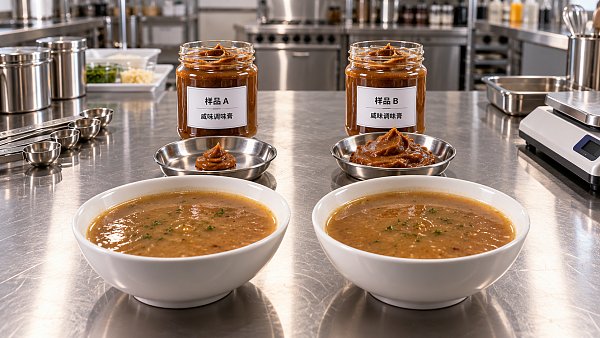
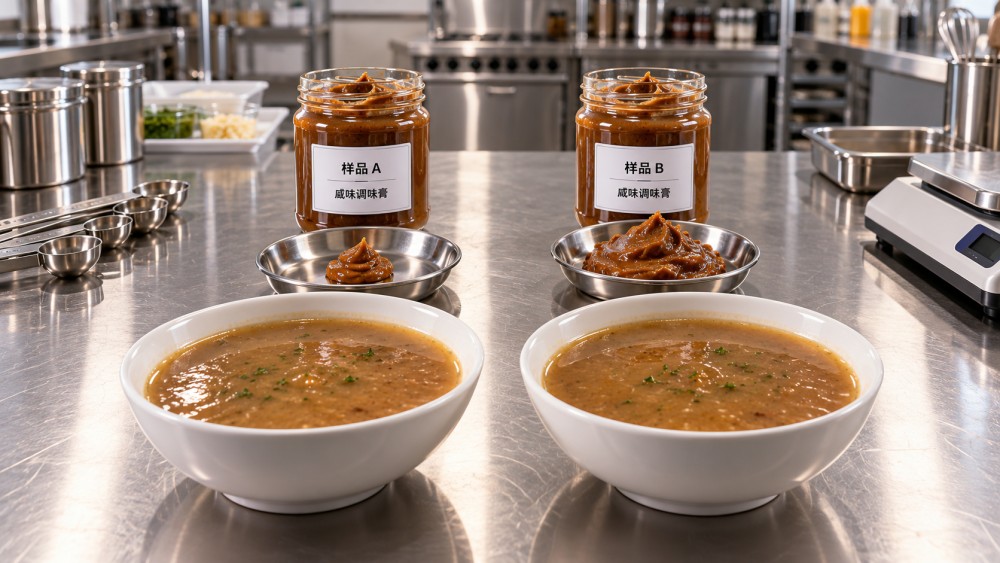
- Compare coded samples. Keep supplier identity and quotation price out of the sensory assessment where practical.
- Confirm the workable dose. Select a dose that meets the specification consistently, rather than one that only just passes a single assessment.
- Verify production handling. Check whether the paste disperses and doses reliably with the equipment used at scale.
Heat exposure deserves particular attention. When important flavor notes weaken during processing, the apparent saving at the supplier’s suggested dose may disappear after the dose is increased. Conversely, a more expensive paste may justify its price if it achieves the target at a lower validated use rate.
Assess the product at the point relevant to sale and consumption. Immediate post-cook tasting may be insufficient for a chilled meal that is stored and reheated. Use the intended product-life assessment plan rather than assuming initial flavor performance will remain unchanged.
Convert the quoted price into usable landed cost
Once the dose is established, normalize the commercial terms. Quotes should use the same currency, net product weight, delivery basis, and order quantity. Confirm whether freight, insurance, import charges, and local delivery are included. Treat recoverable taxes consistently with your accounting policy rather than automatically classifying them as ingredient cost.
Landed cost per kilogram = total attributable acquisition cost ÷ net kilograms received.
Do not spread freight over a hypothetical full load unless that reflects the purchasing plan. A price based on consolidated shipments may not represent the cost of smaller replenishment orders. For imported material, distinguish exchange-rate exposure from a supplier’s underlying product-price change.
Packaging changes the amount you can use
Viscous paste may remain on container walls, in liners, or inside transfer equipment. Pack geometry, paste consistency, and dispensing method all affect recovery. A larger pack can reduce packaging cost per kilogram yet create more waste when consumption is slow or emptying is difficult.
Measure recovery through a normal production transfer rather than assuming complete emptying. Record the purchased net quantity, the quantity delivered into the process, and any recoverable remainder. Check the result across representative operating conditions, especially where storage temperature changes handling behavior.
Warming or rinsing containers is not automatically an acceptable recovery method. Warming must remain within supported handling conditions, and rinse liquid changes the recipe balance. Any proposed recovery practice needs production and food-safety approval before its savings enter the cost model.
Include recipe offsets and operational costs without inflating the model
A paste may replace part of an existing seasoning system. Its contribution could allow changes to salt, stock, fat, or other flavor ingredients, but those reductions must be demonstrated in an approved formulation. Do not treat every component listed in the paste as a one-for-one replacement.
Calculate the total ingredient cost of the revised recipe, then compare it with the control on the same saleable-serving basis. This catches an important failure mode: a lower-cost paste that needs additional ingredients to restore body, balance, or flavor character.
Operational differences belong in the comparison when they are measurable and attributable:
- Dispensing and mixing: additional weighing, pre-dilution, scraping, or mixing time required by the candidate paste.
- Cleaning and changeovers: extra work caused by residues or a different allergen profile.
- Inventory exposure: material likely to expire because pack size, minimum order quantity, or demand does not align.
- Quality losses: documented rework or rejection associated with inconsistent performance or dosing.
Avoid converting every possible concern into a speculative surcharge. Separate measured costs from unresolved risks. Where evidence is missing, state what must be confirmed and test the financial effect across a reasonable operating range.
Documentation and formulation eligibility are approval gates, not optional cost premiums. An apparently economical paste is not a viable alternative if its ingredients, allergens, labeling implications, or intended use are incompatible with the finished product and destination market.
Find the price at which a higher-cost paste stops saving money
A break-even calculation makes negotiations more precise. If two pastes meet the same finished-product requirements, compare their landed prices, validated doses, and recovery fractions.
Break-even landed price for paste B = landed price of paste A × (dose A ÷ dose B) × (recovery B ÷ recovery A).
Use identical dose units and the same serving basis. This expression compares paste cost only; it assumes equivalent finished-product yield and excludes differences in other recipe ingredients or operating costs. If those differ materially, compare total relevant cost per serving instead.
The resulting threshold tells procurement how much more it can pay for a lower-dose product before its paste-cost advantage disappears. It also reveals when a supplier discount is too small to compensate for a higher use rate.
Test the result against likely variation. Change the dose within its approved operating range, use realistic recovery assumptions, and assess the effect of order size or freight changes. A candidate that wins only under ideal conditions offers a weaker commercial case than one that remains competitive under normal production variation.
Turn the comparison into a purchasing decision
The approval record should connect the quoted material to the tested formulation. Retain the product identification, agreed specification, validated dose, relevant batch documents, packaging format, and commercial terms. A substitution in composition or pack format can change the economics even when the product name stays the same.
For negotiation, request prices at order quantities the business can actually consume. Ask about remaining shelf life on delivery, lead times, and change-notification arrangements. A volume discount should be assessed after expected inventory losses and working-capital effects, not accepted solely because it lowers the invoice rate.
Keep one decision sheet showing landed cost, approved dose, usable recovery, recipe adjustments, and resulting cost per saleable serving. Identify which figures are measured and which remain provisional. When the difference between suppliers is smaller than the uncertainty in dosage or recovery, the next useful action is a targeted production trial—not another round of price negotiation.
Facing technical bottlenecks in manufacturing or looking for more efficient industrial solutions? Leave your details below and let the engineering experts at FCAS solve them for you.
We respect your privacy. Your information is strictly confidential.
Related News
 Maillard Reaction Savory FlavorsHow Does an Ethyl Maltol Factory Control Product Quality?How does an ethyl maltol factory ensure consistent quality? Explore testing, contamination controls, traceability, and key questions to ask suppliers.MORE+
 Maillard Reaction Savory FlavorsHow Spray Dried Flavors Retain Flavor in Dry Food MixesDiscover how Spray Dried Flavors preserve aroma in dry food mixes, and learn how formulation, storage and packaging influence flavor quality.MORE+
 Maillard Reaction Savory FlavorsHow High Purity Ethyl Maltol Enhances Flavor in FoodDiscover how high purity ethyl maltol enhances sweet, fruity and caramel notes, and explore practical tips for food formulation and sourcing.MORE+
 Maillard Reaction Savory FlavorsHow to Choose Spray Dried Flavors for Better Powder StabilityChoose Spray Dried Flavors with confidence. Compare carriers, moisture behavior, particle properties, and packaging to improve powder stability and flavor retention.MORE+
 Maillard Reaction Savory FlavorsHow Do Savory Flavor Paste Prices Affect Your Cost per Serving?Compare flavor pastes price by validated dose, landed cost, and usable recovery—not price per kilogram alone. Discover how to lower cost per serving without compromising flavor.MORE+
 Maillard Reaction Savory FlavorsWhat Should You Check Before Choosing a Flavor Paste Exporter?Choosing a flavor pastes exporter? Discover how to verify food safety, compliance, product performance, and landed costs to avoid costly mistakes and secure reliable supply.MORE+
 Maillard Reaction Savory FlavorsWhat to Consider When Developing Flavor Bases for Food ApplicationsCan flavor bases be customized for specific food applications? Explore sensory targets, processing stability, compliance, and cost-effective development strategies.MORE+
 Maillard Reaction Savory FlavorsHow Oil Soluble Aroma Ingredients Improve Flavor ConsistencyOil soluble aroma ingredients improve flavor consistency in fat-based foods by enhancing distribution, stability, and controlled aroma release. Discover practical selection tips.MORE+
 Maillard Reaction Savory FlavorsWhat to Check Before Choosing Flavor Bases Wholesale for BeveragesFlavor bases wholesale guide for beverage buyers: evaluate taste, stability, documentation, dosage costs, and supplier reliability before scaling production.MORE+
 Maillard Reaction Savory FlavorsHow to Assess a Flavor Bases Supplier List for Reliable SourcingGlobal Fine Chemicals & Agrochemical Intelligence Network flavor bases supplier list: assess specs, samples, supply risk, and true cost to source with confidence.MORE+
 Maillard Reaction Savory FlavorsHow Ethyl Maltol Purity Testing Supports Flavor Safety ComplianceEthyl Maltol purity testing strengthens flavor safety compliance through identity checks, impurity profiling, supplier verification, and audit-ready documentation.MORE+
 Maillard Reaction Savory FlavorsHow to Evaluate an Ethyl Maltol Supplier for Reliable Flavor QualityChoose an ethyl maltol supplier with confidence. Learn how to assess sensory consistency, purity, documentation, compliance, and supply reliability for dependable flavor quality.MORE+
 Maillard Reaction Savory FlavorsHow Aroma Ingredients for Baked Goods Shape Fresh-Baked AppealAroma ingredients for baked goods help create authentic fresh-baked appeal. Explore heat stability, sensory balance, sourcing, and formulation tips for better bakery products.MORE+
 Maillard Reaction Savory FlavorsHow to Select Liquid Flavorings for Consistent Beverage ProfilesLiquid Flavorings guide for consistent beverage profiles—compare stability, dosage, carriers, processing performance, and supplier reliability for better product results.MORE+
 Maillard Reaction Savory FlavorsHow Flavoring Preparations for Confectionery Stay Stable in ProductionFlavoring preparations for confectionery: learn how to protect aroma, ensure even dispersion, control heat exposure, and achieve consistent production quality.MORE+
 Maillard Reaction Savory FlavorsHow Powder Flavors Improve Consistency in Snack SeasoningPowder flavors for snack seasoning improve blend uniformity, adhesion, aroma release, and shelf-life stability. Learn how to control key process variables.MORE+
 Maillard Reaction Savory FlavorsHow Natural Flavor Bases Create Consistent Savory Food ProfilesNatural flavor bases help create consistent savory food profiles. Learn how sensory testing, processing control, and storage practices protect flavor quality.MORE+
 Maillard Reaction Savory FlavorsHow High Color Oleoresins Improve Consistency in Savory Food FormulationsHigh color oleoresins improve savory food consistency through precise dosing, stable dispersion, and heat-aware processing. Discover practical formulation controls.MORE+
 Maillard Reaction Savory FlavorsWhy Do Food Flavorings Change Taste During Long-Term Storage?Why do food flavorings change taste after prolonged storage? Discover how oxidation, heat, packaging, and ingredient interactions affect flavor stability.MORE+
 Maillard Reaction Savory FlavorsEthyl Maltol in Food Formulations for Balanced Sweet Aroma ProfilesEthyl Maltol helps food formulators create balanced sweet aroma profiles. Explore dosage control, sensory performance, quality assurance, and compliance insights.MORE+
 Maillard Reaction Savory FlavorsHow Concentrated Flavor Pastes Solve Batch-to-Batch Flavor VariationConcentrated flavor pastes help manufacturers reduce batch-to-batch variation with precise dosing, reliable dispersion, and stronger sensory consistency.MORE+
 Maillard Reaction Savory FlavorsHow Reaction Flavors Create Richer Taste in Baked and Savory FoodsReaction Flavors bring roasted, toasted, and savory depth to bakery, snacks, sauces, and plant-based foods. Learn how to select profiles that perform after processing.MORE+
 Maillard Reaction Savory FlavorsCan Flavor Bases Withstand High-Temperature Baking Without Losing Flavor?Can flavor bases withstand high temperature baking? Discover how heat, moisture, encapsulation, and formula design affect flavor retention in baked goods.MORE+
 Maillard Reaction Savory FlavorsWhat Determines Flavoring Preparations Bulk Price in 2026Flavoring preparations bulk price in 2026 depends on formula, dosage, logistics, compliance, and supplier reliability. Learn how to compare total cost and reduce sourcing risk.MORE+
 Maillard Reaction Savory FlavorsWhy Food Grade Flavor Pastes Help Build Stable Savory ProfilesFood grade flavor pastes help manufacturers build stable savory profiles with better dispersion, heat retention, and dosing control—ideal for sauces, snacks, meats, and ready meals.MORE+
 Maillard Reaction Savory FlavorsHow Microencapsulated Flavors for Chewing Gum Extend TasteMicroencapsulated flavors for chewing gum help extend taste by improving flavor retention, controlling release, and supporting longer-lasting sensory performance from processing to chew.MORE+
 Maillard Reaction Savory FlavorsWhy Spray Dried Flavors Fit Modern Beverage Premix DevelopmentSpray dried flavors for beverage premixes help brands improve stability, dosing, and dry blending efficiency. See why they fit faster launches and scalable modern premix production.MORE+
 Maillard Reaction Savory FlavorsFlavor Bases for Sauces, Snacks, and Seasonings: How to Match Base Notes to Product FormatFlavor Bases guide for sauces, snacks, and seasonings—learn how to match base notes to each format for better stability, flavor release, and product performance.MORE+