How to Evaluate a Microbial Insecticides Supplier Before Ordering
A microbial insecticides supplier should qualify on product identity, measurable biological activity, and evidence that the delivered batch will remain within specification through its intended use period. Price comparisons become meaningful only after those conditions are aligned. A cheaper shipment with limited remaining shelf life, uncertain potency, or unsuitable transport conditions can cost more per usable treatment than a higher-priced offer.
Before requesting quotations, define the intended crop, target pest and life stage, destination market, formulation type, order volume, and expected application window. These details establish whether competing offers represent usable alternatives. A product suitable for one pest, climate, or application method does not automatically provide an equivalent option elsewhere.
Establish exactly what the quotation covers
“Microbial insecticide” describes products with different organisms and mechanisms. Bacterial products, insect-pathogenic fungi, and insect viruses require different specifications and testing methods. A species name alone does not establish equivalence between offers; strain identity and the finished formulation matter.
Request the organism’s current scientific name, strain designation, formulation code, and declared active content. Where historical names appear in registration documents, the supplier should explain the connection to the current name. The quotation, product label, specification, and certificate of analysis should identify the same material.
Clarify whether the offer covers a technical concentrate or a finished formulation. A concentrate intended for further processing may require formulation development, compatibility work, and additional regulatory authorization before sale or application. Its unit price cannot be compared directly with that of a ready-to-use commercial formulation.
The commercial chain also deserves attention. Establish who manufactures, formulates, packs, and releases the product. When these activities occur at different sites, ask how batch numbers connect across them and which entity investigates complaints. A distributor should be able to obtain manufacturer-backed technical answers and traceability records.
Read potency claims alongside the test method
A large organism count does not, by itself, prove stronger insect control. The relevant measurement depends on the active organism and the product’s mode of action. Colony-forming units measure organisms capable of forming colonies under specified laboratory conditions. They do not directly measure insecticidal activity.
For fungal products, total spore count and viable spore count answer different questions. Germination results add useful information, but interpretation requires the test medium, incubation conditions, counting procedure, and acceptance limit. Results obtained using different methods may not support a direct ranking.
For Bacillus thuringiensis products, insecticidal activity is associated with specific toxin proteins, and a viable bacterial count alone does not describe that activity. Ask how potency is assessed, including the reference preparation and target insect used in any bioassay. Reported activity units should be compared only when their methods and reference systems are compatible.
For insect virus products, an occlusion-body count describes concentration, while infectivity testing addresses biological activity. Identity, count, and activity together provide a stronger basis for evaluation than a single concentration claim.
Ask whether the quoted value is a typical production result, a minimum release specification, or a guaranteed minimum at expiry under labeled storage. These statements create different purchasing expectations. A high release result offers limited reassurance if the supplier cannot support the product’s subsequent stability.
Look for evidence across batches and storage time
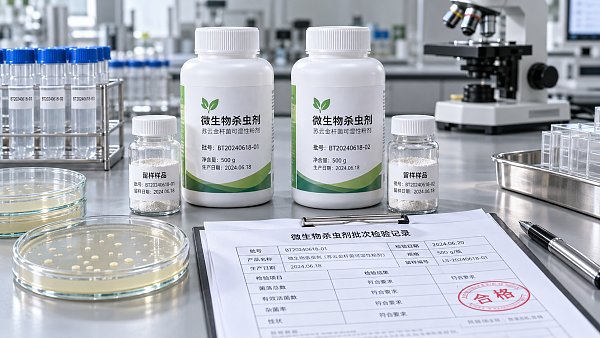
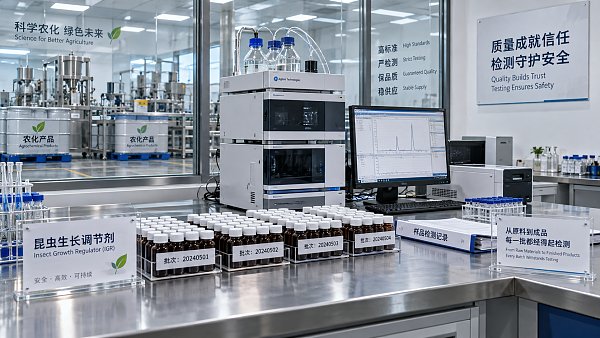
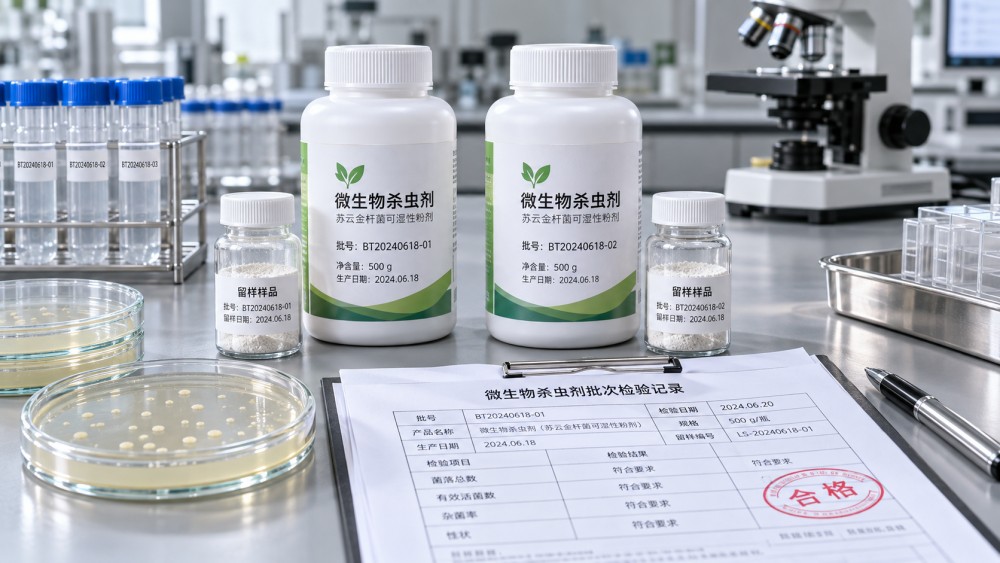
A sample certificate of analysis shows how results are reported. Certificates from several recent commercial batches reveal more about production consistency. Request actual results for relevant attributes rather than documents that state only “passes.” Sensitive commercial details can be removed without obscuring batch dates, methods, specifications, and results.
Useful attributes include identity, biological potency or viability, relevant microbial contamination limits, and formulation properties linked to application. For powders and granules, moisture, wetting, dispersibility, and suspensibility may affect usability. Liquid formulations require attention to settling, redispersion, viscosity, and compatibility with their packaging.
Specifications for microbial contamination should distinguish the intended organism from unwanted organisms and reflect the product’s regulatory and safety requirements. A generic statement such as “microbiologically compliant” provides little information unless the test panel and acceptance limits are available.
Shelf-life support should cover the commercial formulation in its proposed packaging. Data from an unformulated culture or a different container do not automatically support the offered product. Ask for real-time stability results under labeled conditions and identify which attributes were measured throughout storage. Accelerated studies can support assessment, but their predictive value requires justification for the organism and formulation.
Separate unopened shelf life from stability after opening. A large pack that remains open across several applications can experience repeated moisture exposure or temperature changes. Where post-opening data are unavailable, smaller packs may reduce unused inventory despite a higher price per kilogram.
Connect shelf life to the actual delivery route
The relevant shelf life is what remains when the shipment arrives and enters inventory. Request manufacturing dates, expiry dates, and a contractual minimum remaining shelf life at receipt. Include time for customs clearance, incoming inspection, seasonal demand shifts, and distribution to the application location.
Storage instructions need operational detail. Establish the permitted temperature range, sensitivity to freezing, moisture protection requirements, and the evidence supporting allowable temperature excursions. Refrigeration is not a universal requirement for microbial insecticides; the appropriate conditions depend on the specific product.
For a temperature-sensitive shipment, agree on packaging, monitoring, logger placement, and the procedure for evaluating an excursion. An elevated temperature reading requires assessment against relevant stability evidence. A logger records exposure; it does not establish the shipment’s remaining biological activity.
Also examine the route beyond the main transport leg. Loading areas, transshipment warehouses, customs holds, and local delivery vehicles can expose products to unfavorable conditions. Responsibility for maintaining storage conditions and handling a delayed or compromised shipment should be explicit before dispatch.
Confirm that the product fits the intended application
Laboratory potency does not establish performance under every field condition. Request efficacy evidence relevant to the target pest, crop, application method, and pest stage. Trials against another insect species or under protected cultivation may have limited relevance to an outdoor use with greater sunlight exposure or different humidity.
Read trial conditions alongside reported outcomes. Application timing, pest pressure, spray coverage, repeat applications, and assessment intervals affect interpretation. Slower mortality is compatible with some microbial modes of action, so observations must cover a biologically appropriate period. An early assessment alone can give a misleading picture.
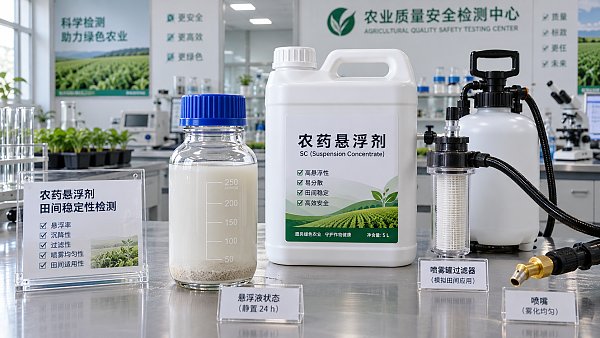
Formulation quality also affects delivery. A wettable powder that disperses poorly can produce uneven tank concentrations or nozzle blockages even when its biological assay passes. Request preparation instructions and physical test results relevant to the intended equipment.
Technical support should address practical compatibility questions: water quality, tank residence time, agitation, and mixing with other crop inputs. Compatibility has several meanings. A mixture can remain physically stable while reducing microbial viability or activity. Any claimed compatibility should identify the tested products, concentrations, exposure time, and assessment method.
Resolve market access before paying for commercial stock
Registration and import requirements differ across destinations. Verify that the exact product, strain, formulation, intended use, and relevant supply entities align with the applicable authorization. An approval in one country does not establish permission to import or sell the product elsewhere.
Request the current approved label, safety data sheet, and relevant registration or authorization evidence. Confirm their status through the competent authority’s records where available. Export paperwork, a free-sale certificate, or a general quality-system certificate does not independently establish destination-market authorization.
Label restrictions also affect commercial value. Permitted crops, target pests, application rates, storage instructions, and any applicable harvest or re-entry conditions determine how inventory can be used. These constraints belong in the evaluation before price negotiations conclude.
Compare the cost of usable treatments
Start with the labeled application rate for the proposed use, then calculate product cost per treated area. Include freight, temperature protection where required, import charges, testing, storage, and expected losses from expiry or unusable packaging sizes. Keep assumptions visible so that differences between quotations remain explainable.
Usable treatment cost = total acquisition and handling cost ÷ treatments available from accepted, usable stock.
This calculation is meaningful only when the treatment basis is comparable. Different products may require different application frequencies or timing. Use supported application programs rather than assuming identical performance from equal product weights or organism counts. Where efficacy is uncertain, a controlled trial provides better evidence than assigning an invented performance adjustment.
Minimum order quantity can outweigh a small unit-price discount. Stock purchased beyond realistic seasonal demand creates exposure to expiry and storage costs. Negotiate pack sizes, staged deliveries, or smaller initial quantities against expected consumption and remaining shelf life.
Make acceptance terms specific enough to enforce
Before the first commercial order, agree on a written specification and sampling procedure. Define the test methods, sampling point, laboratory arrangements, and acceptance limits. Independent testing is useful only when the laboratory can handle the organism and formulation correctly; an unsuitable recovery method can produce misleadingly low results.
The purchase terms should address:
- Batch documentation and minimum remaining shelf life on arrival.
- Transport conditions, monitoring responsibilities, and the evidence required to assess excursions.
- A claims period that allows receipt testing to finish, with a defined process for disputed results.
- Replacement, credit, or refund arrangements for confirmed nonconformity, including responsibility for associated freight and testing costs.
A retained sample from the dispatched batch, stored under agreed conditions, helps investigate later discrepancies. Record batch identifiers through receipt and storage so that an investigation can distinguish a manufacturing issue from transport exposure, storage damage, or application conditions.
For an unfamiliar source, a limited first order creates an opportunity to assess commercial-batch documentation, delivery conditions, incoming quality, and technical response before committing to larger volumes. Set the acceptance criteria before shipment so that expansion rests on evidence from the material actually supplied.
Facing technical bottlenecks in manufacturing or looking for more efficient industrial solutions? Leave your details below and let the engineering experts at FCAS solve them for you.
We respect your privacy. Your information is strictly confidential.
Related News
 Targeted Bio-pesticides & APIsWhen Should You Apply Botanical Insecticides for Fruit Trees?When should you apply botanical insecticides for fruit trees? Discover how to time treatments for vulnerable pests while protecting pollinators and your harvest.MORE+
 Targeted Bio-pesticides & APIsHow to Use Microbial Fungicides for Soil Borne DiseasesDiscover how to use microbial fungicides for soil borne diseases, from product selection to root-zone application, and build a more effective crop protection program.MORE+
 Targeted Bio-pesticides & APIsHow to Choose Insecticides Based on the Pest and CropChoose insecticides with confidence. Learn how to match treatments to pests and crops while protecting beneficial insects and meeting harvest requirements.MORE+
 Targeted Bio-pesticides & APIsHow Are Fungicide APIs Used in Crop Protection Products?Fungicide APIs for crop protection power disease control products. Discover how formulation, application and resistance management affect results.MORE+
 Targeted Bio-pesticides & APIsHow to Evaluate Quality Control at a Botanical Insecticides FactoryEvaluate a botanical insecticides factory with practical checks for sourcing, testing, batch traceability and stability. Learn how to identify quality risks before choosing a supplier.MORE+
 Targeted Bio-pesticides & APIsHow Microbial Insecticides for Public Health Control MosquitoesDiscover how microbial insecticides for public health control mosquito larvae, and learn how to choose formulations and improve field results.MORE+
 Targeted Bio-pesticides & APIsHow Effective Are Botanical Fungicides for Anthracnose?Botanical fungicides for anthracnose can help suppress disease, but results vary. Discover what affects performance and how to choose and use them effectively.MORE+
 Targeted Bio-pesticides & APIsHow to Select Insecticide APIs for Ultra Low Volume FormulationsExplore how to select insecticide APIs for ultra low volume formulations, from stability and droplet performance to regulatory compliance and supply.MORE+
 Targeted Bio-pesticides & APIsEFSA Publishes Peer Review of Trichoderma asperellum ICC012EFSA’s peer review of Trichoderma asperellum ICC012 finds no safety concerns for its assessed EU uses. Explore the implications for biopesticide compliance.MORE+
 Targeted Bio-pesticides & APIsHow to Apply Microbial Pesticides to Foliage EffectivelyMicrobial pesticides for foliar application work best with proper mixing, timing, and leaf coverage. Discover practical steps to improve results and avoid common mistakes.MORE+
 Targeted Bio-pesticides & APIsHow to Use Botanical Fungicides for Fruits EffectivelyBotanical fungicides for fruits can help protect your crop when used correctly. Learn how to choose, time, and apply treatments for healthier fruit.MORE+
 Targeted Bio-pesticides & APIsHow Are Insecticide APIs Used in Public Health Programs?Insecticide APIs for public health support vector control through sprays, treated nets and larvicides. Discover how formulation, resistance and safety shape product selection.MORE+
 Targeted Bio-pesticides & APIsGerman Research Reinforces Pesticide Risks to Aquatic EcosystemsPesticide risks to aquatic ecosystems gain new support from German research. Explore the findings and why holistic approaches matter for agriculture and environmental protection.MORE+
 Targeted Bio-pesticides & APIsSulfonium Modification Offers a Potential Route Around Antifungal ResistanceSulfonium modification shows potential against antifungal resistance in wax moth larvae. Explore what this early finding could mean for future antifungal drug development.MORE+
 Targeted Bio-pesticides & APIsHow Do Microbial Fungicides for Seed Treatment Reduce Damping-Off?Discover how microbial fungicides for seed treatment help reduce damping-off. Learn what to check in strains, coatings, and efficacy data to protect seedlings.MORE+
 Targeted Bio-pesticides & APIsHow to Evaluate a Microbial Insecticides Supplier Before OrderingEvaluate a microbial insecticides supplier with confidence. Learn to verify potency, shelf life, compliance, and delivery quality before ordering to reduce risk and protect your budget.MORE+
 Targeted Bio-pesticides & APIsWhich Quality Specifications Matter When Sourcing Bioherbicide APIs?Sourcing Bioherbicide APIs? Discover the quality specs that matter—from identity and potency to impurities and stability—to compare suppliers and buy with confidence.MORE+
 Targeted Bio-pesticides & APIsHow to Select Residue-Compliant Insect Growth Regulators for CropsSelect residue compliant insect growth regulators with confidence. Discover key checks for crop approvals, export MRLs, harvest intervals, and testing to make informed treatment decisions.MORE+
 Targeted Bio-pesticides & APIsHow to Choose a Reliable Supplier of Insect Growth RegulatorsChoose a reliable insect growth regulators supplier with confidence. Learn how to verify quality, regulatory fit, traceability, and delivery before committing to your next order.MORE+
 Targeted Bio-pesticides & APIsHow Botanical Insecticides Protect Vegetable Crops EffectivelyBotanical insecticides for vegetables help growers improve pest control, spray coverage, IPM compatibility, and crop protection results. Explore practical application insights.MORE+
 Targeted Bio-pesticides & APIsChoosing Microbial Fungicides for Foliar Diseases in Integrated Crop ProgramsMicrobial fungicides for foliar diseases: learn how to match biology, formulation, tank compatibility, and timing for stronger integrated crop protection.MORE+
 Targeted Bio-pesticides & APIsHow Microbial Insecticides Control Caterpillars With Lower Crop Residue RiskMicrobial insecticides for caterpillars help protect crops with targeted early-larval control and lower residue-management pressure. Learn timing, coverage, compliance, and scouting essentials.MORE+
 Targeted Bio-pesticides & APIsInsecticides Explained Through Labels, Active Ingredients, and SafetyInsecticides explained through labels, active ingredients, formulations, and safety. Learn how to compare products, manage risk, and make informed crop protection decisions.MORE+
 Targeted Bio-pesticides & APIsHow to Evaluate Pesticide Suspension Concentrates for Field StabilityPesticide Suspension Concentrates: learn how to evaluate field stability, redispersibility, dilution, tank-mix compatibility, and spray safety for reliable performance.MORE+
 Targeted Bio-pesticides & APIsHow Microbial Inoculants for Seed Treatment Improve Early Crop VigorDiscover how microbial inoculants for seed treatment support early crop vigor through viable microbes, precise application, compatibility, storage, and stronger root establishment.MORE+
 Targeted Bio-pesticides & APIsSelecting Fungicide APIs for Soluble Liquid FormulationsFungicide APIs for soluble liquid formulations: explore solubility, stability, solvent selection, compliance, and sourcing factors for scalable product development.MORE+
 Targeted Bio-pesticides & APIsHow to Qualify a Pesticide Formulation Intermediates SupplierChoose a reliable pesticide formulation intermediates supplier with proven quality control, traceability, formulation testing, and change management expertise.MORE+
 Targeted Bio-pesticides & APIsHow to Evaluate a Microbial Insecticides Factory Before You Place an OrderEvaluate a microbial insecticides factory with confidence. Compare strain control, formulation stability, batch consistency, documents, logistics, and real cost before ordering.MORE+
 Targeted Bio-pesticides & APIsHow to Select Insecticide APIs for Reliable Stored Grain ProtectionInsecticide APIs for stored grain: learn how to select compliant, reliable actives for pest control, residue limits, formulation fit, and supplier quality.MORE+
 Targeted Bio-pesticides & APIsHow Botanical Insecticides Support Greenhouse Pest ControlBotanical insecticides for greenhouse use: learn practical IPM strategies for pest control, spray coverage, crop safety, and beneficial insect protection.MORE+
 Targeted Bio-pesticides & APIsChoosing Fungicide APIs for Stable Water Dispersible GranulesFungicide APIs for water dispersible granules: learn how particle behavior, wettability, carrier compatibility, and stability drive reliable WDG performance.MORE+
 Targeted Bio-pesticides & APIsHow Botanical Fungicides Protect Vegetables Without Residue RisksBotanical fungicides for vegetables help reduce residue risks while supporting effective disease control, compliance, and market-ready crop quality.MORE+
 Targeted Bio-pesticides & APIsHow to Select Intermediates for Stable Emulsifiable ConcentratesPesticide formulation intermediates for emulsifiable concentrate: learn how to select solvents and emulsifiers for robust solubility, dilution stability, hard-water performance, and scalable EC products.MORE+
 Targeted Bio-pesticides & APIsHow Organic Botanical Insecticides Can Improve Integrated Pest ManagementOrganic botanical insecticides can strengthen IPM through targeted pest control, smarter monitoring, safer application, and better protection of crops and beneficial insects.MORE+
 Targeted Bio-pesticides & APIsWhat to Evaluate Before Choosing a Botanical Insecticides ManufacturerBotanical insecticides manufacturer selection guide: evaluate raw material traceability, formulation stability, regulatory documents, supply continuity, and cost per hectare.MORE+
 Targeted Bio-pesticides & APIsHow Chitin Synthesis Inhibitors Control Insects Without ResistanceChitin synthesis inhibitor insect growth regulators disrupt pest development. Learn timing, coverage, monitoring, and resistance-management strategies for smarter control.MORE+
 Targeted Bio-pesticides & APIsIs Microbial Inoculants Wholesale the Right Move for Cost ControlMicrobial inoculants wholesale can cut costs—but only when storage, shelf life, logistics, and supplier consistency protect product performance. Learn what distributors must check before buying.MORE+
 Targeted Bio-pesticides & APIsWhen Microbial Fungicides Work Best for Greenhouse CropsMicrobial fungicides for greenhouse crops work best when applied early under balanced humidity, clean sanitation, and strong scouting. Learn the best timing, crop stages, and use tips for better disease control.MORE+
 Targeted Bio-pesticides & APIsBiocontrol Agents for Fruit Crops That Help Cut Residue and Pest PressureBiocontrol agents for fruit crops help reduce residue risk, ease pest pressure, and support resistance management. Learn where they fit best for orchards and vineyards.MORE+
 Targeted Bio-pesticides & APIsWhen Microbial Fungicides for Foliar Diseases Work Better Than ChemicalsMicrobial fungicides for foliar diseases can outperform chemicals when timing, coverage, and residue control matter most. See where they deliver stronger field results.MORE+