How Do Microbial Fungicides for Seed Treatment Reduce Damping-Off?
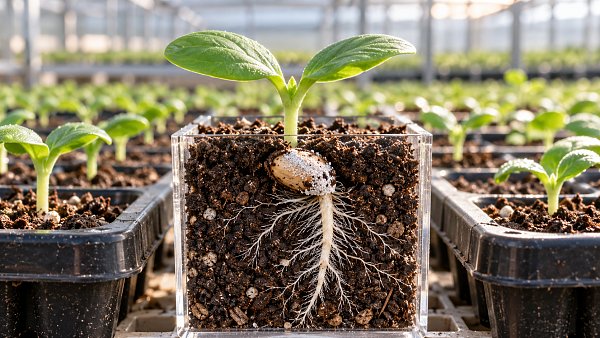
Microbial fungicides for seed treatment reduce damping-off by placing beneficial microorganisms close to the seed before pathogens can establish an infection. Depending on the strain, they can compete for nutrients and space, produce antimicrobial compounds, attack susceptible pathogens, or stimulate plant defenses. Protection depends on whether the organism remains viable during treatment and storage, becomes active after sowing, and protects the developing root under the conditions in which disease occurs.
These treatments work preventively. They cannot restore a seed that has already rotted or a seedling whose stem has collapsed. Their practical value lies in reducing infection during germination and early establishment, alongside drainage, sanitation, suitable planting conditions, and other compatible disease-control measures.
Damping-off has several causes, and treatment must match the pathogen
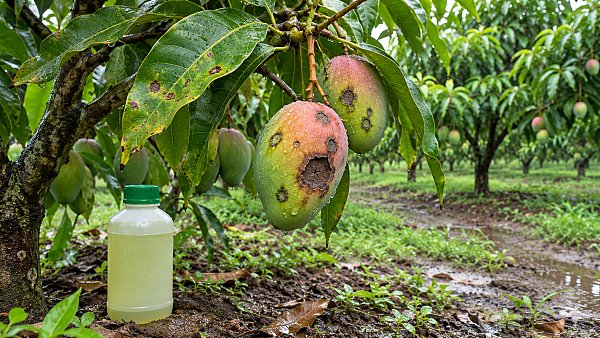
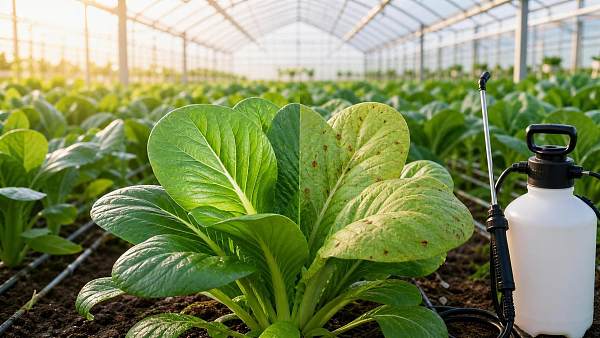
Damping-off describes a disease outcome rather than a single infection. Before emergence, seeds or developing seedlings decay underground, leaving gaps in the stand. After emergence, infected seedlings may develop a constricted, water-soaked, or discolored stem near the soil surface and fall over. Root injury can also leave surviving plants weak and uneven.
Common causes include Pythium species, Rhizoctonia solani, and some Fusarium species. Their biology differs: Pythium organisms are oomycetes, while Rhizoctonia and Fusarium are true fungi. Consequently, evidence that a biological treatment suppresses one pathogen does not establish that it controls the others.
Poor emergence alone is insufficient to diagnose damping-off. Low seed vigor, planting depth, fertilizer injury, crusting, and unsuitable moisture can produce similar stand losses. Where disease recurs, identifying the likely pathogen helps determine whether a proposed microbial strain has a relevant activity spectrum.
Conditions also change the balance between seedling growth and infection. Cool, wet soil can prolong emergence and favor some pathogens, while other damping-off organisms remain damaging in warmer conditions. A treatment evaluated only in warm, well-drained substrate provides limited evidence for performance in a cold, saturated seedbed.
How beneficial microorganisms interrupt infection
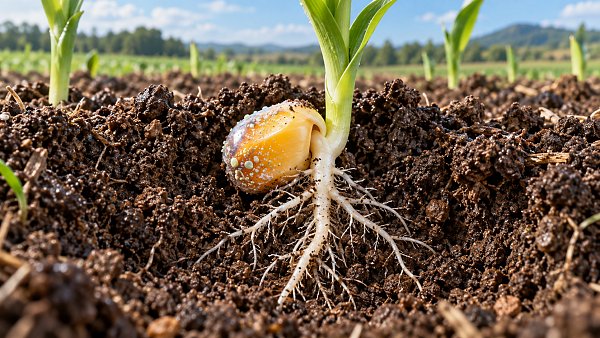
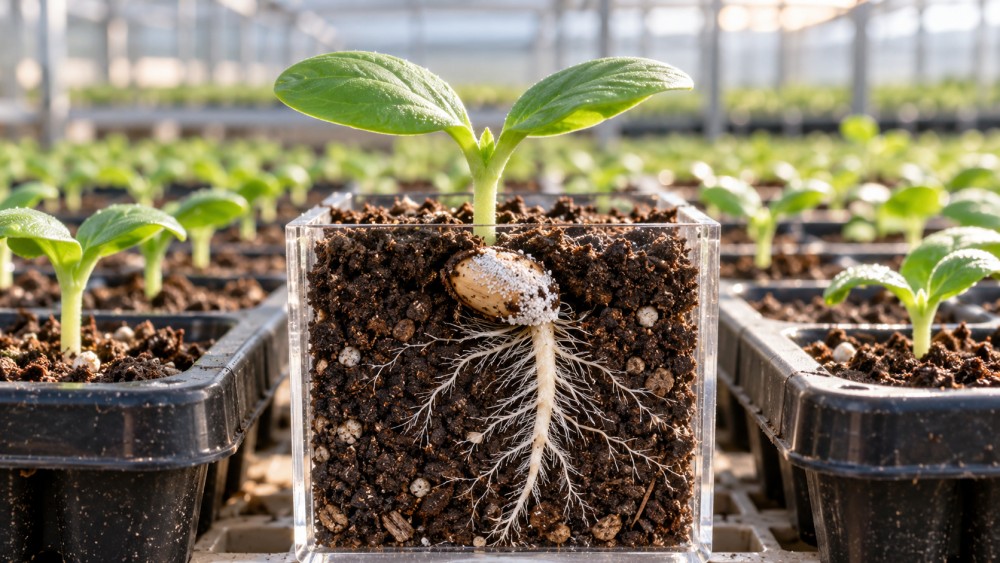
A germinating seed releases compounds that attract and nourish microorganisms. A biological seed coating positions a selected organism near this nutrient source, potentially giving it an early opportunity to occupy the seed surface and emerging root. Several mechanisms may operate together, but their importance varies by strain and environment.
Competition around the seed and root
Beneficial organisms can consume available nutrients and occupy sites that pathogens might otherwise use. Some also produce siderophores, compounds that bind iron and can restrict its availability to competing microorganisms. Successful root colonization can extend protection beyond the original seed surface as the seedling develops.
Timing matters. A high viable count in the package does not guarantee rapid establishment after sowing. The organism must survive application, respond to soil moisture and temperature, and become active before infection advances. Protection may be limited if the pathogen attacks faster than the beneficial organism establishes.
Antimicrobial activity and direct antagonism
Certain Bacillus strains produce antimicrobial metabolites, including lipopeptides that can interfere with susceptible pathogens. Some Trichoderma strains compete with pathogens and may directly parasitize susceptible fungi through contact and enzymatic activity.
These capabilities are strain-specific. A species name alone cannot establish which compounds are produced, which pathogens are affected, or whether effective activity occurs around a treated seed. Inhibition on a laboratory plate is useful screening evidence, but soil, organic matter, microbial competition, and root exudates can alter the interaction.
Changes in plant defense responses
Some beneficial microorganisms can prime plant defenses, helping the plant respond more effectively to subsequent attack. This response depends on the microorganism, crop, and growing conditions. It is also distinct from directly killing a pathogen.
For damping-off, the timing of defense activation is particularly relevant because infection can occur very early. Claims about induced resistance should therefore be supported by disease outcomes in the target crop, rather than inferred from general plant-growth responses.
Why strain identity and formulation matter more than the genus name
Comparisons such as “Bacillus versus Trichoderma” offer only a starting point. Products within either group can differ in strain, viable concentration, carrier, storage requirements, application method, and supporting evidence. Two products listing the same species may behave differently during coating, storage, and establishment.
Many commercial Bacillus formulations use bacterial endospores, which can support formulation and storage stability. Those spores still need suitable conditions to become metabolically active. Products containing Trichoderma commonly rely on fungal propagules whose survival and germination also depend on formulation and handling. Neither group is automatically superior across crops and pathogens.
The following questions help connect a product specification to its intended use:
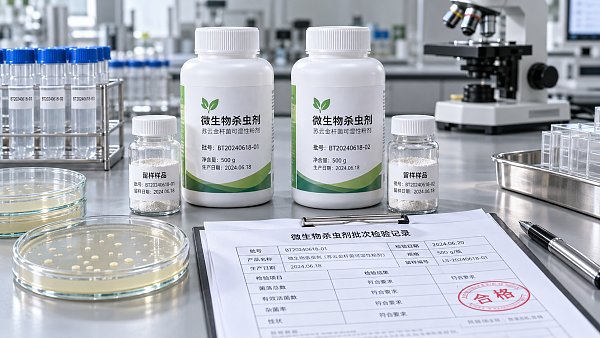
Colony-forming units are commonly used to express viable microbial content, but results depend on the method and organism. Aggregated cells or spores can complicate interpretation. Compare specifications on the same basis, distinguishing concentration per unit of product from the viable amount delivered per seed or seed mass.
Higher counts do not automatically mean better disease control. Dose-response behavior, seed coverage, root colonization, and crop safety all influence the useful application rate.
The seed coating process can determine whether the organism survives
A microbial product may perform well alone and lose activity in a complete treatment recipe. Seed coatings can contain fungicides, insecticides, micronutrients, polymers, colorants, and processing aids. Their effects depend on concentration, contact time, drying conditions, and the susceptibility of the particular microorganism.
Physical compatibility and biological compatibility require separate checks. A slurry may remain uniform and flow through equipment while reducing microbial viability. Conversely, an organism may survive in a mixture that causes clumping, uneven coverage, or excessive dust-off.
Evaluate the complete recipe at the intended application rate and sequence. Include the actual mixing interval, equipment conditions, drying process, and expected delay before sowing. Compatibility demonstrated with one pesticide active ingredient does not establish compatibility with every commercial formulation containing it; solvents, preservatives, and other components can change the outcome.
The same distinction applies to storage. Shelf life in an unopened container does not establish shelf life on treated seed. Once applied, the organism encounters the seed surface, coating chemistry, changing moisture, and storage temperatures. A product suitable for treatment immediately before sowing may require different evidence from one intended for seed stored through a distribution season.
Germination and seedling vigor should be assessed alongside microbial survival. A coating must preserve planting quality as well as biological activity. For inoculated legumes, compatibility with rhizobia is an additional consideration because disease suppression and nodulation depend on different microbial partners.
What convincing damping-off efficacy data should show
A useful evaluation connects the proposed mechanism to a measurable reduction in disease. Laboratory antagonism studies can support strain selection, but they do not reproduce the full seed-to-soil environment. Controlled disease trials and trials under representative production conditions provide different, complementary evidence.
The trial should distinguish disease suppression from general growth promotion. Larger roots or taller seedlings do not establish damping-off control if disease incidence and stand survival were not measured. Similarly, improved emergence may reflect a vigor effect unless pathogen involvement is established.
A practical trial design includes:
- An untreated comparison to establish baseline emergence and disease pressure.
- The microbial treatment at its proposed use rate, using the intended coating process.
- A relevant reference treatment to put performance in context.
- A combined-treatment arm when the intended program includes another seed treatment.
- Replication and randomization appropriate to the trial setting.
Under controlled conditions, a noninfested comparison can help separate disease effects from treatment-related changes in germination. Under field conditions, records of soil temperature, moisture, planting depth, seed lot, and disease history help explain variation between sites.
Assess emergence, pre-emergence losses where measurable, post-emergence damping-off, surviving stand, and symptoms over an appropriate establishment period. Recovering the beneficial strain from roots can support a colonization claim, but colonization alone does not prove protection.
Disease pressure determines how informative a result is. When untreated seedlings remain healthy, similar performance among treatments says little about disease control. Conversely, overwhelming inoculum or prolonged waterlogging can exceed the protection achievable by a seed treatment. Trials should reveal both useful operating conditions and performance limits.
Where biological seed treatments fit in a disease-management program
Microbial fungicides for seed treatment are most useful when their activity matches the likely pathogen and the seedbed allows timely germination and microbial establishment. Sanitary trays, suitable substrate, drainage, appropriate irrigation, and sound seed quality reduce pressures that a coating cannot reliably overcome.
They may also contribute to programs using conventional fungicides, provided the combination is permitted and biologically compatible. A conventional treatment can provide direct protection while a compatible beneficial organism establishes around roots. This is a program to evaluate, rather than a benefit to assume: a chemical partner may suppress the microbial strain or leave little additional disease reduction to measure.
Regulatory suitability is a separate selection requirement. A microorganism marketed for plant growth support does not automatically have authorization for disease-control claims or seed-treatment use. Product documentation should identify the permitted crop, application route, target claims, handling requirements, and use restrictions for the intended market.
Before adopting a treatment, define the actual use scenario: crop and seed lot, likely pathogen, full coating recipe, treated-seed storage period, and planting conditions. Then assess whether the evidence covers that scenario. A strain with relevant disease data, reliable delivery, and demonstrated survival through the intended process provides a stronger basis for selection than a broad species-level claim or a high microbial count alone.
Facing technical bottlenecks in manufacturing or looking for more efficient industrial solutions? Leave your details below and let the engineering experts at FCAS solve them for you.
We respect your privacy. Your information is strictly confidential.
Related News
 Targeted Bio-pesticides & APIsWhen Should You Apply Botanical Insecticides for Fruit Trees?When should you apply botanical insecticides for fruit trees? Discover how to time treatments for vulnerable pests while protecting pollinators and your harvest.MORE+
 Targeted Bio-pesticides & APIsHow to Use Microbial Fungicides for Soil Borne DiseasesDiscover how to use microbial fungicides for soil borne diseases, from product selection to root-zone application, and build a more effective crop protection program.MORE+
 Targeted Bio-pesticides & APIsHow to Choose Insecticides Based on the Pest and CropChoose insecticides with confidence. Learn how to match treatments to pests and crops while protecting beneficial insects and meeting harvest requirements.MORE+
 Targeted Bio-pesticides & APIsHow Are Fungicide APIs Used in Crop Protection Products?Fungicide APIs for crop protection power disease control products. Discover how formulation, application and resistance management affect results.MORE+
 Targeted Bio-pesticides & APIsHow to Evaluate Quality Control at a Botanical Insecticides FactoryEvaluate a botanical insecticides factory with practical checks for sourcing, testing, batch traceability and stability. Learn how to identify quality risks before choosing a supplier.MORE+
 Targeted Bio-pesticides & APIsHow Microbial Insecticides for Public Health Control MosquitoesDiscover how microbial insecticides for public health control mosquito larvae, and learn how to choose formulations and improve field results.MORE+
 Targeted Bio-pesticides & APIsHow Effective Are Botanical Fungicides for Anthracnose?Botanical fungicides for anthracnose can help suppress disease, but results vary. Discover what affects performance and how to choose and use them effectively.MORE+
 Targeted Bio-pesticides & APIsHow to Select Insecticide APIs for Ultra Low Volume FormulationsExplore how to select insecticide APIs for ultra low volume formulations, from stability and droplet performance to regulatory compliance and supply.MORE+
 Targeted Bio-pesticides & APIsEFSA Publishes Peer Review of Trichoderma asperellum ICC012EFSA’s peer review of Trichoderma asperellum ICC012 finds no safety concerns for its assessed EU uses. Explore the implications for biopesticide compliance.MORE+
 Targeted Bio-pesticides & APIsHow to Apply Microbial Pesticides to Foliage EffectivelyMicrobial pesticides for foliar application work best with proper mixing, timing, and leaf coverage. Discover practical steps to improve results and avoid common mistakes.MORE+
 Targeted Bio-pesticides & APIsHow to Use Botanical Fungicides for Fruits EffectivelyBotanical fungicides for fruits can help protect your crop when used correctly. Learn how to choose, time, and apply treatments for healthier fruit.MORE+
 Targeted Bio-pesticides & APIsHow Are Insecticide APIs Used in Public Health Programs?Insecticide APIs for public health support vector control through sprays, treated nets and larvicides. Discover how formulation, resistance and safety shape product selection.MORE+
 Targeted Bio-pesticides & APIsGerman Research Reinforces Pesticide Risks to Aquatic EcosystemsPesticide risks to aquatic ecosystems gain new support from German research. Explore the findings and why holistic approaches matter for agriculture and environmental protection.MORE+
 Targeted Bio-pesticides & APIsSulfonium Modification Offers a Potential Route Around Antifungal ResistanceSulfonium modification shows potential against antifungal resistance in wax moth larvae. Explore what this early finding could mean for future antifungal drug development.MORE+
 Targeted Bio-pesticides & APIsHow Do Microbial Fungicides for Seed Treatment Reduce Damping-Off?Discover how microbial fungicides for seed treatment help reduce damping-off. Learn what to check in strains, coatings, and efficacy data to protect seedlings.MORE+
 Targeted Bio-pesticides & APIsHow to Evaluate a Microbial Insecticides Supplier Before OrderingEvaluate a microbial insecticides supplier with confidence. Learn to verify potency, shelf life, compliance, and delivery quality before ordering to reduce risk and protect your budget.MORE+
 Targeted Bio-pesticides & APIsWhich Quality Specifications Matter When Sourcing Bioherbicide APIs?Sourcing Bioherbicide APIs? Discover the quality specs that matter—from identity and potency to impurities and stability—to compare suppliers and buy with confidence.MORE+
 Targeted Bio-pesticides & APIsHow to Select Residue-Compliant Insect Growth Regulators for CropsSelect residue compliant insect growth regulators with confidence. Discover key checks for crop approvals, export MRLs, harvest intervals, and testing to make informed treatment decisions.MORE+
 Targeted Bio-pesticides & APIsHow to Choose a Reliable Supplier of Insect Growth RegulatorsChoose a reliable insect growth regulators supplier with confidence. Learn how to verify quality, regulatory fit, traceability, and delivery before committing to your next order.MORE+
 Targeted Bio-pesticides & APIsHow Botanical Insecticides Protect Vegetable Crops EffectivelyBotanical insecticides for vegetables help growers improve pest control, spray coverage, IPM compatibility, and crop protection results. Explore practical application insights.MORE+
 Targeted Bio-pesticides & APIsChoosing Microbial Fungicides for Foliar Diseases in Integrated Crop ProgramsMicrobial fungicides for foliar diseases: learn how to match biology, formulation, tank compatibility, and timing for stronger integrated crop protection.MORE+
 Targeted Bio-pesticides & APIsHow Microbial Insecticides Control Caterpillars With Lower Crop Residue RiskMicrobial insecticides for caterpillars help protect crops with targeted early-larval control and lower residue-management pressure. Learn timing, coverage, compliance, and scouting essentials.MORE+
 Targeted Bio-pesticides & APIsInsecticides Explained Through Labels, Active Ingredients, and SafetyInsecticides explained through labels, active ingredients, formulations, and safety. Learn how to compare products, manage risk, and make informed crop protection decisions.MORE+
 Targeted Bio-pesticides & APIsHow to Evaluate Pesticide Suspension Concentrates for Field StabilityPesticide Suspension Concentrates: learn how to evaluate field stability, redispersibility, dilution, tank-mix compatibility, and spray safety for reliable performance.MORE+
 Targeted Bio-pesticides & APIsHow Microbial Inoculants for Seed Treatment Improve Early Crop VigorDiscover how microbial inoculants for seed treatment support early crop vigor through viable microbes, precise application, compatibility, storage, and stronger root establishment.MORE+
 Targeted Bio-pesticides & APIsSelecting Fungicide APIs for Soluble Liquid FormulationsFungicide APIs for soluble liquid formulations: explore solubility, stability, solvent selection, compliance, and sourcing factors for scalable product development.MORE+
 Targeted Bio-pesticides & APIsHow to Qualify a Pesticide Formulation Intermediates SupplierChoose a reliable pesticide formulation intermediates supplier with proven quality control, traceability, formulation testing, and change management expertise.MORE+
 Targeted Bio-pesticides & APIsHow to Evaluate a Microbial Insecticides Factory Before You Place an OrderEvaluate a microbial insecticides factory with confidence. Compare strain control, formulation stability, batch consistency, documents, logistics, and real cost before ordering.MORE+
 Targeted Bio-pesticides & APIsHow to Select Insecticide APIs for Reliable Stored Grain ProtectionInsecticide APIs for stored grain: learn how to select compliant, reliable actives for pest control, residue limits, formulation fit, and supplier quality.MORE+
 Targeted Bio-pesticides & APIsHow Botanical Insecticides Support Greenhouse Pest ControlBotanical insecticides for greenhouse use: learn practical IPM strategies for pest control, spray coverage, crop safety, and beneficial insect protection.MORE+
 Targeted Bio-pesticides & APIsChoosing Fungicide APIs for Stable Water Dispersible GranulesFungicide APIs for water dispersible granules: learn how particle behavior, wettability, carrier compatibility, and stability drive reliable WDG performance.MORE+
 Targeted Bio-pesticides & APIsHow Botanical Fungicides Protect Vegetables Without Residue RisksBotanical fungicides for vegetables help reduce residue risks while supporting effective disease control, compliance, and market-ready crop quality.MORE+
 Targeted Bio-pesticides & APIsHow to Select Intermediates for Stable Emulsifiable ConcentratesPesticide formulation intermediates for emulsifiable concentrate: learn how to select solvents and emulsifiers for robust solubility, dilution stability, hard-water performance, and scalable EC products.MORE+
 Targeted Bio-pesticides & APIsHow Organic Botanical Insecticides Can Improve Integrated Pest ManagementOrganic botanical insecticides can strengthen IPM through targeted pest control, smarter monitoring, safer application, and better protection of crops and beneficial insects.MORE+
 Targeted Bio-pesticides & APIsWhat to Evaluate Before Choosing a Botanical Insecticides ManufacturerBotanical insecticides manufacturer selection guide: evaluate raw material traceability, formulation stability, regulatory documents, supply continuity, and cost per hectare.MORE+
 Targeted Bio-pesticides & APIsHow Chitin Synthesis Inhibitors Control Insects Without ResistanceChitin synthesis inhibitor insect growth regulators disrupt pest development. Learn timing, coverage, monitoring, and resistance-management strategies for smarter control.MORE+
 Targeted Bio-pesticides & APIsIs Microbial Inoculants Wholesale the Right Move for Cost ControlMicrobial inoculants wholesale can cut costs—but only when storage, shelf life, logistics, and supplier consistency protect product performance. Learn what distributors must check before buying.MORE+
 Targeted Bio-pesticides & APIsWhen Microbial Fungicides Work Best for Greenhouse CropsMicrobial fungicides for greenhouse crops work best when applied early under balanced humidity, clean sanitation, and strong scouting. Learn the best timing, crop stages, and use tips for better disease control.MORE+
 Targeted Bio-pesticides & APIsBiocontrol Agents for Fruit Crops That Help Cut Residue and Pest PressureBiocontrol agents for fruit crops help reduce residue risk, ease pest pressure, and support resistance management. Learn where they fit best for orchards and vineyards.MORE+
 Targeted Bio-pesticides & APIsWhen Microbial Fungicides for Foliar Diseases Work Better Than ChemicalsMicrobial fungicides for foliar diseases can outperform chemicals when timing, coverage, and residue control matter most. See where they deliver stronger field results.MORE+