Choosing Microbial Fungicides for Foliar Diseases in Integrated Crop Programs
Choose a microbial fungicide by first matching its biological mode of action to the disease situation, then testing whether its formulation and spray program can preserve that activity on the leaf. A product with an appropriate microorganism can still disappoint when applied after infection has advanced, mixed with an incompatible material, exposed to unsuitable water quality, or scheduled without regard to canopy coverage and weather.
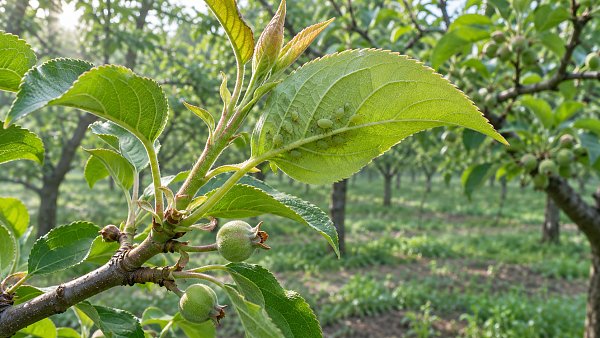
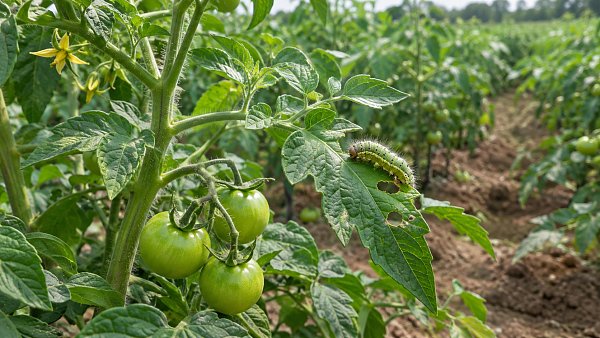
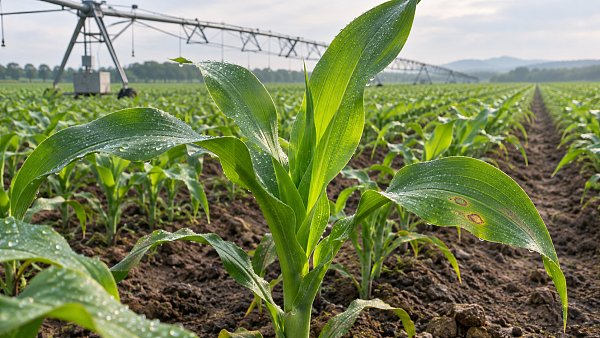
Foliar disease programs often involve recurring pressure from pathogens such as powdery mildew, Botrytis, Alternaria, leaf spots, downy mildew complexes, and other fungi or fungus-like organisms. These disease names are only a starting point. The same visible lesion pattern may arise from different causal organisms, nutrient stress, spray injury, or environmental damage. Selection should therefore begin with a reliable diagnosis and a record of where symptoms occur in the canopy, how quickly they spread, and whether conditions favor new infection.
Start with the role the product must play
Microbial fungicides are usually strongest when positioned as preventive or early-intervention tools within an integrated crop program. Many rely on surface colonization, competition for nutrients and space, antibiosis, parasitism, or stimulation of plant defense responses. These mechanisms require time and adequate contact with the crop surface. They are not interchangeable with fast-acting conventional fungicides used to suppress an established outbreak.
A selection decision changes materially according to the intended role. A product intended for routine preventive coverage should be evaluated for persistence, rainfastness, UV sensitivity, and ability to establish on young foliage. A product intended to bridge intervals between other fungicide applications must fit the rotation plan and remain compatible with associated foliar inputs. When visible disease is already expanding, the relevant question becomes whether the microbial product is suitable as a follow-up treatment after immediate suppression, rather than whether it can serve as the sole corrective spray.
Crop stage also matters. Dense flowering canopies, fruiting structures, tender expanding leaves, and mature waxy foliage present different deposition environments. A microorganism that performs well on exposed leaves may have limited access to protected infection sites. Conversely, a formulation that wets a dense canopy aggressively may increase the risk of runoff, uneven deposits, or sensitivity in delicate tissues.
Read the microbial identity beyond the front label
The organism or organisms in a microbial fungicide provide a useful first screen, but the strain-level product profile is what must fit the use pattern. Bacillus-based products often act through spores and antimicrobial metabolites; Trichoderma products may be selected for antagonism and plant-associated activity; other bacterial or fungal organisms can have different survival requirements and target profiles. Broad organism categories do not prove that two products will perform alike.
Technical documentation should clearly identify the active microorganism, viable-unit specification or other relevant potency expression, formulation type, target crops, labeled disease claims, application directions, storage conditions, and shelf-life statement. A vague declaration of “beneficial microbes” is insufficient for a foliar disease program because it does not establish identity, concentration, use scope, or batch-release basis.
Viability must be interpreted with the formulation and the expiry date. A high declared count at manufacture says little about the material delivered after transport and storage. Ask how potency is monitored through the declared shelf life, whether the specification is expressed at production or at expiry, and what acceptance documentation accompanies each lot. For dry products, moisture protection and reconstitution behavior are relevant. For liquid suspensions, settling, phase separation, viscosity changes, and freezing exposure can affect dose uniformity.
Target claims need a disease-stage reading
A label claim against a disease does not automatically mean equivalent performance at every stage of disease development. Some microbial products are better suited to preventing spore germination or colonizing healthy tissue before infection. Others are positioned where early lesions have appeared but disease pressure remains manageable. Product comparisons should distinguish preventive activity, early curative support where permitted, and suppression of secondary spread. Combining all three under a single “control” claim can lead to an unrealistic spray expectation.
Also separate true pathogen-spectrum relevance from a long crop list. A product used across many crops may be operationally convenient, but disease pressure, leaf architecture, irrigation practice, harvest interval, and spray equipment differ substantially. The best fit is the one supported for the specific crop-pathogen-crop-stage combination, not simply the one with the broadest label footprint.
Formulation quality determines whether biology reaches the leaf
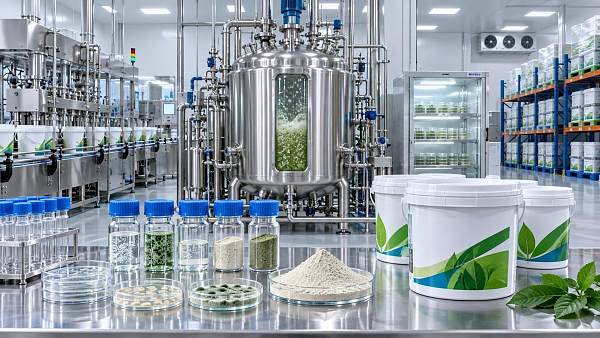
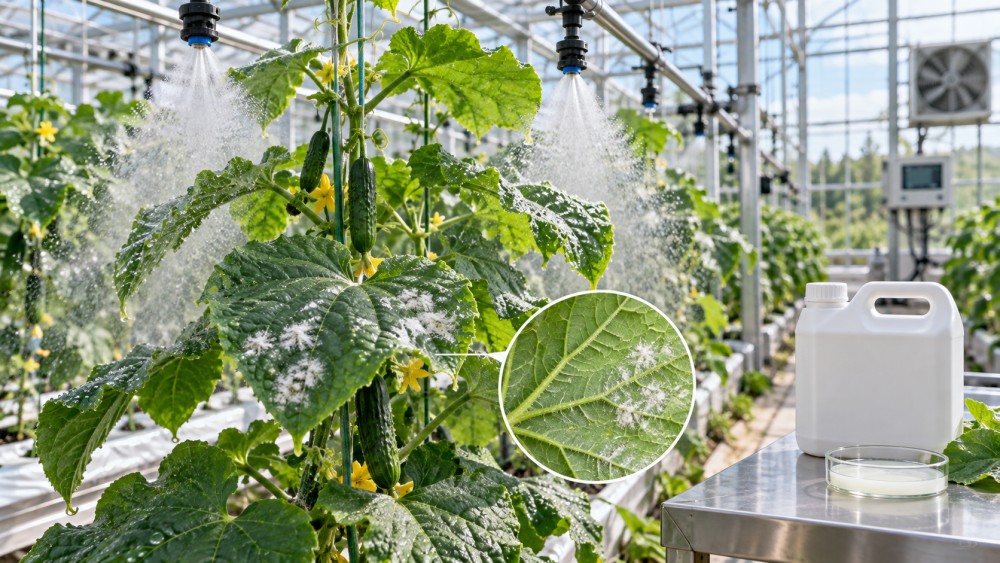
Foliar microbial fungicides are living or biologically active systems carried in a formulation. Their field value depends on dispersibility, suspension stability, wettability, particle behavior, nozzle passage, deposit formation, and protection from storage stress. A sound active strain in a poorly managed formulation may give irregular coverage or loss of viable activity before application.
Dry water-dispersible products can offer transport efficiency and lower leakage risk, yet they need rapid wetting and complete dispersion in the spray tank. Lumps, floating material, or persistent sediment may create uneven dosing and clog screens or nozzles. Liquid concentrates may be easier to measure and mix, but their stability under temperature cycling deserves close attention. A supplier statement that the product is “stable” should be supported by practical information on storage range, shaking requirements, freeze-thaw sensitivity, and handling after container opening.
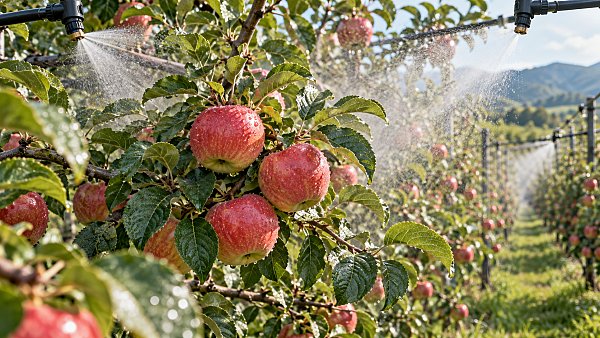
Droplet deposition is especially important for leaf disease control. Fine droplets can increase surface coverage but are more exposed to drift and evaporation. Coarser droplets reduce drift but may leave gaps on complex canopies. The appropriate balance depends on crop architecture, nozzle configuration, spray volume, leaf orientation, and local application restrictions. Coverage should be assessed on the surfaces where infection begins, including lower leaf surfaces or inner canopy zones when relevant. A microbial product cannot protect tissue it does not reach.
Tank-mix compatibility is a biological question
Compatibility is often treated as a physical issue: no sediment, flakes, excessive foam, or separation in the spray tank. Those observations matter, but a visually stable mixture can still reduce microbial viability. Copper products, strongly acidic or alkaline materials, oxidizing agents, disinfectants, bactericides, and some conventional fungicides may impair an organism even when the tank mixture appears normal.
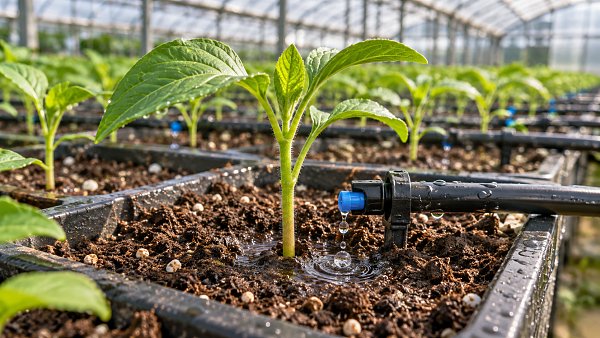
Water chemistry should be reviewed before adding the product. pH, alkalinity, residual sanitizer, hardness, and water temperature influence both the microorganism and formulation behavior. Water drawn from a system treated with sanitizers may require special attention. A biological product introduced into water containing an active disinfectant can lose performance before the sprayer leaves the filling area.
The compatibility question also extends to application sequence. Foliar fertilizers, oils, spreaders, stickers, humectants, and drift-control agents alter drying rate and leaf retention. That may improve persistence in one situation while restricting microbial establishment or creating crop-safety concerns in another. Where the label does not address a proposed combination, a small physical jar test is only the first step. It cannot demonstrate biological survival or crop safety. Use documented compatibility data or a controlled local trial before incorporating an unfamiliar mixture into a commercial spray schedule.
Place microbial products within a resistance-aware program
Microbial fungicides can support fungicide resistance management because their modes of action are often multi-faceted and differ from conventional single-site chemistry. That benefit should not be overstated. A biological product is not a substitute for sound rotation, disease forecasting, sanitation, crop ventilation, irrigation management, and timely application. Under persistent high pressure, relying on one microbial product repeatedly may leave unprotected intervals or select for operational failures such as late treatment and incomplete coverage.
Build the program around disease risk windows rather than calendar convenience. New growth, flowering, prolonged leaf wetness, dense canopy conditions, and forecast rainfall can determine when protectant coverage is needed. A microbial fungicide may be most useful before these windows or after an intervention has reduced active disease. When rainfall follows spraying, the practical concern is not merely whether the product is described as rainfast; it is whether drying time, deposit adhesion, and subsequent leaf expansion leave enough active coverage on susceptible tissue.
Do not assume that a short visible interval between sprays equals continuous biological protection. Leaf growth dilutes deposits, irrigation can disturb them, and ultraviolet exposure can reduce survival on exposed surfaces. Program intervals should reflect crop growth rate and disease pressure, within labeled directions, rather than follow a fixed interval copied from a different crop or season.
Residue, documentation, and handling should be reviewed early
Microbial products are often considered attractive where residue management is important, but residue expectations still need to be verified against the crop destination, market requirements, and the complete spray program. A favorable profile for one market does not establish acceptance in every destination. Review the product registration status for the intended crop and location, residue-related statements, pre-harvest directions, and documentation needed for traceability before committing the product to a season-long schedule.
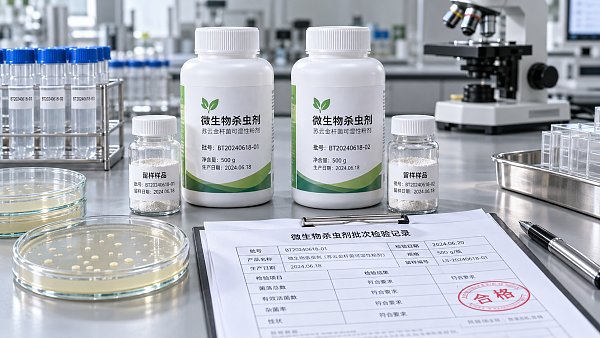
Documentation quality is also an indicator of supply reliability. Useful records include a current technical data sheet, safety information, label or use directions, certificate of analysis or lot-release document, production date, expiry date, storage instructions, and batch identification that remains legible through distribution. Differences between a commercial sample and a delivered lot should be traceable. When the product is imported or stored through multiple distribution points, confirm who controls temperature exposure, stock rotation, and expiry management.
Packaging deserves practical scrutiny. The closure must resist moisture ingress for dry products and leakage for liquids. Labels should remain readable after warehouse handling. Container size should match expected consumption so partially used material is not repeatedly opened and held under unsuitable conditions. This detail becomes more significant for formulations with narrow storage tolerances or a requirement for resealing and rapid use after opening.
Compare offers on a common use basis
Price per container is a weak comparison basis because pack size, potency, dose, spray frequency, usable shelf life, and required adjuvants differ. Compare the cost of a defined application program on the same crop area while keeping the intended disease role constant. Include the practical cost of extra passes, separate tank loads, compatibility restrictions, and loss risk from product expiry. A lower-priced product that requires more frequent application or cannot share a planned spray operation may have a higher program cost.
Field evaluation should be designed to answer a narrow decision question. For example, assess whether a candidate maintains disease suppression during a known risk window, whether it remains compatible with the planned foliar nutrition schedule, or whether it can replace a specific rotation position without reducing canopy protection. Record disease incidence and severity separately, note untreated or reference areas where appropriate, document weather and application conditions, and inspect multiple canopy positions. A single visual observation shortly after spraying does not distinguish disease suppression from temporary wash-off, uneven coverage, or delayed symptom expression.
The most dependable selection is one where the organism, formulation, spray water, equipment, crop stage, disease timing, and documentation all support the same use pattern. When those elements conflict, the apparent advantage of a familiar label claim or low unit price quickly loses value.
Facing technical bottlenecks in manufacturing or looking for more efficient industrial solutions? Leave your details below and let the engineering experts at FCAS solve them for you.
We respect your privacy. Your information is strictly confidential.
Related News
 Targeted Bio-pesticides & APIsWhen Should You Apply Botanical Insecticides for Fruit Trees?When should you apply botanical insecticides for fruit trees? Discover how to time treatments for vulnerable pests while protecting pollinators and your harvest.MORE+
 Targeted Bio-pesticides & APIsHow to Use Microbial Fungicides for Soil Borne DiseasesDiscover how to use microbial fungicides for soil borne diseases, from product selection to root-zone application, and build a more effective crop protection program.MORE+
 Targeted Bio-pesticides & APIsHow to Choose Insecticides Based on the Pest and CropChoose insecticides with confidence. Learn how to match treatments to pests and crops while protecting beneficial insects and meeting harvest requirements.MORE+
 Targeted Bio-pesticides & APIsHow Are Fungicide APIs Used in Crop Protection Products?Fungicide APIs for crop protection power disease control products. Discover how formulation, application and resistance management affect results.MORE+
 Targeted Bio-pesticides & APIsHow to Evaluate Quality Control at a Botanical Insecticides FactoryEvaluate a botanical insecticides factory with practical checks for sourcing, testing, batch traceability and stability. Learn how to identify quality risks before choosing a supplier.MORE+
 Targeted Bio-pesticides & APIsHow Microbial Insecticides for Public Health Control MosquitoesDiscover how microbial insecticides for public health control mosquito larvae, and learn how to choose formulations and improve field results.MORE+
 Targeted Bio-pesticides & APIsHow Effective Are Botanical Fungicides for Anthracnose?Botanical fungicides for anthracnose can help suppress disease, but results vary. Discover what affects performance and how to choose and use them effectively.MORE+
 Targeted Bio-pesticides & APIsHow to Select Insecticide APIs for Ultra Low Volume FormulationsExplore how to select insecticide APIs for ultra low volume formulations, from stability and droplet performance to regulatory compliance and supply.MORE+
 Targeted Bio-pesticides & APIsEFSA Publishes Peer Review of Trichoderma asperellum ICC012EFSA’s peer review of Trichoderma asperellum ICC012 finds no safety concerns for its assessed EU uses. Explore the implications for biopesticide compliance.MORE+
 Targeted Bio-pesticides & APIsHow to Apply Microbial Pesticides to Foliage EffectivelyMicrobial pesticides for foliar application work best with proper mixing, timing, and leaf coverage. Discover practical steps to improve results and avoid common mistakes.MORE+
 Targeted Bio-pesticides & APIsHow to Use Botanical Fungicides for Fruits EffectivelyBotanical fungicides for fruits can help protect your crop when used correctly. Learn how to choose, time, and apply treatments for healthier fruit.MORE+
 Targeted Bio-pesticides & APIsHow Are Insecticide APIs Used in Public Health Programs?Insecticide APIs for public health support vector control through sprays, treated nets and larvicides. Discover how formulation, resistance and safety shape product selection.MORE+
 Targeted Bio-pesticides & APIsGerman Research Reinforces Pesticide Risks to Aquatic EcosystemsPesticide risks to aquatic ecosystems gain new support from German research. Explore the findings and why holistic approaches matter for agriculture and environmental protection.MORE+
 Targeted Bio-pesticides & APIsSulfonium Modification Offers a Potential Route Around Antifungal ResistanceSulfonium modification shows potential against antifungal resistance in wax moth larvae. Explore what this early finding could mean for future antifungal drug development.MORE+
 Targeted Bio-pesticides & APIsHow Do Microbial Fungicides for Seed Treatment Reduce Damping-Off?Discover how microbial fungicides for seed treatment help reduce damping-off. Learn what to check in strains, coatings, and efficacy data to protect seedlings.MORE+
 Targeted Bio-pesticides & APIsHow to Evaluate a Microbial Insecticides Supplier Before OrderingEvaluate a microbial insecticides supplier with confidence. Learn to verify potency, shelf life, compliance, and delivery quality before ordering to reduce risk and protect your budget.MORE+
 Targeted Bio-pesticides & APIsWhich Quality Specifications Matter When Sourcing Bioherbicide APIs?Sourcing Bioherbicide APIs? Discover the quality specs that matter—from identity and potency to impurities and stability—to compare suppliers and buy with confidence.MORE+
 Targeted Bio-pesticides & APIsHow to Select Residue-Compliant Insect Growth Regulators for CropsSelect residue compliant insect growth regulators with confidence. Discover key checks for crop approvals, export MRLs, harvest intervals, and testing to make informed treatment decisions.MORE+
 Targeted Bio-pesticides & APIsHow to Choose a Reliable Supplier of Insect Growth RegulatorsChoose a reliable insect growth regulators supplier with confidence. Learn how to verify quality, regulatory fit, traceability, and delivery before committing to your next order.MORE+
 Targeted Bio-pesticides & APIsHow Botanical Insecticides Protect Vegetable Crops EffectivelyBotanical insecticides for vegetables help growers improve pest control, spray coverage, IPM compatibility, and crop protection results. Explore practical application insights.MORE+
 Targeted Bio-pesticides & APIsChoosing Microbial Fungicides for Foliar Diseases in Integrated Crop ProgramsMicrobial fungicides for foliar diseases: learn how to match biology, formulation, tank compatibility, and timing for stronger integrated crop protection.MORE+
 Targeted Bio-pesticides & APIsHow Microbial Insecticides Control Caterpillars With Lower Crop Residue RiskMicrobial insecticides for caterpillars help protect crops with targeted early-larval control and lower residue-management pressure. Learn timing, coverage, compliance, and scouting essentials.MORE+
 Targeted Bio-pesticides & APIsInsecticides Explained Through Labels, Active Ingredients, and SafetyInsecticides explained through labels, active ingredients, formulations, and safety. Learn how to compare products, manage risk, and make informed crop protection decisions.MORE+
 Targeted Bio-pesticides & APIsHow to Evaluate Pesticide Suspension Concentrates for Field StabilityPesticide Suspension Concentrates: learn how to evaluate field stability, redispersibility, dilution, tank-mix compatibility, and spray safety for reliable performance.MORE+
 Targeted Bio-pesticides & APIsHow Microbial Inoculants for Seed Treatment Improve Early Crop VigorDiscover how microbial inoculants for seed treatment support early crop vigor through viable microbes, precise application, compatibility, storage, and stronger root establishment.MORE+
 Targeted Bio-pesticides & APIsSelecting Fungicide APIs for Soluble Liquid FormulationsFungicide APIs for soluble liquid formulations: explore solubility, stability, solvent selection, compliance, and sourcing factors for scalable product development.MORE+
 Targeted Bio-pesticides & APIsHow to Qualify a Pesticide Formulation Intermediates SupplierChoose a reliable pesticide formulation intermediates supplier with proven quality control, traceability, formulation testing, and change management expertise.MORE+
 Targeted Bio-pesticides & APIsHow to Evaluate a Microbial Insecticides Factory Before You Place an OrderEvaluate a microbial insecticides factory with confidence. Compare strain control, formulation stability, batch consistency, documents, logistics, and real cost before ordering.MORE+
 Targeted Bio-pesticides & APIsHow to Select Insecticide APIs for Reliable Stored Grain ProtectionInsecticide APIs for stored grain: learn how to select compliant, reliable actives for pest control, residue limits, formulation fit, and supplier quality.MORE+
 Targeted Bio-pesticides & APIsHow Botanical Insecticides Support Greenhouse Pest ControlBotanical insecticides for greenhouse use: learn practical IPM strategies for pest control, spray coverage, crop safety, and beneficial insect protection.MORE+
 Targeted Bio-pesticides & APIsChoosing Fungicide APIs for Stable Water Dispersible GranulesFungicide APIs for water dispersible granules: learn how particle behavior, wettability, carrier compatibility, and stability drive reliable WDG performance.MORE+
 Targeted Bio-pesticides & APIsHow Botanical Fungicides Protect Vegetables Without Residue RisksBotanical fungicides for vegetables help reduce residue risks while supporting effective disease control, compliance, and market-ready crop quality.MORE+
 Targeted Bio-pesticides & APIsHow to Select Intermediates for Stable Emulsifiable ConcentratesPesticide formulation intermediates for emulsifiable concentrate: learn how to select solvents and emulsifiers for robust solubility, dilution stability, hard-water performance, and scalable EC products.MORE+
 Targeted Bio-pesticides & APIsHow Organic Botanical Insecticides Can Improve Integrated Pest ManagementOrganic botanical insecticides can strengthen IPM through targeted pest control, smarter monitoring, safer application, and better protection of crops and beneficial insects.MORE+
 Targeted Bio-pesticides & APIsWhat to Evaluate Before Choosing a Botanical Insecticides ManufacturerBotanical insecticides manufacturer selection guide: evaluate raw material traceability, formulation stability, regulatory documents, supply continuity, and cost per hectare.MORE+
 Targeted Bio-pesticides & APIsHow Chitin Synthesis Inhibitors Control Insects Without ResistanceChitin synthesis inhibitor insect growth regulators disrupt pest development. Learn timing, coverage, monitoring, and resistance-management strategies for smarter control.MORE+
 Targeted Bio-pesticides & APIsIs Microbial Inoculants Wholesale the Right Move for Cost ControlMicrobial inoculants wholesale can cut costs—but only when storage, shelf life, logistics, and supplier consistency protect product performance. Learn what distributors must check before buying.MORE+
 Targeted Bio-pesticides & APIsWhen Microbial Fungicides Work Best for Greenhouse CropsMicrobial fungicides for greenhouse crops work best when applied early under balanced humidity, clean sanitation, and strong scouting. Learn the best timing, crop stages, and use tips for better disease control.MORE+
 Targeted Bio-pesticides & APIsBiocontrol Agents for Fruit Crops That Help Cut Residue and Pest PressureBiocontrol agents for fruit crops help reduce residue risk, ease pest pressure, and support resistance management. Learn where they fit best for orchards and vineyards.MORE+
 Targeted Bio-pesticides & APIsWhen Microbial Fungicides for Foliar Diseases Work Better Than ChemicalsMicrobial fungicides for foliar diseases can outperform chemicals when timing, coverage, and residue control matter most. See where they deliver stronger field results.MORE+