How Food Grade Cyclodextrin Complexes Protect Sensitive Flavors
Protection Starts with Fit Between the Flavor and the Cyclodextrin
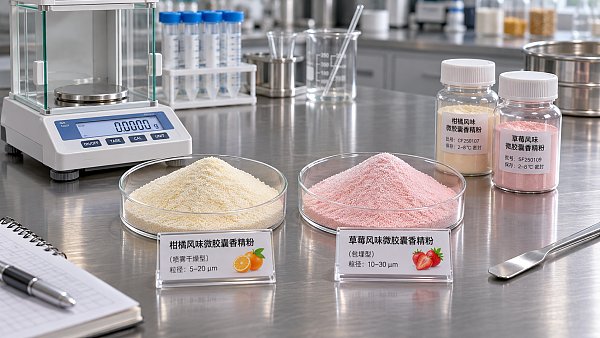
Food grade cyclodextrin inclusion complexes can protect sensitive flavors, but they do not protect every flavor in the same way or under every process condition. Their value comes from selectively hosting part of a flavor molecule inside a hydrophobic cavity while the exterior of the cyclodextrin remains compatible with aqueous food systems. When the fit is suitable, this can reduce losses from evaporation, oxidation, light exposure, and some interactions with other ingredients.
For quality-control and food-safety teams, the practical question is not whether cyclodextrin is capable of encapsulation in principle. It is whether a particular flavor system remains recognizable, stable, compliant, and reproducible after complexation, processing, storage, and release in the finished food. A complex that improves the retention of one key aroma compound may also change release timing, suppress top notes, or create a sensory profile that differs from the original flavor specification.
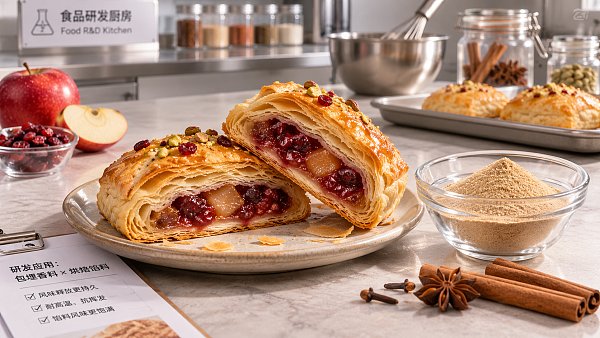
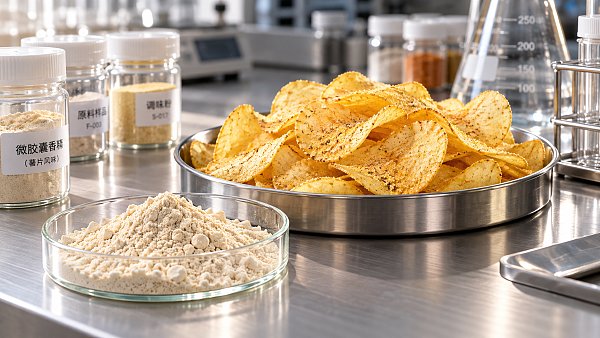
That distinction matters most in products where flavor is both volatile and commercially defining: powdered beverages, dry mixes, bakery fillings, tea and coffee preparations, confectionery, dairy powders, seasoning systems, and products exposed to thermal processing or long distribution cycles. In such applications, food grade cyclodextrin inclusion complexes can be a useful control tool, provided they are evaluated as part of the whole formulation rather than treated as a universal flavor shield.
How Inclusion Complexes Reduce Flavor Loss
Cyclodextrins are cyclic carbohydrates with a water-compatible outer surface and a relatively non-polar internal cavity. Certain flavor molecules, particularly hydrophobic volatile compounds, can associate with that cavity to form an inclusion complex. The interaction is generally reversible. Flavor is not permanently sealed away; instead, its exposure to the surrounding environment is moderated.
This changes the behavior of vulnerable aroma compounds in several useful ways. A compound that is less exposed at the particle surface may be less likely to evaporate during handling. Reduced contact with oxygen can slow oxidative deterioration for some susceptible constituents. Complexation may also improve the apparent dispersibility of poorly water-soluble flavor components and make concentrated flavor materials easier to dose into a dry blend or aqueous processing system.
The degree of protection depends on molecular size, shape, polarity, volatility, and affinity for the selected cyclodextrin. It also depends on how the complex was prepared. A flavor oil mixed with cyclodextrin powder is not necessarily equivalent to a well-characterized inclusion complex. Processing route, water activity, drying conditions, residual uncomplexed flavor, particle properties, and storage conditions all affect the final performance.
Quality teams should therefore avoid assessing a cyclodextrin-based flavor material only by a supplier statement such as “encapsulated” or “stabilized.” Those terms describe an intended function, not a verified level of complex formation, retention, or release performance in the final product.

Protection Is Useful Only If the Intended Flavor Still Releases
A common assumption is that stronger flavor retention automatically produces a better product. In practice, excessive retention can become a sensory problem. A flavor system must release at the right point: during powder reconstitution, heating, chewing, hydration, dilution, or consumption. If release is too slow, a beverage may smell weak on opening even though analytical testing shows high flavor retention. If release occurs too quickly after reconstitution, the protection may add little value during actual use.
This is why headspace measurements alone should not be used as the sole acceptance criterion. Lower headspace concentration can indicate less flavor loss during storage, but it may also indicate that the flavor is insufficiently available to the consumer. Sensory assessment, where appropriate to the company’s quality system, should be linked to instrumental testing and finished-product shelf-life evaluation.
Release behavior is influenced by more than the flavor-cyclodextrin interaction. Temperature, pH, water content, dissolved solids, fats, proteins, surfactants, alcohol, salts, and competing hydrophobic ingredients may all alter complex stability. In a high-fat product, for example, flavor components may partition into the fat phase rather than remain associated with the cyclodextrin. In a beverage containing other solubilizing ingredients, the flavor may release differently from how it behaves in a simple water model.
The relevant acceptance question is therefore specific: does the complex preserve the intended aroma through the product’s defined shelf life and deliver that aroma under the conditions in which the consumer uses the product? A positive result in a dry powder does not automatically establish performance after reconstitution, baking, pasteurization, or retort processing.
What Quality Control Should Ask Before Approving a Material
Approval should begin with the identity and status of both parts of the system: the cyclodextrin material and the flavor composition. “Food grade” should be supported by clear documentation rather than inferred from a general chemical description. The applicable food-use status, permitted conditions of use, labeling implications, and specification requirements depend on the market where the food will be manufactured and sold.
Because food additive rules differ by jurisdiction and product category, a supplier’s declaration for one market should not be treated as a universal authorization. Regulatory teams should assess the selected cyclodextrin type, intended use level, food category, and finished-product destination against the relevant local requirements. The same review should cover the flavor ingredients, processing aids where applicable, carriers, residual solvents, and any additional components introduced during complex manufacture.
A technically useful supplier package normally allows the buyer to understand what is being supplied rather than simply what function it is expected to perform. The review should include:
- Clear material identification, including the cyclodextrin type and the stated flavor or flavor fraction being complexed.
- Product specifications for appearance, moisture or loss on drying, assay or characteristic markers, microbiological limits, and relevant impurity controls.
- Information on manufacturing controls and the declared food-contact suitability of processing materials and packaging where relevant.
- A certificate of analysis tied to the delivered lot, with methods or method references sufficient to interpret the reported results.
- Allergen, GMO, irradiation, animal-origin, and other market-specific declarations when these are relevant to the finished product and its claims.
- Storage conditions, shelf life, and transport controls that protect against moisture uptake, odor contamination, and flavor loss.
The flavor loading should receive particular attention. A stated percentage of flavor does not by itself show how much is included within cyclodextrin cavities, how much is present on the surface, or how much may be lost during downstream processing. For a product with a tight sensory specification, quality teams may need agreed analytical markers for the aroma compounds that define product identity, alongside a retained reference sample program.
Process Conditions Can Defeat a Good Complex
Cyclodextrin complexation is often most attractive when a flavor must survive exposure that would otherwise cause meaningful losses. Yet the complex should not be assumed to withstand every process step unchanged. High temperature, long residence time, aggressive shear, moisture migration, acidic or alkaline conditions, and contact with reactive ingredients can all alter the outcome.
Dry blending may appear low risk, but hygroscopic ingredients and humid production environments can change powder flow and complex behavior over time. In liquid systems, the order of addition can determine whether the flavor remains associated with cyclodextrin or is displaced by other hydrophobic substances. In bakery and extrusion applications, the thermal profile matters, but so do dough moisture, fat content, time before baking, and post-process cooling. A favorable result from a short laboratory heat test may not predict a full production cycle.
Compatibility assessment should include packaging. Flavor protection achieved inside the food matrix can be undermined by permeable packs, inadequate seals, high residual oxygen, or packaging materials that absorb aroma compounds. Conversely, a cyclodextrin complex may reduce the intensity of aroma released into package headspace, which can affect opening aroma even when the in-mouth profile remains acceptable.
These issues are best controlled through representative trials. The material should be tested in the intended formula, at the proposed inclusion level, using production-relevant processing conditions and the actual packaging configuration. Accelerated storage can help identify likely weaknesses, but it should support rather than replace real-time shelf-life confirmation where flavor consistency is critical.
Analytical Results Need a Sensory Context
Instrumental methods are valuable for controlling lot consistency and tracking chemical change. Depending on the flavor and product matrix, teams may monitor selected marker compounds, volatile profiles, moisture, particle size, bulk density, oxidation-related indicators, or release into headspace. These methods can identify drift that may be difficult to detect through routine visual inspection.
However, a flavor is a mixture whose sensory impact depends on the balance among many components. Retaining one dominant marker does not prove that the overall aroma remains unchanged. Some low-level compounds have a disproportionately large sensory contribution, and a small shift in their ratio may move a flavor from fresh to cooked, citrus-like to peel-like, or creamy to waxy.
A practical control plan connects three levels of evidence: incoming-material conformity, process control, and finished-product sensory or sensory-linked assessment. The plan should define what constitutes a meaningful deviation, how retained samples are compared, and when a change in supplier, flavor source, cyclodextrin grade, manufacturing route, or packaging requires revalidation.
Safety and Documentation Should Follow the Material Through the Supply Chain
Cyclodextrin use in food applications needs the same disciplined documentation approach applied to other functional food ingredients. Safety management does not end with a supplier declaration. Specifications, traceability, change notification procedures, contaminant controls, allergen management, storage instructions, and recall readiness should all be incorporated into the approved-material file.
For complexed flavors, traceability may be more complicated than for a single chemical substance because the finished ingredient combines a host material with a multi-component flavor. Procurement and quality functions should be able to identify the origin and lot history of both the cyclodextrin and the flavor system, particularly when natural extracts, essential oils, or seasonally variable raw materials are involved.
Change control deserves close attention. A supplier may consider adjustments to a flavor composition, drying process, particle-size distribution, carrier system, or packaging format to be operationally minor. For the food manufacturer, the same adjustment may affect sensory release, labeling, allergen status, shelf life, or process behavior. Quality agreements should define which changes require advance notice and which require renewed technical approval.
Food grade cyclodextrin inclusion complexes are most useful when they are treated as a controlled functional ingredient rather than a simple flavor carrier. They can improve protection of volatile and oxidation-sensitive notes, make handling more predictable, and support better flavor consistency. Their performance still depends on molecular fit, formulation conditions, process exposure, packaging, regulatory status, and a test plan that measures the flavor consumers actually experience.
Facing technical bottlenecks in manufacturing or looking for more efficient industrial solutions? Leave your details below and let the engineering experts at FCAS solve them for you.
We respect your privacy. Your information is strictly confidential.
Related News
 Nano-microcapsule FormulationsIndexBox Releases 2026–2035 Global Controlled-Release Pesticide Formulation OutlookControlled-release pesticide formulations could grow 5.8% annually through 2035, according to IndexBox. Explore the forecast, key drivers and implications for buyers.MORE+
 Nano-microcapsule FormulationsWhat Affects the Cost of Microencapsulated Flavors Wholesale?Microencapsulated flavors wholesale pricing depends on formulation, processing, volume and quality. Learn how to compare suppliers and lower your cost in use.MORE+
 Nano-microcapsule FormulationsHow to Use Microcapsule Slurries for Household ProductsDiscover how to use microcapsule slurries for household products, from compatibility and gentle mixing to stability testing and fragrance performance.MORE+
 Nano-microcapsule FormulationsHow to Choose a Capsule Suspension Pesticides SupplierChoose a capsule suspension pesticides supplier with confidence. Compare formulation quality, regulatory documentation, delivery reliability and total costs.MORE+
 Nano-microcapsule FormulationsHow to Choose Seed Coating Agents for Better Seed CoverageChoose Seed Coating Agents with confidence. Learn how to assess coverage, dust-off, compatibility, drying, and germination for reliable results.MORE+
 Nano-microcapsule FormulationsHow Flavor Encapsulates for Bakery Fillings Retain FlavorDiscover how flavor encapsulates for bakery fillings protect aroma, support shelf-life stability, and help you choose the right carrier for your formulation.MORE+
 Nano-microcapsule FormulationsHow Can You Prevent Microcapsule Slurries From Settling in Storage?Keep Microcapsule Slurries stable in storage. Discover how temperature control, gentle agitation, and uniformity checks help reduce settling and protect capsule integrity.MORE+
 Nano-microcapsule FormulationsHow Do Microencapsulated Flavors Improve Snack Seasoning Stability?Explore how microencapsulated flavors for snack seasonings help preserve aroma and slow flavor loss. Learn to select and test systems for lasting freshness and better snack performance.MORE+
 Nano-microcapsule FormulationsHow to Use Food Grade Cyclodextrin Inclusion Complexes in BeveragesExplore food grade cyclodextrin inclusion complexes for beverages. Learn how to select, dose, and test them for flavor retention, stability, and smarter formulation decisions.MORE+
 Nano-microcapsule FormulationsHow Can High Solids Microcapsule Slurries Stay Stable in Storage?Keep high solids microcapsule slurries stable in storage. Learn how to control settling, protect capsule integrity, and optimize mixing for reliable pumping and consistent dosing.MORE+
 Nano-microcapsule FormulationsHow Spray Drying Wall Materials Affect Stability and EncapsulationSpray drying wall materials determine powder stability, encapsulation efficiency, moisture resistance, and release. Learn how to select the right matrix for reliable performance.MORE+
 Nano-microcapsule FormulationsHow Encapsulated Flavors Protect Taste During Processing and StorageEncapsulated Flavors protect taste from heat, oxygen, moisture, and storage loss. Explore smarter release, carrier selection, and processing strategies.MORE+
 Nano-microcapsule FormulationsHow Food Grade Cyclodextrin Complexes Protect Sensitive FlavorsFood grade cyclodextrin inclusion complexes help protect sensitive flavors from oxidation, evaporation, and processing loss while supporting controlled release and consistent sensory quality.MORE+
 Nano-microcapsule FormulationsChoosing Fragrance Preparations That Perform Well in Personal WashFragrance preparations for personal wash: learn how to select options that protect clarity, stability, foam, scent performance, and packaging compatibility.MORE+
 Nano-microcapsule FormulationsHow to Select Spray Drying Wall Materials for Better StabilitySpray drying wall materials: learn how to select the right matrix for improved stability, moisture resistance, encapsulation, release performance, and cost-efficient scale-up.MORE+
 Nano-microcapsule FormulationsFood Grade Cyclodextrin Inclusion Complexes for Stable Flavor DeliveryFood grade cyclodextrin inclusion complexes help protect volatile flavors, improve handling, and support controlled release for reliable food formulation performance.MORE+
 Nano-microcapsule FormulationsHow Oxidation Resistant Flavor Encapsulation Protects Taste StabilityOxidation resistant flavor encapsulation protects aroma, freshness, and taste stability. Discover how smart barriers, release control, and packaging improve shelf life.MORE+
 Nano-microcapsule FormulationsWhat to Verify When Choosing a Cyclodextrin Inclusion Complexes ManufacturerChoose a cyclodextrin inclusion complexes manufacturer with confidence: verify complexation evidence, loading, stability, process control, and batch consistency.MORE+
 Nano-microcapsule FormulationsWhat to Look for in a Reliable Flavor Encapsulates ManufacturerFlavor encapsulates manufacturer selection starts with application fit. Learn how to compare stability, release, documentation, and supply reliability before you buy.MORE+
 Nano-microcapsule FormulationsHow Pesticide Formulation Intermediates Improve Suspoemulsion StabilityPesticide formulation intermediates for suspoemulsion can make or break product stability. Learn how dispersants, emulsifiers, and co-stabilizers reduce separation, caking, and storage failure.MORE+