How Can You Prevent Microcapsule Slurries From Settling in Storage?
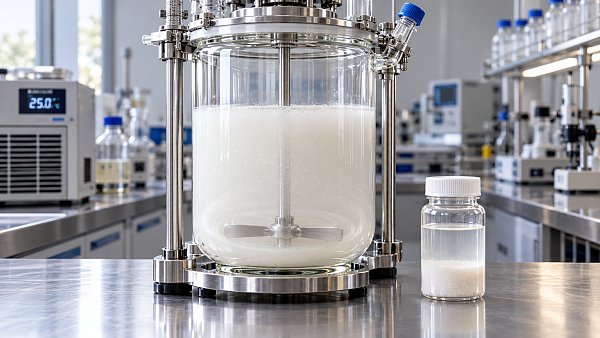
To reduce settling in microcapsule slurries, keep storage temperature within the product’s approved range, preserve the formulation’s suspension structure, and use gentle agitation at a validated frequency. Before changing the mixing schedule, establish whether the material forms a loose, reversible sediment or a compacted layer that resists redispersion. These conditions require different responses, and stronger mixing can damage capsules without correcting the underlying instability.
A stable storage system must keep the slurry sufficiently uniform for accurate withdrawal while preserving capsule integrity and release performance. Some formulations tolerate a soft sediment during extended storage, provided it redistributes under the specified procedure. Others need continuous slow movement. The acceptable condition comes from product specifications and storage trials, rather than appearance alone.
Identify what is separating before changing the process
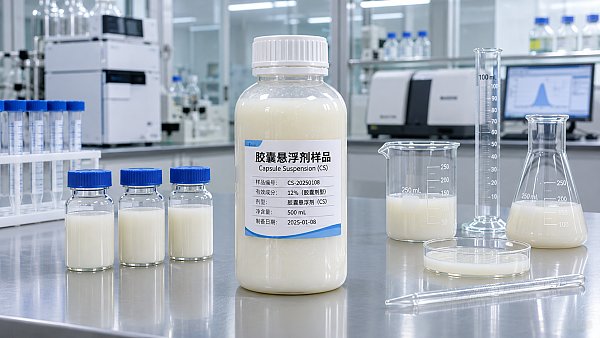
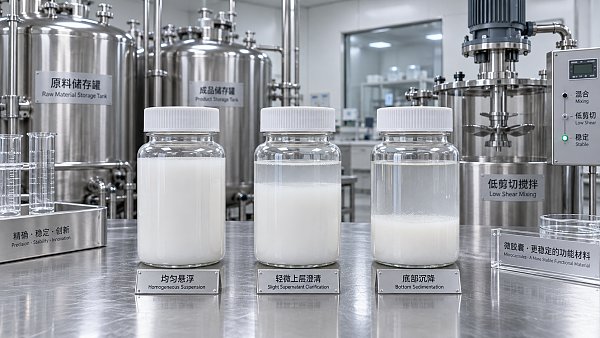
A clear upper layer and concentrated material at the bottom suggest sedimentation, but visual inspection cannot establish the cause. Capsules may settle individually, gather into clusters, or become trapped in a collapsing suspension network. A floating layer points toward creaming, potentially caused by capsules lighter than the liquid or by attached air bubbles. Oil droplets or a separate liquid phase raise a different concern: leakage or failure of the encapsulated system.
Compare observations at a consistent temperature and elapsed storage time. A sample inspected immediately after mixing tells little about how the slurry behaves during a weekend shutdown. Record the sediment’s appearance and its response to a defined mixing procedure, including any material left on the container floor.
Understand which physical changes will actually slow settling
For isolated spherical particles in a dilute Newtonian liquid, Stokes’ law predicts faster settling as particle diameter and the density difference between particle and liquid increase, and slower settling as liquid viscosity increases. Diameter enters the relationship as a square, so oversized capsules or aggregates deserve attention. Concentrated microcapsule slurries often behave differently because particles interact and the carrier is non-Newtonian; the equation is a guide to causes, not a shelf-life prediction.
The relevant particle density is the effective density of the complete capsule, including its core and shell. The density of the active ingredient alone is insufficient. Temperature also changes liquid viscosity and density, sometimes enough to expose instability that was absent during room-temperature inspection.
Review the particle-size distribution rather than relying only on the average. A relatively small coarse fraction can accumulate at the bottom while most capsules remain suspended. If apparent size increases during storage, investigate aggregation before assuming the original encapsulation process produced larger capsules.
Do not mill a finished slurry to reduce capsule size unless that operation is explicitly part of its validated manufacturing process. Equipment suitable for breaking down solid pesticide particles or pigment agglomerates can rupture capsule walls and change release behavior.
Preserve suspension structure without making the slurry unmanageable
Many capsule suspensions use a structured liquid phase that resists movement at rest and becomes easier to pour or pump under shear. Where a yield stress exists, the network can support capsules against gravity within the formulation’s operating limits. A viscosity reading taken at one spindle speed does not adequately describe that behavior.
A product can appear thick during pouring yet provide weak support during quiet storage. Conversely, a structured slurry can flow readily during transfer and rebuild enough structure afterward to limit settling. Relevant measurements include low-shear behavior, yield characteristics where applicable, and structural recovery after mixing.
Changes to thickeners, dispersants, salts, solvents, or pH belong in controlled formulation development. For example, an electrolyte-sensitive thickener can lose effectiveness after contact with hard water or a concentrated salt solution. Excess dispersant can alter particle interactions; an unsuitable thickener can promote flocculation or leave persistent lumps.
Do not add water, thickener, or dispersant directly to a storage container as an improvised correction. Added water changes solids concentration and dosing calculations while potentially weakening the suspension network and preservation system. A successful adjustment must retain capsule integrity, redispersibility, transfer performance, and the intended release profile.
Set agitation by the container and the capsule limits
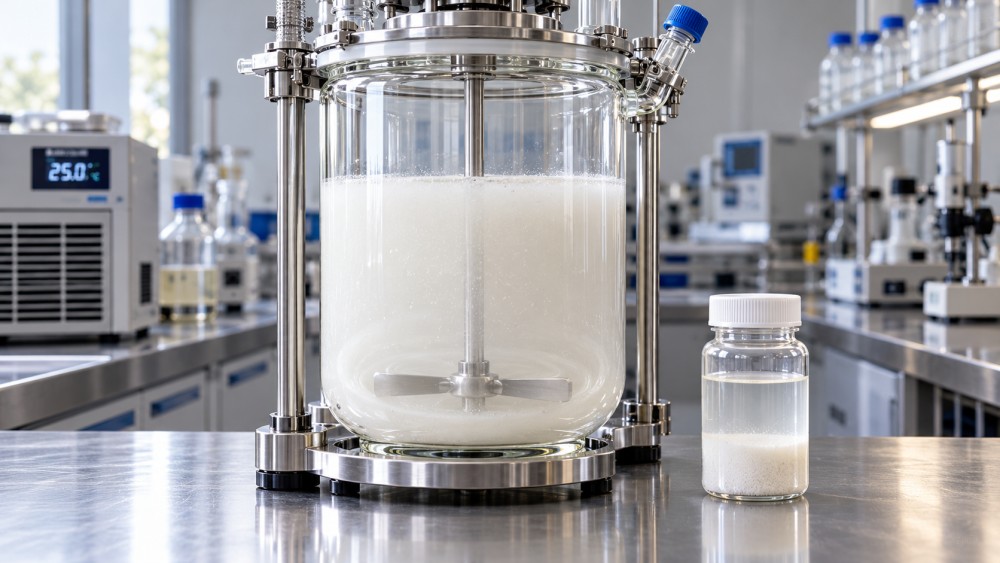
Gentle agitation should move material through the whole vessel, including the region near the floor. Surface movement alone does not demonstrate effective suspension. In a tall tank, an apparently active upper zone can coexist with a stationary bottom layer. Vessel geometry, impeller position, fill level, and internal obstructions all influence circulation.
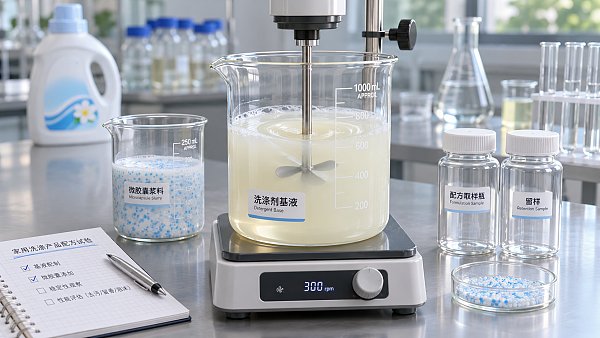
Use the equipment and operating range approved for the slurry. A suitable low-shear impeller can maintain circulation, but “low speed” is not a transferable specification: the same rotational speed produces different tip speeds with different impeller diameters. Capsule exposure also depends on clearances, mixing duration, and local shear near blades.
Where intermittent agitation is permitted, establish the longest acceptable idle period through storage trials. Observe how quickly a soft sediment develops and whether the approved restart procedure restores uniformity. Frequent short mixing periods are useful only when they reach the entire settled zone and allow the suspension structure to recover as intended.
For a container with substantial sediment, follow its specified restart procedure. Starting immediately at high speed can circulate the upper liquid while leaving a compacted bed untouched. If the approved procedure fails, stop escalation and investigate rather than substituting a high-shear mixer.
Recirculation needs equivalent scrutiny. Pump type, valve restrictions, narrow passages, and repeated passes can damage capsules even when the tank agitator is gentle. A return line above the liquid surface also introduces air. Validate the complete loop and assess capsule condition after representative circulation exposure.
Control temperature and the conditions around storage
Maintain the specified storage temperature and limit repeated heating and cooling. Higher temperature often lowers carrier viscosity and accelerates settling. Cooling can increase viscosity yet still create problems through crystallization, changes in polymer behavior, or reduced pumpability. Freezing can disrupt the suspension and damage capsules; thawing does not establish that the original performance has returned.
Measure conditions near the stored product, especially beside external walls, under a roof, or near a heat source. An acceptable warehouse air reading does not rule out local temperature excursions. Keep closures secured to limit evaporation and contamination, and avoid leaving partly emptied containers exposed between withdrawals.
Storage time matters because sediment can consolidate under its own weight. A batch that redistributes easily after a short hold may become difficult to recover after prolonged storage. Apply stock rotation and reassess material that has exceeded its validated holding period, even if its appearance remains familiar.
Verify uniformity before dosing or transfer
After the approved mixing cycle, assess representative material from different vessel levels using a sampling method suitable for the container. A sample from the top cannot confirm bottom-layer recovery. Sampling ports also need attention: stagnant product in a valve or dead leg can misrepresent the tank contents.
Use the product’s defined acceptance criteria. Solids content, density, or another validated rapid measurement can help detect concentration gradients, but these measurements do not automatically establish uniform active ingredient concentration. Free active ingredient, capsule fragments, or other formulation solids can complicate interpretation. Where dosing depends on active content, use an appropriate assay or a demonstrated correlation.
- Record the storage duration, temperature history, and visible separation before mixing.
- Run the specified agitation procedure, documenting fill level and actual operating conditions. Include any approved recirculation in that record.
- Compare representative samples for uniformity and inspect for residual sediment or capsule changes.
- Release the slurry for withdrawal only when the relevant criteria are met. Unexplained differences require investigation.
During transfer, maintain the approved agitation condition and avoid drawing down into a concentrated bottom layer. If withdrawal pauses long enough for separation to recur, repeat the applicable mixing and verification steps before restarting. The last portion of a container deserves particular attention because accumulated sediment can produce a concentration spike.
Use storage trials to decide when the formulation needs work
A recurring need for stronger mixing indicates that the existing storage process or formulation needs reassessment. Trials should represent the intended holding time, temperature range, container geometry, and restart conditions. Small laboratory bottles are useful for screening, but their sediment depth and mixing behavior differ from those of drums, intermediate bulk containers, and tanks.
Track sediment development, redispersion effort, particle-size distribution, rheology, and capsule integrity. Compare fresh material with stored material under the same measurement conditions. A low sediment height alone is ambiguous: it can indicate limited settling or a tightly compacted deposit. Interpret it alongside the amount of separated liquid and the effort needed to restore uniformity.
Accelerated temperature storage or centrifugation can reveal weaknesses, but neither should be treated as a direct substitute for real-time storage without an established correlation. Excessive stress can introduce failure mechanisms absent from normal conditions. Conversely, a short test may miss slow aggregation or sediment consolidation.
If normal storage repeatedly produces hard sediment, examine the coarse capsule fraction, effective density difference, dispersion chemistry, and recovery of the suspension network after shear. Confirm any reformulation through both storage and application testing. A slurry that remains visually uniform but releases its contents incorrectly has not met the stability objective.
Keep the validated mixing procedure with the batch handling instructions, including the restart method after extended idle periods. Record exceptions such as freezing, unusual separation, or failed redispersion so that affected material is evaluated before it enters the dosing system.
Facing technical bottlenecks in manufacturing or looking for more efficient industrial solutions? Leave your details below and let the engineering experts at FCAS solve them for you.
We respect your privacy. Your information is strictly confidential.
Related News
 Nano-microcapsule FormulationsIndexBox Releases 2026–2035 Global Controlled-Release Pesticide Formulation OutlookControlled-release pesticide formulations could grow 5.8% annually through 2035, according to IndexBox. Explore the forecast, key drivers and implications for buyers.MORE+
 Nano-microcapsule FormulationsWhat Affects the Cost of Microencapsulated Flavors Wholesale?Microencapsulated flavors wholesale pricing depends on formulation, processing, volume and quality. Learn how to compare suppliers and lower your cost in use.MORE+
 Nano-microcapsule FormulationsHow to Use Microcapsule Slurries for Household ProductsDiscover how to use microcapsule slurries for household products, from compatibility and gentle mixing to stability testing and fragrance performance.MORE+
 Nano-microcapsule FormulationsHow to Choose a Capsule Suspension Pesticides SupplierChoose a capsule suspension pesticides supplier with confidence. Compare formulation quality, regulatory documentation, delivery reliability and total costs.MORE+
 Nano-microcapsule FormulationsHow to Choose Seed Coating Agents for Better Seed CoverageChoose Seed Coating Agents with confidence. Learn how to assess coverage, dust-off, compatibility, drying, and germination for reliable results.MORE+
 Nano-microcapsule FormulationsHow Flavor Encapsulates for Bakery Fillings Retain FlavorDiscover how flavor encapsulates for bakery fillings protect aroma, support shelf-life stability, and help you choose the right carrier for your formulation.MORE+
 Nano-microcapsule FormulationsHow Can You Prevent Microcapsule Slurries From Settling in Storage?Keep Microcapsule Slurries stable in storage. Discover how temperature control, gentle agitation, and uniformity checks help reduce settling and protect capsule integrity.MORE+
 Nano-microcapsule FormulationsHow Do Microencapsulated Flavors Improve Snack Seasoning Stability?Explore how microencapsulated flavors for snack seasonings help preserve aroma and slow flavor loss. Learn to select and test systems for lasting freshness and better snack performance.MORE+
 Nano-microcapsule FormulationsHow to Use Food Grade Cyclodextrin Inclusion Complexes in BeveragesExplore food grade cyclodextrin inclusion complexes for beverages. Learn how to select, dose, and test them for flavor retention, stability, and smarter formulation decisions.MORE+
 Nano-microcapsule FormulationsHow Can High Solids Microcapsule Slurries Stay Stable in Storage?Keep high solids microcapsule slurries stable in storage. Learn how to control settling, protect capsule integrity, and optimize mixing for reliable pumping and consistent dosing.MORE+
 Nano-microcapsule FormulationsHow Spray Drying Wall Materials Affect Stability and EncapsulationSpray drying wall materials determine powder stability, encapsulation efficiency, moisture resistance, and release. Learn how to select the right matrix for reliable performance.MORE+
 Nano-microcapsule FormulationsHow Encapsulated Flavors Protect Taste During Processing and StorageEncapsulated Flavors protect taste from heat, oxygen, moisture, and storage loss. Explore smarter release, carrier selection, and processing strategies.MORE+
 Nano-microcapsule FormulationsHow Food Grade Cyclodextrin Complexes Protect Sensitive FlavorsFood grade cyclodextrin inclusion complexes help protect sensitive flavors from oxidation, evaporation, and processing loss while supporting controlled release and consistent sensory quality.MORE+
 Nano-microcapsule FormulationsChoosing Fragrance Preparations That Perform Well in Personal WashFragrance preparations for personal wash: learn how to select options that protect clarity, stability, foam, scent performance, and packaging compatibility.MORE+
 Nano-microcapsule FormulationsHow to Select Spray Drying Wall Materials for Better StabilitySpray drying wall materials: learn how to select the right matrix for improved stability, moisture resistance, encapsulation, release performance, and cost-efficient scale-up.MORE+
 Nano-microcapsule FormulationsFood Grade Cyclodextrin Inclusion Complexes for Stable Flavor DeliveryFood grade cyclodextrin inclusion complexes help protect volatile flavors, improve handling, and support controlled release for reliable food formulation performance.MORE+
 Nano-microcapsule FormulationsHow Oxidation Resistant Flavor Encapsulation Protects Taste StabilityOxidation resistant flavor encapsulation protects aroma, freshness, and taste stability. Discover how smart barriers, release control, and packaging improve shelf life.MORE+
 Nano-microcapsule FormulationsWhat to Verify When Choosing a Cyclodextrin Inclusion Complexes ManufacturerChoose a cyclodextrin inclusion complexes manufacturer with confidence: verify complexation evidence, loading, stability, process control, and batch consistency.MORE+
 Nano-microcapsule FormulationsWhat to Look for in a Reliable Flavor Encapsulates ManufacturerFlavor encapsulates manufacturer selection starts with application fit. Learn how to compare stability, release, documentation, and supply reliability before you buy.MORE+
 Nano-microcapsule FormulationsHow Pesticide Formulation Intermediates Improve Suspoemulsion StabilityPesticide formulation intermediates for suspoemulsion can make or break product stability. Learn how dispersants, emulsifiers, and co-stabilizers reduce separation, caking, and storage failure.MORE+