Using Insect Growth Regulators to Protect Stored Grain from Infestations
Using Insect Growth Regulators to Protect Stored Grain from Infestations
Stored-grain infestations can compromise more than weight and grade. Insects create hot spots, increase dockage, spread fragments and webbing, encourage mold development, and trigger customer complaints or rejected loads. For quality control and safety managers, the difficult part is rarely recognizing that insects are present. It is deciding how to interrupt an infestation without creating a new problem involving residues, documentation gaps, unsuitable application practices, or treatment failure.
Insect growth regulators for stored grain can be useful in that decision. Rather than relying solely on rapid adult knockdown, these materials interfere with the insect life cycle. Used correctly, they can reduce the emergence of new adults and support a longer-term stored-product pest management program. They are not a substitute for sanitation, grain cooling, inspection, or proper storage conditions. Their value lies in fitting into those controls with a clear understanding of what they can—and cannot—do.
Why lifecycle control matters in grain storage
Common stored-grain pests, including beetles, weevils, moths, and grain borers, do not present the same risk at every stage of development. Eggs, larvae, pupae, and adults may occupy different locations in the grain mass, and some immature stages develop inside kernels. A treatment that visibly reduces exposed adults may leave a substantial immature population behind. When conditions remain favorable, that hidden population can reappear as a fresh adult infestation weeks later.
This is where insect growth regulators, often called IGRs, are different from conventional contact insecticides. Depending on the active ingredient and pest, an IGR may mimic or disrupt insect hormones, prevent successful molting, or interfere with normal development and reproduction. The operational outcome is delayed rather than immediate: susceptible immature insects fail to develop normally, and adult emergence is reduced. This makes IGRs particularly relevant where grain will remain in storage long enough for a new pest generation to develop.
That delayed action is also a frequent source of misunderstanding. A facility manager may treat grain, continue to observe adult insects shortly afterward, and conclude that the product failed. In fact, the treatment objective may be suppression of future population growth rather than instant mortality. Any program using insect growth regulators for stored grain should define success in those terms before application begins.
Where IGRs fit—and where they do not
IGRs are generally most useful as preventive grain protectants or as one component of an integrated response where pest pressure is still manageable. They can be considered for incoming grain, long-term storage programs, and situations where a site needs residual population suppression while maintaining a broader residue and food-safety control plan. The exact use pattern depends on the product registration, grain commodity, target species, local market, and treatment label.
They are less suitable as a stand-alone answer to a severe, active infestation. If a bin contains heavily infested grain, live adult activity is high, temperatures are elevated, or moisture and spoilage are developing, the immediate priority is to assess the grain condition and stop deterioration. That may require segregation, cleaning, cooling, turning, movement, or a treatment approach specifically approved for the observed pest and situation. An IGR may still have a role, but it should not be presented as an emergency rescue tool.
There is another practical boundary: IGRs do not correct poor storage discipline. Residual grain in conveyors, boot pits, truck bays, elevator legs, floor-wall junctions, and empty bins can sustain pest populations outside the treated grain stream. Treating new grain while leaving old residues in handling equipment is one of the most common ways to undermine an otherwise sound program.
Start with the grain and the pest, not the active ingredient
The right technical conversation begins with the storage scenario. Quality teams should establish the commodity, intended end use, expected storage duration, origin and destination markets, current pest evidence, grain temperature, moisture condition, and the site’s treatment history. These details determine whether a grain protectant program is appropriate at all and what restrictions may apply.
Pest identification deserves more attention than it often receives. Different species vary in their susceptibility to insect growth regulators, developmental timing, behavior, and location within the grain. Moth activity in headspace and beetle activity within the grain mass do not call for the same inspection emphasis. Similarly, the presence of insects does not always mean the insects originated in the current lot; they may have emerged from residues in equipment or migrated from nearby untreated storage.
Application quality determines whether the program is credible
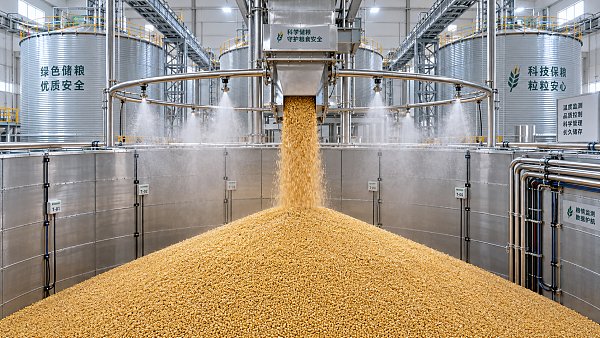
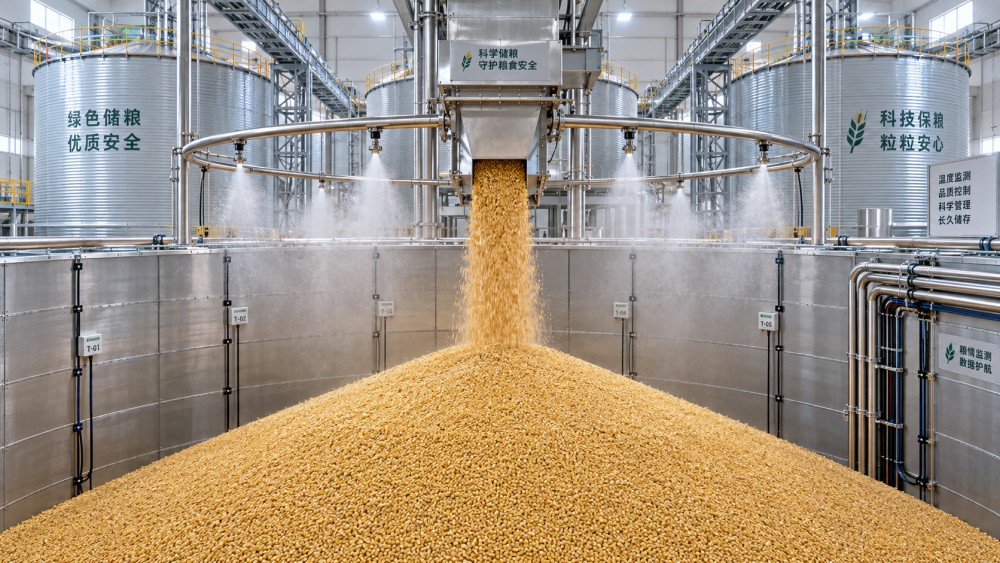
A registered product can still underperform when it is poorly applied. For grain protectant uses, treatment is often designed to occur as grain moves through a handling system, allowing the formulation to distribute through the commodity. Application to a stationary grain surface may not provide the same distribution through the bulk mass. The approved label, equipment design, and local operating procedures should govern the method.
Quality managers should view calibration as a food-safety and traceability control, not merely a maintenance task. Pump output, nozzle condition, grain flow rate, formulation agitation where applicable, and start-stop synchronization all affect whether the intended treatment reaches the grain consistently. A nominal application rate on paper says little if the grain stream was uneven, the nozzle was partially blocked, or the equipment was not matched to the actual throughput.
Documentation should make it possible to reconstruct the event later. At a minimum, facilities commonly need to retain the grain lot or bin reference, treatment date, product identity, batch or lot information where available, application method, operator, equipment status, and the applicable use instructions. Where grain is destined for multiple markets, records should also preserve the intended destination and any segregation decision. This is especially important when commercial contracts impose requirements beyond the local legal minimum.
Residue management is a planning issue, not a final check
For food and feed chains, residue considerations need to be addressed before treatment rather than after a shipment is booked. An active ingredient may be permitted for one commodity or market and unsuitable for another. Import tolerances, maximum residue limits, national registrations, processor specifications, organic claims, and retailer policies can all affect whether a treatment is commercially acceptable. There is no safe shortcut of assuming that authorization in one country automatically supports trade into another.
This does not mean that IGRs are inherently difficult to manage. It means the treatment choice must be tied to a clearly defined market route. Procurement, regulatory, operations, and quality teams should align on the active ingredient, formulation, dose, and treated commodity before product is applied. If the grain may be redirected later, the site should understand what flexibility remains and what documentation will travel with the load.
Sampling plans should also be realistic. Residue testing can support verification where required, but a test result cannot compensate for an unauthorized use or incomplete treatment record. The laboratory method, analyte scope, reporting limit, sampling location, and chain of custody should be appropriate to the decision being made. These points usually require confirmation against customer specifications and the relevant market requirements.
Storage conditions can either support or defeat the treatment
Insect development is closely connected to temperature, and grain condition affects both pest activity and product protection. Warm grain, moisture migration, fines accumulation, damaged kernels, and inadequate aeration create conditions in which insect populations can expand quickly. An IGR may suppress development, yet the overall risk remains elevated if the facility does not identify hot spots or moisture problems early.
Routine monitoring should therefore remain active after treatment. Probe traps, pheromone traps where relevant, grain samples, temperature cables, visual inspections, and trend records each reveal different parts of the risk picture. Trap catches should not be interpreted in isolation; insects found near a bin may indicate external activity, residues in equipment, or an internal grain issue. Repeated inspection of the same zones and comparison over time are usually more informative than a single count.
Cooling and aeration are often decisive partners to chemical control. They slow insect development and can make an IGR-based program more manageable. Good sanitation does the same by removing breeding reservoirs. In practical terms, the strongest result usually comes from combining clean bins and handling routes, sound grain condition, temperature management, preventive treatment where justified, and monitoring that triggers action before infestation becomes severe.
Avoid predictable failures
Several failures recur across storage operations. One is treating only after insects are highly visible. Another is expecting an IGR to solve adult insect activity immediately. A third is applying a product without checking the destination market, then discovering that the grain has limited commercial outlets. Sites also run into trouble when cleaning is treated as a one-time seasonal event rather than part of normal operating control.
Resistance management deserves attention as well. Repeated reliance on the same mode of action can increase selection pressure, particularly where treatments are used year after year and sanitation is weak. A site should not assume that a past program will continue to perform unchanged. Monitoring results, pest identification, treatment history, and local professional guidance should inform any rotation or combination strategy. Only legally approved combinations and use patterns should be considered.
Building a defensible decision process
For quality and safety teams, the question is not simply whether insect growth regulators for stored grain are effective. The more useful question is whether they fit a specific grain flow, storage period, pest profile, and market requirement. A defensible decision links technical efficacy to operational control: the pest is identified, the grain is in suitable condition, the product is registered for the intended use, the application equipment is validated, and the records support downstream traceability.
FCAS approaches crop protection and specialty chemical decisions through this practical lens. For buyers, formulators, distributors, and technical teams, product selection depends not only on an active ingredient’s basic profile but also on formulation behavior, compatibility, handling, documentation readiness, residue expectations, packaging, and supply continuity. In stored-grain protection, those details often determine whether a treatment program remains workable after the grain leaves the bin.
Before implementing or revising a program, confirm the target pests, expected storage interval, treatment equipment, approved label uses, destination-market requirements, and monitoring plan. If any of these elements is uncertain, resolve it before grain treatment—not when a load is ready to move.
Facing technical bottlenecks in manufacturing or looking for more efficient industrial solutions? Leave your details below and let the engineering experts at FCAS solve them for you.
We respect your privacy. Your information is strictly confidential.
Related News
 Herbicides & Plant Growth RegulatorsChina Pesticide Retail Prices Diverge as Lambda-Cyhalothrin and Glyphosate Lead GainsChina pesticide retail prices diverge as lambda-cyhalothrin and glyphosate lead gains. Explore the implications for buyers, suppliers and procurement.MORE+
 Herbicides & Plant Growth RegulatorsHow to Apply Powder Single Superphosphate for Better Root GrowthDiscover how to apply powder single superphosphate for better root growth, with practical guidance on soil testing, fertilizer rates, safe placement, and application.MORE+
 Herbicides & Plant Growth RegulatorsEnvironmental Groups Urge EPA to Release Paraquat Litigation MaterialsParaquat litigation materials are at the center of a push for EPA disclosure. Explore what environmental groups are requesting and why it matters for the herbicide review.MORE+
 Herbicides & Plant Growth RegulatorsHow to Choose a Reliable Herbicide APIs ManufacturerChoose a reliable herbicide APIs manufacturer with confidence. Discover how to assess quality, compliance, delivered costs and supply reliability.MORE+
 Herbicides & Plant Growth RegulatorsEU Pesticide Reduction Stalls as Binding Targets Are ScrappedEU pesticide reduction is stalling as binding targets are scrapped. Discover what the uncertainty means for sourcing, compliance and supply-chain planning.MORE+
 Herbicides & Plant Growth RegulatorsNAFDAC Seizes Banned Farm Chemicals Worth 200 Million Naira in KanoNAFDAC seizes banned farm chemicals worth 200 million naira in Kano. Discover what the action means for pesticide suppliers, buyers and storage operators.MORE+
 Herbicides & Plant Growth RegulatorsHow Do Herbicide Intermediates Affect Production Yield?Discover how Herbicide Intermediates influence production yield, from impurity control to product recovery, and learn how to evaluate suppliers with confidence.MORE+
 Herbicides & Plant Growth RegulatorsHow to Choose Crop Protection Chemicals for Effective Weed ControlChoose Crop Protection Chemicals with confidence. Discover how to match herbicides to weeds, crop stages, field conditions, and resistance risks for effective control.MORE+
 Herbicides & Plant Growth RegulatorsBayer Launches First Group 12 Pre-Emergence Herbicide Convintro in the USBayer's Convintro brings a Group 12 pre-emergence herbicide option to US corn and soybean growers. Explore its potential role and key purchasing considerations.MORE+
 Herbicides & Plant Growth RegulatorsCalifornia Report Shows Continued Decline in High-Risk Pesticide UseCalifornia pesticide use reportedly declined 28% for carcinogen-classified products. Explore what this could mean for suppliers, buyers and market access.MORE+
 Herbicides & Plant Growth RegulatorsHow to Choose Adjuvant Systems for Herbicide FormulationsChoose Adjuvant Systems that improve herbicide performance without sacrificing crop safety or stability. Explore practical selection and testing strategies.MORE+
 Herbicides & Plant Growth RegulatorsHow to Choose Adjuvant Systems for HerbicidesChoose adjuvant systems for herbicides with confidence. Explore label requirements, compatibility, crop safety, and field testing to make better-informed decisions.MORE+
 Herbicides & Plant Growth RegulatorsReport Forecasts Global Agrochemical Market to Reach $387.7 Billion by 2031Global agrochemical market could reach $387.7 billion by 2031. Explore how technology, regulation and agricultural drones may shape industry decisions.MORE+
 Herbicides & Plant Growth RegulatorsWisconsin DNR Board to Vote on Drafting New Pesticide RulesWisconsin DNR pesticide rules are up for a drafting vote. See what the decision could mean for farmers, suppliers and future compliance.MORE+
 Herbicides & Plant Growth RegulatorsHow Do Herbicide APIs for Formulation Affect Final Product Stability?Discover how herbicide APIs for formulation affect product stability. Learn which impurities, particle properties, and tests matter to reduce storage failures and qualify reliable suppliers.MORE+
 Herbicides & Plant Growth RegulatorsHow Do You Choose Spray Adjuvant Systems for Herbicide Applications?Choose spray adjuvant systems with confidence. Compare surfactants, oils, and water conditioners, check label requirements, and learn how to avoid costly herbicide application mistakes.MORE+
 Herbicides & Plant Growth RegulatorsHow Can Plant Growth Regulators Control Excessive Shoot Growth?Plant Growth Regulators help control excessive shoot growth. Discover how crop-specific selection, timing, and application can improve canopy management without over-suppressing plants.MORE+
 Herbicides & Plant Growth RegulatorsCanadian Coalition Calls for Removal of Bill C-31 Pesticide ProvisionBill C-31 faces calls from a Canadian coalition to remove Section 13 over pesticide oversight concerns. Explore the debate and potential implications for farmers and suppliers.MORE+
 Herbicides & Plant Growth RegulatorsUS EPA Approves Three Controversial New Pesticide Active IngredientsExplore reported US EPA approvals of epyrifenacil, diflufenican and trifludimoxazin. Understand PFAS concerns and discover key checks for pesticide buyers and agricultural suppliers.MORE+
 Herbicides & Plant Growth RegulatorsEnvironmental Groups Sue EPA to Seek Atrazine Water Quality StandardsAtrazine water quality standards are at the center of a reported EPA lawsuit. Explore potential impacts on growers and suppliers, plus practical steps to prepare for possible regulatory changes.MORE+
 Herbicides & Plant Growth RegulatorsUsing Insect Growth Regulators to Protect Stored Grain from InfestationsInsect growth regulators for stored grain: learn how lifecycle control, precise application, sanitation, and residue planning help safeguard quality and market access.MORE+
 Herbicides & Plant Growth RegulatorsSelecting Benzyl Alcohol for Stable Agrochemical FormulationsBenzyl alcohol for agrochemical formulations: discover how to improve solubility, emulsion stability, storage performance, compliance, and supplier qualification.MORE+
 Herbicides & Plant Growth RegulatorsWhat to Verify Before Choosing a Suspoemulsion Pesticides SupplierChoose a reliable suspoemulsion pesticides supplier with confidence. Verify formulation stability, dilution performance, documentation, packaging, batch control, and supply reliability.MORE+
 Herbicides & Plant Growth RegulatorsHow to Assess Quality Risks at a Pesticide Formulation Intermediates FactoryPesticide formulation intermediates factory assessment guide: identify quality risks in raw materials, processes, testing, traceability, and storage.MORE+
 Herbicides & Plant Growth RegulatorsSoluble Concentrates Explained for Reliable Field ApplicationsSoluble Concentrates explained: improve mixing, calibration, water quality, compatibility, and spray coverage for more reliable field applications.MORE+
 Herbicides & Plant Growth RegulatorsHow to Test Wetting Agents for Crop Protection FormulationsHow to test industrial wetting agents for crop protection use? Explore practical checks for leaf coverage, foam, stability, sprayability, and crop safety to select the right formulation additive.MORE+
 Herbicides & Plant Growth RegulatorsWhat Does Water-Dispersible Granules Mean in Crop Protection Formulations?Water dispersible granules meaning explained: discover how WDG crop protection formulations disperse in water, improve handling, and support reliable spray performance.MORE+
 Herbicides & Plant Growth RegulatorsHow Plant Growth Promoters Improve Crop Uniformity and YieldPlant Growth Promoters help improve crop uniformity, root development, stress recovery, and yield potential. Learn how to choose the right product, timing, and application strategy.MORE+
 Herbicides & Plant Growth RegulatorsAre Bioherbicides Ready to Replace Conventional Weed Control in 2026Bioherbicides are gaining ground in 2026, but can they replace conventional weed control? Explore where they truly perform, what limits adoption, and which markets offer the biggest opportunity.MORE+
 Herbicides & Plant Growth RegulatorsHow to Compare Herbicides for Cost, Control, and Crop SafetyHerbicides comparison made practical: learn how to assess true cost per hectare, weed control reliability, crop safety, resistance risk, and supplier quality before you buy.MORE+