Soluble Concentrates Explained for Reliable Field Applications
A soluble concentrate is designed to form a true solution when diluted in the specified carrier, usually water. In crop protection, this formulation is commonly identified as an SL. The active ingredient is dissolved rather than suspended as solid particles, so a correctly prepared spray liquid should appear uniform and should not leave sediment at the bottom of the tank.
That apparent simplicity can be misleading. Reliable field performance depends less on the fact that a product is liquid and more on whether the correct amount reaches the target, remains compatible with the spray water and any approved tank-mix partners, and is applied under conditions that support coverage and retention. A soluble concentrate can be convenient to measure and mix, but it is not automatically forgiving of poor water quality, inaccurate calibration, or unsuitable spraying conditions.
What makes a soluble concentrate different?
A soluble concentrate contains an active ingredient that has been formulated to dissolve in a liquid carrier. When it is added to water at the label-directed rate, the active ingredient disperses at molecular level rather than remaining as visible droplets or particles. This differs from several other common crop-protection formulation types.
The difference matters because formulation behavior affects mixing, nozzle performance, spray deposits, residue management, and the risk of uneven application. A clear-looking tank mixture is useful, but clarity alone does not confirm that the rate, pH range, application timing, or tank-mix sequence is appropriate.
Soluble concentrates are often selected where rapid dilution, simple handling, and consistent distribution through the spray liquid are useful. They may be used with herbicides, insecticides, fungicides, plant growth regulators, micronutrient products, or adjuvant systems, depending on the active ingredient and its registered use. The active ingredient, not the formulation label alone, determines the biological purpose and use pattern.
The field result begins before filling the tank
The most common error with any concentrate is treating the pack size as the application rate. A product label may state a dose per hectare, per treated area, per water volume, or a combination of these. These are not interchangeable. A low-volume application and a high-volume application can use different amounts of water while still delivering the same amount of product per area.
Start with the intended treated area and the sprayer’s verified output. Then calculate the product quantity from the approved rate. Do not adjust the product rate merely because the tank holds less or more water than expected. Water volume influences coverage and concentration in the tank; the area rate determines how much active ingredient is delivered to the field.
Sprayer calibration is therefore not an administrative exercise. Worn nozzles, inconsistent travel speed, changing pressure, blocked filters, and uneven boom height can all create over- or under-application. A soluble concentrate may move cleanly through the equipment, but it cannot correct a sprayer that is delivering uneven output across the boom.
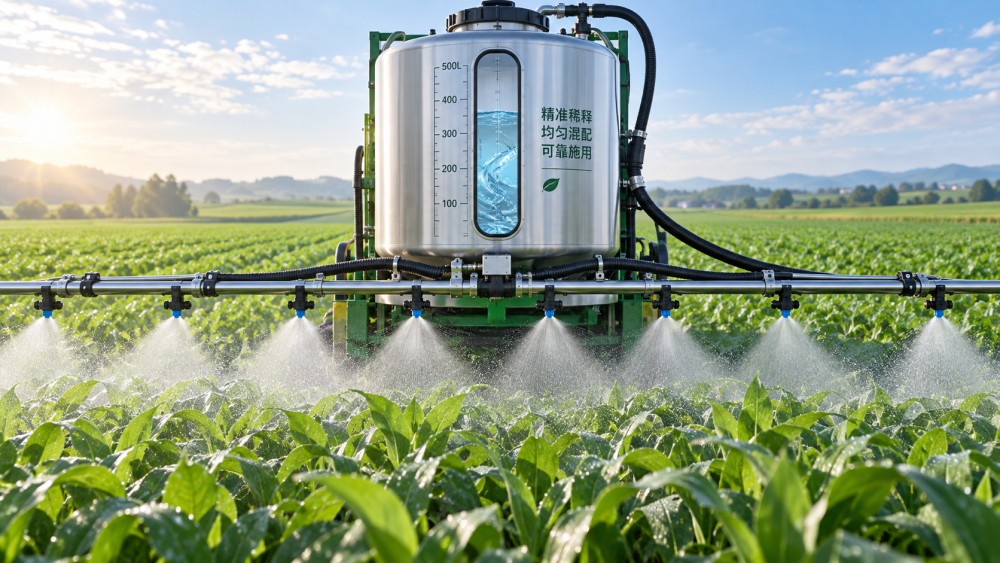
A useful pre-application check is to confirm three things: the measured output per nozzle is consistent, the travel speed matches the planned setting, and the tank volume will cover the expected area. This turns a label rate into an actual field rate rather than an assumption.
Water quality can change how a soluble concentrate performs
Water is not simply a neutral diluent. Its hardness, pH, temperature, suspended material, and dissolved salts can affect some active ingredients and tank-mix components. The exact sensitivity depends on the product, but poor-quality water can reduce stability, slow dissolution of other materials in the mix, or alter how a treatment performs after application.
Hard water is especially relevant when mineral ions interact with certain ingredients. Water with a high pH can also reduce the stability of pH-sensitive actives. In some cases, a label-approved water conditioner or buffering agent is appropriate. It should not be added on the assumption that every spray solution needs correcting. Unnecessary additives can create their own compatibility problems and increase handling complexity.
Visible sediment, algae, mud, or organic debris in source water deserves attention even when the soluble concentrate itself dissolves fully. Contaminated water can block filters and nozzles, interfere with other materials in the tank, and make it harder to identify the source of a performance problem. Clean water and clean equipment are basic controls, not optional refinements.
Mixing sequence is about preventing avoidable incompatibility
A single soluble concentrate is generally straightforward to dilute, but tank mixes require more discipline. The risk is not limited to visible clumping or separation. A mixture can look normal and still be unsuitable because one component changes the spray solution’s pH, increases crop stress, reduces uptake, or causes antagonism with another product.
Follow the product label and the approved local use instructions for tank-mix partners. When the combination is permitted, a practical filling sequence is usually to begin with a partly filled tank and operating agitation, add products in the required order, allow each material to mix properly, then top up with water. The exact order depends on the formulation types involved. Dry dispersible materials, suspension products, soluble concentrates, emulsifiable products, adjuvants, and fertilizers may not belong in the tank in the same sequence.
When a mix is unfamiliar, a small compatibility test using the same water source can reveal obvious physical problems before the full tank is prepared. Look for flakes, persistent foam, layered liquid, sediment, heat generation, or materials that refuse to mix. This test does not prove crop safety or biological compatibility, but it can prevent a blocked sprayer or unusable tank mix.
Do not leave a prepared spray mixture standing for long periods unless the product instructions clearly support it. Changes in temperature, settling of other formulation types, chemical interactions, and loss of agitation can all make a mixture less reliable. Prepare only the volume that can be applied within the intended working period.
Coverage matters more than a uniform-looking tank
Soluble concentrates are often associated with easy mixing, yet mixing is only one part of the job. The spray must reach the relevant plant surface, pest habitat, weed foliage, or crop zone. A systemic active may move within plant tissue after uptake, but it still needs sufficient contact with healthy, actively functioning tissue. A contact-active product may require more complete surface coverage.
Nozzle selection, droplet size, spray volume, boom height, and travel speed should match the target and the conditions. Fine droplets may improve coverage in some situations but are more vulnerable to off-target movement. Larger droplets can reduce drift risk but may leave gaps in coverage if application volume and nozzle choice are not adjusted appropriately.
Wind, heat, low humidity, rain risk, and plant stress also matter. Under hot and dry conditions, droplets can evaporate before they reach the target or before deposits have time to perform as intended. Rain shortly after application can wash off products that need time on the leaf surface. Drought-stressed, waterlogged, damaged, or otherwise stressed crops may respond differently to a treatment than actively growing plants. Application timing should account for both the target problem and crop condition.
Do not confuse solubility with universal compatibility
A soluble concentrate is compatible with water under its intended dilution conditions. That does not mean it is compatible with every fertilizer, biological product, surfactant, pesticide, or foliar feed. This distinction is important when combining crop-protection treatments with nutrition products to save a pass through the field.
Compatibility has several layers. Physical compatibility asks whether the materials can remain mixed. Chemical compatibility asks whether the ingredients remain stable. Biological compatibility asks whether the combination still controls the target. Crop compatibility asks whether the mixture can be used without unacceptable injury under the planned conditions. A mixture should satisfy all four, not only the first one.
Extra adjuvant is another frequent source of trouble. Some soluble concentrate products already contain ingredients that support wetting, uptake, or spreading. Adding more surfactant or oil than directed can increase uptake beyond the intended level and raise the risk of crop damage. Conversely, omitting an adjuvant that is specifically required may reduce performance. The correct choice is product-specific rather than based on a general rule that more adjuvant is better.
Handling and cleaning protect both the next application and the person preparing it
Liquid formulations reduce dust exposure compared with many dry products, but they still require careful handling. Concentrated products can cause harm through skin or eye contact, inhalation of spray mist, or accidental ingestion. Wear the protective equipment specified for the product, avoid splashes during measuring and pouring, and use dedicated measuring tools that are not returned to general use.
Keep the original container closed when not in use, store it in suitable conditions, and prevent product from reaching drains, surface water, feed, food, or seed. Empty packaging and rinsate need to be handled through the applicable product instructions and local collection or disposal arrangements. Reusing pesticide containers for any other purpose is unsafe.
Tank cleaning deserves the same attention as mixing. Residue from a previous application can contaminate the next crop treatment, particularly when the next field contains a sensitive crop. Rinse the sprayer promptly after use, clean filters and nozzles, and follow any product-specific decontamination directions. Cleaning is more effective before residues dry inside the tank, lines, boom, and nozzle bodies.
When a soluble concentrate is a good fit
This formulation is often practical when the application requires a liquid product that can be accurately measured, diluted efficiently, and delivered through standard spray equipment without the particle-management demands of a suspension formulation. It can simplify routine field preparation when water is suitable, equipment is clean and calibrated, and the intended use is clearly supported by the label.
It may be less suitable when the application plan depends on an unapproved multi-product tank mix, poor-quality water cannot be managed, or field conditions make drift, runoff, or crop stress likely. In those cases, changing formulation type is not always the answer; changing timing, water source, application method, or treatment plan may be more important.
Before selecting or applying a product, establish the crop and target, the intended application method, the area rate, the expected water volume, the water source, and every other material planned for the tank. Resources such as FCAS can help place soluble concentrates alongside suspension concentrates, emulsifiable concentrates, adjuvants, and related formulation technologies. The final field decision should still be built around the specific product instructions and the conditions present on the day of application.
Questions that often arise in the field
Does a soluble concentrate need agitation?
Continuous agitation may be less critical for the soluble active ingredient than it is for a suspension concentrate, but it is still useful during filling and spraying, especially when other products are included in the tank. Follow the product instructions and keep the mixture uniform.
Why is the spray liquid cloudy if the product is a soluble concentrate?
The cloudiness may come from another tank-mix partner, the water source, an added adjuvant, or an incompatibility. A soluble concentrate does not guarantee that a mixed spray solution will remain clear.
Can the same dilution rate be used in every sprayer?
No. The product amount must match the treated area and approved use rate. Water volume and tank concentration may change with sprayer type, nozzle choice, and application volume, while the amount delivered per area must remain correct.
Can a soluble concentrate be mixed with liquid fertilizer?
Only where the combination is permitted and suitable for the intended crop and application. Liquid fertilizer can alter the physical and chemical environment of the spray solution, so a product’s water solubility alone is not enough to establish compatibility.
Related News
 Antioxidants & Natural PreservativesWhat Quality Checks Matter When Sourcing Butylparaben for Personal CareButylparaben for personal care sourcing guide: compare assay, impurities, physical performance, documentation, traceability, and supplier quality to reduce formulation risk.MORE+
 Nano-microcapsule FormulationsHow Encapsulated Flavors Protect Taste During Processing and StorageEncapsulated Flavors protect taste from heat, oxygen, moisture, and storage loss. Explore smarter release, carrier selection, and processing strategies.MORE+
 Chelated Trace Element FertilizersHow Greenhouse Fertigation Systems Reduce Water and Fertilizer WasteGreenhouse fertigation systems reduce water and fertilizer waste with precise dosing, uniform irrigation, drainage monitoring, and smarter crop-zone control. Learn practical strategies.MORE+
 Supercritical CO2 Essential OilsHow Natural Essential Oil Blends Improve Consistent Product FragranceNatural essential oil blends help brands achieve consistent, appealing fragrance across batches. Explore smart blend design, stability testing, and product compatibility strategies.MORE+
 Non-ionic Surfactants & DefoamersHow to Choose Non Ionic Low Foaming Surfactants for CIP CleaningNon ionic low foaming surfactants for CIP cleaning: learn how to balance wetting, foam control, compatibility, and rinseability for reliable cleaning performance.MORE+
 Nano-microcapsule FormulationsHow Food Grade Cyclodextrin Complexes Protect Sensitive FlavorsFood grade cyclodextrin inclusion complexes help protect sensitive flavors from oxidation, evaporation, and processing loss while supporting controlled release and consistent sensory quality.MORE+
 Polymer-Coated Water Soluble NPKHow Fertilizer Coating Polymers Improve NPK Granule ReleaseFertilizer coating polymers for NPK granules improve controlled nutrient release, reduce loss risks, and enhance product consistency. Discover key selection and process insights.MORE+
 Chelated Trace Element FertilizersWhat Diammonium Phosphate Means for Crop Nutrition PlanningDiammonium Phosphate: learn how DAP supports early phosphorus access, nitrogen budgeting, smart placement, and balanced crop nutrition planning.MORE+
 Maillard Reaction Savory FlavorsHow to Assess a Flavor Bases Supplier List for Reliable SourcingGlobal Fine Chemicals & Agrochemical Intelligence Network flavor bases supplier list: assess specs, samples, supply risk, and true cost to source with confidence.MORE+
 Hydrocolloids & EmulsifiersHow Konjac Gum Powder Improves Texture in Low-Calorie FoodsKonjac gum powder improves body, stability, and mouthfeel in low-calorie foods. Discover practical tips for smoother sauces, beverages, and reduced-fat formulations.MORE+
 Supercritical CO2 Essential OilsWhat to Check Before Choosing a Botanical Essential Oils ManufacturerChoose a botanical essential oils manufacturer with confidence. Explore key checks for purity, traceability, compliance, batch consistency, and reliable supply.MORE+
 Microencapsulated FragrancesHow Fragrance Carriers for Detergents Improve Scent PerformanceFragrance carriers for detergents improve stability, fabric deposition, and long-lasting scent. Explore practical solutions for better wash-to-wear fragrance performance.MORE+
 Antioxidants & Natural PreservativesWhen Propyl Gallate Antioxidant Is the Right Choice for Oil StabilityPropyl gallate antioxidant: learn when it is the right choice for oil stability, shelf-life protection, processing compatibility, and smarter formulation decisions.MORE+
 Antioxidants & Natural PreservativesHow Potassium Sorbate Extends Shelf Life in Food and Beverage ProductsPotassium Sorbate helps food and beverage brands control yeast and mold spoilage. Explore pH, dosage, processing, and packaging strategies for reliable shelf life.MORE+
 Antioxidants & Natural PreservativesHow to Source Bulk Herbal Extracts With Reliable Quality ControlBulk herbal extracts sourcing guide: compare suppliers, verify traceability, review CoAs, and build reliable quality controls for safer, consistent purchasing.MORE+
 Antioxidants & Natural PreservativesWhat to Check Before Sourcing Butylparaben for Personal Care FormulasButylparaben for personal care sourcing guide: check market eligibility, purity, supplier controls, formula compatibility, packaging, and total risk before buying.MORE+
 Targeted Bio-pesticides & APIsChoosing Microbial Fungicides for Foliar Diseases in Integrated Crop ProgramsMicrobial fungicides for foliar diseases: learn how to match biology, formulation, tank compatibility, and timing for stronger integrated crop protection.MORE+
 Targeted Bio-pesticides & APIsHow Microbial Insecticides Control Caterpillars With Lower Crop Residue RiskMicrobial insecticides for caterpillars help protect crops with targeted early-larval control and lower residue-management pressure. Learn timing, coverage, compliance, and scouting essentials.MORE+
 Microencapsulated FragrancesHow to Add Encapsulated Laundry Fragrances Without Weakening Wash ResultsEncapsulated laundry fragrances: learn how to boost long-lasting scent while protecting cleaning power, stability, foam control, and fabric care.MORE+
 Supercritical CO2 Essential OilsHow Aroma Ingredients Shape Lasting and Skin-Safe Personal Care ProductsAroma ingredients for personal care: discover how to achieve lasting scent, formulation stability, skin safety, and confident product performance.MORE+
 Targeted Bio-pesticides & APIsInsecticides Explained Through Labels, Active Ingredients, and SafetyInsecticides explained through labels, active ingredients, formulations, and safety. Learn how to compare products, manage risk, and make informed crop protection decisions.MORE+
 Heavy-duty Industrial DegreasersHow to Select Parts Wash Cleaners for Automotive ComponentsParts wash cleaners for automotive components: learn how to match chemistry, materials, rinsing, safety, and waste controls for reliable cleaning results.MORE+
 Chelated Trace Element FertilizersHow Precision Fertigation Systems Improve Water and Nutrient ControlPrecision fertigation systems improve water and nutrient control with accurate dosing, uniform irrigation, smart monitoring, and reduced waste. Discover how to optimize crop performance.MORE+
 Hydrocolloids & EmulsifiersHow Bulk Price Factors Affect Hydrocolloid Stabilizer Blend SourcingHydrocolloid stabilizer blends bulk price: compare dosage efficiency, quality consistency, logistics, and documentation to reduce total sourcing costs.MORE+
 Zero-Calorie Sweeteners & AcidulantsHow to Choose a Natural Sweeteners Supplier for Clean-Label ProductsNatural sweeteners supplier selection guide for clean-label products: compare formulation fit, traceability, documentation, and supply reliability.MORE+
 Non-ionic Surfactants & DefoamersWhat Cationic Surfactants Do and Where They Are UsedCationic Surfactants deliver antimicrobial action, conditioning, antistatic control, and surface treatment benefits. Explore key uses, compatibility, and safe selection tips.MORE+
 Targeted Bio-pesticides & APIsHow to Evaluate Pesticide Suspension Concentrates for Field StabilityPesticide Suspension Concentrates: learn how to evaluate field stability, redispersibility, dilution, tank-mix compatibility, and spray safety for reliable performance.MORE+
 Hydrocolloids & EmulsifiersHow Hydrocolloid Systems for Meat Products Improve Texture and YieldHydrocolloid systems for meat products improve yield, texture, water retention, and slicing quality. Explore practical formulation strategies for stable, high-performing meat products.MORE+
 Microencapsulated FragrancesHow Laundry Fragrances for Liquid Detergents Improve Scent LongevityLaundry fragrances for liquid detergents: discover how fragrance design, deposition, and encapsulation create lasting fabric freshness and stronger product appeal.MORE+
 Nano-microcapsule FormulationsChoosing Fragrance Preparations That Perform Well in Personal WashFragrance preparations for personal wash: learn how to select options that protect clarity, stability, foam, scent performance, and packaging compatibility.MORE+
 Controlled-Release ThermodynamicsModified Cyclodextrins Explained for Controlled Fragrance ReleaseModified cyclodextrins enable controlled fragrance release, odor control, and volatile-note protection. Explore how they optimize performance in detergents, fabric care, and more.MORE+
 Microencapsulated FragrancesHow Fragrance Delivery Systems Improve Fabric Softener LongevityFragrance delivery systems for fabric softeners improve scent longevity through smart protection, reliable deposition, and controlled release for lasting freshness.MORE+
 Supercritical CO2 Essential OilsHow to Evaluate a Natural Cardamom Oil Supplier for Reliable SupplyNatural cardamom oil supplier evaluation guide: verify botanical origin, purity, batch consistency, documentation, packaging, and delivery reliability for confident sourcing.MORE+
 Maillard Reaction Savory FlavorsHow Ethyl Maltol Purity Testing Supports Flavor Safety ComplianceEthyl Maltol purity testing strengthens flavor safety compliance through identity checks, impurity profiling, supplier verification, and audit-ready documentation.MORE+
 Microencapsulated FragrancesEssential Oil Extracts Compared for Fragrance and Wellness UsesEssential Oil Extracts compared for fragrance and wellness: explore scent profiles, extraction methods, stability, safety, and sourcing insights for smarter formulation choices.MORE+
 Zero-Calorie Sweeteners & AcidulantsWhat Drives Zero Calorie Sweeteners Bulk Price in 2026Zero calorie sweeteners bulk price in 2026: compare specifications, dosage, quality, freight, and supply risk to make smarter sourcing decisions.MORE+
 EPA FIFRA & FDA GRAS RegsSynthetic Food Preservatives Rules That Support Safer FormulasSynthetic Food Preservatives: learn the rules for safer formulas, compliant use levels, validated shelf life, labeling, and reliable microbial control.MORE+
 Micelle Fluidics & ChelationHow Anionic Industrial Dispersants Improve Coating StabilityAnionic industrial dispersants improve coating stability, pigment wetting, viscosity control, gloss, and storage performance. Learn how to select and test the right solution.MORE+
 Supercritical CO2 Essential OilsHow to Choose Eucalyptus Oil Grades for Clean, Consistent ProductsChoose the right Eucalyptus Oil grade with confidence. Compare cineole content, purity, origin, processing, documentation, and application fit for consistent products.MORE+
 Micelle Fluidics & ChelationWhat Are Cationic Surfactants and Where Are They Commonly Used?Cationic Surfactants deliver powerful surface affinity for disinfection, fabric softening, hair conditioning, antistatic control, and industrial treatments. Explore key uses and selection factors.MORE+