Selecting Benzyl Alcohol for Stable Agrochemical Formulations
Selecting Benzyl Alcohol for Stable Agrochemical Formulations
Selecting benzyl alcohol for agrochemical formulations requires more than checking solvent strength or availability. Technical evaluators must assess active ingredient solubility, emulsion stability, viscosity, storage behavior, material compatibility, toxicological considerations, and regulatory documentation. A solvent that performs well in a bench beaker can still create problems during cold storage, dilution in spray water, filling, transport, or registration review.
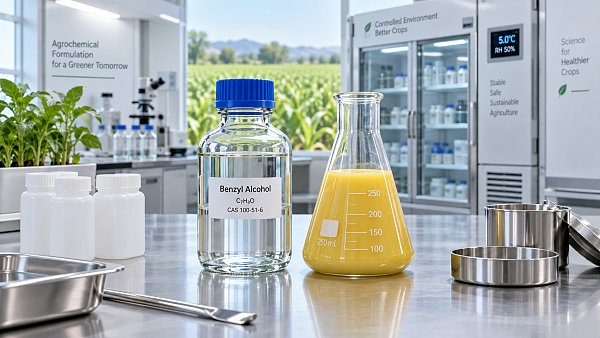
Benzyl alcohol is often considered when a formulation needs a relatively low-volatility aromatic oxygenated solvent with useful solvency for certain organic active ingredients and formulation auxiliaries. It may function as a primary solvent, a co-solvent, a viscosity modifier, or a component within a broader solvent package. Its actual value depends on the formulation type and on what happens after the product leaves the production line.
For technical teams developing emulsifiable concentrates, oil dispersions, seed treatment liquids, some suspension-based systems, or specialty adjuvant blends, the right question is not “Does benzyl alcohol dissolve the active?” It is “Does it support a stable, manufacturable, compliant formulation across its intended shelf life and use conditions?”
Why Benzyl Alcohol Is Considered in Crop Protection Systems
Benzyl alcohol has a polar aromatic structure that can make it useful where hydrocarbon solvents alone provide insufficient solvency or where formulators need to adjust the balance between active ingredient dissolution and emulsifier performance. Compared with highly volatile solvents, its lower evaporation tendency can be beneficial during manufacturing and application. It can also contribute to a more manageable odor and handling profile than some conventional aromatic solvent choices, although the final sensory and safety profile must always be assessed for the whole mixture.
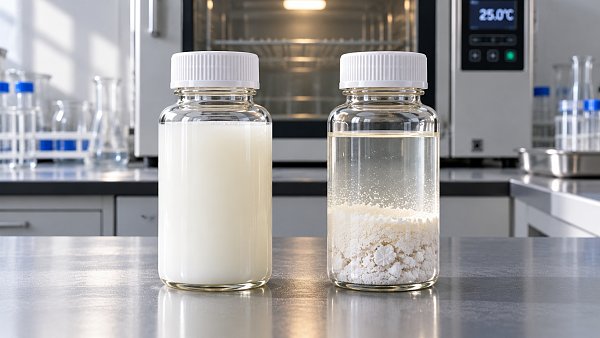
That said, it is not a universal replacement for every aromatic solvent, glycol ether, ester, or vegetable-oil-derived carrier. Benzyl alcohol brings its own polarity, water affinity, viscosity, and interaction pattern with surfactants. These characteristics can improve one part of a formulation while destabilizing another. A clear active solution at room temperature, for example, may become hazy after cooling if the active ingredient or one of the emulsifier components has limited compatibility with the full solvent blend.
Its selection is therefore most defensible when it is tied to a defined formulation need: dissolving a difficult active, reducing crystallization risk, improving co-solvent balance, moderating viscosity, or supporting a more robust emulsion after dilution. It should not be selected simply because it appears on an established formulation sheet.
Start with the Formulation, Not the Solvent
The same benzyl alcohol grade can behave very differently in an emulsifiable concentrate, a suspension concentrate, a capsule suspension, or a seed treatment formulation. The development route should begin with the intended delivery system and the physical state of the active ingredient.
In an emulsifiable concentrate, the central issue is usually the relationship among active ingredient solubility, solvent blend composition, and emulsifier package. Benzyl alcohol may help maintain active ingredient concentration, but it can also change the hydrophilic-lipophilic balance experienced by the surfactants. The result may be a stable concentrate but a weak emulsion on dilution, or a product that emulsifies well in one water source and separates in hard water.
In suspension concentrates, benzyl alcohol is not normally evaluated only for dissolving the active; it must also be reviewed for its effect on dispersion, rheology, particle wetting, crystal growth, and preservative strategy. If too much active dissolves into the liquid phase during storage and later recrystallizes, particle-size distribution can drift. This may affect suspendability, redispersibility, nozzle performance, and ultimately dose uniformity in the field.
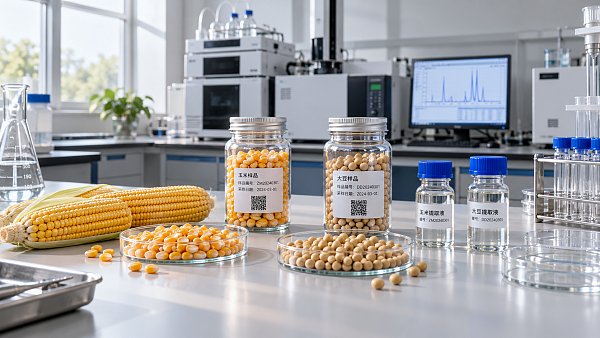
For seed treatment products, the formulation must additionally remain compatible with colorants, binders, film-forming polymers, flow agents, and packaging. A solvent that performs well in a sprayable concentrate may soften a coating polymer, shift drying behavior, or affect the visual consistency of treated seed. The intended application method matters as much as the chemistry.
The Technical Checks That Actually Influence Selection
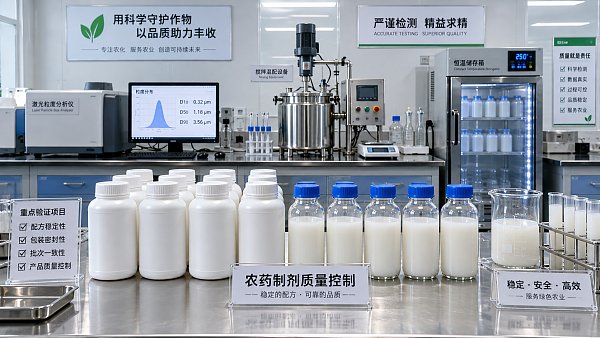
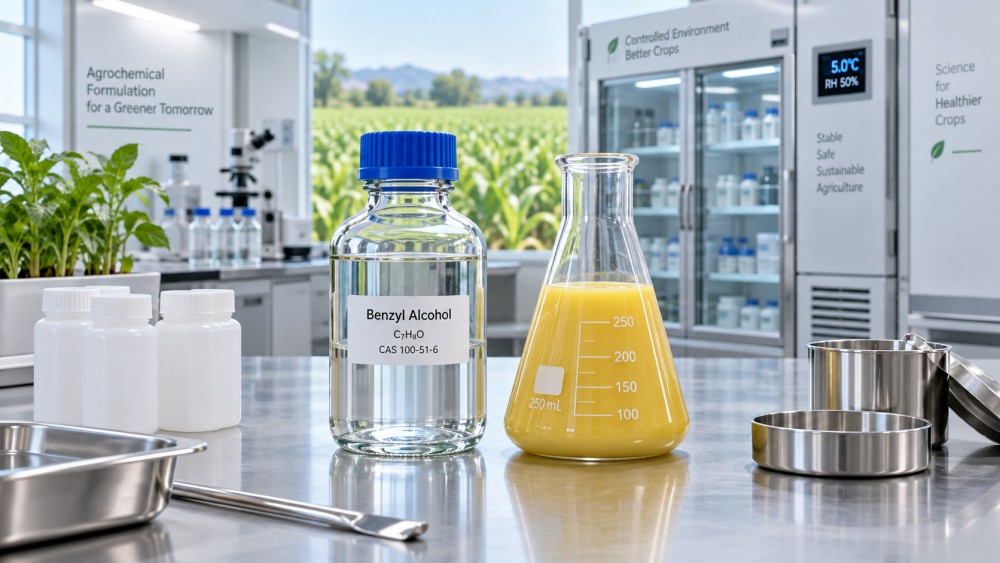
A practical assessment of benzyl alcohol for agrochemical formulations should combine chemical compatibility tests with realistic process and storage conditions. Early screening can be simple, but it should be designed to eliminate false positives before pilot production begins.
Testing should include the complete formulation, not only binary blends of active ingredient and benzyl alcohol. Surfactants, antifoams, stabilizers, dyes, water, and other solvents frequently determine the final outcome. This is especially important for multi-active products, where one active may be fully dissolved while another is near its solubility limit.
Solvent-Blending Decisions: Where Many Formulas Succeed or Fail
Benzyl alcohol is often most effective as part of a solvent system rather than as the sole liquid carrier. The objective is to achieve enough solvency margin without creating a formulation that is overly viscous, difficult to emulsify, too sensitive to temperature, or incompatible with packaging. A blend may include an ester, another oxygenated solvent, a hydrocarbon fraction, or a renewable carrier, depending on the active ingredient and the local regulatory framework.
The useful concept here is solvency margin. A formula operating very close to the active ingredient’s solubility limit may look economical on paper but is vulnerable to raw-material variation, low-temperature precipitation, and water ingress. A wider margin can improve robustness, although it may require trade-offs in cost, flash characteristics, viscosity, or emulsifier demand. Development teams should define which margin is needed for the product’s actual supply chain rather than relying on a single laboratory storage point.
Water deserves particular attention. Benzyl alcohol has some affinity for water, and small amounts of moisture introduced through raw materials, vessels, or humid handling conditions may influence clarity and phase behavior. In water-sensitive concentrates, incoming-material controls and dry processing discipline can be as important as the nominal formulation composition.
Safety, Regulatory Review, and Documentation Cannot Be Added Later
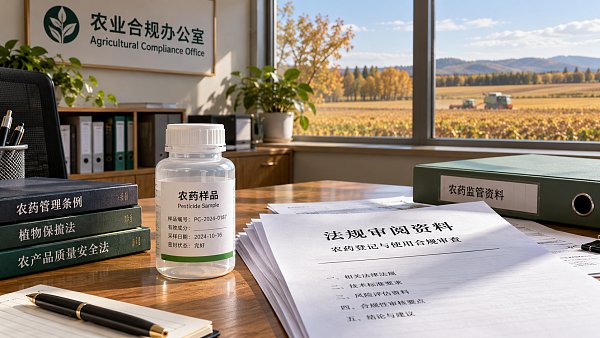
A technically stable formulation is not automatically suitable for registration or commercial sale. Benzyl alcohol must be assessed in the context of the target market, formulation use pattern, classification of the finished product, worker exposure, crop and environmental requirements, and applicable co-formulant restrictions. Requirements can differ by country, by product category, and by whether the formulation is intended for professional, agricultural, or household use.
Technical evaluators should request current supplier documentation early: a specification sheet, certificate of analysis format, safety data sheet, impurity-related information where relevant, transport details, shelf-life guidance, and confirmation of the material’s identity and manufacturing consistency. A high assay alone does not answer every formulation question. Trace impurities, moisture level, color, odor, storage history, and batch-to-batch variation can all matter in sensitive products.
It is also unwise to assume that benzyl alcohol can be treated as a preservative solution simply because it may show antimicrobial properties in certain contexts. Preservation of an aqueous or water-containing formulation requires a separate assessment of the microbial risk, formulation pH, storage conditions, packaging, and compatibility with the chosen preservation system. The same caution applies to claims around safer handling or environmental profile: they need to be supported by the complete product assessment, not inferred from one ingredient.
Supplier Qualification Is Part of Formulation Stability
For commercial products, solvent selection and supplier selection are inseparable. A formulation may have been optimized using one material profile, then become less predictable when sourced against a broad or poorly controlled specification. Procurement teams should therefore avoid comparing suppliers only on nominal purity and delivered price.
Useful questions include whether the supplier can maintain a stable specification over time, how lot changes are communicated, what packaging formats are available, how the material is protected from contamination or moisture during transport, and whether technical documents are maintained for the intended sales regions. For projects with long registration timelines, continuity of supply and change-control discipline may be more valuable than a short-term price advantage.
This broader view reflects the way formulation decisions are increasingly made across technical, regulatory, quality, and purchasing functions. FCAS organizes information across fine chemicals, crop protection materials, formulation auxiliaries, specialty solvents, and supply-chain considerations because these decisions rarely sit within a single department. A solvent choice affects laboratory work, plant operations, packaging, registration files, distributor handling, and field use.
A Sensible Decision Path
Benzyl alcohol is a credible candidate when its solvency and handling characteristics address a real formulation constraint. It is less convincing when selected by convention, without evidence that it improves the complete system. The strongest decision process begins with active ingredient behavior, then verifies solvent blend compatibility, emulsion or dispersion performance, storage stability, packaging interaction, and market-specific documentation.
Before finalizing a formula, confirm performance using representative raw-material lots, the intended packaging, and realistic temperature conditions. Review the finished product rather than isolated ingredients, and involve regulatory and procurement teams before the composition becomes difficult to change. For benzyl alcohol for agrochemical formulations, that discipline is usually what separates a promising laboratory blend from a product that remains stable, reproducible, and practical throughout its commercial life.
Facing technical bottlenecks in manufacturing or looking for more efficient industrial solutions? Leave your details below and let the engineering experts at FCAS solve them for you.
We respect your privacy. Your information is strictly confidential.
Related News
 Herbicides & Plant Growth RegulatorsChina Pesticide Retail Prices Diverge as Lambda-Cyhalothrin and Glyphosate Lead GainsChina pesticide retail prices diverge as lambda-cyhalothrin and glyphosate lead gains. Explore the implications for buyers, suppliers and procurement.MORE+
 Herbicides & Plant Growth RegulatorsHow to Apply Powder Single Superphosphate for Better Root GrowthDiscover how to apply powder single superphosphate for better root growth, with practical guidance on soil testing, fertilizer rates, safe placement, and application.MORE+
 Herbicides & Plant Growth RegulatorsEnvironmental Groups Urge EPA to Release Paraquat Litigation MaterialsParaquat litigation materials are at the center of a push for EPA disclosure. Explore what environmental groups are requesting and why it matters for the herbicide review.MORE+
 Herbicides & Plant Growth RegulatorsHow to Choose a Reliable Herbicide APIs ManufacturerChoose a reliable herbicide APIs manufacturer with confidence. Discover how to assess quality, compliance, delivered costs and supply reliability.MORE+
 Herbicides & Plant Growth RegulatorsEU Pesticide Reduction Stalls as Binding Targets Are ScrappedEU pesticide reduction is stalling as binding targets are scrapped. Discover what the uncertainty means for sourcing, compliance and supply-chain planning.MORE+
 Herbicides & Plant Growth RegulatorsNAFDAC Seizes Banned Farm Chemicals Worth 200 Million Naira in KanoNAFDAC seizes banned farm chemicals worth 200 million naira in Kano. Discover what the action means for pesticide suppliers, buyers and storage operators.MORE+
 Herbicides & Plant Growth RegulatorsHow Do Herbicide Intermediates Affect Production Yield?Discover how Herbicide Intermediates influence production yield, from impurity control to product recovery, and learn how to evaluate suppliers with confidence.MORE+
 Herbicides & Plant Growth RegulatorsHow to Choose Crop Protection Chemicals for Effective Weed ControlChoose Crop Protection Chemicals with confidence. Discover how to match herbicides to weeds, crop stages, field conditions, and resistance risks for effective control.MORE+
 Herbicides & Plant Growth RegulatorsBayer Launches First Group 12 Pre-Emergence Herbicide Convintro in the USBayer's Convintro brings a Group 12 pre-emergence herbicide option to US corn and soybean growers. Explore its potential role and key purchasing considerations.MORE+
 Herbicides & Plant Growth RegulatorsCalifornia Report Shows Continued Decline in High-Risk Pesticide UseCalifornia pesticide use reportedly declined 28% for carcinogen-classified products. Explore what this could mean for suppliers, buyers and market access.MORE+
 Herbicides & Plant Growth RegulatorsHow to Choose Adjuvant Systems for Herbicide FormulationsChoose Adjuvant Systems that improve herbicide performance without sacrificing crop safety or stability. Explore practical selection and testing strategies.MORE+
 Herbicides & Plant Growth RegulatorsHow to Choose Adjuvant Systems for HerbicidesChoose adjuvant systems for herbicides with confidence. Explore label requirements, compatibility, crop safety, and field testing to make better-informed decisions.MORE+
 Herbicides & Plant Growth RegulatorsReport Forecasts Global Agrochemical Market to Reach $387.7 Billion by 2031Global agrochemical market could reach $387.7 billion by 2031. Explore how technology, regulation and agricultural drones may shape industry decisions.MORE+
 Herbicides & Plant Growth RegulatorsWisconsin DNR Board to Vote on Drafting New Pesticide RulesWisconsin DNR pesticide rules are up for a drafting vote. See what the decision could mean for farmers, suppliers and future compliance.MORE+
 Herbicides & Plant Growth RegulatorsHow Do Herbicide APIs for Formulation Affect Final Product Stability?Discover how herbicide APIs for formulation affect product stability. Learn which impurities, particle properties, and tests matter to reduce storage failures and qualify reliable suppliers.MORE+
 Herbicides & Plant Growth RegulatorsHow Do You Choose Spray Adjuvant Systems for Herbicide Applications?Choose spray adjuvant systems with confidence. Compare surfactants, oils, and water conditioners, check label requirements, and learn how to avoid costly herbicide application mistakes.MORE+
 Herbicides & Plant Growth RegulatorsHow Can Plant Growth Regulators Control Excessive Shoot Growth?Plant Growth Regulators help control excessive shoot growth. Discover how crop-specific selection, timing, and application can improve canopy management without over-suppressing plants.MORE+
 Herbicides & Plant Growth RegulatorsCanadian Coalition Calls for Removal of Bill C-31 Pesticide ProvisionBill C-31 faces calls from a Canadian coalition to remove Section 13 over pesticide oversight concerns. Explore the debate and potential implications for farmers and suppliers.MORE+
 Herbicides & Plant Growth RegulatorsUS EPA Approves Three Controversial New Pesticide Active IngredientsExplore reported US EPA approvals of epyrifenacil, diflufenican and trifludimoxazin. Understand PFAS concerns and discover key checks for pesticide buyers and agricultural suppliers.MORE+
 Herbicides & Plant Growth RegulatorsEnvironmental Groups Sue EPA to Seek Atrazine Water Quality StandardsAtrazine water quality standards are at the center of a reported EPA lawsuit. Explore potential impacts on growers and suppliers, plus practical steps to prepare for possible regulatory changes.MORE+
 Herbicides & Plant Growth RegulatorsUsing Insect Growth Regulators to Protect Stored Grain from InfestationsInsect growth regulators for stored grain: learn how lifecycle control, precise application, sanitation, and residue planning help safeguard quality and market access.MORE+
 Herbicides & Plant Growth RegulatorsSelecting Benzyl Alcohol for Stable Agrochemical FormulationsBenzyl alcohol for agrochemical formulations: discover how to improve solubility, emulsion stability, storage performance, compliance, and supplier qualification.MORE+
 Herbicides & Plant Growth RegulatorsWhat to Verify Before Choosing a Suspoemulsion Pesticides SupplierChoose a reliable suspoemulsion pesticides supplier with confidence. Verify formulation stability, dilution performance, documentation, packaging, batch control, and supply reliability.MORE+
 Herbicides & Plant Growth RegulatorsHow to Assess Quality Risks at a Pesticide Formulation Intermediates FactoryPesticide formulation intermediates factory assessment guide: identify quality risks in raw materials, processes, testing, traceability, and storage.MORE+
 Herbicides & Plant Growth RegulatorsSoluble Concentrates Explained for Reliable Field ApplicationsSoluble Concentrates explained: improve mixing, calibration, water quality, compatibility, and spray coverage for more reliable field applications.MORE+
 Herbicides & Plant Growth RegulatorsHow to Test Wetting Agents for Crop Protection FormulationsHow to test industrial wetting agents for crop protection use? Explore practical checks for leaf coverage, foam, stability, sprayability, and crop safety to select the right formulation additive.MORE+
 Herbicides & Plant Growth RegulatorsWhat Does Water-Dispersible Granules Mean in Crop Protection Formulations?Water dispersible granules meaning explained: discover how WDG crop protection formulations disperse in water, improve handling, and support reliable spray performance.MORE+
 Herbicides & Plant Growth RegulatorsHow Plant Growth Promoters Improve Crop Uniformity and YieldPlant Growth Promoters help improve crop uniformity, root development, stress recovery, and yield potential. Learn how to choose the right product, timing, and application strategy.MORE+
 Herbicides & Plant Growth RegulatorsAre Bioherbicides Ready to Replace Conventional Weed Control in 2026Bioherbicides are gaining ground in 2026, but can they replace conventional weed control? Explore where they truly perform, what limits adoption, and which markets offer the biggest opportunity.MORE+
 Herbicides & Plant Growth RegulatorsHow to Compare Herbicides for Cost, Control, and Crop SafetyHerbicides comparison made practical: learn how to assess true cost per hectare, weed control reliability, crop safety, resistance risk, and supplier quality before you buy.MORE+