How to Test Wetting Agents for Crop Protection Formulations
A wetting agent should not be selected for a crop protection formulation because it produces the lowest surface-tension reading in water. That result can be useful, but it does not tell a formulator whether the spray will wet a waxy leaf, remain compatible with the active ingredient, stay manageable in the spray tank, or cause crop injury under realistic use conditions.
To test industrial wetting agents for crop protection use, evaluate them in the actual formulation and intended spray dilution. A practical screening program should combine physical measurements with leaf-level observations, formulation stability checks, foam assessment, and a small crop-safety screen. The objective is not to find the strongest surfactant in isolation. It is to find the wetting agent that delivers consistent deposition and coverage without creating new formulation or application problems.
Start with the formulation and use case, not the surfactant catalogue
“Wetting agent” describes a function rather than a single chemistry. Non-ionic surfactants, anionic surfactants, silicone-based materials, polymeric systems, and blends can all improve contact between spray droplets and plant surfaces. Their suitability changes with the active ingredient, formulation type, target crop, leaf surface, water quality, spray equipment, and intended dose.
Before running laboratory tests, write down the conditions the additive must handle:
- Formulation type, such as suspension concentrate, emulsifiable concentrate, water-dispersible granule, soluble liquid, biological product, or tank-mix adjuvant.
- Active ingredient properties, especially water solubility, particle form, oil-phase requirements, and sensitivity to pH or oxidation.
- Target crop and leaf character. Smooth, waxy, hairy, upright, and highly water-repellent leaves can behave very differently.
- Application method, including foliar spray, seed treatment, soil-directed application, or drone and conventional ground spraying.
- Typical dilution water, because water hardness, pH, and dissolved salts can change surfactant behavior.
- Constraints such as low foam, biological compatibility, rainfastness goals, residue expectations, or a preference for lower-risk ingredient profiles.
This first step prevents a common error: comparing wetting agents only in deionized water and then assuming the ranking will carry over to a complex crop protection product.
Build a screening sequence that answers useful questions
Testing becomes more efficient when each stage removes a different source of uncertainty. Begin with simple tests that reveal major incompatibilities, then move only the viable candidates into more representative trials.
1. Check solubility and formulation compatibility
Add each candidate wetting agent at the intended use range to the full formulation, not merely to water. Observe whether it dissolves or disperses cleanly and whether it changes appearance, viscosity, odor, color, particle settling, or phase separation. For oil-containing systems, check whether the emulsion remains uniform after dilution. For suspension concentrates and water-dispersible products, check whether the additive alters particle dispersion or promotes sedimentation.
Compatibility should also be assessed after the product has been exposed to conditions that may occur in storage and transport. A wetting agent that initially looks acceptable can later produce haze, crystallization, oil separation, viscosity drift, or a difficult-to-redisperse sediment. Biological crop protection formulations deserve particular care because surfactant chemistry may affect microorganism viability, spore germination, protein stability, or the performance of natural extracts.
Do not assume that a wetting agent suitable for industrial cleaning will transfer directly into crop protection. It may have excellent wetting power but unacceptable foam, incompatibility with the carrier system, poor tolerance of formulation salts, or a crop-safety profile that is unsuitable for foliar use.
2. Measure surface tension, but interpret it as an early screen
Surface-tension measurement is a fast way to see whether a candidate changes the air-water interface at relevant concentrations. Measure the spray dilution rather than only the concentrated product. If the formulation will be used across several dilution rates, test the practical range.
A lower reading can indicate a stronger ability to reduce cohesive forces within the liquid, which may support wetting. It is not a direct prediction of field coverage. Two products with similar surface tension can produce very different droplets on a leaf because dynamic surface behavior, spray droplet formation, formulation solvents, and the chemistry of the leaf cuticle all matter.
For this reason, use surface tension to eliminate clearly weak candidates or establish dose-response behavior. Avoid using it as the final purchasing criterion.
3. Test wetting speed on a relevant surface
Wetting speed asks a more practical question: how quickly does the spray solution displace air and contact the surface? A simple laboratory test can use a standardized hydrophobic film, treated glass, or another repeatable test substrate. Observe how rapidly a droplet loses its beaded shape and develops contact with the surface.
However, standardized surfaces are only a bridge between basic measurements and plant testing. A leaf is chemically and physically more variable. Waxes, hairs, veins, surface roughness, leaf age, dust, humidity, and prior treatments can all change results. Use the same crop leaves and similar growth stage when comparing candidates, and collect them shortly before testing.

Leaf spreading is where many selections change
Place a controlled-volume droplet of diluted formulation on representative leaves and record its footprint over a short, consistent observation period. A camera, a fixed light source, and image analysis can improve repeatability, but a disciplined visual comparison is still valuable in early development.
Look for more than the final spread area. Note whether the droplet beads, spreads evenly, forms fingers around leaf hairs, runs toward the leaf edge, penetrates too quickly, or leaves uneven dry deposits. Excessive spreading is not automatically desirable. A highly mobile solution may run off narrow or steep leaves, concentrate at margins, or increase contact with sensitive tissues. For systemic products, the preferred behavior may differ from that of a contact fungicide or insecticide that needs uniform surface coverage.
Run the leaf test with the complete formulation. A wetting agent can look excellent in water but behave differently once emulsifiers, dispersants, oils, humectants, inorganic salts, or suspended active particles are present.
Assess sprayability: foam, dilution stability, and tank behavior
A wetting agent affects more than the leaf. It can change mixing behavior, pump performance, nozzle output, and the operator’s ability to prepare a uniform spray liquid. Foam is especially important because it can slow filling, cause inconsistent tank volume, interfere with recirculation, and make a product difficult to use in practice.
Evaluate foam during realistic dilution and agitation rather than by shaking a small vial once. Compare the initial foam volume, bubble persistence, and whether foam changes after the formulation has been mixed with common tank-mix partners. A candidate that gives better leaf spreading but creates persistent foam may still be unsuitable unless the overall formulation contains an effective, compatible foam-control strategy.
Also inspect diluted samples for clouding, flocculation, floating material, separation, oil rings, settling, or changes in pourability. Test with water representative of intended use, including harder water where relevant. Some surfactant systems lose effectiveness or destabilize dispersions when divalent ions or fertilizer salts are present.
Use application equipment in the screening stage
Bench tests cannot fully represent atomization. Spray a small batch through the nozzle types and pressure range expected in use. Watch for irregular patterns, nozzle deposits, poor re-suspension, excessive fine droplets, or a change in droplet retention on the target. The wetting agent is only one part of the system, but its interaction with viscosity, solvent content, and other surfactants can alter spray behavior.
For aerial or drone applications, where droplet size and evaporation are particularly sensitive to operating conditions, avoid judging wetting performance from a leaf-drop test alone. Evaluate the intended application mode early, using practical drift and deposition controls appropriate to the development program.
Crop safety is a selection gate, not a final afterthought
Wetting agents can increase active-ingredient uptake, which may improve efficacy but can also raise phytotoxicity risk. The risk is often higher on tender foliage, stressed crops, young plants, under hot or dry conditions, or when the formulation includes solvents and penetrant-like components. A surfactant that gives excellent coverage at one dose may be too aggressive at another.
Conduct a controlled small-scale crop-safety screen with untreated plants for comparison. Apply the complete formulation at the intended rate and observe leaves for burn, spotting, chlorosis, deformation, delayed growth, or other abnormal responses. Include the surfactant-free formulation where possible. That comparison separates effects caused by the wetting agent from effects caused by the active ingredient or the base formulation.
Testing should represent the crop stage and application conditions most likely to expose the formulation’s weak points. A result on a robust mature leaf does not necessarily predict performance on young foliage or under environmental stress.
Turn test results into a defensible choice
The best candidate is usually the one with balanced behavior, not the strongest result in any single test. A useful decision record compares candidates across wetting speed, leaf spreading, runoff tendency, foam, dilution stability, formulation stability, sprayability, crop response, and supply consistency. Keep notes on the exact formulation version, water source, mixing order, concentration, leaf material, and application conditions. Without this context, apparently conflicting results are hard to interpret later.
Consider dosage carefully. A surfactant may have a narrow practical window: too little gives poor coverage, while too much creates foam, runoff, instability, or crop injury. Testing a small dose range is generally more informative than testing each candidate at only one arbitrary level.
Supplier documentation also belongs in the decision. Review the material specification, batch consistency approach, handling information, composition disclosure suitable for the project, and the support available for formulation questions. Formulators and procurement teams need a product that can be reproduced in commercial manufacture, not only a sample that performs well once in the laboratory.
FCAS organizes practical information across crop protection adjuvants, industrial surfactants, dispersants, wetting agents, formulation systems, and supply-chain considerations. When comparing materials, this broader view helps place a wetting agent within the full product system: active ingredient, carrier, other additives, packaging, intended crop use, and commercial sourcing requirements.
Common testing mistakes that lead to poor selections
- Testing in pure water only: this misses interactions with the active ingredient, solvents, salts, and other formulation additives.
- Choosing by lowest surface tension: this can favor a material that foams excessively, runs off the leaf, or damages the crop.
- Using one leaf type as a universal model: waxy cereal leaves, broadleaf crops, hairy leaves, and young foliage require different judgments.
- Ignoring mixing order: adding the same wetting agent at a different stage can change dispersion, emulsion formation, or foam.
- Separating performance from safety: stronger wetting and penetration can alter both efficacy and crop tolerance.
- Testing only fresh samples: a candidate should retain acceptable behavior after the formulation has faced realistic storage conditions.
A sound testing program does not need to begin with a large field trial. Start with the full formulation, compare candidates at realistic dilution, use leaf tests to assess controlled spreading, and reject materials that introduce foam, instability, or crop-safety concerns. The remaining candidates can then move into more representative application and efficacy work with a clear reason for their selection.
Related News
 Antioxidants & Natural PreservativesWhat Quality Checks Matter When Sourcing Butylparaben for Personal CareButylparaben for personal care sourcing guide: compare assay, impurities, physical performance, documentation, traceability, and supplier quality to reduce formulation risk.MORE+
 Nano-microcapsule FormulationsHow Encapsulated Flavors Protect Taste During Processing and StorageEncapsulated Flavors protect taste from heat, oxygen, moisture, and storage loss. Explore smarter release, carrier selection, and processing strategies.MORE+
 Chelated Trace Element FertilizersHow Greenhouse Fertigation Systems Reduce Water and Fertilizer WasteGreenhouse fertigation systems reduce water and fertilizer waste with precise dosing, uniform irrigation, drainage monitoring, and smarter crop-zone control. Learn practical strategies.MORE+
 Supercritical CO2 Essential OilsHow Natural Essential Oil Blends Improve Consistent Product FragranceNatural essential oil blends help brands achieve consistent, appealing fragrance across batches. Explore smart blend design, stability testing, and product compatibility strategies.MORE+
 Non-ionic Surfactants & DefoamersHow to Choose Non Ionic Low Foaming Surfactants for CIP CleaningNon ionic low foaming surfactants for CIP cleaning: learn how to balance wetting, foam control, compatibility, and rinseability for reliable cleaning performance.MORE+
 Nano-microcapsule FormulationsHow Food Grade Cyclodextrin Complexes Protect Sensitive FlavorsFood grade cyclodextrin inclusion complexes help protect sensitive flavors from oxidation, evaporation, and processing loss while supporting controlled release and consistent sensory quality.MORE+
 Polymer-Coated Water Soluble NPKHow Fertilizer Coating Polymers Improve NPK Granule ReleaseFertilizer coating polymers for NPK granules improve controlled nutrient release, reduce loss risks, and enhance product consistency. Discover key selection and process insights.MORE+
 Chelated Trace Element FertilizersWhat Diammonium Phosphate Means for Crop Nutrition PlanningDiammonium Phosphate: learn how DAP supports early phosphorus access, nitrogen budgeting, smart placement, and balanced crop nutrition planning.MORE+
 Maillard Reaction Savory FlavorsHow to Assess a Flavor Bases Supplier List for Reliable SourcingGlobal Fine Chemicals & Agrochemical Intelligence Network flavor bases supplier list: assess specs, samples, supply risk, and true cost to source with confidence.MORE+
 Hydrocolloids & EmulsifiersHow Konjac Gum Powder Improves Texture in Low-Calorie FoodsKonjac gum powder improves body, stability, and mouthfeel in low-calorie foods. Discover practical tips for smoother sauces, beverages, and reduced-fat formulations.MORE+
 Supercritical CO2 Essential OilsWhat to Check Before Choosing a Botanical Essential Oils ManufacturerChoose a botanical essential oils manufacturer with confidence. Explore key checks for purity, traceability, compliance, batch consistency, and reliable supply.MORE+
 Microencapsulated FragrancesHow Fragrance Carriers for Detergents Improve Scent PerformanceFragrance carriers for detergents improve stability, fabric deposition, and long-lasting scent. Explore practical solutions for better wash-to-wear fragrance performance.MORE+
 Antioxidants & Natural PreservativesWhen Propyl Gallate Antioxidant Is the Right Choice for Oil StabilityPropyl gallate antioxidant: learn when it is the right choice for oil stability, shelf-life protection, processing compatibility, and smarter formulation decisions.MORE+
 Antioxidants & Natural PreservativesHow Potassium Sorbate Extends Shelf Life in Food and Beverage ProductsPotassium Sorbate helps food and beverage brands control yeast and mold spoilage. Explore pH, dosage, processing, and packaging strategies for reliable shelf life.MORE+
 Antioxidants & Natural PreservativesHow to Source Bulk Herbal Extracts With Reliable Quality ControlBulk herbal extracts sourcing guide: compare suppliers, verify traceability, review CoAs, and build reliable quality controls for safer, consistent purchasing.MORE+
 Antioxidants & Natural PreservativesWhat to Check Before Sourcing Butylparaben for Personal Care FormulasButylparaben for personal care sourcing guide: check market eligibility, purity, supplier controls, formula compatibility, packaging, and total risk before buying.MORE+
 Targeted Bio-pesticides & APIsChoosing Microbial Fungicides for Foliar Diseases in Integrated Crop ProgramsMicrobial fungicides for foliar diseases: learn how to match biology, formulation, tank compatibility, and timing for stronger integrated crop protection.MORE+
 Targeted Bio-pesticides & APIsHow Microbial Insecticides Control Caterpillars With Lower Crop Residue RiskMicrobial insecticides for caterpillars help protect crops with targeted early-larval control and lower residue-management pressure. Learn timing, coverage, compliance, and scouting essentials.MORE+
 Microencapsulated FragrancesHow to Add Encapsulated Laundry Fragrances Without Weakening Wash ResultsEncapsulated laundry fragrances: learn how to boost long-lasting scent while protecting cleaning power, stability, foam control, and fabric care.MORE+
 Supercritical CO2 Essential OilsHow Aroma Ingredients Shape Lasting and Skin-Safe Personal Care ProductsAroma ingredients for personal care: discover how to achieve lasting scent, formulation stability, skin safety, and confident product performance.MORE+
 Targeted Bio-pesticides & APIsInsecticides Explained Through Labels, Active Ingredients, and SafetyInsecticides explained through labels, active ingredients, formulations, and safety. Learn how to compare products, manage risk, and make informed crop protection decisions.MORE+
 Heavy-duty Industrial DegreasersHow to Select Parts Wash Cleaners for Automotive ComponentsParts wash cleaners for automotive components: learn how to match chemistry, materials, rinsing, safety, and waste controls for reliable cleaning results.MORE+
 Chelated Trace Element FertilizersHow Precision Fertigation Systems Improve Water and Nutrient ControlPrecision fertigation systems improve water and nutrient control with accurate dosing, uniform irrigation, smart monitoring, and reduced waste. Discover how to optimize crop performance.MORE+
 Hydrocolloids & EmulsifiersHow Bulk Price Factors Affect Hydrocolloid Stabilizer Blend SourcingHydrocolloid stabilizer blends bulk price: compare dosage efficiency, quality consistency, logistics, and documentation to reduce total sourcing costs.MORE+
 Zero-Calorie Sweeteners & AcidulantsHow to Choose a Natural Sweeteners Supplier for Clean-Label ProductsNatural sweeteners supplier selection guide for clean-label products: compare formulation fit, traceability, documentation, and supply reliability.MORE+
 Non-ionic Surfactants & DefoamersWhat Cationic Surfactants Do and Where They Are UsedCationic Surfactants deliver antimicrobial action, conditioning, antistatic control, and surface treatment benefits. Explore key uses, compatibility, and safe selection tips.MORE+
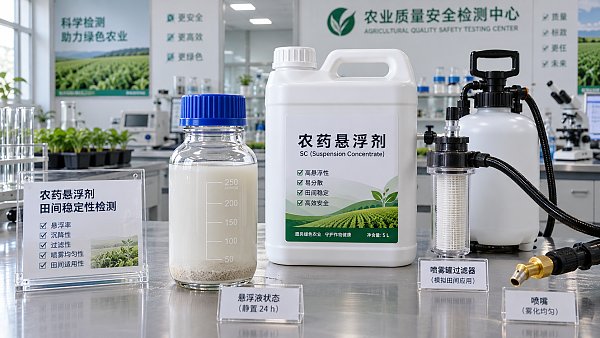
 Targeted Bio-pesticides & APIsHow to Evaluate Pesticide Suspension Concentrates for Field StabilityPesticide Suspension Concentrates: learn how to evaluate field stability, redispersibility, dilution, tank-mix compatibility, and spray safety for reliable performance.MORE+
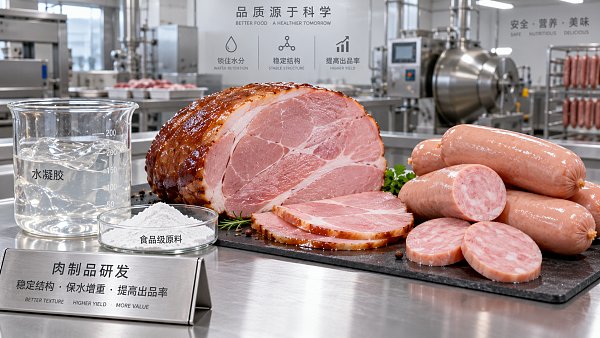
 Hydrocolloids & EmulsifiersHow Hydrocolloid Systems for Meat Products Improve Texture and YieldHydrocolloid systems for meat products improve yield, texture, water retention, and slicing quality. Explore practical formulation strategies for stable, high-performing meat products.MORE+
 Microencapsulated FragrancesHow Laundry Fragrances for Liquid Detergents Improve Scent LongevityLaundry fragrances for liquid detergents: discover how fragrance design, deposition, and encapsulation create lasting fabric freshness and stronger product appeal.MORE+
 Nano-microcapsule FormulationsChoosing Fragrance Preparations That Perform Well in Personal WashFragrance preparations for personal wash: learn how to select options that protect clarity, stability, foam, scent performance, and packaging compatibility.MORE+
 Controlled-Release ThermodynamicsModified Cyclodextrins Explained for Controlled Fragrance ReleaseModified cyclodextrins enable controlled fragrance release, odor control, and volatile-note protection. Explore how they optimize performance in detergents, fabric care, and more.MORE+
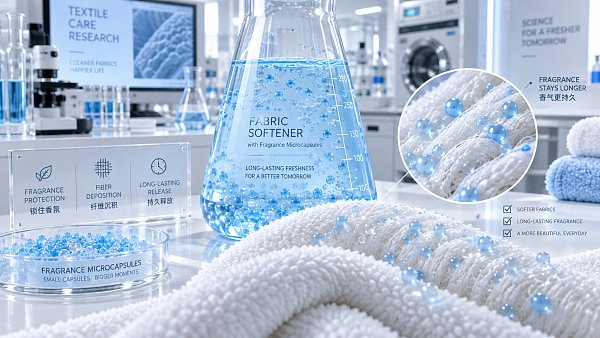
 Microencapsulated FragrancesHow Fragrance Delivery Systems Improve Fabric Softener LongevityFragrance delivery systems for fabric softeners improve scent longevity through smart protection, reliable deposition, and controlled release for lasting freshness.MORE+
 Supercritical CO2 Essential OilsHow to Evaluate a Natural Cardamom Oil Supplier for Reliable SupplyNatural cardamom oil supplier evaluation guide: verify botanical origin, purity, batch consistency, documentation, packaging, and delivery reliability for confident sourcing.MORE+
 Maillard Reaction Savory FlavorsHow Ethyl Maltol Purity Testing Supports Flavor Safety ComplianceEthyl Maltol purity testing strengthens flavor safety compliance through identity checks, impurity profiling, supplier verification, and audit-ready documentation.MORE+
 Microencapsulated FragrancesEssential Oil Extracts Compared for Fragrance and Wellness UsesEssential Oil Extracts compared for fragrance and wellness: explore scent profiles, extraction methods, stability, safety, and sourcing insights for smarter formulation choices.MORE+
 Zero-Calorie Sweeteners & AcidulantsWhat Drives Zero Calorie Sweeteners Bulk Price in 2026Zero calorie sweeteners bulk price in 2026: compare specifications, dosage, quality, freight, and supply risk to make smarter sourcing decisions.MORE+
 EPA FIFRA & FDA GRAS RegsSynthetic Food Preservatives Rules That Support Safer FormulasSynthetic Food Preservatives: learn the rules for safer formulas, compliant use levels, validated shelf life, labeling, and reliable microbial control.MORE+
 Micelle Fluidics & ChelationHow Anionic Industrial Dispersants Improve Coating StabilityAnionic industrial dispersants improve coating stability, pigment wetting, viscosity control, gloss, and storage performance. Learn how to select and test the right solution.MORE+
 Supercritical CO2 Essential OilsHow to Choose Eucalyptus Oil Grades for Clean, Consistent ProductsChoose the right Eucalyptus Oil grade with confidence. Compare cineole content, purity, origin, processing, documentation, and application fit for consistent products.MORE+
 Micelle Fluidics & ChelationWhat Are Cationic Surfactants and Where Are They Commonly Used?Cationic Surfactants deliver powerful surface affinity for disinfection, fabric softening, hair conditioning, antistatic control, and industrial treatments. Explore key uses and selection factors.MORE+