Choosing spray adjuvant systems for herbicide applications starts with the product label—not a promise of stronger weed control. The right choice depends on application conditions.
Herbicide formulation, target weeds, crop sensitivity, water quality, and spraying conditions all matter. A poorly matched adjuvant can cause inconsistent coverage, tank problems, or crop injury.
This guide explains how to compare surfactants, oil-based adjuvants, water conditioners, and drift-control products, check compatibility, and follow label requirements before filling the spray tank.
The practical rule is simple: identify what the herbicide requires, confirm what your water and equipment need, and select products that satisfy those requirements together.
What Should You Check Before Choosing an Adjuvant?
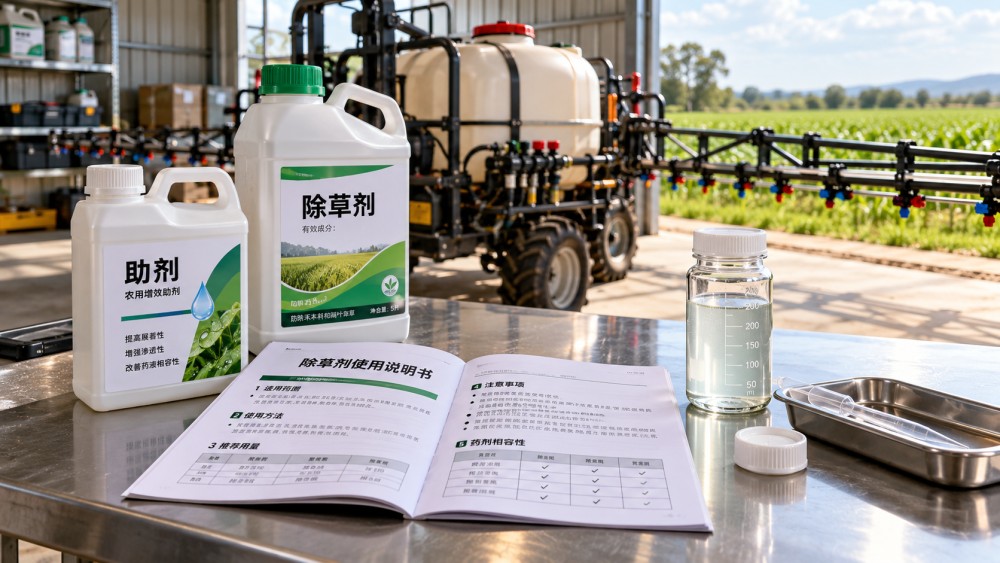
Start with the label for the exact herbicide product you intend to apply. Products containing the same active ingredient can have different formulations and directions.
Find the sections covering adjuvants, application equipment, carrier volume, crop restrictions, and tank mixtures. Check any supplemental labeling and applicable local requirements before proceeding further.
Determine whether an adjuvant is required, permitted, discouraged, or prohibited. Where specified, record the adjuvant class, concentration, use rate, and any approved-product or compatibility requirements.
Some formulations already contain surfactants, but that does not automatically eliminate additional requirements. Conversely, adding more surfactant to a formulated herbicide may offer no benefit.
Review every pesticide label in the proposed mixture. If their requirements cannot be satisfied together, change the mixture or obtain qualified guidance before making an application.
Build a short application record: herbicide product, crop stage, weed species and size, water source, spray volume, nozzle setup, and expected weather during application hours.
Which Adjuvant Function Does Your Application Actually Need?
Spray adjuvant systems may combine several functions, but each function should address an identified need. Use the following comparison to organize your initial product selection.
A multifunctional product can simplify handling when all its functions match the application. Its convenience does not establish equivalence to separately specified adjuvant requirements, however.
Compare technical information rather than product names alone. Terms such as “premium,” “complete,” or “high performance” do not establish suitability for a particular herbicide program.
Should You Use a Nonionic Surfactant, COC, or MSO?
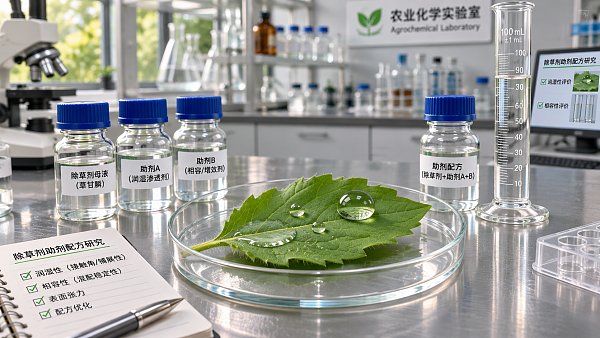
Nonionic surfactants generally help droplets wet leaf surfaces. They can be appropriate where the herbicide label calls for NIS, but specifications still matter during selection.
Do not replace a specified agricultural surfactant with household detergent. Detergents have different ingredients and performance characteristics, and they may create excessive foam or crop injury.
Crop oil concentrates and methylated seed oils can increase penetration for certain herbicides. Their suitability depends on the herbicide, crop, weed, and labeled application conditions.
MSO is not a universal upgrade from COC or NIS. Greater penetration can increase crop response, particularly where the crop is stressed or mixtures intensify injury.
Specialty surfactants, including organosilicone products, can produce extensive spreading. More spreading is not always beneficial if it encourages runoff or creates an unsuitable deposition pattern.
When comparing products within an allowed class, check composition, concentration, technical documentation, and labeled rates. Similar package descriptions do not guarantee equivalent performance in use.
Does Your Spray Water Need Conditioning?
Test the water source actually used for spraying. Useful measurements include hardness, pH, and alkalinity; inspect for sediment and consider additional testing when local conditions warrant.
Hardness and pH describe different properties. Water can have an acceptable pH yet contain calcium or magnesium levels that interfere with certain herbicides during application.
For some glyphosate applications, label-directed ammonium sulfate can help address antagonistic cations. The appropriate product and amount depend on labeling, water chemistry, and mixture composition.
Do not assume ammonium-containing conditioners fit every program. Some dicamba product labels prohibit ammonium-containing additives because they can increase volatility risk; verify the exact requirements.
Similarly, lowering pH is not a universal improvement. Acidification can be unsuitable for particular herbicides, and some products specify minimum spray-solution pH or other restrictions.
Ask suppliers which water problem their conditioner addresses and what evidence supports its rate. A vague claim to “improve water” provides little operational guidance alone.
How Do Weeds, Crop Stress, and Weather Change the Choice?
Identify the target weeds and their growth stage before adjusting the adjuvant system. Large or drought-stressed weeds may remain difficult to control despite enhanced wetting.
Waxy, hairy, or upright leaves can influence droplet retention and coverage. These characteristics help explain label recommendations, but they do not justify exceeding labeled rates.
Check crop condition as carefully as weed condition. Heat, drought, waterlogging, frost, or other stress can change crop tolerance to herbicides and penetration-enhancing adjuvant combinations.
Review rainfastness directions for the herbicide and relevant mixture components. An adjuvant does not automatically shorten the required interval between spraying and rainfall or irrigation.
Temperature and humidity influence droplet evaporation and plant response. When conditions fall outside label limits, postpone the application instead of trying to compensate with additives.
If weeds are beyond the labeled growth stage, reassess the treatment program. Adding extra oil or surfactant cannot reliably rescue an unsuitable herbicide application decision.
Can a Drift-Control Product Solve an Application Problem?
Drift-control adjuvants can alter droplet formation, but performance depends on the formulation, nozzle, pressure, carrier volume, and complete tank mixture used during the actual application.
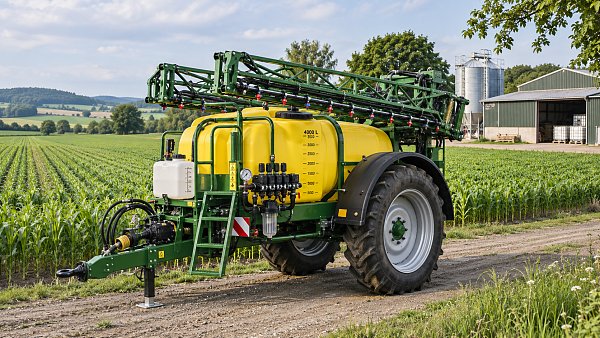
Check whether the herbicide requires particular nozzles, droplet categories, pressures, or approved drift-reduction products. An additive cannot substitute for those equipment and operating requirements safely.
Droplets that become too coarse may reduce coverage for some treatments. Evaluate drift reduction alongside the deposition pattern needed for effective control of target weeds.
Physical spray drift and herbicide volatility are different processes. A product intended to reduce fine droplets should not be assumed to prevent vapor movement afterward.
Observe wind restrictions, buffer requirements, boom-height limits, and temperature-inversion precautions. Stop when conditions become unsuitable, even if a drift-control product is already in the tank.
Inspect spray patterns after introducing a new adjuvant system using suitable procedures. Changes in viscosity or spray formation can affect nozzle output and application uniformity.
How Should You Check Compatibility Before Filling the Tank?
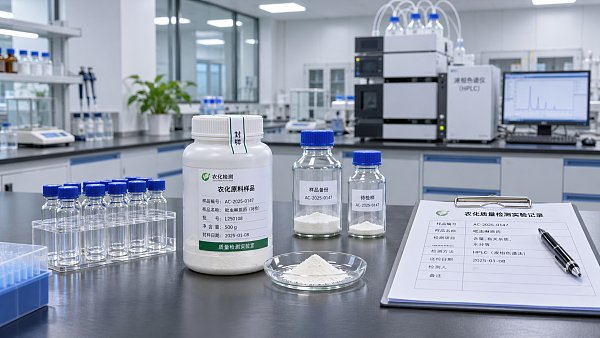
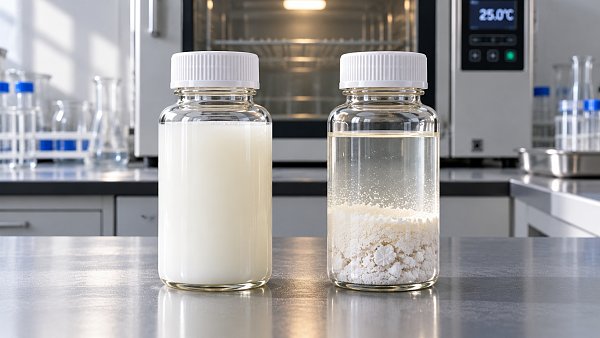
Use a label-consistent jar test when evaluating an unfamiliar mixture. Use the actual carrier water and proportionally scaled quantities of every intended tank component together.
Wear the required protective equipment and use suitable dedicated containers. Follow product directions for order, agitation, temperature, and observation time throughout the compatibility test procedure.
Look for persistent separation, flakes, clumps, gels, heavy sediment, or excessive foam. These observations can flag physical incompatibility before it affects a full spray load.
A successful jar test demonstrates only limited physical compatibility under the test conditions. It does not establish crop safety, biological performance, or legal tank-mix approval.
Follow the mixing sequence specified by the applicable labels. Water conditioners often require early addition, but there is no universal sequence that fits every formulation.
Start with the required amount of carrier water, maintain appropriate agitation, and allow components to disperse. Avoid combining concentrated products directly unless directions explicitly permit.
How Do You Calculate the Rate and Compare Product Costs?
First identify the rate basis. Adjuvant directions may specify a percentage by volume, an amount per water volume, or an amount per treated land area.
For example, a permitted rate of 0.25% v/v in a 1,000-liter final spray mixture requires 2.5 liters of adjuvant. Confirm the label’s stated volume basis.
At the same percentage, doubling spray volume per hectare doubles adjuvant use per hectare. Keep this distinction clear when comparing products or changing application volume.
Use calibrated measuring equipment and verify tank capacity rather than relying on an approximate gauge. Small measurement errors can become significant across repeated spray loads.
Compare cost per treated hectare at the required rate, including conditioning needs and handling time. Price per liter alone can misrepresent the actual application cost.
For supplier evaluation, request current labels, safety data sheets, technical specifications, and relevant performance evidence. Clear batch identification also helps investigate problems and maintain consistent purchasing.
What Should Be on Your Final Pre-Spray Checklist?
Before loading, confirm the exact herbicide and adjuvant products, legal mixture, rate calculations, water source, and crop and weed stages against the relevant application directions.
Check nozzle selection, pressure, spray volume, agitation, strainers, and equipment cleanliness. Herbicide residues from previous applications can cause injury that an adjuvant will not prevent.
Confirm required protective equipment, nearby sensitive areas, weather conditions, and application restrictions. Keep product labels accessible so operators can resolve questions before adding tank components.
Record the mixture, water conditions, equipment settings, and weather for each application. Follow up on weed control and crop response at agronomically appropriate assessment times.
If performance disappoints, investigate weed resistance, growth stage, coverage, weather, and mixing alongside adjuvant choice. Increasing the additive rate without diagnosing the cause risks repeating failure.
The best spray adjuvant systems meet the herbicide’s requirements, address verified application problems, and work with available equipment. Choose by function, confirm compatibility, and document results.