
Which Specialty Fertilizers Best Support High-Value Crop Production?
High-value crops rarely respond well to a “one fertilizer for the whole season” approach. Fresh berries, protected vegetables, vineyards, ornamentals, tree fruit, seed crops, and premium export produce are managed against narrow quality windows: uniform sizing, firmness, color, sugar balance, shelf life, and residue expectations. In these systems, nutrient timing can matter as much as total nutrient supply.
The best Specialty Fertilizers are therefore not simply the most concentrated or technically complex products. They are the products whose nutrient form, release pattern, delivery method, and quality controls match the crop, soil or substrate, irrigation system, labor model, and market destination. A coated fertilizer may be the right choice for container-grown ornamentals but a poor fit for a short-season leafy crop under intensive fertigation. A foliar micronutrient may correct a transient deficiency, yet it cannot compensate for a poorly managed root-zone pH.
For procurement teams and agricultural input suppliers, the practical question is not “Which product category is best?” It is: “Which nutrient technology reduces the most relevant production risk without adding avoidable operational complexity?”
Start With the Crop’s Economic Weak Point
High-value crop programs should begin with the point at which the crop is most vulnerable commercially. In greenhouse tomatoes, this may be fruit quality and calcium transport during rapid fruit expansion. In citrus or vineyards, it may be balanced nutrition over a longer season without excessive vegetative growth. In nursery production, labor availability and the consistency of nutrition inside each container often drive the choice. For export vegetables, nitrate management, traceability, and fertilizer documentation may be as relevant as field performance.
This is why broad NPK comparisons are often misleading. Two fertilizers with a similar label analysis can behave very differently once they enter a fertigation tank, a substrate, or an alkaline soil. Nitrogen source, potassium source, chloride content, solubility, salinity contribution, micronutrient chemistry, and compatibility with water quality all affect the final outcome.
A sound program separates three needs that are frequently mixed together: seasonal base nutrition, responsive in-season correction, and quality-focused supplementation at specific growth stages. Specialty products are most useful when assigned to one of those jobs clearly rather than being treated as a premium replacement for every conventional fertilizer input.
Controlled-Release Fertilizers: Best When Timing and Labor Matter
Controlled-release fertilizers (CRFs) are designed to release nutrients gradually through a coating or encapsulation system. Their strongest commercial case is not simply “less fertilizer loss.” It is the ability to place a planned nutrient supply near the crop root zone while reducing the number of field or nursery applications.
They are particularly relevant for container nurseries, landscape production, transplant establishment, perennial crops, and operations where access to the field is limited after planting. In these settings, a well-matched release profile can reduce labor pressure and avoid the sharp nutrient peaks associated with large, infrequent applications.
The phrase “controlled release,” however, should never be accepted without questions. Release behavior is influenced by temperature, moisture, coating integrity, product storage conditions, and placement. A release period described by a supplier should be read alongside the stated test conditions. A product assessed under one temperature regime will not necessarily perform identically in a hot substrate, a cool orchard soil, or a heavily irrigated field.
Buyers should also examine granule uniformity, nutrient distribution between granules, coating damage during handling, and compatibility with the intended placement equipment. If a CRF is blended with conventional granular materials, segregation during transport and application can undermine the precision the product was meant to provide.
Water-Soluble Fertilizers: The Core Tool for Fertigation Precision
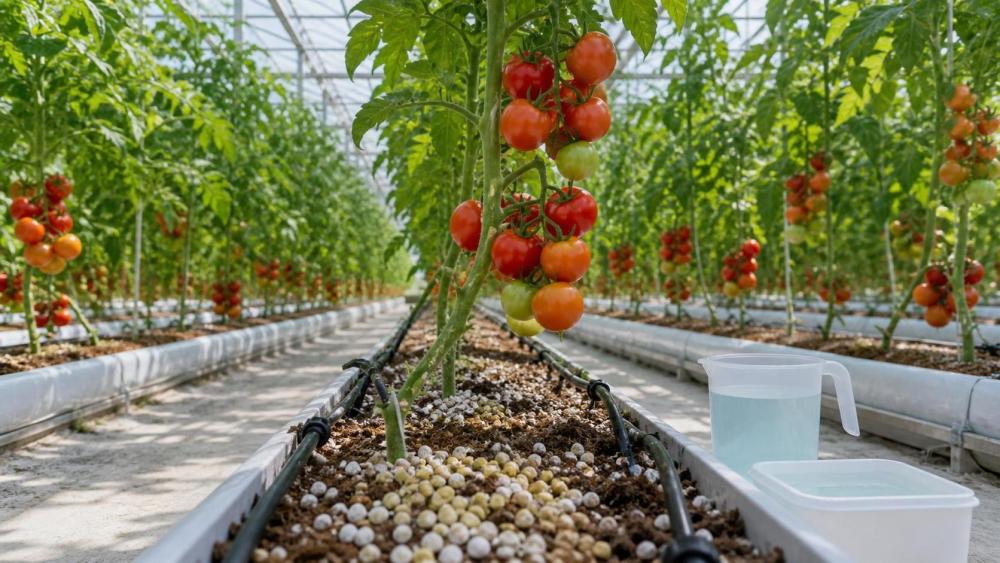
For intensive irrigation systems, water-soluble fertilizers are often the most flexible specialty nutrition platform. They allow growers to adjust nutrient ratios according to crop stage, irrigation volume, weather conditions, and observed tissue or substrate trends. This is especially useful in protected cultivation, hydroponics, high-density fruit production, and drip-irrigated vegetables.
Their value lies in controllability, but that same flexibility introduces room for error. A fertilizer that dissolves readily in a bucket is not automatically suitable for a commercial fertigation system. The important questions are whether it dissolves consistently at the working concentration, whether insoluble residue is controlled, and whether it remains compatible with the other materials injected into the system.
Calcium-containing products deserve particular attention. Calcium sources can react with phosphates or sulfates in concentrated stock solutions, creating precipitates that may clog filters, emitters, or injection lines. Experienced operators typically separate incompatible materials into different stock tanks and verify local water chemistry before finalizing the recipe. Hard water, bicarbonate levels, pH, and dissolved minerals can change the behavior of the same fertilizer program from one site to another.
For high-value crops, the best fertigation blends are usually those that make operational control easier. A supplier should be able to provide a clear guaranteed analysis, solubility information, recommended handling conditions, storage guidance, and compatibility notes. If those documents are vague, the product may be difficult to support downstream even if the nutrient analysis looks attractive.
Micronutrients: Small Quantities, Large Consequences
Micronutrients are often discussed as a minor add-on, but in premium crop systems they can become the limiting factor that determines whether a crop reaches its intended quality grade. Iron, zinc, manganese, boron, copper, molybdenum, and other trace elements each have narrow application contexts. Their usefulness depends not only on the element supplied but also on the soil reaction, water chemistry, application method, crop sensitivity, and interaction with macronutrient management.
Chelated micronutrients are frequently selected where nutrient availability is restricted by pH or where fertigation requires a more stable form. But “chelated” is not a sufficient purchasing specification on its own. The chelating agent, declared nutrient content, stability conditions, impurity profile, and suitability for the relevant application environment should be reviewed. Different chelate systems do not have identical behavior across all pH ranges or all irrigation waters.
Foliar micronutrient products have a different role. They can be practical when root uptake is temporarily constrained, when a crop needs a timely correction, or when a low-dose application is more appropriate than a broad soil treatment. Yet foliar feeding should be approached as a targeted intervention. Spray concentration, water quality, adjuvant selection, crop stage, temperature, and leaf surface sensitivity all affect uptake and phytotoxicity risk. Applying a micronutrient because a leaf appears pale, without confirming the likely cause, can waste time during a critical production window.
Biostimulant-Based Nutrition: Useful, but Not a Substitute for Balance
Humic substances, seaweed extracts, amino acid-based inputs, and related biostimulant products are often incorporated into specialty crop nutrition programs. They may be considered where root development, recovery from stress, nutrient uptake support, or crop uniformity are operational priorities. Their fit is usually strongest when the underlying nutrient program is already technically sound.
The category requires disciplined evaluation because formulations vary substantially. Raw material source, extraction method, concentration, pH, salt content, filtration quality, and compatibility can differ between products carrying similar marketing descriptions. In a drip system, a product also needs to be evaluated for physical stability and potential interaction with fertilizers and crop protection inputs. A biologically derived material that performs well in a foliar program may not be suitable for repeated injection through fine emitters.
The sensible position is neither to dismiss these products nor to treat them as universal yield enhancers. They should be tested against a defined agronomic question: establishment under transplant stress, performance under salinity pressure, recovery after a weather event, or support for a particular quality-management program. Claims should be checked against product documentation and local trial experience rather than assumed from the ingredient category.
A Practical Comparison for Product Selection
Documentation and Supply Reliability Are Part of Fertilizer Performance
In commercial practice, a nutrient product is only as useful as the consistency behind it. Batch variation, unclear labeling, weak packaging, delayed delivery, or missing safety documents can disrupt a crop program at exactly the wrong time. This is particularly relevant for distributors building repeat business around water-soluble blends, liquid fertilizers, and micronutrient formulations, where customers need predictable physical and chemical behavior from shipment to shipment.
A robust evaluation should include the technical data sheet, safety documentation where applicable, certificate-of-analysis practices, packaging specification, storage requirements, shelf-life guidance, and traceability arrangements. Local fertilizer registration, labeling, contaminant limits, and import requirements must also be confirmed in the intended market. These obligations vary by jurisdiction and crop-use context, so they should not be assumed from a product’s acceptance elsewhere.
This broader view of product selection is central to the work of the Global Fine Chemicals & Agrochemical Intelligence Network (FCAS). Fertilizer technologies need to be understood not only by nutrient labels, but by formulation stability, application conditions, supply-chain controls, technical documentation, and fit within wider crop-management systems.
The Best Choice Is Usually a Program, Not a Single Product
For high-value crop production, controlled-release fertilizers, water-soluble formulations, chelated micronutrients, and carefully selected biostimulant inputs all have legitimate roles. None of them is inherently superior across every crop and production environment. The strongest programs often combine them: a stable base supply, precise fertigation during active growth, targeted micronutrient management, and limited corrective use where field observations or analysis justify it.
Before committing to a new specialty fertilizer, ask for the details that affect real use: nutrient form, release behavior, solubility, compatibility, impurity control, batch consistency, packaging, and technical support. Then compare those details against the crop calendar, irrigation design, water analysis, soil or substrate data, and required market specifications. That process is less glamorous than selecting a product from a brochure, but it is usually where the agronomic and commercial value is decided.
Related News
 Antioxidants & Natural PreservativesWhat Quality Checks Matter When Sourcing Butylparaben for Personal CareButylparaben for personal care sourcing guide: compare assay, impurities, physical performance, documentation, traceability, and supplier quality to reduce formulation risk.MORE+
 Nano-microcapsule FormulationsHow Encapsulated Flavors Protect Taste During Processing and StorageEncapsulated Flavors protect taste from heat, oxygen, moisture, and storage loss. Explore smarter release, carrier selection, and processing strategies.MORE+
 Chelated Trace Element FertilizersHow Greenhouse Fertigation Systems Reduce Water and Fertilizer WasteGreenhouse fertigation systems reduce water and fertilizer waste with precise dosing, uniform irrigation, drainage monitoring, and smarter crop-zone control. Learn practical strategies.MORE+
 Supercritical CO2 Essential OilsHow Natural Essential Oil Blends Improve Consistent Product FragranceNatural essential oil blends help brands achieve consistent, appealing fragrance across batches. Explore smart blend design, stability testing, and product compatibility strategies.MORE+
 Non-ionic Surfactants & DefoamersHow to Choose Non Ionic Low Foaming Surfactants for CIP CleaningNon ionic low foaming surfactants for CIP cleaning: learn how to balance wetting, foam control, compatibility, and rinseability for reliable cleaning performance.MORE+
 Nano-microcapsule FormulationsHow Food Grade Cyclodextrin Complexes Protect Sensitive FlavorsFood grade cyclodextrin inclusion complexes help protect sensitive flavors from oxidation, evaporation, and processing loss while supporting controlled release and consistent sensory quality.MORE+
 Polymer-Coated Water Soluble NPKHow Fertilizer Coating Polymers Improve NPK Granule ReleaseFertilizer coating polymers for NPK granules improve controlled nutrient release, reduce loss risks, and enhance product consistency. Discover key selection and process insights.MORE+
 Chelated Trace Element FertilizersWhat Diammonium Phosphate Means for Crop Nutrition PlanningDiammonium Phosphate: learn how DAP supports early phosphorus access, nitrogen budgeting, smart placement, and balanced crop nutrition planning.MORE+
 Maillard Reaction Savory FlavorsHow to Assess a Flavor Bases Supplier List for Reliable SourcingGlobal Fine Chemicals & Agrochemical Intelligence Network flavor bases supplier list: assess specs, samples, supply risk, and true cost to source with confidence.MORE+
 Hydrocolloids & EmulsifiersHow Konjac Gum Powder Improves Texture in Low-Calorie FoodsKonjac gum powder improves body, stability, and mouthfeel in low-calorie foods. Discover practical tips for smoother sauces, beverages, and reduced-fat formulations.MORE+
 Supercritical CO2 Essential OilsWhat to Check Before Choosing a Botanical Essential Oils ManufacturerChoose a botanical essential oils manufacturer with confidence. Explore key checks for purity, traceability, compliance, batch consistency, and reliable supply.MORE+
 Microencapsulated FragrancesHow Fragrance Carriers for Detergents Improve Scent PerformanceFragrance carriers for detergents improve stability, fabric deposition, and long-lasting scent. Explore practical solutions for better wash-to-wear fragrance performance.MORE+
 Antioxidants & Natural PreservativesWhen Propyl Gallate Antioxidant Is the Right Choice for Oil StabilityPropyl gallate antioxidant: learn when it is the right choice for oil stability, shelf-life protection, processing compatibility, and smarter formulation decisions.MORE+
 Antioxidants & Natural PreservativesHow Potassium Sorbate Extends Shelf Life in Food and Beverage ProductsPotassium Sorbate helps food and beverage brands control yeast and mold spoilage. Explore pH, dosage, processing, and packaging strategies for reliable shelf life.MORE+
 Antioxidants & Natural PreservativesHow to Source Bulk Herbal Extracts With Reliable Quality ControlBulk herbal extracts sourcing guide: compare suppliers, verify traceability, review CoAs, and build reliable quality controls for safer, consistent purchasing.MORE+
 Antioxidants & Natural PreservativesWhat to Check Before Sourcing Butylparaben for Personal Care FormulasButylparaben for personal care sourcing guide: check market eligibility, purity, supplier controls, formula compatibility, packaging, and total risk before buying.MORE+
 Targeted Bio-pesticides & APIsChoosing Microbial Fungicides for Foliar Diseases in Integrated Crop ProgramsMicrobial fungicides for foliar diseases: learn how to match biology, formulation, tank compatibility, and timing for stronger integrated crop protection.MORE+
 Targeted Bio-pesticides & APIsHow Microbial Insecticides Control Caterpillars With Lower Crop Residue RiskMicrobial insecticides for caterpillars help protect crops with targeted early-larval control and lower residue-management pressure. Learn timing, coverage, compliance, and scouting essentials.MORE+
 Microencapsulated FragrancesHow to Add Encapsulated Laundry Fragrances Without Weakening Wash ResultsEncapsulated laundry fragrances: learn how to boost long-lasting scent while protecting cleaning power, stability, foam control, and fabric care.MORE+
 Supercritical CO2 Essential OilsHow Aroma Ingredients Shape Lasting and Skin-Safe Personal Care ProductsAroma ingredients for personal care: discover how to achieve lasting scent, formulation stability, skin safety, and confident product performance.MORE+
 Targeted Bio-pesticides & APIsInsecticides Explained Through Labels, Active Ingredients, and SafetyInsecticides explained through labels, active ingredients, formulations, and safety. Learn how to compare products, manage risk, and make informed crop protection decisions.MORE+
 Heavy-duty Industrial DegreasersHow to Select Parts Wash Cleaners for Automotive ComponentsParts wash cleaners for automotive components: learn how to match chemistry, materials, rinsing, safety, and waste controls for reliable cleaning results.MORE+
 Chelated Trace Element FertilizersHow Precision Fertigation Systems Improve Water and Nutrient ControlPrecision fertigation systems improve water and nutrient control with accurate dosing, uniform irrigation, smart monitoring, and reduced waste. Discover how to optimize crop performance.MORE+
 Hydrocolloids & EmulsifiersHow Bulk Price Factors Affect Hydrocolloid Stabilizer Blend SourcingHydrocolloid stabilizer blends bulk price: compare dosage efficiency, quality consistency, logistics, and documentation to reduce total sourcing costs.MORE+
 Zero-Calorie Sweeteners & AcidulantsHow to Choose a Natural Sweeteners Supplier for Clean-Label ProductsNatural sweeteners supplier selection guide for clean-label products: compare formulation fit, traceability, documentation, and supply reliability.MORE+
 Non-ionic Surfactants & DefoamersWhat Cationic Surfactants Do and Where They Are UsedCationic Surfactants deliver antimicrobial action, conditioning, antistatic control, and surface treatment benefits. Explore key uses, compatibility, and safe selection tips.MORE+
 Targeted Bio-pesticides & APIsHow to Evaluate Pesticide Suspension Concentrates for Field StabilityPesticide Suspension Concentrates: learn how to evaluate field stability, redispersibility, dilution, tank-mix compatibility, and spray safety for reliable performance.MORE+
 Hydrocolloids & EmulsifiersHow Hydrocolloid Systems for Meat Products Improve Texture and YieldHydrocolloid systems for meat products improve yield, texture, water retention, and slicing quality. Explore practical formulation strategies for stable, high-performing meat products.MORE+
 Microencapsulated FragrancesHow Laundry Fragrances for Liquid Detergents Improve Scent LongevityLaundry fragrances for liquid detergents: discover how fragrance design, deposition, and encapsulation create lasting fabric freshness and stronger product appeal.MORE+
 Nano-microcapsule FormulationsChoosing Fragrance Preparations That Perform Well in Personal WashFragrance preparations for personal wash: learn how to select options that protect clarity, stability, foam, scent performance, and packaging compatibility.MORE+
 Controlled-Release ThermodynamicsModified Cyclodextrins Explained for Controlled Fragrance ReleaseModified cyclodextrins enable controlled fragrance release, odor control, and volatile-note protection. Explore how they optimize performance in detergents, fabric care, and more.MORE+
 Microencapsulated FragrancesHow Fragrance Delivery Systems Improve Fabric Softener LongevityFragrance delivery systems for fabric softeners improve scent longevity through smart protection, reliable deposition, and controlled release for lasting freshness.MORE+
 Supercritical CO2 Essential OilsHow to Evaluate a Natural Cardamom Oil Supplier for Reliable SupplyNatural cardamom oil supplier evaluation guide: verify botanical origin, purity, batch consistency, documentation, packaging, and delivery reliability for confident sourcing.MORE+
 Maillard Reaction Savory FlavorsHow Ethyl Maltol Purity Testing Supports Flavor Safety ComplianceEthyl Maltol purity testing strengthens flavor safety compliance through identity checks, impurity profiling, supplier verification, and audit-ready documentation.MORE+
 Microencapsulated FragrancesEssential Oil Extracts Compared for Fragrance and Wellness UsesEssential Oil Extracts compared for fragrance and wellness: explore scent profiles, extraction methods, stability, safety, and sourcing insights for smarter formulation choices.MORE+
 Zero-Calorie Sweeteners & AcidulantsWhat Drives Zero Calorie Sweeteners Bulk Price in 2026Zero calorie sweeteners bulk price in 2026: compare specifications, dosage, quality, freight, and supply risk to make smarter sourcing decisions.MORE+
 EPA FIFRA & FDA GRAS RegsSynthetic Food Preservatives Rules That Support Safer FormulasSynthetic Food Preservatives: learn the rules for safer formulas, compliant use levels, validated shelf life, labeling, and reliable microbial control.MORE+
 Micelle Fluidics & ChelationHow Anionic Industrial Dispersants Improve Coating StabilityAnionic industrial dispersants improve coating stability, pigment wetting, viscosity control, gloss, and storage performance. Learn how to select and test the right solution.MORE+
 Supercritical CO2 Essential OilsHow to Choose Eucalyptus Oil Grades for Clean, Consistent ProductsChoose the right Eucalyptus Oil grade with confidence. Compare cineole content, purity, origin, processing, documentation, and application fit for consistent products.MORE+
 Micelle Fluidics & ChelationWhat Are Cationic Surfactants and Where Are They Commonly Used?Cationic Surfactants deliver powerful surface affinity for disinfection, fabric softening, hair conditioning, antistatic control, and industrial treatments. Explore key uses and selection factors.MORE+







































