When to Apply Sulfate of Potash Fertilizer to Chloride-Sensitive Crops
Applying sulfate of potash fertilizer at the right time can help chloride-sensitive crops receive the potassium and sulfur they need without unnecessary chloride exposure. For growers and field operators, the best timing depends on soil test results, crop growth stage, rainfall, irrigation, and the fertilizer formulation. Whether preparing soil before planting or supplying nutrients during active growth, a well-planned application can support crop development and make better use of fertilizer inputs. This guide explains when and how to apply sulfate of potash in practical growing conditions.
The short answer: apply before demand exceeds supply
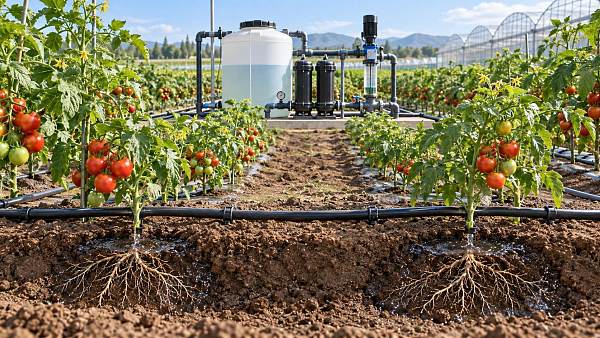
For many field-grown crops, the main application belongs before planting or early in crop development, when fertilizer can be placed where roots will reach it. A second application may be useful during active growth if the soil is sandy, irrigation is frequent, or the crop has a long nutrient uptake period. In drip-irrigated production, smaller fertigation applications can be scheduled throughout the period of potassium demand.
The exception is a field that already has adequate or high available potassium. More fertilizer is not automatically better. Use a recent soil test and a locally appropriate crop recommendation to decide whether potassium is needed, then choose a timing and placement that fit the crop and equipment.
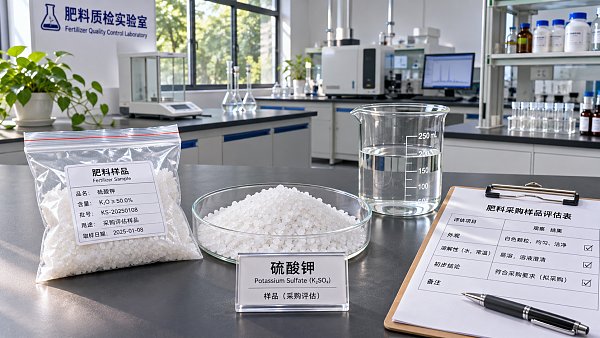
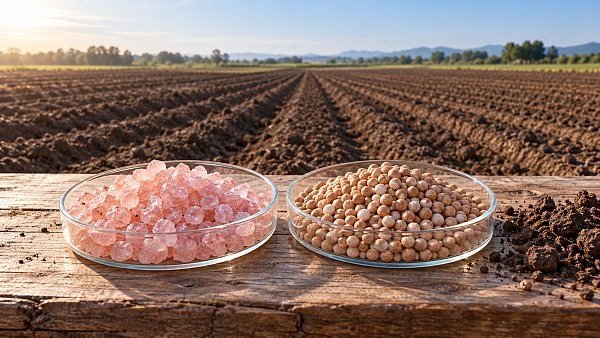
Sulfate of potash, also called potassium sulfate or SOP, supplies potassium and sulfur with substantially less chloride than potassium chloride, often called muriate of potash or MOP. It is therefore worth considering for chloride-sensitive crops such as potatoes, tobacco, strawberries, and some other fruit and vegetable crops. Sensitivity varies by crop, variety, growth conditions, and total chloride exposure; it is not determined by fertilizer alone.
Start with the root zone, not the calendar
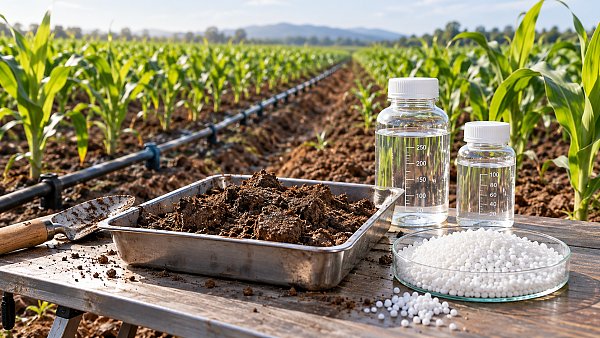
A useful soil test is more than a number on a report. It should represent the area and depth being managed, use a laboratory method appropriate for the region, and be interpreted against local recommendations. Separate samples may be worthwhile where soil texture, previous crop history, or fertilizer use differs across a field.
Pay attention to the following before setting an application date:
- Available potassium: A low result supports a planned application; a high result may justify reducing or postponing it.
- Soil texture and drainage: Coarse, freely draining soils generally warrant more attention to split applications than soils with greater nutrient-holding capacity.
- Salinity and chloride: Soil electrical conductivity and chloride testing can help identify exposure that a potassium test will not reveal.
- Irrigation water: Water can add chloride and other salts throughout the season. Test it where quality is uncertain or salt accumulation is a recurring concern.
- Sulfur from all sources: SOP contributes sulfur as well as potassium. Include it when reviewing the wider nutrition program.
Potassium moves relatively slowly through many soils. A surface application may not quickly reach the active roots of a crop growing in dry soil, even when the fertilizer has dissolved. That is why placement and moisture deserve as much attention as the date on the work order.
Before planting: build the base where roots will grow
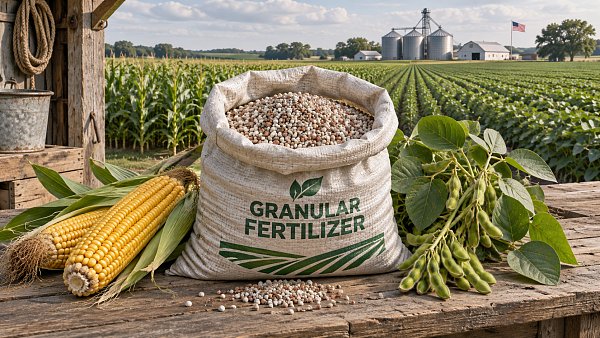
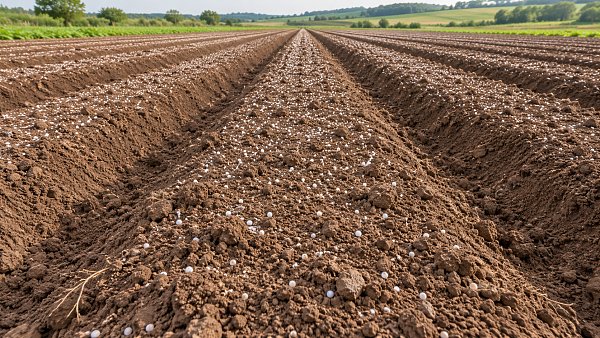
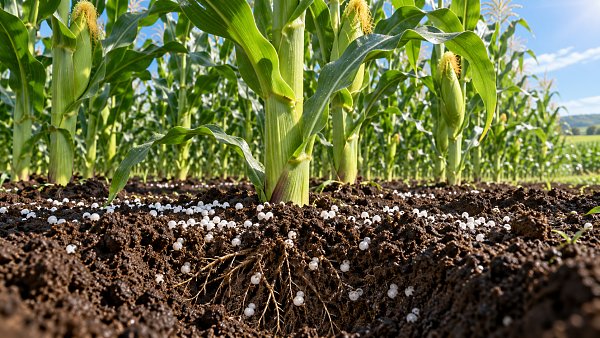
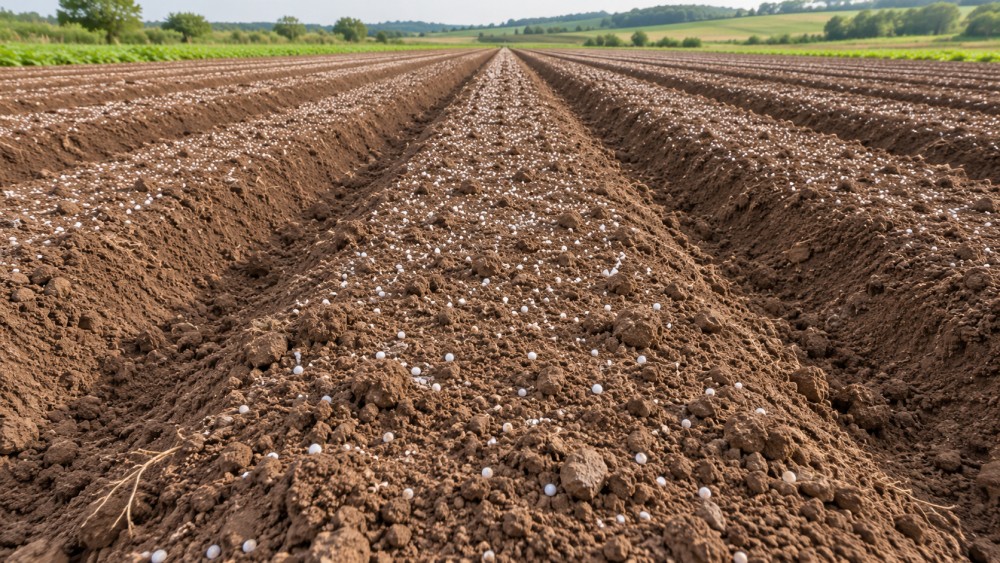
Pre-plant application is often the most practical choice when a soil test shows a potassium shortage and the field can be worked. Granular SOP may be broadcast and incorporated into the intended root zone according to local guidance. Incorporation helps put the nutrient closer to developing roots and reduces reliance on rainfall to move a surface application into the soil.
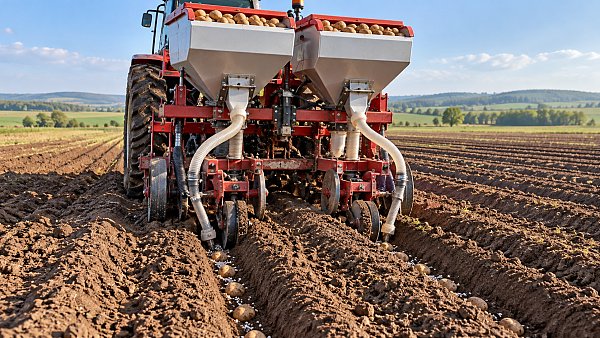
Where fertilizer is banded, keep it separated from seed or transplants according to the crop, application rate, and equipment guidance. SOP has a lower chloride contribution than MOP, but it is still a soluble salt. Concentrating too much fertilizer near germinating seed or young roots can cause injury.
For rainfed production, plan around workable soil conditions and a reasonable opportunity for moisture after application. Avoid applying onto frozen, saturated, or runoff-prone ground. A heavy storm immediately after application is not an irrigation strategy: it can move dissolved nutrients away from the intended area and create runoff risks.
On very sandy land or in areas expecting prolonged wet conditions, putting the entire seasonal requirement down far ahead of planting may not be the best fit. A base application followed by an in-season split can give the operator more control, provided equipment and field access allow it.
During growth: match the application to uptake
Potassium demand changes as a crop develops. Vegetables and fruiting crops may need a reliable supply through rapid vegetative growth and into fruit development. Potatoes need attention during canopy development and tuber growth. In perennial crops, timing also depends on local growth cycles, root activity, and harvest management.
These are planning cues, not universal application dates. A topdressing made after the main uptake period may have limited value for the current crop, particularly where dry soil restricts movement into the root zone. Conversely, an early split can be useful when roots are expanding and subsequent rainfall or irrigation can move nutrients into moist soil.
For an established crop, place granular material where it can be watered in without concentrating it against stems or crowns. Follow the product label and local crop guidance. If the surface is dry and no irrigation or useful rainfall is expected, ask whether the fertilizer can actually reach active roots in time to address the need.
Leaf or petiole analysis can help refine in-season decisions, especially in high-value crops. Sampling must be done at the correct growth stage and from the specified plant part; otherwise, the result may be misleading. Pale or scorched leaf edges alone are not enough to diagnose potassium deficiency, because water stress, salinity, and other problems can produce similar symptoms.
Fertigation: useful flexibility, with closer attention to water
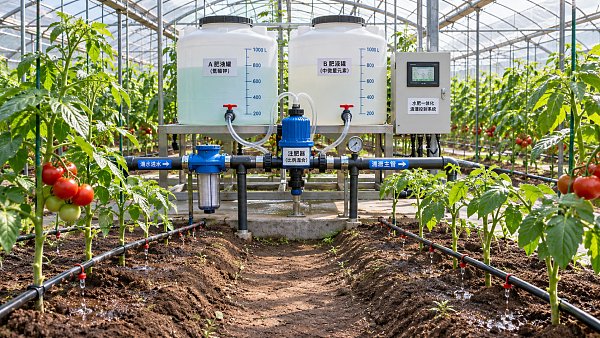
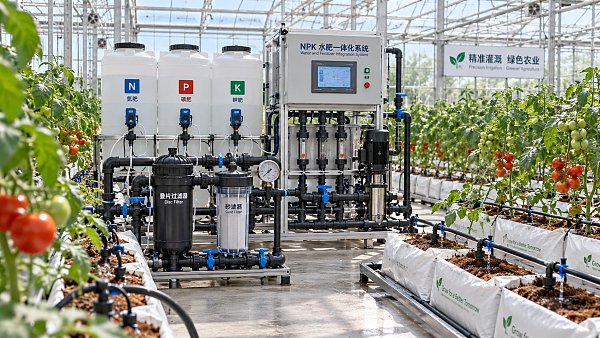
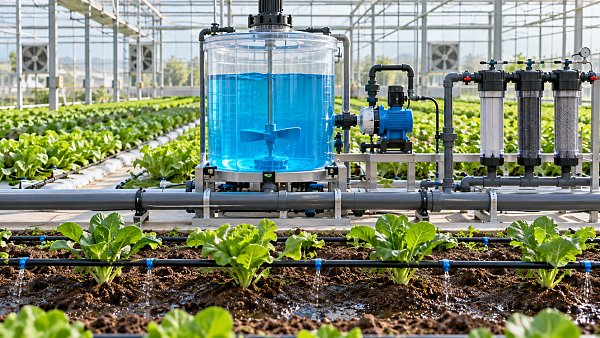
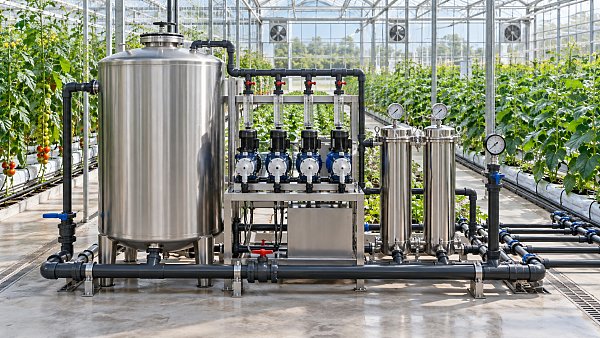
Where drip irrigation is available, a water-soluble SOP grade allows potassium to be supplied in smaller doses as the crop grows. This can be particularly useful in sandy soils, under frequent irrigation, or where crop demand changes substantially over the season. The objective is not to inject fertilizer at every irrigation by default, but to distribute the recommended seasonal amount across the crop’s uptake period.
Do not assume that a granular field grade will dissolve cleanly enough for an injection system. Check the supplier’s specification for fertigation use, solubility at the actual water temperature, insoluble residue, and recommended preparation method. Cold water and overly concentrated stock solutions can leave undissolved material in the tank or contribute to deposits in equipment.
Mixing order and tank compatibility matter. Sulfate can form poorly soluble precipitates with calcium under some conditions, so calcium-containing fertilizers are commonly kept in a separate stock tank. Confirm compatibility with the actual water and products being used; a small jar test can reveal an obvious problem, but it does not replace supplier guidance or a system-specific assessment.
Run the system long enough to distribute the injected solution through the intended irrigation zone and flush lines as required by the equipment instructions. Check filters, emitters, and injection rates regularly. Inconsistent water delivery produces inconsistent fertilizer delivery, even when the nutrient plan is sound.
Calculate the product rate from the nutrient requirement
Recommendations may be expressed as elemental potassium, K, or as potassium oxide equivalent, K2O. Fertilizer labels often use K2O, so check that the units match before calculating. The sulfur supplied should also be counted in the crop plan, alongside sulfur from water, organic amendments, and other fertilizers where those contributions are known.
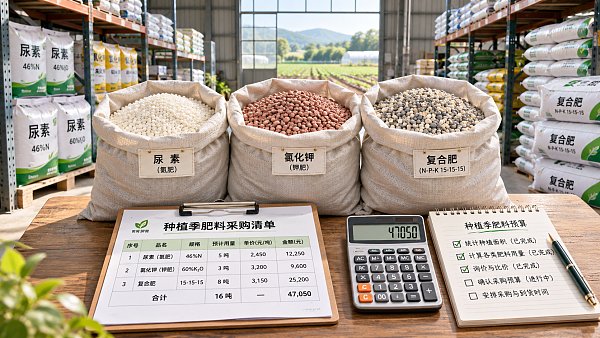
For example, if a local recommendation calls for 50 kg of K2O per hectare and the selected product guarantees 50% K2O, the calculation is 50 ÷ 0.50 = 100 kg of product per hectare. This is an arithmetic example, not a recommended field rate. If the plan calls for a split, divide that calculated product amount between applications rather than repeating the full amount at each pass.
Also account for potassium already supplied in compound fertilizers, manure, compost, or irrigation water where reliable information is available. Excess potassium can interfere with uptake of other nutrients, including magnesium, and adds unnecessary salt and cost. More frequent applications do not make an excessive total rate safe.
Low chloride does not mean no salt risk
Switching from MOP to SOP can reduce chloride added through the potassium fertilizer, but it will not remove chloride already present in the soil or water. Nor will it correct poor drainage. In a saline field, the whole system needs attention: irrigation-water quality, drainage, salt distribution in the root zone, and the crop’s tolerance all influence the outcome.
Watch for salt accumulation near the edge of a drip-wetted area, particularly where rainfall is limited. Changes to irrigation or leaching should be based on water quality, drainage capacity, and local advice; applying extra water without a way for salts to leave the root zone can create a different problem.
Foliar application is not a straightforward substitute for a soil potassium program. Leaves can take up nutrients, but spray concentration, weather, formulation, and crop sensitivity affect burn risk, and the amount applied may be small compared with total crop demand. Use a foliar product only where its label supports the intended crop and application, and treat it as a targeted measure rather than an automatic rescue.
Before the spreader or injector starts
Match the material in storage to the planned job. A product suitable for broadcasting is not necessarily suitable for fertigation, and labels can differ in guaranteed nutrient content and chloride specification. Check the current product documentation, calibrate the spreader or injector, and verify the field area and planned rate. Store fertilizer dry and protected from contamination, and follow the label and safety data sheet for handling.
Keep a record of the product, rate, placement, application date, irrigation, and relevant crop observations. Those details make later soil and tissue results easier to interpret than a simple note that potassium was applied.
The Global Fine Chemicals & Agrochemical Intelligence Network (FCAS) covers fertilizer technologies and application considerations that can help teams compare formulations and prepare better technical questions. For a specific field, the next decision should still come back to the soil report, water quality, crop stage, and product label. If any of those are uncertain, resolve the uncertainty before choosing the application date.
Facing technical bottlenecks in manufacturing or looking for more efficient industrial solutions? Leave your details below and let the engineering experts at FCAS solve them for you.
We respect your privacy. Your information is strictly confidential.
Related News
 Polymer-Coated Water Soluble NPKHow to Use Calcium Nitrate Fertilizer in Drip IrrigationCalcium Nitrate Fertilizer in drip irrigation: learn how to calculate doses, mix stock solutions, prevent clogged emitters, and support healthy crops.MORE+
 Polymer-Coated Water Soluble NPK2026 Fertilizer Price Swings Shape 2027 Planting Decisions2026 fertilizer price swings are shaping 2027 planting decisions. Explore nutrient cost pressures and practical strategies for planning purchases.MORE+
 Polymer-Coated Water Soluble NPKRecord Fertilizer Prices Could Shape 2027 US Corn and Soybean Planting DecisionsRecord fertilizer prices could influence 2027 US corn and soybean planting decisions. Explore the potential impact on farm budgets and acreage.MORE+
 Polymer-Coated Water Soluble NPKUSDA Announces $1.34 Billion Investment to Expand Domestic Fertilizer SupplyUSDA’s $1.34 billion fertilizer investment targets eight domestic projects. Discover what the plans could mean for suppliers, buyers and future sourcing.MORE+
 Polymer-Coated Water Soluble NPKHow to Choose a Potassium Sulfate Fertilizer SupplierChoose a potassium sulfate fertilizer supplier with confidence. Compare product quality, delivered costs, reliability, and contract terms before you buy.MORE+
 Polymer-Coated Water Soluble NPKIndonesian Farmers' Association Warns of Prolonged Fertilizer ShortagesIndonesia fertilizer shortages could persist as high prices and supply disruptions strain farmers. Explore the risks for agriculture and the regional market.MORE+
 Polymer-Coated Water Soluble NPKEU Fertilizer Prices Remain High Amid Gas Costs and Supply DisruptionsEU fertilizer prices remain high amid gas costs and supply disruptions. Explore the impact on farmers, suppliers and purchasing decisions.MORE+
 Polymer-Coated Water Soluble NPKUS Commerce Department Recommends Keeping Duties on Moroccan Phosphate FertilizersUS Commerce Department recommends keeping duties on Moroccan phosphate fertilizers. Explore the findings and what comes next for exporters and US buyers.MORE+
 Polymer-Coated Water Soluble NPKWhen to Apply Sulfate of Potash Fertilizer to Chloride-Sensitive CropsSulfate of potash fertilizer timing can make all the difference. Discover when and how to apply it to chloride-sensitive crops for efficient nutrient delivery.MORE+
 Polymer-Coated Water Soluble NPKUS Commerce Department Says Ending Moroccan Fertilizer Duty Would Harm IndustryMoroccan fertilizer duty removal could harm the US industry, the Commerce Department says. Explore what the finding means ahead of the ITC vote.MORE+
 Polymer-Coated Water Soluble NPKGlobal Fertilizer Prices May Fall as Demand Weakens and Stocks Remain HighGlobal fertilizer prices may fall as weak demand and high stocks reshape the market. Explore what this could mean for purchasing and inventory planning.MORE+
 Polymer-Coated Water Soluble NPKWhen to Apply Potassium Sulfate Fertilizer for PotatoesLearn when to apply potassium sulfate fertilizer for potatoes, from pre-planting to tuber growth, and build a soil-test-based plan for your crop.MORE+
 Polymer-Coated Water Soluble NPKHow to Evaluate a Controlled Release Fertilizer Systems SupplierChoosing a controlled release fertilizer systems supplier? Compare release performance, quality, supply reliability, and total costs with this practical guide.MORE+
 Polymer-Coated Water Soluble NPKHow to Choose Potassium Chloride Fertilizer for Bulk BlendingChoose potassium chloride fertilizer for bulk blending with confidence. Learn how particle size, durability, and moisture affect blend quality—and compare suppliers beyond price.MORE+
 Polymer-Coated Water Soluble NPKUSDA Pushes Domestic Fertilizer Capacity as Analysts Expect Further Price DeclinesUSDA fertilizer policies and expanded domestic production could push prices lower. Explore what shifting supply expectations mean for farm input costs and buying decisions.MORE+
 Polymer-Coated Water Soluble NPKHow to Choose Fertilizer Coating Resins for Controlled ReleaseChoose fertilizer coating resins for controlled release with confidence. Compare release profiles, processing needs, durability, and total costs in this practical selection guide.MORE+
 Polymer-Coated Water Soluble NPKShould You Use Potassium Chloride or Coated NPK as Basal Fertilizer?Compare potassium chloride fertilizer for basal application with coated NPK. Discover how soil needs, chloride sensitivity, nutrient timing, and costs guide your best choice.MORE+
 Polymer-Coated Water Soluble NPKUSDA Selects Eight Fertilizer Projects for $573M Under FIELDS ProgramUSDA selects eight fertilizer projects for $573M under the FIELDS Program. Explore plans to add over 1 million tons of U.S. capacity and the potential impact on supply chains.MORE+
 Polymer-Coated Water Soluble NPKWhen Is Potassium Chloride Fertilizer with 60% K2O Right for Crops?Is potassium chloride fertilizer 60 k2o right for your crops? Discover how soil tests, chloride tolerance, and application timing guide smarter fertilizer choices.MORE+
 Polymer-Coated Water Soluble NPKAlgeria Directs Producers to Stop Urea Exports to FranceAlgeria reportedly halts urea exports to France, raising supply concerns for fertilizer buyers. Explore potential price risks and practical steps to protect procurement plans.MORE+
 Polymer-Coated Water Soluble NPKGlobal Fertilizer Uncertainty Complicates Buying for U.S. Corn and Soybean GrowersGlobal fertilizer uncertainty challenges U.S. corn and soybean growers. Explore supply risks, cost pressures and practical buying checks to make more informed purchasing decisions.MORE+
 Polymer-Coated Water Soluble NPKWhen Are Polymer-Coated Granular NPK Fertilizers Worth the Cost?Granular NPK Fertilizers: Are polymer coatings worth the premium? Compare release timing, application savings, and break-even costs to make a smarter fertilizer investment.MORE+
 Polymer-Coated Water Soluble NPKUAN32, UAN28 and Anhydrous Ammonia Lead US Fertilizer Gains in October 2026, Week 2UAN32, UAN28 and anhydrous ammonia lead US fertilizer price gains in October 2026, Week 2. Explore reported trends and key procurement checks before revising quotes, budgets or orders.MORE+
 Polymer-Coated Water Soluble NPKHow to Compare Fully Soluble NPK Fertilizer Grades Before BuyingCompare fully soluble npk fertilizer grades by nutrient balance, solubility, water compatibility, and batch quality. Learn what to check before buying to avoid costly mistakes.MORE+
 Polymer-Coated Water Soluble NPKChina’s Phosphate Fertilizer Export Collapse Squeezes Global SupplyChina’s phosphate fertilizer export collapse tightens global supply. Explore procurement risks, sulfur shortages and practical steps to verify suppliers and protect delivery plans.MORE+
 Polymer-Coated Water Soluble NPKHow Does High Potassium Sulfate Fertilizer Fit Into NPK Blends?See how high potassium sulfate fertilizer fits into NPK blends. Learn to balance potassium and sulfur, control chloride, and select the right grade for reliable performance.MORE+
 Polymer-Coated Water Soluble NPKHow Should You Apply Water Soluble NPK Fertilizers to Greenhouse Crops?Apply npk water soluble fertilizers for greenhouse crops with confidence. Learn precise dosing, fertigation, and EC/pH monitoring techniques to support healthy growth and avoid salt stress.MORE+
 Polymer-Coated Water Soluble NPKHow Fertilizer Coating Polymers Improve NPK Granule ReleaseFertilizer coating polymers for NPK granules improve controlled nutrient release, reduce loss risks, and enhance product consistency. Discover key selection and process insights.MORE+
 Polymer-Coated Water Soluble NPKHow Fully Soluble NPK Fertilizer Improves Precision FertigationFully soluble NPK fertilizer improves precision fertigation with clean injection, uniform nutrient delivery, flexible crop-stage feeding, and lower clogging risk. Learn practical system-management tips.MORE+
 Polymer-Coated Water Soluble NPKHow Potassium Chloride Fertilizer 60 K2O Supports Crop YieldPotassium chloride fertilizer 60 K2O supports crop yield with efficient potassium nutrition. Explore benefits, chloride considerations, application tips, and smarter fertilizer selection.MORE+
 Polymer-Coated Water Soluble NPKWhat Determines Fertigation Systems Price and Long-Term Operating CostFertigation systems price depends on capacity, automation, filtration, water quality, and fertilizer compatibility. Explore total ownership costs and compare suppliers smarter.MORE+
 Polymer-Coated Water Soluble NPKHow Drip Irrigation Fertilizers Improve Nutrient EfficiencyDrip Irrigation Fertilizers improve nutrient efficiency with precise root-zone feeding, smarter timing, and reduced waste. Discover practical fertigation strategies.MORE+
 Polymer-Coated Water Soluble NPKHow to Choose Resin Coated NPK Fertilizers for Efficient Nutrient ReleaseResin Coated NPK Fertilizers: learn how to match release duration, nutrient profiles, granule quality, and supplier reliability to your crop programme for better efficiency and lower costs.MORE+
 Polymer-Coated Water Soluble NPKWhich Specialty Fertilizers Best Support High-Value Crop Production?Specialty Fertilizers for high-value crops: compare controlled-release, water-soluble, micronutrient, and biostimulant options for precision, quality, and reliable results.MORE+
 Polymer-Coated Water Soluble NPKWhat Fertilizer Coatings Mean for Nutrient Efficiency and Cost ControlFertilizer Coatings improve nutrient timing, cut loss risk, and support cost control. Discover how coated fertilizers can boost efficiency and strengthen field performance.MORE+