When Are Polymer-Coated Granular NPK Fertilizers Worth the Cost?
Polymer-coated granular NPK fertilizers are worth the extra cost when their release pattern fits crop demand and produces enough value through fewer applications, lower nutrient losses, or improved marketable yield. The strongest business case appears where fertilizer timing is difficult to manage: repeated applications are expensive, field access is uncertain, or nutrients can leave the root zone before the crop uses them.
The premium is harder to justify where conventional fertilizer already delivers reliable results through inexpensive, well-timed applications. A coating cannot compensate for an unsuitable nutrient ratio, poor placement, or an irrigation program that moves nutrients beyond the roots. Commercial evaluation therefore needs to connect the product’s release behavior with a specific production problem and calculate what solving that problem is worth per hectare.
Start by identifying the cost that the coating is expected to remove. A proposal built around eliminating a scheduled fertilizer pass can be assessed against labor, machinery, fuel, and contractor charges. A proposal built around better nutrient retention needs evidence that losses materially affect the existing program. A proposal promising higher yield requires a stronger agronomic comparison, especially when the conventional program already meets crop requirements.
These benefits have different levels of certainty. An application saving may be reasonably predictable if the entire operation disappears. Yield improvement depends on weather, crop response, nutrient availability, and other production constraints. Procurement teams should keep those benefits separate in the budget so that a speculative yield increase does not conceal an otherwise uneconomic purchase.
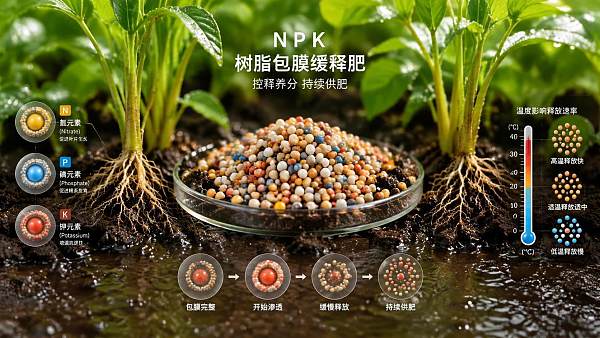
The release period must fit the field, not just the crop calendar. Polymer coatings regulate nutrient movement after water enters the granule and dissolves the fertilizer core. Release depends on the coating system and surrounding conditions, particularly temperature and moisture. A stated duration describes performance under specified conditions; it does not establish a fixed field schedule across different soils, climates, and planting dates.
A product described as lasting several months may release too slowly during cool establishment and faster as soils warm. That pattern could suit a crop whose nutrient demand rises later, but create an early shortage in another production system. Conversely, a product that retains a substantial nutrient fraction beyond harvest may provide limited value to the harvested crop. Whether residual nutrients benefit a following crop depends on rotation, timing, root activity, and subsequent losses.
Request the release curve and its test conditions, including temperature, test medium, measurement method, and the definition of the stated release duration. A cumulative curve helps reveal whether nutrients become available during establishment, rapid vegetative growth, and reproductive development. Comparing that curve with expected root-zone conditions is more useful than choosing the longest available duration.
Moisture also deserves careful treatment. A coating does not make nutrients available to roots without adequate water. Dry conditions can restrict release and nutrient transport, while warm, wet conditions can accelerate release for some products. Once nutrients have left the granule, they remain subject to soil processes and crop uptake limitations. Claims about preventing leaching or maintaining availability through adverse weather should be evaluated within these boundaries.
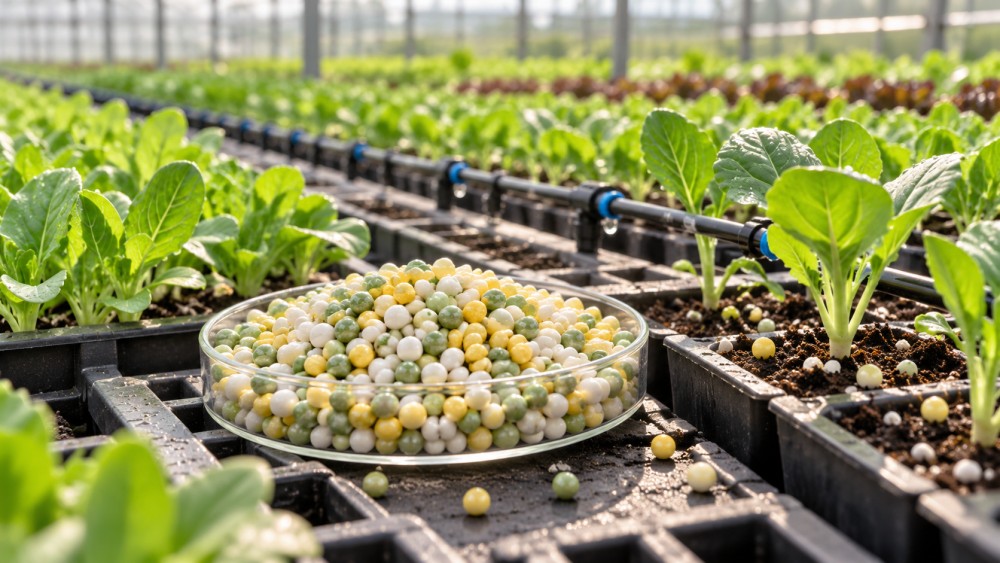
The NPK designation adds another layer to the decision. Nitrogen, phosphorus, and potassium do not behave identically in soil, and crops do not require them in a constant ratio throughout development. A release schedule that works for nitrogen does not automatically establish suitable phosphorus availability during establishment or potassium supply during fruit development. Soil nutrient reserves and placement can influence the result as much as coating duration.
Ask what is actually coated. A product may contain coated compound granules, a blend of coated and uncoated materials, or different coated fractions with different release characteristics. The overall nutrient analysis alone cannot show how much of each nutrient is controlled-release. Obtain the coated proportion and release information for the relevant nutrient fractions. A premium applied to the whole product needs to be assessed against the portion delivering the claimed benefit.
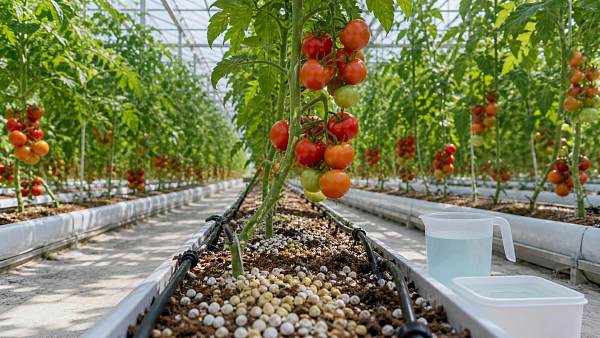
The most attractive applications combine a timing problem with a meaningful cost of intervention. Container nurseries and other intensively managed crops can offer a plausible case because repeated feeding, nutrient movement through growing media, and saleable plant quality all carry commercial consequences. Even there, irrigation frequency and substrate temperature can alter performance. Results from one container system should not be assumed to transfer directly to another.
Field-grown vegetables and other higher-value crops may also justify evaluation where topdressing is costly or access becomes difficult after canopy development. Avoiding a pass can reduce scheduling pressure and, where relevant, crop disturbance. However, the saving exists only if the operation is genuinely removed. When fertilizer is applied during a trip already required for another task, the recoverable cost may be limited to handling time and incremental equipment use.
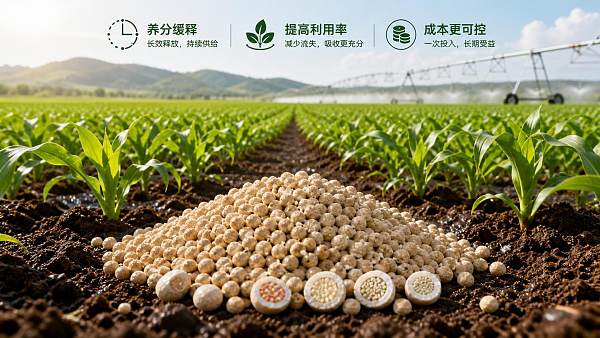
Broadacre use calls for particularly disciplined arithmetic because the additional fertilizer cost applies across a large area. Potential benefits can arise where repeated applications are constrained or nutrient losses are substantial. Where split applications are timely and economical, the coated option has less room to recover its premium. A high crop value can improve the economics, but it cannot establish that a particular release profile will improve crop performance.
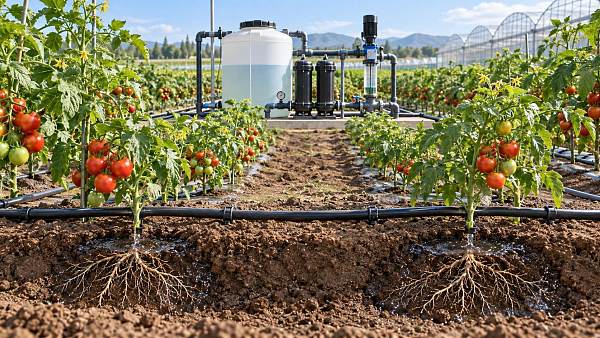
At the other end of the spectrum, a well-managed fertigation program may already provide frequent nutrient delivery matched to crop development. Adding a coated basal product could still serve a defined purpose, but savings from fewer nutrient applications may be small when irrigation and dosing continue anyway. The appropriate comparison is the farm’s feasible alternative program, including an improved conventional schedule if that improvement is available at modest cost.
Build the comparison around complete programs per hectare. Price per tonne is an incomplete purchasing measure because products may differ in nutrient concentration, recommended rate, and coated fraction. Calculate delivered fertilizer cost at the intended application rate, then add spreading, handling, and any supplementary feeding. Use soil testing and crop requirements to assess whether both programs provide suitable nutrient quantities and timing.
For an initial product comparison, matching nutrient rates helps separate the coating effect from differences in nutrient supply. A lower-rate coated program can then be assessed as a distinct proposal if evidence supports it. Automatically reducing the rate because a product is controlled-release risks crediting an unproven efficiency gain. Equally, applying a coated product at an excessive rate can erase its economic advantage and increase the amount released after crop demand declines.
A useful calculation is:
Change in margin per hectare = additional marketable crop revenue + application and other operating savings − additional fertilizer and management costs.
Use the net value of additional production after variable harvesting, grading, packing, and selling costs. For quality improvements, apply the expected change in grade distribution or saleable proportion rather than assuming that every harvested unit receives a higher price. Avoid counting the same improvement twice as both greater marketable yield and a separate reduction in rejected output.
Consider an illustrative budget, with figures chosen only to demonstrate the calculation. If the coated program costs $140 more per hectare and removes an application costing $45 per hectare, it still needs $95 per hectare in additional contribution to break even. At a net contribution of $190 per additional tonne sold, the required increase is 0.5 tonnes per hectare. Those figures are not a performance forecast; they show the hurdle that local evidence must support.
If the farm already obtains its expected yield with conventional fertilizer, a prudent base case assigns no yield benefit initially. The evaluator can then calculate whether operational savings alone cover the premium and test what happens under different crop prices, application costs, and yield responses. A proposal that works only with an optimistic yield increase deserves a smaller trial commitment than one supported largely by identifiable cost savings.
Operational flexibility can have value beyond an application charge. Removing a time-sensitive fertilizer pass may release a crew or contractor for another essential operation. That value is credible when it addresses a specific bottleneck and its consequences can be explained. A general claim that the product “saves management time” provides little basis for accepting a higher price.
Field evidence should test the proposed purchase decision. A useful comparison includes the conventional program the grower can realistically execute, the coated program at its intended rate, and any supplementary nutrition the latter requires. Comparable plots, replication where feasible, and records of soil conditions, irrigation, rainfall, application timing, and marketable output make results easier to interpret. One successful strip can justify further evaluation, but offers limited evidence about repeatability.
Read supplier trial results with attention to the baseline. A coated treatment compared with a single conventional application may show an advantage that narrows when conventional nutrients are split appropriately. Differences in total nutrient rate, irrigation, or placement can also affect the outcome. Ask whether the trial demonstrates the value of the coating itself or the value of changing several management practices together.
The most useful results report both agronomic performance and the economics of the complete program. Total yield alone can obscure differences in crop grade, harvest timing, or unsaleable production. Similarly, reduced nutrient loss is commercially relevant when it supports input savings, crop performance, or a defined operational requirement. It should not automatically be converted into a yield credit.
Handling and application can undermine an otherwise sound selection. Coating damage from unsuitable equipment or handling can change release behavior, while a product containing different granule types may require attention to segregation and spread uniformity. Establish compatibility with the intended storage, blending, transport, and application process. For a concentrated placement near roots, confirm that the proposed rate and placement suit the product and crop, particularly where an immediately soluble fraction is present.
Coating composition may also affect purchasing eligibility. Environmental claims require documentation appropriate to the destination market and intended use; “polymer-coated” alone does not establish biodegradability or acceptable residue behavior. Where a customer specification or applicable rule restricts coating materials, resolve that requirement before field evaluation. It can determine whether the product is a viable option regardless of its agronomic performance.
The buying decision becomes clearer when the proposal states four things: the operation or loss being addressed, the field conditions under which release should match demand, the per-hectare premium, and the measurable benefit needed to recover it. If those elements remain uncertain, a limited trial tied to the actual commercial program is the appropriate next investment. A larger commitment is justified when the release profile fits the production system and the observed margin improvement can withstand reasonable changes in weather, crop value, and operating costs.
Facing technical bottlenecks in manufacturing or looking for more efficient industrial solutions? Leave your details below and let the engineering experts at FCAS solve them for you.
We respect your privacy. Your information is strictly confidential.
Related News
 Polymer-Coated Water Soluble NPKHow to Use Calcium Nitrate Fertilizer in Drip IrrigationCalcium Nitrate Fertilizer in drip irrigation: learn how to calculate doses, mix stock solutions, prevent clogged emitters, and support healthy crops.MORE+
 Polymer-Coated Water Soluble NPK2026 Fertilizer Price Swings Shape 2027 Planting Decisions2026 fertilizer price swings are shaping 2027 planting decisions. Explore nutrient cost pressures and practical strategies for planning purchases.MORE+
 Polymer-Coated Water Soluble NPKRecord Fertilizer Prices Could Shape 2027 US Corn and Soybean Planting DecisionsRecord fertilizer prices could influence 2027 US corn and soybean planting decisions. Explore the potential impact on farm budgets and acreage.MORE+
 Polymer-Coated Water Soluble NPKUSDA Announces $1.34 Billion Investment to Expand Domestic Fertilizer SupplyUSDA’s $1.34 billion fertilizer investment targets eight domestic projects. Discover what the plans could mean for suppliers, buyers and future sourcing.MORE+
 Polymer-Coated Water Soluble NPKHow to Choose a Potassium Sulfate Fertilizer SupplierChoose a potassium sulfate fertilizer supplier with confidence. Compare product quality, delivered costs, reliability, and contract terms before you buy.MORE+
 Polymer-Coated Water Soluble NPKIndonesian Farmers' Association Warns of Prolonged Fertilizer ShortagesIndonesia fertilizer shortages could persist as high prices and supply disruptions strain farmers. Explore the risks for agriculture and the regional market.MORE+
 Polymer-Coated Water Soluble NPKEU Fertilizer Prices Remain High Amid Gas Costs and Supply DisruptionsEU fertilizer prices remain high amid gas costs and supply disruptions. Explore the impact on farmers, suppliers and purchasing decisions.MORE+
 Polymer-Coated Water Soluble NPKUS Commerce Department Recommends Keeping Duties on Moroccan Phosphate FertilizersUS Commerce Department recommends keeping duties on Moroccan phosphate fertilizers. Explore the findings and what comes next for exporters and US buyers.MORE+
 Polymer-Coated Water Soluble NPKWhen to Apply Sulfate of Potash Fertilizer to Chloride-Sensitive CropsSulfate of potash fertilizer timing can make all the difference. Discover when and how to apply it to chloride-sensitive crops for efficient nutrient delivery.MORE+
 Polymer-Coated Water Soluble NPKUS Commerce Department Says Ending Moroccan Fertilizer Duty Would Harm IndustryMoroccan fertilizer duty removal could harm the US industry, the Commerce Department says. Explore what the finding means ahead of the ITC vote.MORE+
 Polymer-Coated Water Soluble NPKGlobal Fertilizer Prices May Fall as Demand Weakens and Stocks Remain HighGlobal fertilizer prices may fall as weak demand and high stocks reshape the market. Explore what this could mean for purchasing and inventory planning.MORE+
 Polymer-Coated Water Soluble NPKWhen to Apply Potassium Sulfate Fertilizer for PotatoesLearn when to apply potassium sulfate fertilizer for potatoes, from pre-planting to tuber growth, and build a soil-test-based plan for your crop.MORE+
 Polymer-Coated Water Soluble NPKHow to Evaluate a Controlled Release Fertilizer Systems SupplierChoosing a controlled release fertilizer systems supplier? Compare release performance, quality, supply reliability, and total costs with this practical guide.MORE+
 Polymer-Coated Water Soluble NPKHow to Choose Potassium Chloride Fertilizer for Bulk BlendingChoose potassium chloride fertilizer for bulk blending with confidence. Learn how particle size, durability, and moisture affect blend quality—and compare suppliers beyond price.MORE+
 Polymer-Coated Water Soluble NPKUSDA Pushes Domestic Fertilizer Capacity as Analysts Expect Further Price DeclinesUSDA fertilizer policies and expanded domestic production could push prices lower. Explore what shifting supply expectations mean for farm input costs and buying decisions.MORE+
 Polymer-Coated Water Soluble NPKHow to Choose Fertilizer Coating Resins for Controlled ReleaseChoose fertilizer coating resins for controlled release with confidence. Compare release profiles, processing needs, durability, and total costs in this practical selection guide.MORE+
 Polymer-Coated Water Soluble NPKShould You Use Potassium Chloride or Coated NPK as Basal Fertilizer?Compare potassium chloride fertilizer for basal application with coated NPK. Discover how soil needs, chloride sensitivity, nutrient timing, and costs guide your best choice.MORE+
 Polymer-Coated Water Soluble NPKUSDA Selects Eight Fertilizer Projects for $573M Under FIELDS ProgramUSDA selects eight fertilizer projects for $573M under the FIELDS Program. Explore plans to add over 1 million tons of U.S. capacity and the potential impact on supply chains.MORE+
 Polymer-Coated Water Soluble NPKWhen Is Potassium Chloride Fertilizer with 60% K2O Right for Crops?Is potassium chloride fertilizer 60 k2o right for your crops? Discover how soil tests, chloride tolerance, and application timing guide smarter fertilizer choices.MORE+
 Polymer-Coated Water Soluble NPKAlgeria Directs Producers to Stop Urea Exports to FranceAlgeria reportedly halts urea exports to France, raising supply concerns for fertilizer buyers. Explore potential price risks and practical steps to protect procurement plans.MORE+
 Polymer-Coated Water Soluble NPKGlobal Fertilizer Uncertainty Complicates Buying for U.S. Corn and Soybean GrowersGlobal fertilizer uncertainty challenges U.S. corn and soybean growers. Explore supply risks, cost pressures and practical buying checks to make more informed purchasing decisions.MORE+
 Polymer-Coated Water Soluble NPKWhen Are Polymer-Coated Granular NPK Fertilizers Worth the Cost?Granular NPK Fertilizers: Are polymer coatings worth the premium? Compare release timing, application savings, and break-even costs to make a smarter fertilizer investment.MORE+
 Polymer-Coated Water Soluble NPKUAN32, UAN28 and Anhydrous Ammonia Lead US Fertilizer Gains in October 2026, Week 2UAN32, UAN28 and anhydrous ammonia lead US fertilizer price gains in October 2026, Week 2. Explore reported trends and key procurement checks before revising quotes, budgets or orders.MORE+
 Polymer-Coated Water Soluble NPKHow to Compare Fully Soluble NPK Fertilizer Grades Before BuyingCompare fully soluble npk fertilizer grades by nutrient balance, solubility, water compatibility, and batch quality. Learn what to check before buying to avoid costly mistakes.MORE+
 Polymer-Coated Water Soluble NPKChina’s Phosphate Fertilizer Export Collapse Squeezes Global SupplyChina’s phosphate fertilizer export collapse tightens global supply. Explore procurement risks, sulfur shortages and practical steps to verify suppliers and protect delivery plans.MORE+
 Polymer-Coated Water Soluble NPKHow Does High Potassium Sulfate Fertilizer Fit Into NPK Blends?See how high potassium sulfate fertilizer fits into NPK blends. Learn to balance potassium and sulfur, control chloride, and select the right grade for reliable performance.MORE+
 Polymer-Coated Water Soluble NPKHow Should You Apply Water Soluble NPK Fertilizers to Greenhouse Crops?Apply npk water soluble fertilizers for greenhouse crops with confidence. Learn precise dosing, fertigation, and EC/pH monitoring techniques to support healthy growth and avoid salt stress.MORE+
 Polymer-Coated Water Soluble NPKHow Fertilizer Coating Polymers Improve NPK Granule ReleaseFertilizer coating polymers for NPK granules improve controlled nutrient release, reduce loss risks, and enhance product consistency. Discover key selection and process insights.MORE+
 Polymer-Coated Water Soluble NPKHow Fully Soluble NPK Fertilizer Improves Precision FertigationFully soluble NPK fertilizer improves precision fertigation with clean injection, uniform nutrient delivery, flexible crop-stage feeding, and lower clogging risk. Learn practical system-management tips.MORE+
 Polymer-Coated Water Soluble NPKHow Potassium Chloride Fertilizer 60 K2O Supports Crop YieldPotassium chloride fertilizer 60 K2O supports crop yield with efficient potassium nutrition. Explore benefits, chloride considerations, application tips, and smarter fertilizer selection.MORE+
 Polymer-Coated Water Soluble NPKWhat Determines Fertigation Systems Price and Long-Term Operating CostFertigation systems price depends on capacity, automation, filtration, water quality, and fertilizer compatibility. Explore total ownership costs and compare suppliers smarter.MORE+
 Polymer-Coated Water Soluble NPKHow Drip Irrigation Fertilizers Improve Nutrient EfficiencyDrip Irrigation Fertilizers improve nutrient efficiency with precise root-zone feeding, smarter timing, and reduced waste. Discover practical fertigation strategies.MORE+
 Polymer-Coated Water Soluble NPKHow to Choose Resin Coated NPK Fertilizers for Efficient Nutrient ReleaseResin Coated NPK Fertilizers: learn how to match release duration, nutrient profiles, granule quality, and supplier reliability to your crop programme for better efficiency and lower costs.MORE+
 Polymer-Coated Water Soluble NPKWhich Specialty Fertilizers Best Support High-Value Crop Production?Specialty Fertilizers for high-value crops: compare controlled-release, water-soluble, micronutrient, and biostimulant options for precision, quality, and reliable results.MORE+
 Polymer-Coated Water Soluble NPKWhat Fertilizer Coatings Mean for Nutrient Efficiency and Cost ControlFertilizer Coatings improve nutrient timing, cut loss risk, and support cost control. Discover how coated fertilizers can boost efficiency and strengthen field performance.MORE+