How to Choose Resin Coated NPK Fertilizers for Efficient Nutrient Release
Start with the crop programme, not the nutrient label
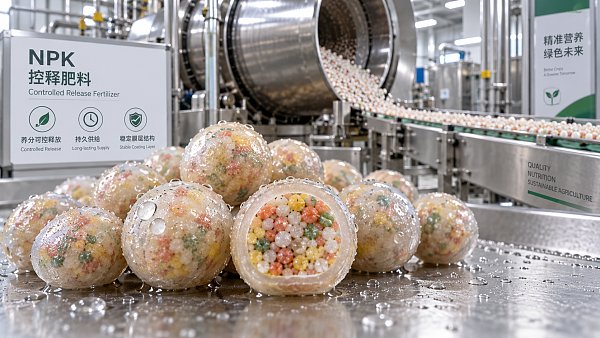
Resin coated NPK fertilizers can justify a higher purchase price when their release pattern matches the crop’s nutrient demand and reduces the cost or risk of repeated applications. They are a poor buying decision when the coating is treated as a generic quality feature, without checking whether its release duration fits soil temperature, crop cycle, irrigation practice, and placement method.
For procurement teams, the central question is not simply which NPK grade offers the lowest cost per tonne. It is whether the delivered product will provide a predictable amount of nitrogen, phosphorus, and potassium over the required production window. A product designed to release over a long cycle may underfeed a short-cycle crop. A shorter-duration grade may exhaust too early in a nursery, container, turf, orchard, or greenhouse programme that depends on extended nutrition.
Begin the specification with the intended release window. Suppliers may describe this as a release period, longevity, or controlled-release duration. That claim needs context: nutrient release from resin-coated granules is strongly influenced by temperature. Warmer growing conditions generally accelerate release, while cooler conditions slow it. A stated duration is therefore useful only when it is linked to a defined test temperature or a clear application environment.
A buyer should be able to ask a straightforward question: under conditions close to our use case, when will the product begin releasing meaningful nutrient quantities, and when will most of the nutrient charge be available? A broad answer such as “long-lasting” does not provide enough basis for commercial comparison.
Translate release claims into a purchase specification
Resin coatings work by allowing water to enter the coating and dissolved nutrients to diffuse outward over time. The coating material, thickness, integrity, and consistency around each granule all affect this process. In purchasing terms, this makes release behavior a product specification, not a marketing description.
Ask suppliers for their release-test method and the conditions used. The purpose is not to demand identical test methods from every manufacturer, since laboratories and product categories may use different protocols. The purpose is to understand what the reported duration actually represents and whether competing offers can be compared on a reasonable basis.
A useful technical discussion should address the following points:
- The stated release duration and the temperature associated with that claim.
- The release profile, including whether nutrition is relatively even or weighted toward the early, middle, or later part of the stated period.
- The nutrients covered by the coating. In some products, all nutrients may be controlled-release; in others, only part of the nutrient package is coated or slow-release.
- The proportion of immediately available nutrients, if present, and how it supports crop establishment.
- Expected behavior in the buyer’s production conditions, especially where high substrate temperature, heavy irrigation, or long crop cycles are involved.
The distinction between a coated blend and a fully designed controlled-release formulation matters. A product can contain resin-coated granules yet still deliver a substantial portion of its nutrients quickly through uncoated components. That may be appropriate where seedlings or transplanted crops need an early nutrient supply. It should not be purchased on the assumption that the full NPK analysis will release over the stated duration.
Procurement documents should therefore identify both the total nutrient analysis and the controlled-release fraction where applicable. Without that separation, two products with the same label grade can behave very differently after application.
The cheapest nutrient cost can be the most expensive programme
Resin coated NPK fertilizers are commonly compared against conventional compound fertilizers on price per tonne or price per kilogram of nutrient. That is a valid starting calculation, but it is incomplete for crops where labor, application timing, nutrient losses, uniformity, or access to the field have material cost consequences.
The purchasing case becomes stronger when a single incorporated application can replace several topdressings or fertigation events, or when controlled nutrient availability lowers the risk of a missed application during a sensitive growth stage. It can also be relevant where nutrient placement must occur before planting, where labor availability is constrained, or where crops are grown in containers and frequent corrective feeding is impractical.
However, a higher coating cost does not automatically produce a better economic result. If the crop receives substantial nutrient input through fertigation, a long-duration coated NPK may duplicate a nutrition source already being managed through irrigation. Likewise, where a crop cycle is short and nutrient demand peaks early, paying for a long release period may leave residual nutrient value in the growing medium after harvest rather than contributing to saleable yield or quality.
A more useful comparison is the programme cost per production cycle. It should include fertilizer purchase cost, expected application passes, labor, equipment use, water-management implications, corrective feeding, and the cost of crop variability. In high-value crops, uniformity can carry more financial weight than a small difference in nutrient cost. In broad-acre situations with low application cost and flexible timing, conventional products may remain more economical.
Check physical quality before negotiating on price
Release performance begins with the granule. A sound formulation can still disappoint if coating coverage varies excessively, granules are damaged during packing and transport, or the product segregates in storage and handling. Buyers should assess physical quality with the same discipline used for nutrient analysis.
Granule size distribution affects spreading accuracy and nutrient uniformity. A narrow, application-appropriate size range can be important for mechanical spreading, controlled placement, and container production. Excessive fines may release nutrients more rapidly, generate dust, complicate handling, or lead to uneven distribution. Oversized or irregular granules can create a different problem: uneven placement and inconsistent feeding across plants or production areas.
Ask for information on typical granule size, moisture limits, bulk density where relevant to equipment calibration, and the acceptable level of fines or broken granules. The supplier should also describe the packaging format and recommended storage conditions. Resin-coated fertilizers are not exempt from storage risk. Rough loading, repeated bag handling, moisture exposure, and poor pallet protection can damage product integrity before it reaches the field or nursery.
A receiving inspection should be proportionate to shipment size and production risk. It may include checking bag condition, lot identification, visible dust or broken material, unusual caking, consistency of granule appearance, and alignment between shipment documents and the approved product specification. For repeat purchases, retaining a representative sample by lot gives procurement and technical teams a practical reference if field performance is later questioned.
Do not separate supplier qualification from agronomic fit
A fertilizer supplier can provide an attractive analysis and a competitive commercial offer while still being unable to support a reliable controlled-release programme. Resin coating adds manufacturing complexity. The buyer needs confidence that the producer can maintain coating consistency between batches, manage packaging quality, and explain the limits of the release claim in the intended use environment.
Technical documentation should be reviewed early, particularly for products entering formal distribution channels or being used in regulated agricultural programmes. The documentation package normally needs to make the product identity, nutrient analysis, handling requirements, storage conditions, batch traceability, and safety information clear. Where local fertilizer registration, labelling, environmental, or import requirements apply, the purchasing team should confirm the allocation of compliance responsibilities before placing volume orders.
Documentation alone does not establish product suitability. The commercial and technical teams should agree on the crop programme that the product is intended to serve. This is especially important when a distributor purchases one grade for several end uses. A resin-coated NPK developed for container ornamentals, for example, may have a nutrient ratio, granule size, and release profile that are less suitable for transplant production or a field crop with different nutrient timing.
For a new supplier or an unfamiliar product grade, a staged purchase is often more informative than moving directly to a large seasonal commitment. The first order should be sufficient to evaluate receiving quality, application behavior, and fit within the planned fertility schedule. The evaluation should focus on whether the product performs against the agreed specification, rather than on informal visual comparisons alone. Subsequent purchasing can then use actual operational observations to refine the release duration, application rate, or product mix required for the next cycle.
Match the formulation to the system that controls water and temperature
Coating performance cannot be judged independently of the growing system. In a container nursery or greenhouse, substrate temperature and irrigation frequency can change rapidly. In field production, rainfall pattern, soil moisture, planting date, placement depth, and soil temperature all influence how a controlled-release fertilizer performs in practice.
Water is necessary for nutrient dissolution and movement through the coating, but the response is not simply proportional to rainfall or irrigation volume. Temperature often has a decisive influence on release speed. A grade selected from a catalogue for a nominal six-month period may behave differently when placed into a hot root zone, used under warm-season production, or held through an unexpectedly cool period. Procurement teams do not need to model every environmental variable themselves, but they should make those variables explicit during supplier selection.
This is also why a single annual fertilizer contract may need more than one coated NPK grade. Operations with different planting dates, container sizes, crop durations, or climate zones may need different release windows and nutrient ratios. Consolidating all demand into one grade can simplify purchasing administration while shifting complexity and risk to the production team. The better commercial outcome may be a limited, well-defined portfolio that supports consistent use rather than one product forced across incompatible applications.
Questions that expose weak offers early
Before finalizing an order, procurement should be able to obtain clear answers to a small number of practical questions. Ambiguous responses are often more useful than polished product claims because they reveal where technical support, batch control, or application knowledge is thin.
- What test conditions support the stated release duration, and how should that duration be adjusted for our expected temperature range?
- Is the entire NPK analysis resin-coated, or does the formulation include immediate-release nutrient sources?
- What granule size range, tolerance for fines, and packaging protections are included in the specification?
- Can the supplier provide batch traceability and consistent documents for each shipment?
- Which crop cycles and application methods are within the supplier’s recommended use range?
- What happens if the crop cycle is extended, shortened, or exposed to hotter-than-planned root-zone conditions?
- What is the lead time for the specified grade, and how will quality be protected during storage and transport?
Buying Resin Coated NPK Fertilizers efficiently comes down to converting a broad promise of “controlled release” into measurable commercial requirements. The right grade is the one whose nutrient profile, release window, granule quality, and supply reliability fit a defined crop programme. Once those conditions are written into the purchasing specification, price comparisons become more meaningful and the risk of paying for unusable longevity, uneven release, or avoidable supplemental feeding falls sharply.
Related News
 Antioxidants & Natural PreservativesWhat Quality Checks Matter When Sourcing Butylparaben for Personal CareButylparaben for personal care sourcing guide: compare assay, impurities, physical performance, documentation, traceability, and supplier quality to reduce formulation risk.MORE+
 Nano-microcapsule FormulationsHow Encapsulated Flavors Protect Taste During Processing and StorageEncapsulated Flavors protect taste from heat, oxygen, moisture, and storage loss. Explore smarter release, carrier selection, and processing strategies.MORE+
 Chelated Trace Element FertilizersHow Greenhouse Fertigation Systems Reduce Water and Fertilizer WasteGreenhouse fertigation systems reduce water and fertilizer waste with precise dosing, uniform irrigation, drainage monitoring, and smarter crop-zone control. Learn practical strategies.MORE+
 Supercritical CO2 Essential OilsHow Natural Essential Oil Blends Improve Consistent Product FragranceNatural essential oil blends help brands achieve consistent, appealing fragrance across batches. Explore smart blend design, stability testing, and product compatibility strategies.MORE+
 Non-ionic Surfactants & DefoamersHow to Choose Non Ionic Low Foaming Surfactants for CIP CleaningNon ionic low foaming surfactants for CIP cleaning: learn how to balance wetting, foam control, compatibility, and rinseability for reliable cleaning performance.MORE+
 Nano-microcapsule FormulationsHow Food Grade Cyclodextrin Complexes Protect Sensitive FlavorsFood grade cyclodextrin inclusion complexes help protect sensitive flavors from oxidation, evaporation, and processing loss while supporting controlled release and consistent sensory quality.MORE+
 Polymer-Coated Water Soluble NPKHow Fertilizer Coating Polymers Improve NPK Granule ReleaseFertilizer coating polymers for NPK granules improve controlled nutrient release, reduce loss risks, and enhance product consistency. Discover key selection and process insights.MORE+
 Chelated Trace Element FertilizersWhat Diammonium Phosphate Means for Crop Nutrition PlanningDiammonium Phosphate: learn how DAP supports early phosphorus access, nitrogen budgeting, smart placement, and balanced crop nutrition planning.MORE+
 Maillard Reaction Savory FlavorsHow to Assess a Flavor Bases Supplier List for Reliable SourcingGlobal Fine Chemicals & Agrochemical Intelligence Network flavor bases supplier list: assess specs, samples, supply risk, and true cost to source with confidence.MORE+
 Hydrocolloids & EmulsifiersHow Konjac Gum Powder Improves Texture in Low-Calorie FoodsKonjac gum powder improves body, stability, and mouthfeel in low-calorie foods. Discover practical tips for smoother sauces, beverages, and reduced-fat formulations.MORE+
 Supercritical CO2 Essential OilsWhat to Check Before Choosing a Botanical Essential Oils ManufacturerChoose a botanical essential oils manufacturer with confidence. Explore key checks for purity, traceability, compliance, batch consistency, and reliable supply.MORE+
 Microencapsulated FragrancesHow Fragrance Carriers for Detergents Improve Scent PerformanceFragrance carriers for detergents improve stability, fabric deposition, and long-lasting scent. Explore practical solutions for better wash-to-wear fragrance performance.MORE+
 Antioxidants & Natural PreservativesWhen Propyl Gallate Antioxidant Is the Right Choice for Oil StabilityPropyl gallate antioxidant: learn when it is the right choice for oil stability, shelf-life protection, processing compatibility, and smarter formulation decisions.MORE+
 Antioxidants & Natural PreservativesHow Potassium Sorbate Extends Shelf Life in Food and Beverage ProductsPotassium Sorbate helps food and beverage brands control yeast and mold spoilage. Explore pH, dosage, processing, and packaging strategies for reliable shelf life.MORE+
 Antioxidants & Natural PreservativesHow to Source Bulk Herbal Extracts With Reliable Quality ControlBulk herbal extracts sourcing guide: compare suppliers, verify traceability, review CoAs, and build reliable quality controls for safer, consistent purchasing.MORE+
 Antioxidants & Natural PreservativesWhat to Check Before Sourcing Butylparaben for Personal Care FormulasButylparaben for personal care sourcing guide: check market eligibility, purity, supplier controls, formula compatibility, packaging, and total risk before buying.MORE+
 Targeted Bio-pesticides & APIsChoosing Microbial Fungicides for Foliar Diseases in Integrated Crop ProgramsMicrobial fungicides for foliar diseases: learn how to match biology, formulation, tank compatibility, and timing for stronger integrated crop protection.MORE+
 Targeted Bio-pesticides & APIsHow Microbial Insecticides Control Caterpillars With Lower Crop Residue RiskMicrobial insecticides for caterpillars help protect crops with targeted early-larval control and lower residue-management pressure. Learn timing, coverage, compliance, and scouting essentials.MORE+
 Microencapsulated FragrancesHow to Add Encapsulated Laundry Fragrances Without Weakening Wash ResultsEncapsulated laundry fragrances: learn how to boost long-lasting scent while protecting cleaning power, stability, foam control, and fabric care.MORE+
 Supercritical CO2 Essential OilsHow Aroma Ingredients Shape Lasting and Skin-Safe Personal Care ProductsAroma ingredients for personal care: discover how to achieve lasting scent, formulation stability, skin safety, and confident product performance.MORE+
 Targeted Bio-pesticides & APIsInsecticides Explained Through Labels, Active Ingredients, and SafetyInsecticides explained through labels, active ingredients, formulations, and safety. Learn how to compare products, manage risk, and make informed crop protection decisions.MORE+
 Heavy-duty Industrial DegreasersHow to Select Parts Wash Cleaners for Automotive ComponentsParts wash cleaners for automotive components: learn how to match chemistry, materials, rinsing, safety, and waste controls for reliable cleaning results.MORE+
 Chelated Trace Element FertilizersHow Precision Fertigation Systems Improve Water and Nutrient ControlPrecision fertigation systems improve water and nutrient control with accurate dosing, uniform irrigation, smart monitoring, and reduced waste. Discover how to optimize crop performance.MORE+
 Hydrocolloids & EmulsifiersHow Bulk Price Factors Affect Hydrocolloid Stabilizer Blend SourcingHydrocolloid stabilizer blends bulk price: compare dosage efficiency, quality consistency, logistics, and documentation to reduce total sourcing costs.MORE+
 Zero-Calorie Sweeteners & AcidulantsHow to Choose a Natural Sweeteners Supplier for Clean-Label ProductsNatural sweeteners supplier selection guide for clean-label products: compare formulation fit, traceability, documentation, and supply reliability.MORE+
 Non-ionic Surfactants & DefoamersWhat Cationic Surfactants Do and Where They Are UsedCationic Surfactants deliver antimicrobial action, conditioning, antistatic control, and surface treatment benefits. Explore key uses, compatibility, and safe selection tips.MORE+
 Targeted Bio-pesticides & APIsHow to Evaluate Pesticide Suspension Concentrates for Field StabilityPesticide Suspension Concentrates: learn how to evaluate field stability, redispersibility, dilution, tank-mix compatibility, and spray safety for reliable performance.MORE+
 Hydrocolloids & EmulsifiersHow Hydrocolloid Systems for Meat Products Improve Texture and YieldHydrocolloid systems for meat products improve yield, texture, water retention, and slicing quality. Explore practical formulation strategies for stable, high-performing meat products.MORE+
 Microencapsulated FragrancesHow Laundry Fragrances for Liquid Detergents Improve Scent LongevityLaundry fragrances for liquid detergents: discover how fragrance design, deposition, and encapsulation create lasting fabric freshness and stronger product appeal.MORE+
 Nano-microcapsule FormulationsChoosing Fragrance Preparations That Perform Well in Personal WashFragrance preparations for personal wash: learn how to select options that protect clarity, stability, foam, scent performance, and packaging compatibility.MORE+
 Controlled-Release ThermodynamicsModified Cyclodextrins Explained for Controlled Fragrance ReleaseModified cyclodextrins enable controlled fragrance release, odor control, and volatile-note protection. Explore how they optimize performance in detergents, fabric care, and more.MORE+
 Microencapsulated FragrancesHow Fragrance Delivery Systems Improve Fabric Softener LongevityFragrance delivery systems for fabric softeners improve scent longevity through smart protection, reliable deposition, and controlled release for lasting freshness.MORE+
 Supercritical CO2 Essential OilsHow to Evaluate a Natural Cardamom Oil Supplier for Reliable SupplyNatural cardamom oil supplier evaluation guide: verify botanical origin, purity, batch consistency, documentation, packaging, and delivery reliability for confident sourcing.MORE+
 Maillard Reaction Savory FlavorsHow Ethyl Maltol Purity Testing Supports Flavor Safety ComplianceEthyl Maltol purity testing strengthens flavor safety compliance through identity checks, impurity profiling, supplier verification, and audit-ready documentation.MORE+
 Microencapsulated FragrancesEssential Oil Extracts Compared for Fragrance and Wellness UsesEssential Oil Extracts compared for fragrance and wellness: explore scent profiles, extraction methods, stability, safety, and sourcing insights for smarter formulation choices.MORE+
 Zero-Calorie Sweeteners & AcidulantsWhat Drives Zero Calorie Sweeteners Bulk Price in 2026Zero calorie sweeteners bulk price in 2026: compare specifications, dosage, quality, freight, and supply risk to make smarter sourcing decisions.MORE+
 EPA FIFRA & FDA GRAS RegsSynthetic Food Preservatives Rules That Support Safer FormulasSynthetic Food Preservatives: learn the rules for safer formulas, compliant use levels, validated shelf life, labeling, and reliable microbial control.MORE+
 Micelle Fluidics & ChelationHow Anionic Industrial Dispersants Improve Coating StabilityAnionic industrial dispersants improve coating stability, pigment wetting, viscosity control, gloss, and storage performance. Learn how to select and test the right solution.MORE+
 Supercritical CO2 Essential OilsHow to Choose Eucalyptus Oil Grades for Clean, Consistent ProductsChoose the right Eucalyptus Oil grade with confidence. Compare cineole content, purity, origin, processing, documentation, and application fit for consistent products.MORE+
 Micelle Fluidics & ChelationWhat Are Cationic Surfactants and Where Are They Commonly Used?Cationic Surfactants deliver powerful surface affinity for disinfection, fabric softening, hair conditioning, antistatic control, and industrial treatments. Explore key uses and selection factors.MORE+