Modified Cyclodextrins Explained for Controlled Fragrance Release
Controlled fragrance release is often described as a matter of choosing a more substantive perfume oil or adding a stronger fixative. Modified cyclodextrins introduce a different mechanism: they can temporarily host selected fragrance molecules inside a molecular cavity, reducing their immediate availability and releasing them as the surrounding conditions change.
This can improve fragrance persistence, protect volatile notes during storage, and reduce the perception of certain unwanted odors. It does not, however, turn a fragrance into a permanently encapsulated material. Performance depends on the match between the cyclodextrin derivative, the fragrance composition, the formulation matrix, the substrate, and the actual trigger for release. A cyclodextrin that performs well in a dry powder product may behave very differently in a surfactant-rich liquid detergent or an alcohol-based spray.
What modified cyclodextrins are doing at the molecular level
Cyclodextrins are cyclic oligosaccharides produced from starch. Their molecular structure resembles a short, hollow cone: the outer surface is relatively hydrophilic, while the internal cavity is comparatively hydrophobic. This geometry allows suitable guest molecules to enter the cavity and form what is known as an inclusion complex.
Many fragrance ingredients contain hydrophobic regions that can fit, at least partly, into this cavity. When complexed, the guest molecule is less exposed to air, oxygen, light, or other formulation components. The interaction is non-covalent. No new chemical bond is normally created between the fragrance ingredient and the cyclodextrin; instead, the complex exists in an equilibrium between bound and unbound material.
That equilibrium is central to controlled release. A fragrance molecule can leave the cavity when conditions favor its free state, such as dilution, changes in humidity, mechanical friction, temperature changes, contact with skin or fabric moisture, or competition from another hydrophobic material. The result is not a single timed-release event. It is a dynamic partitioning process in which the perfume is retained, released, and in some conditions partially re-associated.
Native cyclodextrins are commonly divided into alpha-, beta-, and gamma-cyclodextrin, which differ mainly in cavity size. Beta-cyclodextrin is frequently discussed for fragrance inclusion because its cavity can accommodate many common aroma chemicals. Yet native beta-cyclodextrin has limited water solubility, which restricts its use in some liquid systems. This is one reason chemically modified cyclodextrins are important in commercial formulation work.
Why chemical modification changes practical performance
Modified cyclodextrins are derivatives in which some hydroxyl groups on the cyclodextrin structure have been substituted. The modification may improve water solubility, change the affinity for fragrance molecules, alter interaction with polymers or surfaces, or improve processing behavior. The modification is therefore not a minor specification detail; it affects whether the material is workable in the intended product form.
Hydroxypropylated cyclodextrins are often considered where improved aqueous solubility is needed. Methylated derivatives can show different guest affinity and moisture behavior. Ionic derivatives, including certain cationic or anionic forms, may be selected where deposition on a charged substrate or compatibility with a formulation system is relevant. Crosslinked cyclodextrin materials are another category. They may function more as insoluble or partially swellable host matrices than as fully dissolved molecular carriers.
The appropriate derivative cannot be chosen solely by asking which one “holds fragrance longer.” Strong binding is not always desirable. If a complex is too stable under use conditions, it may suppress fragrance perception rather than extend it. Conversely, a weak interaction may offer little storage protection or retention benefit. The useful design target is a binding range that protects selected components during manufacturing and storage while allowing release at the moment the product is expected to smell.

Fragrance release is governed by several competing forces
Fragrance materials are not equally compatible with cyclodextrin cavities. Molecular size, shape, polarity, volatility, and functional groups all influence complex formation. Small to medium-sized hydrophobic aroma chemicals may be suitable guests, but a fragrance oil is a multicomponent mixture rather than one molecule. Some ingredients may complex readily, others may remain mostly free, and some may compete for the same cavities.
This selective behavior can change the perceived fragrance profile. Highly volatile top-note materials may gain protection if they form useful inclusion complexes, but the final sensory outcome depends on which notes are retained and which remain freely available. A formulation may therefore smell less intense immediately after preparation but offer a different character after drying, rubbing, or exposure to moisture. This is not necessarily a defect, but it must be evaluated against the intended consumer experience.
Water is particularly important. In an aqueous system, dilution and hydration can influence complex stability and solubilization. On a dried fabric or hard surface, subsequent humidity may mobilize both the cyclodextrin and guest molecules enough to support renewed release. Temperature can also shift the balance, while rubbing or abrasion may expose fresh deposited material and increase odor perception.
Surfactants add another layer of complexity. Nonionic, anionic, amphoteric, or cationic surfactants can solubilize fragrance components in micelles. Those micelles may compete with the cyclodextrin cavity for the same guest molecules. In a high-surfactant liquid detergent, a fragrance ingredient may distribute among free oil droplets, micelles, cyclodextrin complexes, polymers, and packaging headspace. A result observed in water alone cannot be assumed to predict performance in the finished detergent.
Where modified cyclodextrins fit best in fragrance systems
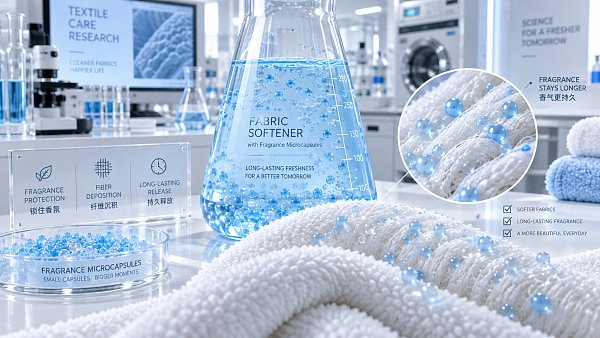
Modified cyclodextrins can serve different purposes depending on the product category. In fabric care, the objective may be to deposit a host material on textiles and generate fragrance upon humidity, body heat, or movement. In dry detergent powders, tablets, and granules, they can help protect selected perfume components against evaporation or interaction with other ingredients during storage. In home-care products, they may be used to moderate the release of fragrance in air-care, surface-care, or odor-control applications.
Personal-care applications require more careful formulation and compliance assessment. Body sprays, deodorant products, rinse-off systems, and fragranced textiles do not place the same demands on solubility, skin exposure, residue, or perfume intensity. A material that functions as an odor-trapping additive in a household product should not be assumed suitable for a leave-on cosmetic product without evaluating its grade, purity profile, intended use status, and relevant safety requirements.
Industrial applications may focus less on a consumer fragrance experience and more on masking intermittent process odors, improving the handling perception of cleaning products, or moderating fragrance losses in concentrates. In these cases, the formulation objective may be odor management rather than a long-lasting scent trail. That distinction matters because odor capture and fragrance release are related but not identical functions.
Odor neutralization is not the same as covering an odor
Cyclodextrins are often associated with odor control because they can include some volatile compounds responsible for malodor. The mechanism is physical inclusion rather than chemical destruction of the odor source. If a problematic volatile is captured, its concentration in the air can decline and odor perception may be reduced. But cyclodextrins do not automatically remove every malodor, and they do not address nonvolatile residues, microbial growth, or the underlying cause of odor generation.
In a cleaning or fabric-care application, this leads to an important product-development distinction. A fragrance can mask an odor by adding a stronger or more pleasant smell. A cyclodextrin system can reduce the availability of certain odor molecules. A cleaning system can remove the soil or source that produces the odor. These approaches can be combined, but they should not be treated as interchangeable claims.
The same caution applies to fragrance stability. Inclusion can reduce loss of suitable volatile components, but it does not guarantee protection against every degradation pathway. Oxidation, hydrolysis, discoloration, interaction with preservatives, reaction with oxidizing cleaning ingredients, and perfume adsorption into packaging materials may still determine shelf life.
Compatibility problems that are easy to overlook
The first formulation question is usually whether the modified cyclodextrin disperses or dissolves adequately. A clear aqueous product has different requirements from an opaque emulsion, a suspension, a powder, or a coated granule. A derivative with acceptable solubility in deionized water may show haze, sediment, viscosity changes, or crystallization after exposure to salts, solvents, surfactants, pH adjustment, or low temperatures.
Alcohol and glycol content can also affect the system. In sprays and fragrance concentrates, solvents may change the solubility of both the host and guest and weaken the apparent advantage of complexation. High electrolyte loading, common in some laundry and cleaning products, can alter hydration and phase behavior. Polymeric deposition aids, fabric softener actives, and rheology modifiers may further influence where the cyclodextrin ends up after use.
Packaging must be included in the assessment. If the finished product is stored in a plastic container, fragrance components can partition into the package wall or migrate into headspace. A cyclodextrin complex may reduce the free concentration of some perfume materials, but the final effect depends on the entire system. Packaging compatibility testing remains necessary, particularly for products stored under warm conditions or for long distribution periods.
How to assess whether a cyclodextrin approach is genuinely working
Simple solubility or inclusion testing is not enough to establish controlled-release performance. The critical evidence is generated in the final formulation and on the actual substrate. For a laundry product, that means assessing fragrance before washing, during washing, on wet fabric, after drying, and after a defined storage period. For a room or surface-care product, release should be assessed under realistic application, drying, ventilation, and humidity conditions.
Analytical methods such as headspace gas chromatography can help compare volatile release and identify which fragrance components are being retained. Sensory evaluation remains necessary because analytical concentration does not translate directly into human odor perception. A small change in a highly impactful aroma chemical can alter the perceived perfume more than a larger change in a low-impact ingredient.
Useful evaluation questions include whether the initial fragrance is still acceptable, whether the intended delayed-release effect is perceptible, whether the carrier leaves visible residue, whether the product remains physically stable, and whether the fragrance profile changes after accelerated storage. For odor-control claims, testing should distinguish between a reduction in malodor perception and a simple increase in fragrance intensity.
What to request when comparing materials
A material description such as “modified cyclodextrin for fragrance encapsulation” does not provide enough information for technical comparison. The derivative type, degree of substitution or related compositional specification, physical form, moisture content, particle size where relevant, solubility behavior, and recommended use conditions all affect feasibility. For dry applications, powder flow, dusting, compatibility with granulation, and resistance to processing heat may matter. For liquid products, microbial control, solution clarity, viscosity impact, and low-temperature stability may be more relevant.
Documentation should match the intended market and application. Depending on use, this can include a technical data sheet, safety data sheet, certificate of analysis, composition information, impurity profile, storage guidance, and statements relevant to cosmetic, detergent, food-contact, or other applicable regulatory frameworks. The suitability of a cyclodextrin derivative is not established merely because cyclodextrins as a broad chemical family are familiar.
It is also prudent to clarify whether the offered material is the cyclodextrin carrier alone, a pre-complexed fragrance ingredient, or a formulated delivery system containing additional polymers, binders, or processing aids. These are commercially and technically different materials. Comparing their cost per kilogram without comparing active fragrance loading, deposition efficiency, and performance in use can lead to misleading conclusions.
The practical limitation: controlled release is formulation-specific
Modified cyclodextrins are useful tools for fragrance management because they can alter the availability of selected aroma molecules without relying solely on conventional fixatives or polymeric capsules. Their main value lies in creating a reversible host–guest relationship that can protect, retain, or moderate release under defined conditions.
But the carrier does not independently determine product performance. The same derivative can improve stability in one perfume composition and flatten it in another; remain effective on a dry textile yet contribute little in a micelle-rich liquid; or assist odor reduction without delivering a strong long-lasting fragrance. The relevant question is not whether modified cyclodextrins work in general, but whether a specific derivative creates the desired balance of complexation, formulation stability, substrate deposition, and sensory release in the finished product.
Related News
 Antioxidants & Natural PreservativesWhat Quality Checks Matter When Sourcing Butylparaben for Personal CareButylparaben for personal care sourcing guide: compare assay, impurities, physical performance, documentation, traceability, and supplier quality to reduce formulation risk.MORE+
 Nano-microcapsule FormulationsHow Encapsulated Flavors Protect Taste During Processing and StorageEncapsulated Flavors protect taste from heat, oxygen, moisture, and storage loss. Explore smarter release, carrier selection, and processing strategies.MORE+
 Chelated Trace Element FertilizersHow Greenhouse Fertigation Systems Reduce Water and Fertilizer WasteGreenhouse fertigation systems reduce water and fertilizer waste with precise dosing, uniform irrigation, drainage monitoring, and smarter crop-zone control. Learn practical strategies.MORE+
 Supercritical CO2 Essential OilsHow Natural Essential Oil Blends Improve Consistent Product FragranceNatural essential oil blends help brands achieve consistent, appealing fragrance across batches. Explore smart blend design, stability testing, and product compatibility strategies.MORE+
 Non-ionic Surfactants & DefoamersHow to Choose Non Ionic Low Foaming Surfactants for CIP CleaningNon ionic low foaming surfactants for CIP cleaning: learn how to balance wetting, foam control, compatibility, and rinseability for reliable cleaning performance.MORE+
 Nano-microcapsule FormulationsHow Food Grade Cyclodextrin Complexes Protect Sensitive FlavorsFood grade cyclodextrin inclusion complexes help protect sensitive flavors from oxidation, evaporation, and processing loss while supporting controlled release and consistent sensory quality.MORE+
 Polymer-Coated Water Soluble NPKHow Fertilizer Coating Polymers Improve NPK Granule ReleaseFertilizer coating polymers for NPK granules improve controlled nutrient release, reduce loss risks, and enhance product consistency. Discover key selection and process insights.MORE+
 Chelated Trace Element FertilizersWhat Diammonium Phosphate Means for Crop Nutrition PlanningDiammonium Phosphate: learn how DAP supports early phosphorus access, nitrogen budgeting, smart placement, and balanced crop nutrition planning.MORE+
 Maillard Reaction Savory FlavorsHow to Assess a Flavor Bases Supplier List for Reliable SourcingGlobal Fine Chemicals & Agrochemical Intelligence Network flavor bases supplier list: assess specs, samples, supply risk, and true cost to source with confidence.MORE+
 Hydrocolloids & EmulsifiersHow Konjac Gum Powder Improves Texture in Low-Calorie FoodsKonjac gum powder improves body, stability, and mouthfeel in low-calorie foods. Discover practical tips for smoother sauces, beverages, and reduced-fat formulations.MORE+
 Supercritical CO2 Essential OilsWhat to Check Before Choosing a Botanical Essential Oils ManufacturerChoose a botanical essential oils manufacturer with confidence. Explore key checks for purity, traceability, compliance, batch consistency, and reliable supply.MORE+
 Microencapsulated FragrancesHow Fragrance Carriers for Detergents Improve Scent PerformanceFragrance carriers for detergents improve stability, fabric deposition, and long-lasting scent. Explore practical solutions for better wash-to-wear fragrance performance.MORE+
 Antioxidants & Natural PreservativesWhen Propyl Gallate Antioxidant Is the Right Choice for Oil StabilityPropyl gallate antioxidant: learn when it is the right choice for oil stability, shelf-life protection, processing compatibility, and smarter formulation decisions.MORE+
 Antioxidants & Natural PreservativesHow Potassium Sorbate Extends Shelf Life in Food and Beverage ProductsPotassium Sorbate helps food and beverage brands control yeast and mold spoilage. Explore pH, dosage, processing, and packaging strategies for reliable shelf life.MORE+
 Antioxidants & Natural PreservativesHow to Source Bulk Herbal Extracts With Reliable Quality ControlBulk herbal extracts sourcing guide: compare suppliers, verify traceability, review CoAs, and build reliable quality controls for safer, consistent purchasing.MORE+
 Antioxidants & Natural PreservativesWhat to Check Before Sourcing Butylparaben for Personal Care FormulasButylparaben for personal care sourcing guide: check market eligibility, purity, supplier controls, formula compatibility, packaging, and total risk before buying.MORE+
 Targeted Bio-pesticides & APIsChoosing Microbial Fungicides for Foliar Diseases in Integrated Crop ProgramsMicrobial fungicides for foliar diseases: learn how to match biology, formulation, tank compatibility, and timing for stronger integrated crop protection.MORE+
 Targeted Bio-pesticides & APIsHow Microbial Insecticides Control Caterpillars With Lower Crop Residue RiskMicrobial insecticides for caterpillars help protect crops with targeted early-larval control and lower residue-management pressure. Learn timing, coverage, compliance, and scouting essentials.MORE+
 Microencapsulated FragrancesHow to Add Encapsulated Laundry Fragrances Without Weakening Wash ResultsEncapsulated laundry fragrances: learn how to boost long-lasting scent while protecting cleaning power, stability, foam control, and fabric care.MORE+
 Supercritical CO2 Essential OilsHow Aroma Ingredients Shape Lasting and Skin-Safe Personal Care ProductsAroma ingredients for personal care: discover how to achieve lasting scent, formulation stability, skin safety, and confident product performance.MORE+
 Targeted Bio-pesticides & APIsInsecticides Explained Through Labels, Active Ingredients, and SafetyInsecticides explained through labels, active ingredients, formulations, and safety. Learn how to compare products, manage risk, and make informed crop protection decisions.MORE+
 Heavy-duty Industrial DegreasersHow to Select Parts Wash Cleaners for Automotive ComponentsParts wash cleaners for automotive components: learn how to match chemistry, materials, rinsing, safety, and waste controls for reliable cleaning results.MORE+
 Chelated Trace Element FertilizersHow Precision Fertigation Systems Improve Water and Nutrient ControlPrecision fertigation systems improve water and nutrient control with accurate dosing, uniform irrigation, smart monitoring, and reduced waste. Discover how to optimize crop performance.MORE+
 Hydrocolloids & EmulsifiersHow Bulk Price Factors Affect Hydrocolloid Stabilizer Blend SourcingHydrocolloid stabilizer blends bulk price: compare dosage efficiency, quality consistency, logistics, and documentation to reduce total sourcing costs.MORE+
 Zero-Calorie Sweeteners & AcidulantsHow to Choose a Natural Sweeteners Supplier for Clean-Label ProductsNatural sweeteners supplier selection guide for clean-label products: compare formulation fit, traceability, documentation, and supply reliability.MORE+
 Non-ionic Surfactants & DefoamersWhat Cationic Surfactants Do and Where They Are UsedCationic Surfactants deliver antimicrobial action, conditioning, antistatic control, and surface treatment benefits. Explore key uses, compatibility, and safe selection tips.MORE+
 Targeted Bio-pesticides & APIsHow to Evaluate Pesticide Suspension Concentrates for Field StabilityPesticide Suspension Concentrates: learn how to evaluate field stability, redispersibility, dilution, tank-mix compatibility, and spray safety for reliable performance.MORE+
 Hydrocolloids & EmulsifiersHow Hydrocolloid Systems for Meat Products Improve Texture and YieldHydrocolloid systems for meat products improve yield, texture, water retention, and slicing quality. Explore practical formulation strategies for stable, high-performing meat products.MORE+
 Microencapsulated FragrancesHow Laundry Fragrances for Liquid Detergents Improve Scent LongevityLaundry fragrances for liquid detergents: discover how fragrance design, deposition, and encapsulation create lasting fabric freshness and stronger product appeal.MORE+
 Nano-microcapsule FormulationsChoosing Fragrance Preparations That Perform Well in Personal WashFragrance preparations for personal wash: learn how to select options that protect clarity, stability, foam, scent performance, and packaging compatibility.MORE+
 Controlled-Release ThermodynamicsModified Cyclodextrins Explained for Controlled Fragrance ReleaseModified cyclodextrins enable controlled fragrance release, odor control, and volatile-note protection. Explore how they optimize performance in detergents, fabric care, and more.MORE+
 Microencapsulated FragrancesHow Fragrance Delivery Systems Improve Fabric Softener LongevityFragrance delivery systems for fabric softeners improve scent longevity through smart protection, reliable deposition, and controlled release for lasting freshness.MORE+
 Supercritical CO2 Essential OilsHow to Evaluate a Natural Cardamom Oil Supplier for Reliable SupplyNatural cardamom oil supplier evaluation guide: verify botanical origin, purity, batch consistency, documentation, packaging, and delivery reliability for confident sourcing.MORE+
 Maillard Reaction Savory FlavorsHow Ethyl Maltol Purity Testing Supports Flavor Safety ComplianceEthyl Maltol purity testing strengthens flavor safety compliance through identity checks, impurity profiling, supplier verification, and audit-ready documentation.MORE+
 Microencapsulated FragrancesEssential Oil Extracts Compared for Fragrance and Wellness UsesEssential Oil Extracts compared for fragrance and wellness: explore scent profiles, extraction methods, stability, safety, and sourcing insights for smarter formulation choices.MORE+
 Zero-Calorie Sweeteners & AcidulantsWhat Drives Zero Calorie Sweeteners Bulk Price in 2026Zero calorie sweeteners bulk price in 2026: compare specifications, dosage, quality, freight, and supply risk to make smarter sourcing decisions.MORE+
 EPA FIFRA & FDA GRAS RegsSynthetic Food Preservatives Rules That Support Safer FormulasSynthetic Food Preservatives: learn the rules for safer formulas, compliant use levels, validated shelf life, labeling, and reliable microbial control.MORE+
 Micelle Fluidics & ChelationHow Anionic Industrial Dispersants Improve Coating StabilityAnionic industrial dispersants improve coating stability, pigment wetting, viscosity control, gloss, and storage performance. Learn how to select and test the right solution.MORE+
 Supercritical CO2 Essential OilsHow to Choose Eucalyptus Oil Grades for Clean, Consistent ProductsChoose the right Eucalyptus Oil grade with confidence. Compare cineole content, purity, origin, processing, documentation, and application fit for consistent products.MORE+
 Micelle Fluidics & ChelationWhat Are Cationic Surfactants and Where Are They Commonly Used?Cationic Surfactants deliver powerful surface affinity for disinfection, fabric softening, hair conditioning, antistatic control, and industrial treatments. Explore key uses and selection factors.MORE+