How Greenhouse Fertigation Systems Reduce Water and Fertilizer Waste
Water and fertilizer waste in a greenhouse rarely comes from one obvious failure. More often, it is the combined result of uneven irrigation, fertilizer applied at the wrong crop stage, poor drainage control, unsuitable water quality, or a system that cannot respond to changing weather and plant demand. Greenhouse fertigation systems address these problems by delivering dissolved nutrients through the irrigation network in controlled doses, close to the root zone and at the time plants can use them.
That does not mean every fertigation installation automatically saves inputs. A sophisticated controller cannot compensate for clogged emitters, unstable source water, incompatible fertilizer products, or poorly designed irrigation zones. Waste reduction depends on treating water delivery, nutrient formulation, drainage, and monitoring as one operating system rather than separate purchases.
Where water and fertilizer waste usually begins
In protected cultivation, crops grow in a relatively controlled environment, but their water and nutrient needs still change with solar radiation, temperature, humidity, crop age, canopy size, substrate volume, and fruit load. A fixed irrigation schedule may be adequate for a short period, then become excessive or insufficient as conditions shift.
Overwatering causes more than unnecessary water consumption. It can move soluble nutrients beyond the active root zone, increase drainage volume, reduce oxygen around roots, and make nutrient deficiencies harder to diagnose. Adding more fertilizer to correct weak plant growth can then make the situation worse: the plant may not be short of nutrients in the feed solution, but unable to absorb them efficiently because the root environment is unbalanced.
Underwatering also creates waste, although less visibly. When the root zone dries too much, fertilizer salts become concentrated. Plants may take up water and nutrients unevenly, and later irrigation can produce a heavy drainage event that carries unused nutrients away. A good fertigation strategy avoids both extremes by matching the irrigation pulse, nutrient concentration, and drainage target to the crop and growing medium.
How greenhouse fertigation systems reduce losses in practice
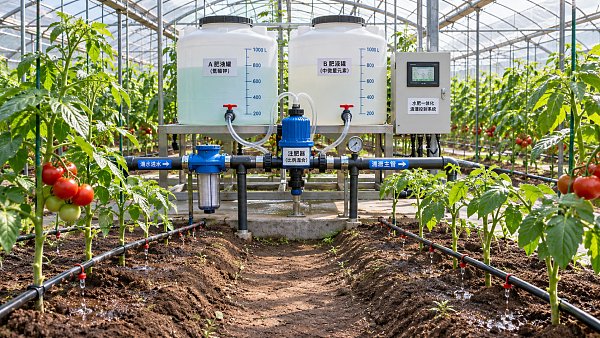
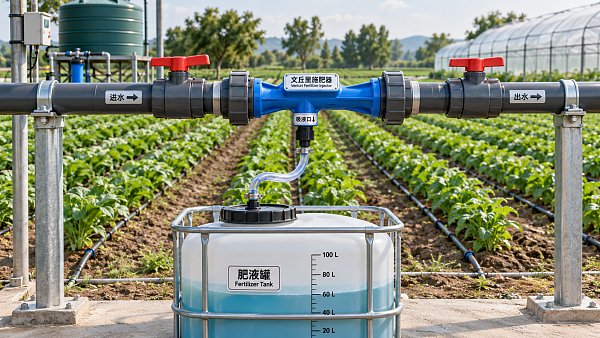
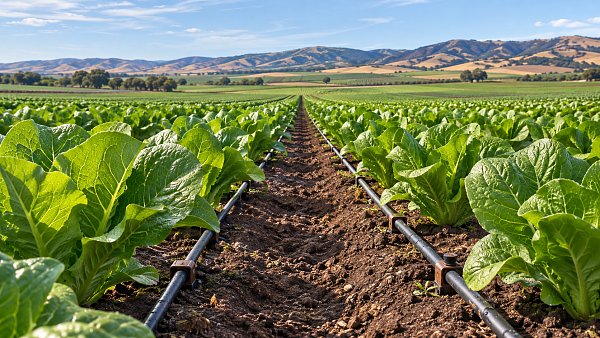
The basic principle is simple: inject a measured fertilizer solution into irrigation water, distribute it through drip lines or similar delivery equipment, and adjust the program according to crop demand. The practical value comes from the level of control this creates.
Instead of applying a large amount of granular or liquid fertilizer at long intervals, growers can divide the nutrient supply into smaller applications. This makes the root-zone concentration more stable and reduces the chance that a large irrigation event will wash recently applied nutrients out of the substrate. It also allows nutrient recipes to change as the crop moves from establishment to vegetative growth, flowering, fruit set, and harvest.
Water savings follow a similar logic. Drip delivery applies water where roots can access it rather than wetting unused ground or greenhouse walkways. Short irrigation events can be scheduled around plant demand, while separate zones prevent a young block, a mature crop, and a low-light section of the house from receiving identical volumes simply because they share the same pipework.
Precision is useful only when distribution is uniform. If one lateral line delivers less than another, increasing the system-wide run time may rescue the dry area while overwatering the rest. For this reason, emitter selection, pressure regulation, filtration, pipe sizing, and zone layout are not secondary engineering details. They determine whether an irrigation instruction becomes a uniform root-zone result.
Design the system around crop zones, not greenhouse geometry
A common design error is to divide zones only by the physical layout of the greenhouse. Straightforward pipe routing can reduce installation complexity, but water and fertilizer demand do not necessarily follow building boundaries. Crops at different development stages, cultivars with different vigor, different substrate volumes, or areas affected by shading and ventilation patterns may need separate irrigation management.
Zone design should begin with the question: which plants can safely receive the same irrigation duration and nutrient recipe? Where the answer differs, separate control is often justified. This does not require creating a zone for every small variation. Too many zones can increase capital cost, valve maintenance, programming complexity, and operator error. The goal is meaningful control, not maximum segmentation.
The irrigation design also needs to account for the growing method. Soil-grown beds, bags, slabs, pots, trough systems, and hydroponic channels do not retain water or nutrients in the same way. A program that works in a high-buffer substrate may cause rapid concentration swings in a smaller-volume medium. Fertigation equipment should be specified after the crop system and root-zone management approach are clear, not before.
Fertilizer compatibility matters as much as the dosing equipment
Water-soluble fertilizers are central to reliable fertigation, but “soluble” does not mean every product can be mixed together in every water source. Some combinations can form precipitates that reduce nutrient availability and clog injectors, filters, emitters, or drip lines. The risk is influenced by fertilizer chemistry, mixing sequence, stock-solution concentration, water hardness, alkalinity, and pH.
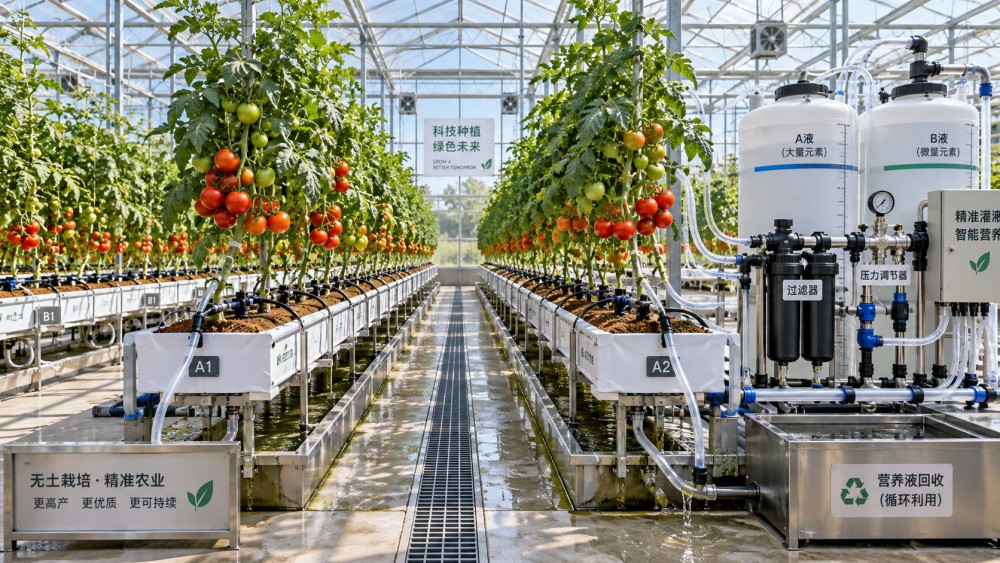
Calcium-containing products are a familiar example. They are often kept separate from phosphate- or sulfate-containing materials in concentrated stock tanks because incompatible combinations may create insoluble material before dilution. Separate A and B tanks are therefore not an unnecessary complication in many installations; they are a practical way to preserve solubility and protect the irrigation network.
Micronutrients require similar attention. Chelated forms can help keep certain elements available under challenging water conditions, but they still need to be selected for the expected pH range and recipe. Products with high insoluble content, poorly controlled particle size, or unsuitable carriers can create operational problems even when their nutrient analysis appears attractive on paper.
Before approving a fertilizer program, review the full operating chain: source-water analysis, intended stock concentration, tank materials, agitation, injection method, filters, and flushing procedure. A lower-cost fertilizer can become the more expensive choice if it causes frequent cleaning, uneven application, or crop inconsistency. Practical fertilizer selection should consider solubility, formulation stability, batch consistency, packaging, documentation, storage conditions, and the supplier’s ability to support the intended application.
Control by feedback, not by a fixed timer alone
Timers are useful, but time is only a proxy for plant demand. Modern greenhouse fertigation systems can combine timing with radiation, substrate moisture, drainage volume, electrical conductivity (EC), pH, flow, pressure, and tank-level data. Not every project requires every sensor. The right level of automation depends on crop value, system scale, staff capability, water constraints, and the consequences of an irrigation error.
For many operations, the most valuable starting point is reliable visibility rather than fully automatic control. Flow meters can reveal unexpected consumption or leaks. Pressure readings can indicate a blocked filter, failed regulator, or broken line. Monitoring feed and drainage EC helps show whether nutrients are accumulating in the root zone or being supplied too weakly. Drainage pH can provide an early indication that nutrient availability may be moving away from the intended range.
Sensor data must be interpreted as a pattern. A single high EC reading does not automatically justify diluting every feed tank; it may reflect a local sampling issue, a dry substrate, a recent change in water quality, or uneven irrigation. Similarly, more drainage is not always evidence of better root-zone control. It may indicate that irrigation volume is excessive for the crop and weather conditions.
Automation becomes more valuable when it supports a clear operational rule. For example, an irrigation event may be triggered after a defined level of light accumulation, paused when a moisture threshold is reached, or adjusted after drainage trends move outside the desired operating range. The rule should be understandable to the people who maintain the system. A complex program that cannot be audited or manually operated during a sensor fault creates a different kind of risk.
Drainage management is where nutrient efficiency becomes visible
Fertigation reduces fertilizer waste most convincingly when drainage is measured and managed. In open systems, nutrient-rich runoff can leave the greenhouse area if it is not captured or controlled. In substrate-based production, drainage also provides useful evidence about what is happening around the roots.
The objective is not necessarily zero drainage. Some systems use controlled drainage to limit salt accumulation and maintain a stable root-zone environment. The appropriate amount depends on crop, substrate, water quality, climate conditions, and the nutrient program. The issue is whether drainage is intentional and understood, rather than an uncontrolled consequence of long irrigation cycles.
Where recirculation is feasible, collected drainage may be treated, rebalanced, and reused. This can reduce both water use and nutrient discharge, but it introduces additional responsibilities. The system must manage pathogens, suspended solids, salt accumulation, changes in nutrient balance, and the quality of make-up water. Recirculation should be designed as a complete water-treatment and crop-health process, not treated as a simple return pipe added after installation.
What should be confirmed before equipment is specified
A strong project brief does not begin with a preferred controller brand or injector size. It begins with the operating conditions that determine what the system must do. The following questions usually prevent expensive redesigns later:
- What crops, varieties, production cycles, and growing media will be used?
- How variable is the source-water quality through the year?
- Which areas have genuinely different irrigation or nutrient requirements?
- What flow and pressure are available at the point of connection during peak demand?
- Will the installation use open drainage, collection, or recirculation?
- Which fertilizer formulations will be used, and how will incompatible materials be separated?
- How will flow, pressure, EC, pH, drainage, and alarms be checked during normal operation?
- Who will clean filters, inspect emitters, calibrate dosing equipment, and act on alarms?
The last question is often underestimated. Fertigation systems reduce manual work in routine delivery, but they do not remove the need for disciplined operation. Filters need service, injectors need calibration, stock tanks need cleaning, and irrigation uniformity needs periodic checking. A well-designed maintenance routine protects both crop performance and the resource savings expected from the investment.
A practical commissioning sequence
Commissioning should test hydraulic performance before relying on crop results. Start with clean-water runs to verify pressure, flow, valve response, leaks, and uniformity across representative lines. Confirm that filters work under expected loading and that flushing reaches all required sections. Only then introduce stock solutions and verify injection accuracy at the intended operating flow range.
Next, test the fertilizer recipe in the actual source water and tank arrangement. Observe whether stock solutions remain stable, whether EC and pH respond as expected after injection, and whether there is any sign of sediment or filter loading. Early crop cycles should use frequent checks of substrate moisture and drainage behavior rather than assuming the programmed schedule is correct from day one.
Operational records are valuable here. Logging irrigation start times, run duration, flow, source-water changes, fertilizer batches, feed EC and pH, drainage observations, and maintenance actions makes recurring issues easier to identify. This is particularly useful when production teams, contractors, and input suppliers all influence the final result.
Choosing the right level of system sophistication
A small, stable greenhouse with one crop and consistent water quality may gain more from good filtration, reliable dosing, basic EC and pH checks, and careful zone design than from a highly complex automation platform. By contrast, a multi-zone facility producing high-value crops through changing seasons may benefit from integrated climate and irrigation controls, remote alarms, drainage monitoring, and data-based scheduling.
The correct choice is not the system with the longest feature list. It is the system that can deliver a repeatable nutrient solution, distribute it uniformly, reveal exceptions early, and be maintained by the operating team. Overspecification can leave useful functions unused; underspecification can force staff to manage preventable variability by hand.
For teams comparing water-soluble fertilizers, micronutrient formulations, fertigation materials, and related crop-input options, FCAS provides structured industry information that can support application planning and supplier discussions. The relevant comparison is not simply nutrient analysis: it is whether a formulation fits the water source, injection system, crop program, handling requirements, and documentation needs of the greenhouse operation.
Water and fertilizer savings become durable when the greenhouse is designed to measure what it delivers and what leaves the root zone. That focus turns fertigation from a dosing method into a controllable production system: less guesswork, fewer corrective applications, and a clearer basis for managing crop inputs over time.
Related News
 Supercritical CO2 Essential OilsHow Are Food Grade Essential Oil Extracts Made with CO2?Discover how food grade essential oil extracts are made with CO2, what shapes their flavor, and how to assess safety and suitability for food applications.MORE+
 Ultra-pure Semiconductor CleanersHow to Choose Electronic Cleaning Chemicals for Corrosion ProtectionElectronic cleaning chemicals corrosion protection starts with the right selection. Discover how to assess compatibility, residues, drying, and safety.MORE+
 Microencapsulated FragrancesHow Can Microencapsulation Help Essential Oil Blends Last Longer?Essential Oil Blends can retain their aroma longer with the right microencapsulation strategy. Explore carrier choices, release mechanisms, and stability testing.MORE+
 Synthesis CAPEX & Yield ROIWhat Affects the Triple Superphosphate Bulk Price?Explore what affects triple superphosphate bulk price, from raw materials and freight to quality and demand, and learn how to compare offers with confidence.MORE+
 Antioxidants & Natural PreservativesHow Do Food Preservation Ingredients Extend Shelf Life?Food Preservation Ingredients extend shelf life by slowing microbial growth and oxidation. Discover how to select and validate the right solution for your product.MORE+
 EPA FIFRA & FDA GRAS RegsEPA Issues Cancellation Order Affecting Certain Pesticide RegistrationsEPA pesticide registration cancellations may affect select products and supply chains. Learn what businesses should verify before making purchasing decisions.MORE+
 Chelated Trace Element FertilizersHow to Apply Single Superphosphate for Sulfur Deficient SoilLearn how to apply single superphosphate for sulfur deficient soil, calculate the right rate, and balance phosphorus needs for healthier crops.MORE+
 Heavy-duty Industrial DegreasersHow to Choose Parts Wash Cleaners for Spray WashersChoose parts wash cleaners for spray washers with confidence. Compare cleaning power, material compatibility, foam control, safety, and supplier support.MORE+
 Polymer-Coated Water Soluble NPKHow to Use Calcium Nitrate Fertilizer in Drip IrrigationCalcium Nitrate Fertilizer in drip irrigation: learn how to calculate doses, mix stock solutions, prevent clogged emitters, and support healthy crops.MORE+
 Micelle Fluidics & ChelationHow Venturi Fertigation Systems Control Fertilizer InjectionDiscover how venturi fertigation systems control fertilizer injection, and learn how pressure, sizing, and calibration affect dosing accuracy.MORE+
 Nano-microcapsule FormulationsHow to Choose a Capsule Suspension Pesticides SupplierChoose a capsule suspension pesticides supplier with confidence. Compare formulation quality, regulatory documentation, delivery reliability and total costs.MORE+
 Polymer-Coated Water Soluble NPK2026 Fertilizer Price Swings Shape 2027 Planting Decisions2026 fertilizer price swings are shaping 2027 planting decisions. Explore nutrient cost pressures and practical strategies for planning purchases.MORE+
 EPA FIFRA & FDA GRAS RegsEPA Reviews Glyphosate Safety, With Decision Expected in Early 2027EPA glyphosate safety review: Discover what the decision expected in early 2027 could mean for health, the environment, and businesses.MORE+
 Targeted Bio-pesticides & APIsHow Are Fungicide APIs Used in Crop Protection Products?Fungicide APIs for crop protection power disease control products. Discover how formulation, application and resistance management affect results.MORE+
 Ultra-pure Semiconductor CleanersWhat Affects the Bulk Price of Semiconductor Process Cleaners?Semiconductor process cleaners bulk price depends on purity, packaging, logistics, and more. Discover how to compare quotes and control costs.MORE+
 Microencapsulated FragrancesHow to Choose a Fragrance Capsules Manufacturer for Your ProductChoose the right fragrance capsules manufacturer with practical tips on formulation testing, quality specifications, compliance, and supply reliability.MORE+
 Targeted Bio-pesticides & APIsHow to Evaluate Quality Control at a Botanical Insecticides FactoryEvaluate a botanical insecticides factory with practical checks for sourcing, testing, batch traceability and stability. Learn how to identify quality risks before choosing a supplier.MORE+
 Herbicides & Plant Growth RegulatorsHow Do Herbicide Intermediates Affect Production Yield?Discover how Herbicide Intermediates influence production yield, from impurity control to product recovery, and learn how to evaluate suppliers with confidence.MORE+
 EPA FIFRA & FDA GRAS RegsEPA Seeks Comment on Voluntary Pesticide Registration CancellationsEPA pesticide registration cancellations are open for public comment. Discover what the proposed changes could mean for product uses, compliance and supply.MORE+
 Polymer-Coated Water Soluble NPKRecord Fertilizer Prices Could Shape 2027 US Corn and Soybean Planting DecisionsRecord fertilizer prices could influence 2027 US corn and soybean planting decisions. Explore the potential impact on farm budgets and acreage.MORE+
 Non-ionic Surfactants & DefoamersChoosing Low Residue Surfactants for Hard Surface CleaningLow residue surfactants for hard surface cleaning: discover how to compare cleaning performance, rinseability, residue testing, and total cost.MORE+
 Ultra-pure Semiconductor CleanersHow to Evaluate Low Ionic Electronic Grade Cleaners for ChipmakingDiscover how to evaluate low ionic electronic grade cleaners for chipmaking, from surface residue and material compatibility to supplier qualification.MORE+
 Zero-Calorie Sweeteners & AcidulantsHow to Use High Sweetness Sucralose in Reduced-Sugar DrinksDiscover how to use high sweetness sucralose in reduced-sugar drinks, with practical tips for balancing taste, mouthfeel, stability, and compliance.MORE+
 Herbicides & Plant Growth RegulatorsHow to Choose Crop Protection Chemicals for Effective Weed ControlChoose Crop Protection Chemicals with confidence. Discover how to match herbicides to weeds, crop stages, field conditions, and resistance risks for effective control.MORE+
 Hydrocolloids & EmulsifiersHow Do Hydrocolloid Gums Improve Texture and Stability in Foods?Discover how hydrocolloid gums improve food texture and stability, and learn how to choose the right gum for your formulation.MORE+
 Polymer-Coated Water Soluble NPKUSDA Announces $1.34 Billion Investment to Expand Domestic Fertilizer SupplyUSDA’s $1.34 billion fertilizer investment targets eight domestic projects. Discover what the plans could mean for suppliers, buyers and future sourcing.MORE+
 Non-ionic Surfactants & DefoamersEPA Adopts Human Airway Tissue Method for Surfactant Inhalation Risk AssessmentEPA surfactant inhalation risk assessment may use human airway tissue. Explore potential impacts for industrial cleaners and the details still to verify.MORE+
 Polymer-Coated Water Soluble NPKHow to Choose a Potassium Sulfate Fertilizer SupplierChoose a potassium sulfate fertilizer supplier with confidence. Compare product quality, delivered costs, reliability, and contract terms before you buy.MORE+
 Micelle Fluidics & ChelationHow to Use Cocamidopropyl Betaine for Hand Soap FormulasDiscover how to use cocamidopropyl betaine for hand soap, balance surfactants, adjust pH and viscosity, and troubleshoot common formulation issues.MORE+
 Antioxidants & Natural PreservativesWhat Drives Antioxidant Blends Bulk Price Changes?Discover what drives antioxidant blends bulk price changes, from ingredient costs to delivery terms, and learn how to compare quotes for better value.MORE+
 Non-ionic Surfactants & DefoamersWhy Do Low Foam Linear Alcohol Ethoxylates Still Cause Foam?Why do low foam linear alcohol ethoxylates still foam? Discover common causes and practical troubleshooting tips to restore consistent performance.MORE+
 Maillard Reaction Savory FlavorsHow Does an Ethyl Maltol Factory Control Product Quality?How does an ethyl maltol factory ensure consistent quality? Explore testing, contamination controls, traceability, and key questions to ask suppliers.MORE+
 Herbicides & Plant Growth RegulatorsBayer Launches First Group 12 Pre-Emergence Herbicide Convintro in the USBayer's Convintro brings a Group 12 pre-emergence herbicide option to US corn and soybean growers. Explore its potential role and key purchasing considerations.MORE+
 Herbicides & Plant Growth RegulatorsCalifornia Report Shows Continued Decline in High-Risk Pesticide UseCalifornia pesticide use reportedly declined 28% for carcinogen-classified products. Explore what this could mean for suppliers, buyers and market access.MORE+
 Controlled-Release ThermodynamicsHow to Select a Microcrystalline Cellulose Excipient for TabletsChoose the right microcrystalline cellulose excipient for tablets. Compare MCC grades, processing properties, and supplier documentation with this practical guide.MORE+
 Targeted Bio-pesticides & APIsHow Microbial Insecticides for Public Health Control MosquitoesDiscover how microbial insecticides for public health control mosquito larvae, and learn how to choose formulations and improve field results.MORE+
 Non-ionic Surfactants & DefoamersHow to Measure Foam Control Efficiency in Cleaning DefoamersMeasure cleaning defoamers foam control efficiency with practical tests, dose-response analysis, and plant trials to find the right solution for your process.MORE+
 Hydrocolloids & EmulsifiersHow to Use Hydrocolloid Stabilizer Blends for SaucesDiscover how to use hydrocolloid stabilizer blends for sauces to improve texture, prevent separation, and achieve consistent results from trial to production.MORE+
 Maillard Reaction Savory FlavorsHow Spray Dried Flavors Retain Flavor in Dry Food MixesDiscover how Spray Dried Flavors preserve aroma in dry food mixes, and learn how formulation, storage and packaging influence flavor quality.MORE+
 Micelle Fluidics & ChelationHow to Evaluate an Industrial Dispersants ManufacturerEvaluate an industrial dispersants manufacturer with confidence. Learn how to assess formulation performance, batch consistency, quality controls and supply risk.MORE+