What Should You Check Before Buying Ultrapure Cleaning Chemicals?
What Should You Check Before Buying Ultrapure Cleaning Chemicals?
Buying ultrapure cleaning chemicals involves more than comparing purity claims and price. Trace contaminants, cleaning residues, incompatible packaging, or inconsistent batches can compromise sensitive processes and increase qualification costs. A material that looks economical on a quotation may become expensive once additional testing, rinsing, rejected parts, or production interruptions enter the calculation.
The purchasing question is therefore not simply, “How pure is it?” It is, “Which contaminants are controlled, how is that control verified, and will the chemical remain suitable when it reaches our process?” Answering those questions before ordering makes supplier comparisons more meaningful—and reduces the risk of paying for either insufficient quality or unnecessary specifications.
Define the cleaning requirement before choosing a grade
“Ultrapure” alone is not a complete purchasing specification. Commercial grade names differ between suppliers, and a grade suitable for one application may not meet another process’s contamination limits. High-purity solvents, acids, alkaline cleaners, and formulated detergents also require different evaluation criteria.
Start with the surface, the soil, and the next manufacturing step. Removing machining oil from precision metal components is not the same task as removing ionic contamination from electronic parts. Optical surfaces may be particularly sensitive to films and particles, while some electronic processes require close control of specific trace metals.
Before requesting quotations, agree internally on:
- The substrate, coatings, seals, and other materials exposed to the cleaner.
- The contaminants to remove and the residues that cannot remain.
- The intended concentration, temperature, contact time, agitation, and rinse conditions.
- The acceptance test for the cleaned component, not just the incoming chemical.
This prevents a common sourcing mistake: buying a higher headline purity while overlooking the impurity or cleaning characteristic that actually controls process performance.
Look beyond the purity percentage
A high assay value describes the amount of the principal chemical, but it does not necessarily identify the remaining impurities. Two products with the same assay can contain different trace metals, organic contaminants, water levels, or nonvolatile residues. Those differences may matter more than the assay itself.
For formulated cleaners, the issue is different again. Surfactants and other functional ingredients are intentional components, not automatically impurities. Evaluate their removal during rinsing and their effect on downstream processing rather than treating a formulated product like a single-component solvent.
Avoid specifying every available test without a process reason. Unnecessary limits can restrict the supplier pool and increase cost without improving the finished part.
Check what the analytical results actually prove
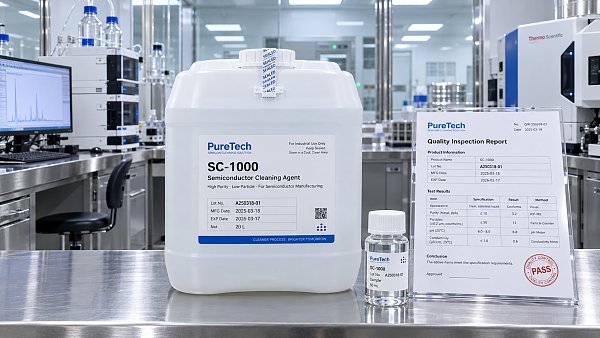
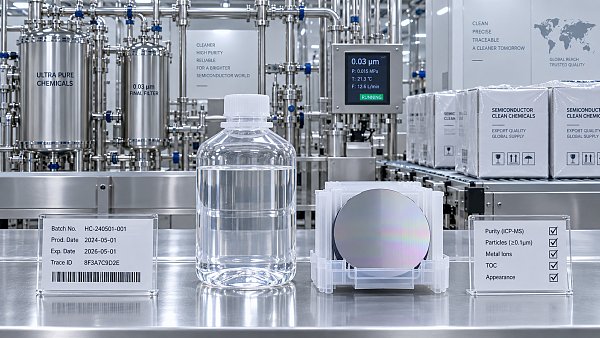
A certificate of analysis, or CoA, is useful only when its results can support your acceptance decision. Request a representative document during supplier evaluation, then require a lot-specific CoA for deliveries. Distinguish guaranteed specification limits from typical values, which may describe historical performance without creating a release commitment.
Ask whether each critical parameter is tested on every batch or covered through periodic monitoring. Neither approach should be assumed from a polished specification sheet. Where reduced testing is proposed, the supplier should explain the control strategy and how deviations are detected.
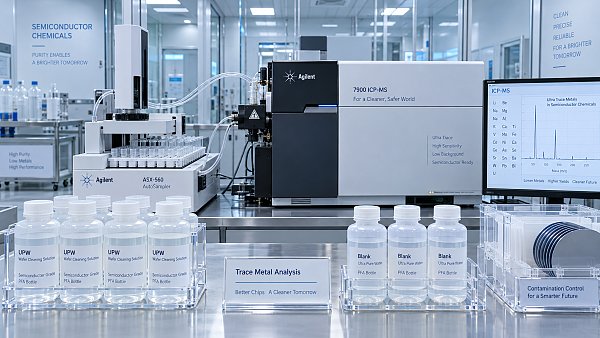
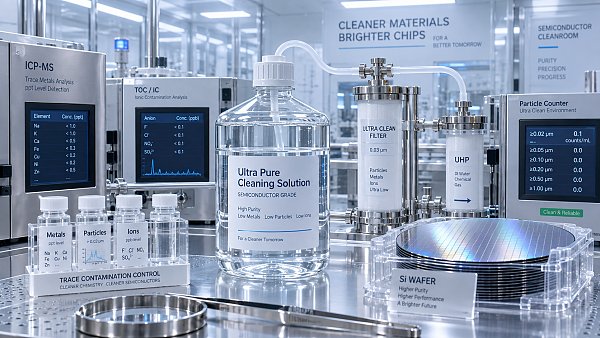
Method capability matters. ICP-MS may be appropriate for certain trace-metal measurements, ion chromatography for selected ions, and suitable particle counters for particle contamination. The method must still work reliably in the chemical matrix being tested. A method name alone does not establish adequate sensitivity or freedom from interference.
“Not detected” does not mean zero. Confirm detection or quantification limits and ensure they support your acceptance threshold. Also check whether reported concentrations are mass-based or volume-based; apparently matching numbers may use different bases. If your laboratory and the supplier’s laboratory disagree, establish a sampling and dispute-resolution procedure before commercial deliveries begin.
Qualify the cleaning process, not only the liquid
A cleaner can meet its chemical specification and still fail on the production line. It may remove the target soil but attack a coating, leave a film, foam excessively, or require more rinse water than the equipment can provide.
Run trials using representative components and realistic contamination. Include actual operating conditions and credible worst cases, such as longer exposure, aged soil, or the maximum intended bath loading. Examine dimensional or surface changes where relevant, rather than relying only on visual cleanliness.
Compatibility checks should cover the whole wetted system: tanks, pumps, tubing, valves, seals, filters, and dispensing connections. Compatibility charts are useful screening tools, but concentration, temperature, mechanical stress, and exposure duration can change the result.
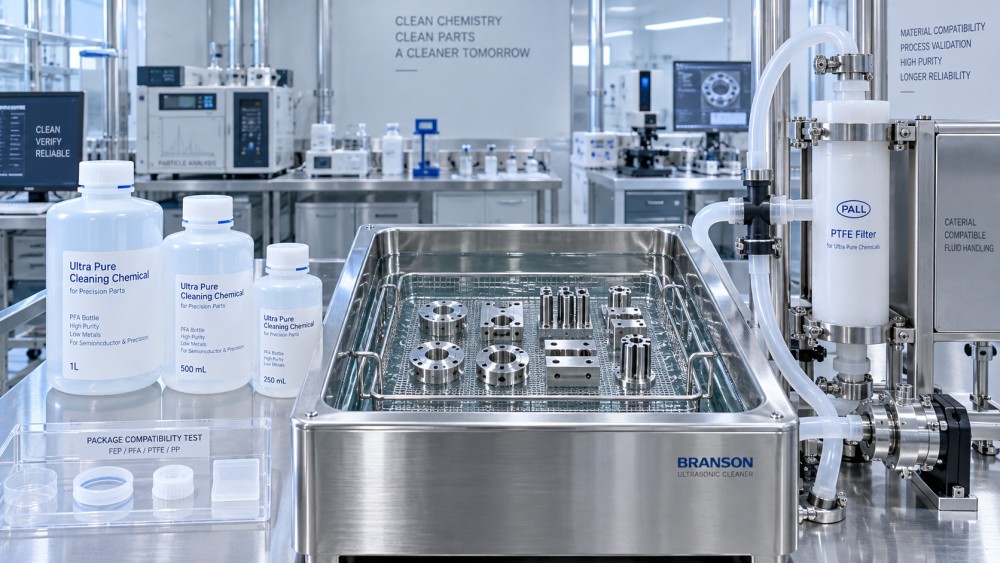
Do not overlook dilution and rinsing. Qualified concentrate can become contaminated through unsuitable water, dirty mixing vessels, or transfer equipment. Evaluate cleanliness after the complete wash, rinse, and drying sequence. For recirculating systems, agree how bath condition and replacement will be monitored; fresh-bath performance alone says little about useful operating life.
Treat packaging and delivery as part of the specification
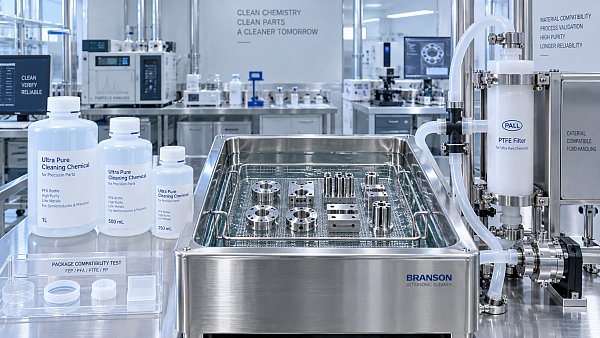
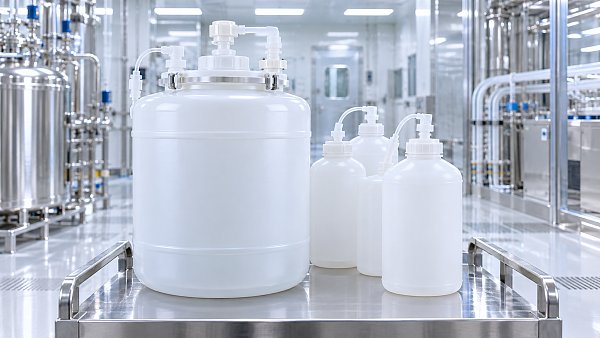
Purity at the manufacturing site is only the starting point. Containers, closures, liners, transfer fittings, and sampling tools can introduce particles or extractable substances. Packaging must be both chemically compatible and appropriate for the required cleanliness level.
Ask which container configuration was used for qualification and whether commercial shipments will use the same materials and preparation procedures. A laboratory sample in one package does not automatically qualify bulk delivery in another. Reusable containers need particular scrutiny over cleaning, inspection, previous service, and traceability.
Confirm storage temperature, light protection where relevant, unopened shelf life, and any supported period after opening. Some materials can absorb moisture, lose volatile components, or change through exposure to air. Shelf-life claims should therefore be tied to stated storage and packaging conditions.
Require enough remaining shelf life on arrival to cover incoming inspection and realistic consumption. Larger packs may lower the purchase price but increase contamination exposure or expiry losses when consumption is slow.
Assess supplier control and continuity before negotiating volume
Supplier qualification should establish who manufactures, purifies, fills, tests, and releases the product. When buying through a distributor, confirm whether it remains in the original sealed package or is repacked. Repacking introduces another operation that needs evaluation.
Request batch traceability and, where available, historical results for critical parameters. Several conforming lots provide more useful evidence of consistency than one selected sample, although they do not replace appropriate ongoing controls. Agree notification requirements for changes to raw materials, production location, purification, test methods, or packaging.
Documentation should include a current safety data sheet, an agreed specification, and applicable market or application declarations. A quality-system certificate may support supplier assessment, but it does not prove suitability for your process. Requirements for food-contact equipment, electronics, or other sensitive applications must be checked against the intended use and relevant local obligations.
Supply continuity deserves equally practical questions: What is the normal lead time? Does analytical release add time? Where is stock held? Can emergency supply come from a different plant, and would that require requalification? A proposed alternative source is not a qualified backup until its product and delivery configuration have been assessed.
Compare cost per accepted output—not price per container
Compare quotations on the same commercial and technical basis. Include freight, dangerous-goods charges where applicable, packaging deposits, testing, storage, disposal, and unusable inventory. For concentrates, compare validated working concentrations rather than assuming equal consumption.
The more useful economic measure is total cleaning cost per accepted component or production batch. That includes chemical use, bath life, rinse water, energy, labor, inspection, rework, and waste treatment. A less expensive cleaner may require extra rinsing; a higher-purity grade may offer no benefit if another part of the process already limits cleanliness.
Keep uncertain costs visible rather than disguising them as precise savings. Use trial results to estimate consumption and cycle time, then identify which assumptions need confirmation during controlled production use.
Global Fine Chemicals & Agrochemical Intelligence Network (FCAS) provides structured industry knowledge on specialty chemicals, industrial cleaning materials, application performance, safety, and supply-chain considerations. For purchasing decisions, that context helps teams connect product specifications with operating requirements; it does not replace supplier evidence or site qualification.
Before approving ultrapure cleaning chemicals, assemble one agreed package: the application specification, analytical acceptance criteria, trial results, approved packaging, documentation requirements, and supply terms. Resolve gaps before committing volume. If a supplier cannot explain what is measured, what is guaranteed, or how changes are controlled, a lower quotation is not enough reason to proceed.
Facing technical bottlenecks in manufacturing or looking for more efficient industrial solutions? Leave your details below and let the engineering experts at FCAS solve them for you.
We respect your privacy. Your information is strictly confidential.
Related News
 Ultra-pure Semiconductor CleanersHow to Select Non Ionic Semiconductor SurfactantsSelect non ionic semiconductor surfactants with confidence. Explore purity, rinseability, compatibility, and supplier checks for a reliable cleaning process.MORE+
 Ultra-pure Semiconductor CleanersHow to Choose Electronic Cleaning Chemicals for Corrosion ProtectionElectronic cleaning chemicals corrosion protection starts with the right selection. Discover how to assess compatibility, residues, drying, and safety.MORE+
 Ultra-pure Semiconductor CleanersWhat Affects the Bulk Price of Semiconductor Process Cleaners?Semiconductor process cleaners bulk price depends on purity, packaging, logistics, and more. Discover how to compare quotes and control costs.MORE+
 Ultra-pure Semiconductor CleanersHow to Evaluate Low Ionic Electronic Grade Cleaners for ChipmakingDiscover how to evaluate low ionic electronic grade cleaners for chipmaking, from surface residue and material compatibility to supplier qualification.MORE+
 Ultra-pure Semiconductor CleanersHow to Choose Water-Based Electronic Cleaning Chemicals That Rinse CleanChoose water based electronic cleaning chemicals that rinse clean. Learn how to compare residue removal, material compatibility, and rinse performance for reliable production.MORE+
 Ultra-pure Semiconductor CleanersHow to Select Aqueous Semiconductor Process Cleaners for CopperSelect aqueous semiconductor process cleaners for copper with confidence. Learn how to balance residue removal, corrosion control, and process compatibility for reliable results.MORE+
 Ultra-pure Semiconductor CleanersHow Can You Verify Purity When Buying Semiconductor Cleaners Wholesale?Buying semiconductor cleaners wholesale? Learn how to verify batch purity, assess test methods, and check packaging to reduce contamination risks and buy with confidence.MORE+
 Ultra-pure Semiconductor CleanersHow Are Trace Metals Measured in Low Metal Wafer Cleaning Solutions?How are trace metals measured in low metal wafer cleaning solutions? Explore ICP-MS, contamination controls, and validation essentials for confident batch-release decisions.MORE+
 Ultra-pure Semiconductor CleanersWhat Should You Check Before Buying Ultrapure Cleaning Chemicals?Buying Ultrapure Cleaning Chemicals? Discover key checks for purity, test results, packaging, and supplier reliability to reduce contamination risks and make smarter purchasing decisions.MORE+
 Ultra-pure Semiconductor CleanersHow Ultra-Pure Semiconductor Cleaners Improve Post-CMP Cleaning ResultsSemiconductor cleaners for post CMP cleaning improve residue removal, reduce contamination risk, and protect sensitive wafer surfaces for more reliable yields.MORE+
 Ultra-pure Semiconductor CleanersA Practical Guide to Semiconductor Process Cleaner Purity RequirementsSemiconductor process cleaners purity requirements explained: assess metals, particles, ions, residues, packaging, and batch consistency to protect yield and process reliability.MORE+
 Ultra-pure Semiconductor CleanersHow to Select Semiconductor Process Cleaners for Fab UseSemiconductor process cleaners for fab use: learn how to match chemistry, material compatibility, particle control, rinse performance, and tool requirements to protect yield.MORE+
 Ultra-pure Semiconductor CleanersHow Precision Cleaning Agents Protect Semiconductor Yield and ReliabilityPrecision cleaning agents for semiconductors protect yield and reliability by removing trace contaminants, safeguarding sensitive materials, and improving rinse performance.MORE+
 Ultra-pure Semiconductor CleanersHow to Assess a Semiconductor Wafer Cleaners ExporterSemiconductor wafer cleaners exporter assessment guide: compare purity controls, packaging, documentation, process fit, and supply reliability before sourcing.MORE+
 Ultra-pure Semiconductor CleanersHow to Verify Semiconductor Process Cleaners Purity RequirementsSemiconductor process cleaners purity requirements: learn how to verify trace metals, ions, particles, residues, COAs, and packaging controls for reliable wafer cleaning.MORE+
 Ultra-pure Semiconductor CleanersIs Semiconductor Cleaner Packaging Critical to Shelf Life?Is semiconductor process cleaner packaging critical for shelf life? Discover how packaging controls contamination, stability, and process-ready purity in high-sensitivity applications.MORE+
 Ultra-pure Semiconductor CleanersCan Electronic Cleaning Chemicals Be Used on Sensitive Circuit Boards?Can electronic cleaning chemicals be used on sensitive circuit boards? Discover safe cleaner selection, material compatibility, targeted application, and drying steps for reliable results.MORE+
 Ultra-pure Semiconductor CleanersHow to Verify Residue Control in Semiconductor Process CleanersSemiconductor Process Cleaners: learn how to verify ionic, organic, metal, and particle residue control with risk-based qualification, rinse testing, and ongoing process monitoring.MORE+
 Ultra-pure Semiconductor CleanersSelecting Low Residue Semiconductor Wafer Cleaners for Critical ProcessesLow residue semiconductor wafer cleaners: learn how to select compatible, rinse-ready solutions that protect critical processes, reduce contamination risk, and support reliable yield.MORE+
 Ultra-pure Semiconductor CleanersHow to Evaluate a Semiconductor Cleaners Factory for Ultra-Pure SupplySemiconductor cleaners factory evaluation guide: verify ultra-pure specifications, contamination controls, packaging integrity, and supply resilience before qualification.MORE+
 Ultra-pure Semiconductor CleanersHow to Evaluate an Electronic Grade Cleaners SupplierElectronic grade cleaners supplier evaluation made simple: learn how to assess purity, batch consistency, compatibility, documentation, packaging, and supply resilience.MORE+
 Ultra-pure Semiconductor CleanersIs Higher Purity Worth the Switch for Semiconductor Process Cleaners?Is it worth switching to semiconductor process cleaners with higher purity? Explore contamination control, compatibility, and cost factors to make a confident choice.MORE+
 Ultra-pure Semiconductor CleanersHow Semiconductor Cleaners for Post CMP Cleaning Prevent DefectsSemiconductor cleaners for post CMP cleaning help prevent particle defects, metal contamination, corrosion, and yield loss. Explore smarter qualification strategies.MORE+
 Ultra-pure Semiconductor CleanersHow to Compare Metal Cleaning Chemicals Wholesale OffersMetal cleaning chemicals wholesale: compare true in-use cost, cleaning performance, compatibility, compliance, and supply reliability to choose the best offer.MORE+
 Ultra-pure Semiconductor CleanersHow to Compare Semiconductor Process Cleaners from Different SuppliersHow to compare semiconductor process cleaners from different suppliers? Learn a practical method to assess purity, residue, compatibility, stability, and supplier support for safer qualification.MORE+
 Ultra-pure Semiconductor CleanersChoosing Degreasing Solvents for Electronic Components Without ResidueDegreasing solvents for electronic components: learn how to choose low-residue, compliant, and material-safe cleaners that improve reliability, reduce risk, and support smarter QC decisions.MORE+
 Ultra-pure Semiconductor CleanersHow Bulk Semiconductor Wafer Cleaners Improve Yield and Defect ControlBulk semiconductor wafer cleaners improve yield by reducing particles, residue, and repeatable defect risks. Learn what technical teams should verify before selecting a system.MORE+
 Ultra-pure Semiconductor CleanersHow to Choose Electronic Cleaning Chemicals for Sensitive PCB and Semiconductor LinesElectronic Cleaning Chemicals for sensitive PCB and semiconductor lines demand more than strong cleaning—they need low residue, material compatibility, and stable process control. Learn how to choose the right chemistry for reliable results.MORE+
 Ultra-pure Semiconductor CleanersWhat Semiconductor Process Cleaners Remove Most Effectively in Advanced Fab ProcessesSemiconductor Process Cleaners remove photoresist, etch residues, particles, and metal ions most effectively in advanced fabs—helping protect yield with precise, low-residue cleaning.MORE+