When Do High Spreading Adjuvant Systems Improve Leaf Coverage?
When Do High Spreading Adjuvant Systems Improve Leaf Coverage?
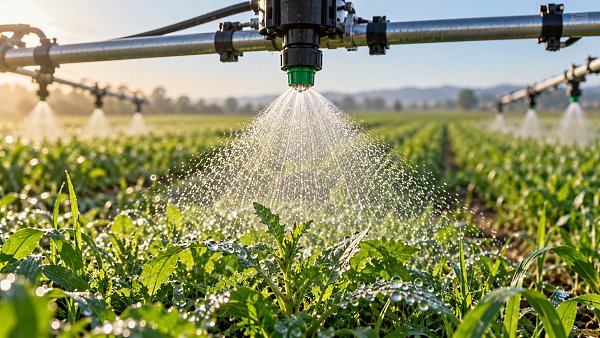
More spreading does not always mean better spray performance. High spreading adjuvant systems are most useful when poor wetting limits coverage on waxy or difficult-to-wet leaves—but excessive spreading can increase runoff and reduce retained deposits. Their value depends on leaf surface properties, formulation compatibility, adjuvant concentration, droplet behavior, and application conditions working together.
The practical question is not whether a droplet becomes wider. It is whether more active ingredient reaches the intended surface, remains there, and produces the required biological response without unacceptable crop injury. A visually impressive spreading demonstration answers only part of that question.
Start by identifying the coverage limitation
A spray can leave gaps for several reasons: droplets never reach the target, bounce on impact, remain as isolated beads, or move off the leaf after deposition. These failures need different corrections. Increasing spreading may help with beading, but it cannot reliably compensate for poor nozzle orientation, inadequate canopy penetration, or insufficient deposition on lower leaf surfaces.
Waxy foliage is a logical starting point for evaluation. Some brassicas and other crops with water-repellent surfaces can resist wetting by an otherwise suitable spray mixture. Yet crop identity alone is not enough. Leaf age, growth conditions, surface wax structure, hairs, and the difference between upper and lower surfaces can change the response.
Inspect deposition before choosing an adjuvant. If the intended leaves receive droplets but retain distinct beads with large untreated spaces, enhanced wetting deserves investigation. If those leaves receive almost no spray, application setup is the more immediate problem.
What high spreading systems change—and what they do not
High spreading adjuvant systems use surfactants or surfactant blends to alter liquid interfacial behavior. Certain organosilicone-based products can produce extensive spreading on suitable surfaces; other wetting-agent blends provide a more restrained response. The commercial description does not establish performance, and products within the same broad chemistry should not be assumed interchangeable.
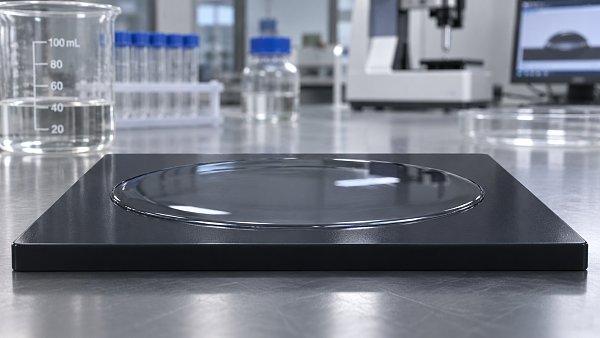
Contact angle helps describe wetting: a lower angle generally indicates that a deposited droplet wets that particular surface more readily. However, a static contact-angle measurement does not capture spray impact, rebound, leaf movement, or film drainage. Likewise, equilibrium surface tension alone cannot predict behavior during the short times involved in atomization and impact. Dynamic surface tension measurements at relevant surface ages can add useful information.
Spreading is also different from retention, adhesion, and uptake. A mixture may wet a larger area without leaving more active ingredient on the leaf. It may improve initial coverage but offer no additional resistance to rainfall. Some systems can facilitate stomatal infiltration under suitable conditions, but that is not a universal response or a substitute for uptake testing.
These distinctions explain why a low surface-tension value or a large footprint on a demonstration surface is insufficient evidence for field selection.
Where greater spreading is most likely to help
The strongest application case is a poorly wetted target where droplets arrive successfully and increased lateral coverage addresses a genuine biological requirement. For contact-active products, gaps in deposition can leave portions of the target unprotected. Improving coverage may therefore be valuable, provided deposits remain effective after drying.
The same reasoning does not transfer automatically to systemic products. Their performance depends on absorption, movement within the plant, and active-ingredient properties as well as coverage. A wider film may help in one formulation and provide little benefit in another. Foliar nutrients also need separate assessment because changes in penetration and localized salt exposure can affect crop safety.
A useful screening framework separates promising situations from problems that spreading alone cannot solve:
The tipping point: spreading beyond useful retention
As neighboring droplets spread and merge, they can form mobile liquid films. On inclined foliage, that liquid may move toward leaf tips and edges, collecting in some areas while leaving others with thinner deposits. The leaf can look thoroughly wet even while part of the applied dose is being lost.

Spreading the same retained mass across more surface also lowers the average active loading per unit of wetted area. That is not inherently harmful: broader distribution may be exactly what a contact treatment needs. But the resulting deposit must still deliver adequate biological activity. Coverage percentage cannot establish that on its own.
Weather changes this balance. Temperature, humidity, and wind affect evaporation and the period available for spreading and uptake. Dew or existing surface moisture can alter dilution and drainage. Stronger wetting or penetration can also increase phytotoxicity with sensitive crops or particular tank mixtures. Testing should include commercially relevant conditions rather than only favorable laboratory conditions.
Evaluate the complete spray mixture
The relevant test liquid is the final tank mixture, not adjuvant diluted in clean laboratory water. Pesticide formulations already contain surfactants, solvents, dispersants, or other auxiliaries. Adding another surfactant package may improve wetting, produce little change, or disturb physical stability.
Use representative water and record its pH, hardness, and other relevant characteristics. Follow the applicable mixing instructions and assess separation, precipitation, flocculation, persistent foam, and behavior during the expected holding period. A jar test is useful for detecting obvious incompatibility, but it cannot establish crop safety, spray quality, or efficacy. For microbial crop-protection products, viability may require its own compatibility assessment.
Concentration deserves particular attention when spray volume changes. At a fixed percentage concentration, reducing water volume reduces the amount of adjuvant applied per hectare. At a fixed adjuvant amount per hectare, reducing water volume increases its tank concentration. Those are different treatments and may produce different wetting and safety outcomes.
Stay within applicable pesticide and adjuvant label directions and local requirements. There is no universal concentration that delivers useful superspreading across crops, formulations, and application methods.
Build a test that separates appearance from delivery
A practical evaluation compares the existing spray mixture, a conventional wetting adjuvant where appropriate, and candidate high spreading systems at permitted concentrations. Keep active-ingredient dose, nozzle, pressure, application volume, and water quality controlled during the initial comparison. Then challenge promising treatments under realistic operating variation.
Use representative leaves, including relevant growth stages and both leaf surfaces where necessary. Intact plants preserve natural orientation better than flattened detached leaves. Record spreading over time rather than relying on a single photograph, and use replication sufficient to distinguish treatment effects from leaf-to-leaf variability.
- Coverage: Measure wetted or deposited area using a validated imaging or tracer method. Confirm that the tracer does not materially change mixture behavior.
- Retention and distribution: Quantify retained tracer or active ingredient, normalized to leaf area or applied dose, and assess uneven accumulation and runoff.
- Spray behavior: Check droplet-size distribution and impact behavior with the intended equipment. Do not assume a spreading adjuvant also reduces drift.
- Biological outcome: Measure the relevant pest-control, disease-control, or nutritional response alongside crop injury. Evaluate uptake or rainfastness separately when those benefits are claimed.
Water-sensitive paper can help diagnose spray distribution, but its staining response is not equivalent to wetting on a waxy leaf. Adjuvants can also change stain dimensions, complicating comparisons. Use it as an application aid rather than the sole proof of improved leaf coverage.
Set acceptance criteria before reviewing results. A candidate should address the identified coverage problem without unacceptable loss of retained dose, formulation stability, crop safety, or application consistency. If both coverage and retained mass change, biological testing must determine whether the trade-off is worthwhile.
Choose the operating window, not the largest footprint
Supplier discussions become more useful when requests extend beyond a surface-tension specification. Ask for the test substrate, complete mixture composition, concentration basis, water conditions, measurement timing, and any crop-safety or compatibility limitations. Evidence from a different formulation or leaf surface should be treated as a starting point, not direct validation.
Global Fine Chemicals & Agrochemical Intelligence Network (FCAS) brings formulation behavior, surfactant applications, safety requirements, and supplier evaluation into a practical business context. For this topic, that means distinguishing an attractive wetting demonstration from evidence relevant to a defined crop-protection program.
Select high spreading adjuvant systems when poor wetting is demonstrably limiting coverage and the improvement survives checks for retention, compatibility, efficacy, and crop safety. If the main constraint is target access or excessive liquid loading, adjust application practice first. The useful operating window is the one that delivers an effective deposit consistently—not the one that makes the widest wet patch.
Facing technical bottlenecks in manufacturing or looking for more efficient industrial solutions? Leave your details below and let the engineering experts at FCAS solve them for you.
We respect your privacy. Your information is strictly confidential.
Related News
 Non-ionic Surfactants & DefoamersHow Do Low Foam Ethoxylated Surfactants Perform in Cleaning?Discover how low foam ethoxylated surfactants balance cleaning power and foam control, and learn what to test before selecting one for your process.MORE+
 Non-ionic Surfactants & DefoamersChoosing Low Residue Surfactants for Hard Surface CleaningLow residue surfactants for hard surface cleaning: discover how to compare cleaning performance, rinseability, residue testing, and total cost.MORE+
 Non-ionic Surfactants & DefoamersEPA Adopts Human Airway Tissue Method for Surfactant Inhalation Risk AssessmentEPA surfactant inhalation risk assessment may use human airway tissue. Explore potential impacts for industrial cleaners and the details still to verify.MORE+
 Non-ionic Surfactants & DefoamersWhy Do Low Foam Linear Alcohol Ethoxylates Still Cause Foam?Why do low foam linear alcohol ethoxylates still foam? Discover common causes and practical troubleshooting tips to restore consistent performance.MORE+
 Non-ionic Surfactants & DefoamersHow to Measure Foam Control Efficiency in Cleaning DefoamersMeasure cleaning defoamers foam control efficiency with practical tests, dose-response analysis, and plant trials to find the right solution for your process.MORE+
 Non-ionic Surfactants & DefoamersWhat to Check Before Choosing a Low Foaming Surfactants FactoryChoosing a low foaming surfactants factory? Discover how to assess foam performance, quality controls, documentation, supply reliability, and true working costs.MORE+
 Non-ionic Surfactants & DefoamersHow Non Ionic Wetting Agents Improve Surface CoverageDiscover how non ionic wetting agents improve surface coverage in coatings, cleaning, and sprays, and learn how to select and test the right formulation.MORE+
 Non-ionic Surfactants & DefoamersDo Industrial Dispersants Require Special Handling During Transport?Do industrial dispersants require special handling during transport? Discover how to protect product quality, meet shipping rules, and prevent costly delays.MORE+
 Non-ionic Surfactants & DefoamersCalifornia OEHHA Proposes Proposition 65 Cancer Listing for PFHxA and Its SaltsPFHxA and its salts face a proposed California Proposition 65 cancer listing. Explore what the OEHHA notice could mean for suppliers and compliance.MORE+
 Non-ionic Surfactants & DefoamersWhat Should a Quote From an Industrial Wetting Agents Exporter Include?Choosing an industrial wetting agents exporter? Learn what a complete quote should include, from product specs and active content to shipping terms, compliance, and true landed costs.MORE+
 Non-ionic Surfactants & DefoamersBASF Starts Up Expanded APG Production in Cincinnati to Serve North American DemandBASF expands APG production in Cincinnati to meet North American demand. Explore how added capacity supports local supply of bio-based, biodegradable surfactants.MORE+
 Non-ionic Surfactants & DefoamersWhat Should You Check When Buying Low-Residue Surfactants in Bulk?Buying low residue surfactants wholesale? Learn how to verify residue claims, assess batch consistency, and compare total costs before your next bulk order.MORE+
 Non-ionic Surfactants & DefoamersBASF Raises Bid for Evonik to €24 a ShareBASF raises its Evonik takeover bid to €24 a share, valuing the offer above €11 billion. Explore the revised terms, German plant pledges and employment guarantees.MORE+
 Non-ionic Surfactants & DefoamersWhen Do High Spreading Adjuvant Systems Improve Leaf Coverage?Discover when high spreading adjuvant systems improve leaf coverage on waxy foliage, and learn how to balance wetting, retention, compatibility, and crop safety for better spray performance.MORE+
 Non-ionic Surfactants & DefoamersHow Do You Evaluate a Low Residue Surfactants Supplier for Cleaning?Evaluate a low residue surfactants supplier with proven residue tests, batch consistency, and rinse performance. Learn how to reduce cleaning risks and choose with confidence.MORE+
 Non-ionic Surfactants & DefoamersHow Do Tank Mix Adjuvant Systems Affect Herbicide Spray Performance?Explore how tank mix adjuvant systems affect herbicide coverage, drift, and uptake. Get practical tips to check compatibility, choose additives, and improve spray performance.MORE+
 Non-ionic Surfactants & DefoamersHow Does Ethoxylation Affect Octylphenol Ethoxylates as Emulsifiers?Choosing an octylphenol ethoxylates emulsifier? Discover how ethoxylation affects HLB, cloud point, and stability to select the right grade for your formulation.MORE+
 Non-ionic Surfactants & DefoamersWhen Do Industrial Wetting Agents Improve Pesticide Spray Coverage?Do industrial wetting agents improve pesticide spray coverage? Discover when they help, how to test retention and compatibility, and what to check for crop safety before selecting an adjuvant.MORE+
 Non-ionic Surfactants & DefoamersHow Do Amine Oxides Affect Foam Stability in Cleaning Formulations?Amine Oxides can enhance foam stability in cleaning formulations. Discover how surfactant blends, pH, and soil affect performance—and learn to balance lasting foam with easy rinsing.MORE+
 Non-ionic Surfactants & DefoamersHow to Choose Linear Alcohol Ethoxylates for Textile WettingChoose linear alcohol ethoxylates for textile wetting with confidence. Compare penetration, foam, and bath compatibility to improve uniformity and find the right grade for your process.MORE+
 Non-ionic Surfactants & DefoamersHow Do You Choose Low Foam Linear Alcohol Ethoxylates for Cleaning?Choose low foam linear alcohol ethoxylates with confidence. Discover how cloud point, foam testing, and rinseability help you achieve reliable cleaning and stable equipment performance.MORE+
 Non-ionic Surfactants & DefoamersHow to Choose Non Ionic Low Foaming Surfactants for CIP CleaningNon ionic low foaming surfactants for CIP cleaning: learn how to balance wetting, foam control, compatibility, and rinseability for reliable cleaning performance.MORE+
 Non-ionic Surfactants & DefoamersWhat Cationic Surfactants Do and Where They Are UsedCationic Surfactants deliver antimicrobial action, conditioning, antistatic control, and surface treatment benefits. Explore key uses, compatibility, and safe selection tips.MORE+
 Non-ionic Surfactants & DefoamersChoosing Defoamers for Agrochemical Formulations Without Reducing EfficacyDefoamers for agrochemical formulations: learn how to control foam while protecting stability, spray performance, and active ingredient efficacy.MORE+
 Non-ionic Surfactants & DefoamersWhy Mild Cocamidopropyl Betaine Matters in Gentle Cleansing FormulasMild cocamidopropyl betaine helps create gentler cleansers with creamy foam, balanced viscosity, and improved surfactant compatibility. Explore its formulation benefits.MORE+
 Non-ionic Surfactants & DefoamersHow to Compare Alkyl Polyglucosides for High-Performance CleanersAlkyl Polyglucosides guide: compare APG grades for wetting, grease removal, foam control, stability, and substrate safety in high-performance cleaners.MORE+
 Non-ionic Surfactants & DefoamersHow Low Residue Wet Cleaning Agents Improve Precision Cleaning ResultsLow residue wet cleaning agents improve precision cleaning with better wetting, efficient rinsing, reduced films, and reliable results for sensitive surfaces.MORE+
 Non-ionic Surfactants & DefoamersHow to Compare Degreasing Surfactants Bulk Price and PerformanceCompare degreasing surfactants bulk price beyond cost per kg. Evaluate dosage, foam, rinse quality, compatibility, and supplier reliability to choose the best-value cleaner.MORE+
 Non-ionic Surfactants & DefoamersWhy Silicone Cleaning Defoamers Prevent Foam-Related Production DelaysSilicone cleaning defoamers prevent foam-related production delays by stabilizing cleaning systems, improving pump performance, and protecting process efficiency.MORE+
 Non-ionic Surfactants & DefoamersHow Non Ionic Intermediates Improve Pesticide Formulation StabilityDiscover how non ionic pesticide formulation intermediates enhance emulsion stability, wetting, hard-water tolerance, and storage performance in crop protection products.MORE+
 Non-ionic Surfactants & DefoamersHow to Choose Low Foam Cleaning Auxiliaries for CIP SystemsLow foam cleaning auxiliaries for CIP systems: learn how to balance foam control, wetting, soil removal, compatibility, and rinseability for reliable cleaning results.MORE+
 Non-ionic Surfactants & DefoamersWhen Silicone Free Industrial Defoaming Agents Solve Process FoamSilicone free industrial defoaming agents control persistent process foam while protecting coating quality, cleaning performance, and downstream compatibility. Explore smarter selection.MORE+
 Non-ionic Surfactants & DefoamersDo Industrial Dispersants Require Special Transport Handling?Do industrial dispersants require special handling during transport? Learn how SDS classification, packaging, temperature control, and freight modes determine safe, compliant delivery.MORE+
 Non-ionic Surfactants & DefoamersAre Cleaning Defoamers Compatible With Acidic Cleaning Solutions?Are cleaning defoamers compatible with acidic cleaning solutions? Discover how to select acid-stable, low-residue defoamers for reliable foam control, cleaner rinsing, and safer industrial performance.MORE+
 Non-ionic Surfactants & DefoamersDo Detergent Builders Improve Cleaning Efficiency in Cold Water?Do detergent builders increase cleaning efficiency in cold water? Discover how they control hardness, reduce redeposition, and optimize cold-water detergent performance.MORE+
 Non-ionic Surfactants & DefoamersHow to Choose Industrial Dispersants for Water-Based CoatingsHow to choose industrial dispersants for water-based coatings? Explore pigment, binder, milling, rheology, VOC, and stability factors for smarter formulation decisions.MORE+
 Non-ionic Surfactants & DefoamersLow-Foaming Nonionic Surfactants for CIP Cleaning: Selection by Soil LoadLow foaming nonionic surfactants for CIP cleaning: learn how to match wetting, emulsification, temperature stability, and rinseability to light, heavy, protein, and mixed soil loads.MORE+
 Non-ionic Surfactants & DefoamersWhat Are Octylphenol Ethoxylates and Where Are They RestrictedOctylphenol Ethoxylates explained: explore their uses, environmental risks, global restrictions, compliance challenges, and practical replacement strategies.MORE+
 Non-ionic Surfactants & DefoamersAre Octylphenol Ethoxylates Still Suitable for Industrial CleanersExplore whether octylphenol ethoxylates for industrial cleaners still deliver reliable performance amid evolving regulations, wastewater demands, and safer formulation alternatives.MORE+
 Non-ionic Surfactants & DefoamersHow Ethoxylated Surfactants Improve Wetting and Cleaning in Textile ProcessingDiscover how ethoxylated surfactants for textile processing enhance wetting, oil removal, foam control, and rinse performance for reliable fabric quality.MORE+