How to Choose Non Ionic Low Foaming Surfactants for CIP Cleaning
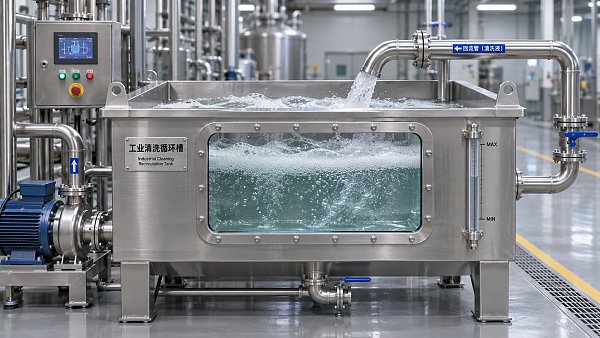
A CIP system can appear to be working well while leaving behind a problem that only becomes visible later: reduced product quality, a failed rinse verification, unstable downstream processing, or unexpected soil redeposition in a hard-to-clean circuit. In these situations, choosing a surfactant only because it is labeled “low foam” is rarely enough. Foam control matters because pumps, spray devices, return lines, and recovery tanks can be disrupted by excessive air entrainment, but it does not prove that the chemistry can wet deposits, lift soils, and rinse away cleanly.
For CIP cleaning, the right non ionic low foaming surfactants are selected by matching the surfactant architecture to the soil, cleaning temperature, water chemistry, mechanical action, and rinse standard of the specific system. Start with cleaning performance and residue control, then verify foam behavior under real circulation conditions. A product that stays low foaming in a beaker may behave differently in a high-shear return loop, while a strong degreaser may be unsuitable if it leaves a difficult-to-rinse film on a high-purity surface.
Begin with the cleaning failure, not the surfactant name
Technical evaluations are more reliable when they start with the condition that needs correction. CIP soils are rarely identical across a facility. A process may involve fatty residues, proteins, starches, mineral scale, pigments, oils, fermentation residues, processing aids, or a mixed soil that changes during production. The same surfactant can assist one cleaning stage and offer little value in another.
For example, poor removal of hydrophobic oil or grease often points to a need for rapid wetting and emulsification. Deposits containing protein or carbohydrate may depend more heavily on alkali concentration, time, temperature, and turbulence; the surfactant supports penetration and soil suspension rather than replacing the alkaline cleaner. Mineral deposits generally require an acidic cleaning stage, where compatibility with acid and dissolved salts becomes central. Trying to use one low-foam nonionic product for every stage can create an unnecessarily complicated cleaning program.
Before comparing supplier samples, define where the failure occurs:
- Does soil remain on the tank wall, spray shadow, gasket area, heat-transfer surface, or return line?
- Is the problem incomplete wetting at the start of the wash cycle, slow soil release, or redeposition during drainage?
- Does foam develop in the supply tank, at the return, or only after soil has entered the cleaning solution?
- Is rinse water taking too long to reach an acceptable conductivity, pH, or residue-control endpoint?
- Has cleaning performance changed after a switch in water source, process temperature, product formulation, or equipment configuration?
These observations help distinguish a surfactant-selection issue from problems caused by inadequate flow, blocked spray devices, insufficient concentration, incompatible defoamer use, or an unsuitable cleaning sequence.
Evaluate foam under CIP conditions rather than static conditions
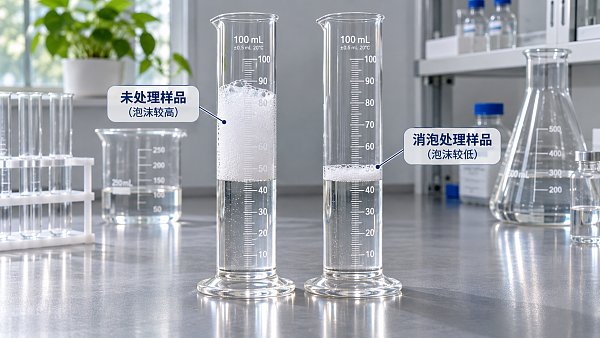
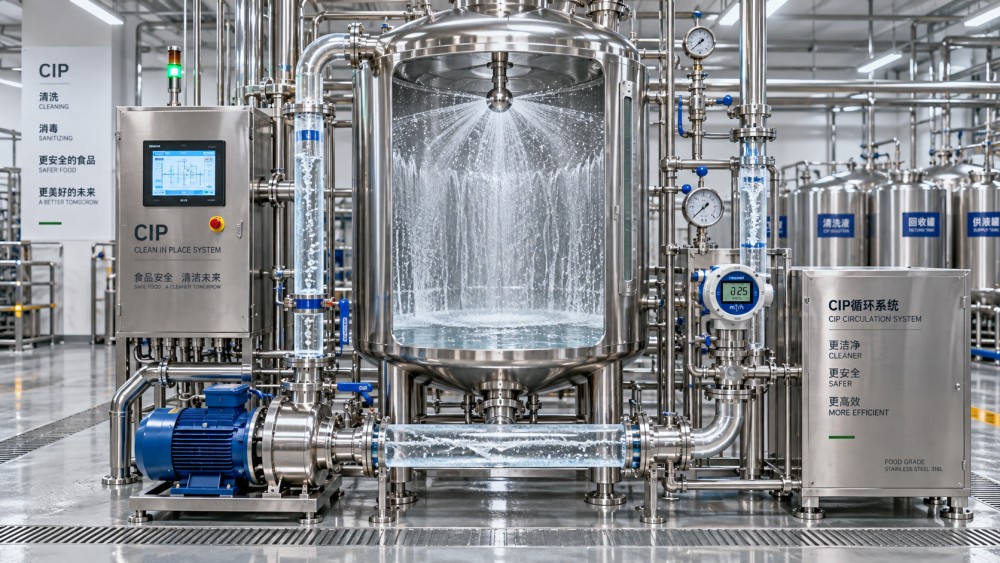
“Low foaming” is a functional description, not a complete performance specification. In CIP, foam behavior is affected by recirculation velocity, pump design, air leaks, spray impact, return-line geometry, soil load, water hardness, and temperature. A surfactant may look acceptable in still solution but foam excessively after repeated circulation or when organic soil changes the interface.
Ask suppliers how foam was evaluated and whether the test resembles the intended process. Useful comparisons should consider the expected use concentration, water quality, operating temperature, and the presence of representative soil. It is also important to observe foam collapse after circulation stops. Persistent foam can delay draining and rinsing even when the initial foam volume appears modest.
Low foam should not be achieved at the expense of wetting. Some formulations suppress foam well but spread too slowly over a dry or partially drained surface. In a system with spray balls, impingement and mechanical force may compensate. In complex piping, dead legs, heat exchangers, or equipment with areas of limited turbulence, fast solution contact can be more important. The goal is controlled foam with sufficient dynamic wetting, not the lowest possible foam number in isolation.
Match nonionic chemistry to the duty of the wash stage
Nonionic surfactants are widely used in CIP formulations because they can provide detergency, wetting, emulsification, and soil dispersion without the strong foam often associated with some anionic surfactants. Their performance, however, varies substantially with hydrophilic-lipophilic balance, molecular structure, cloud point behavior, and interaction with builders, alkali, acids, solvents, and defoamers.
For alkaline degreasing, an evaluator usually needs a surfactant that remains effective in the intended caustic range and at operating temperature. It should help release oily soils without forming a stable emulsion that becomes difficult to rinse or overwhelms separation and wastewater treatment. In some operations, strong oil emulsification is desirable because it keeps soils suspended until discharge. In others, controlled splitting may be preferred to support phase separation. The correct choice depends on how the spent solution is handled, not just on cleaning speed.
Acid stages require separate scrutiny. A nonionic surfactant used in an acid descaling cleaner must remain stable in that formulation and should not cause haze, phase separation, or loss of activity when salts enter the wash liquor. Where the acid stage follows an alkaline wash, carryover may alter the formulation’s behavior. Compatibility should therefore be checked in the actual sequence, not only in fresh laboratory blends.
High-temperature applications need special attention. Certain nonionic materials can show temperature-dependent solubility changes, including clouding or separation at elevated temperature. That behavior may reduce cleaning consistency, create residues, or affect metering reliability. A surfactant that performs at room temperature should not be assumed to remain homogeneous and active throughout a hot CIP cycle.
Rinseability is often the deciding criterion
A surfactant can remove soil effectively and still be a poor choice for a system with stringent residue requirements. This is particularly relevant in food-related processing, pharmaceutical-adjacent operations, electronics cleaning, and any process where a residual film may affect the next batch, surface energy, sensor response, coating adhesion, or final product quality.
Rinseability depends on more than water solubility. Dose level, water temperature, circulation pattern, surface finish, soil type, and the rest of the cleaning formulation all influence how quickly the system clears. A surfactant that forms a tenacious film on a polished surface may require more rinse water or longer rinse time. That additional utility demand can outweigh a lower purchase cost.
Assess the full wash-and-rinse sequence. After the detergent circulation stage, observe drainage behavior and verify whether the rinse removes residual alkalinity, surfactant-related film, turbidity, or foam at the expected point. Where the operation uses conductivity or pH as a rinse indicator, remember that these measures may not independently confirm the absence of every organic surfactant component. The validation method should be appropriate to the process risk and internal quality requirements.
Water hardness and soil loading can change the ranking
Supplier data generated in soft or deionized water may not predict performance in a plant using variable municipal, borehole, recycled, or softened water. Hardness ions can reduce the effectiveness of some cleaning components, while dissolved salts and soil particles can shift the balance between detergency, dispersion, and foam. The effect is not always a simple loss of cleaning power; a formulation may also become less stable or more difficult to rinse.
Test with the actual water source whenever possible. Include realistic conditions such as temperature variation, expected concentration range, and a representative level of process soil. A clean-system circulation test is useful for understanding baseline foam and material compatibility, but it cannot show how the surfactant behaves after it has collected fats, proteins, minerals, or particulate contamination.
Soil loading also affects the decision on concentration. Increasing dosage may improve wetting at first, then produce diminishing cleaning gains while increasing rinse demand or foam sensitivity. The preferred operating range should have enough tolerance for normal process variation rather than working only at a narrow laboratory optimum.
Check compatibility beyond stainless steel
CIP loops often contain more than stainless steel. Gaskets, hoses, valve seats, seals, sight glasses, plastics, coatings, pump components, and instrumentation can all be exposed repeatedly to the cleaning solution. The relevant question is not whether the neat surfactant is generally compatible with a material, but whether the complete cleaning formulation is compatible at the intended concentration, temperature, contact time, and cycle frequency.
Alkalinity and temperature may be the dominant drivers of seal degradation, but the surfactant can influence swelling, extraction, permeability, or stress cracking in certain polymers. Solvent-containing formulations require additional caution. Review the equipment manufacturer’s material recommendations and compare them with the supplier’s technical information. Where exposure is demanding or equipment is high value, controlled coupon testing or a limited monitored trial is more useful than relying on generic compatibility statements.
Use a staged evaluation instead of selecting from a data sheet
A practical selection process does not need to become unnecessarily long, but it should narrow uncertainty in the right order. First, screen candidate materials for formulation compatibility: appearance, phase stability, pH behavior, and performance at the proposed concentration. Remove products that cannot remain stable in the cleaning chemistry or temperature window.
Next, compare candidates under circulation conditions. This stage should look at foam generation, foam persistence, wetting, visible soil removal, and drainage. Use representative water and, where feasible, representative soil. A candidate that performs well in a simple immersion test may not behave similarly through pumps, bends, and spray devices.
Then examine rinse performance and materials exposure. Confirm that the product does not create an unacceptable residue burden and does not introduce operational concerns in seals, hoses, tanks, or wastewater handling. Finally, evaluate supply consistency: specification control, batch documentation, packaging suited to the site’s handling method, storage guidance, and the availability of technical information needed for internal approval.
Questions that reveal whether a supplier understands the application
- What is the recommended use range in alkaline, neutral, and acidic formulations?
- At which temperatures has low-foam behavior been observed, and under what circulation conditions?
- Is there a known cloud point or phase-stability limit relevant to the intended process?
- How does the product perform in hard water and in the presence of salts or oily soils?
- What information is available on rinse behavior and compatibility with common wetted materials?
- Are changes in physical properties, active content, or impurity profile controlled between batches?
These questions are more useful than asking which product is “best.” The best option for a high-temperature caustic wash with oily deposits may be unsuitable for a low-temperature rinse-sensitive system or an acid circulation stage.
Do not use a defoamer to hide a poor surfactant choice
Defoamers can be necessary in some cleaning systems, particularly where aeration is unavoidable. However, adding a defoamer before understanding the surfactant behavior can obscure the root cause. An excessive amount may reduce wetting, interfere with cleaning consistency, or create its own residue and rinse issues. It can also make a marginal formulation appear acceptable during initial trials but unstable when process conditions change.
First determine whether foam originates from the surfactant, an air leak, excessive return turbulence, contamination, incorrect dosage, or a change in soil composition. If a defoamer remains necessary, assess it as part of the complete formulation under the same cleaning and rinse conditions. The interaction between nonionic surfactant, defoamer, and soil should be verified rather than assumed.
The final choice should be a surfactant system that maintains low and manageable foam while still delivering the required wetting, cleaning, drainage, and rinse performance at realistic operating conditions. That balance is what makes a CIP chemistry repeatable rather than merely effective in a simplified test.
Related News
 Supercritical CO2 Essential OilsHow Are Food Grade Essential Oil Extracts Made with CO2?Discover how food grade essential oil extracts are made with CO2, what shapes their flavor, and how to assess safety and suitability for food applications.MORE+
 Ultra-pure Semiconductor CleanersHow to Choose Electronic Cleaning Chemicals for Corrosion ProtectionElectronic cleaning chemicals corrosion protection starts with the right selection. Discover how to assess compatibility, residues, drying, and safety.MORE+
 Microencapsulated FragrancesHow Can Microencapsulation Help Essential Oil Blends Last Longer?Essential Oil Blends can retain their aroma longer with the right microencapsulation strategy. Explore carrier choices, release mechanisms, and stability testing.MORE+
 Synthesis CAPEX & Yield ROIWhat Affects the Triple Superphosphate Bulk Price?Explore what affects triple superphosphate bulk price, from raw materials and freight to quality and demand, and learn how to compare offers with confidence.MORE+
 Antioxidants & Natural PreservativesHow Do Food Preservation Ingredients Extend Shelf Life?Food Preservation Ingredients extend shelf life by slowing microbial growth and oxidation. Discover how to select and validate the right solution for your product.MORE+
 EPA FIFRA & FDA GRAS RegsEPA Issues Cancellation Order Affecting Certain Pesticide RegistrationsEPA pesticide registration cancellations may affect select products and supply chains. Learn what businesses should verify before making purchasing decisions.MORE+
 Chelated Trace Element FertilizersHow to Apply Single Superphosphate for Sulfur Deficient SoilLearn how to apply single superphosphate for sulfur deficient soil, calculate the right rate, and balance phosphorus needs for healthier crops.MORE+
 Heavy-duty Industrial DegreasersHow to Choose Parts Wash Cleaners for Spray WashersChoose parts wash cleaners for spray washers with confidence. Compare cleaning power, material compatibility, foam control, safety, and supplier support.MORE+
 Polymer-Coated Water Soluble NPKHow to Use Calcium Nitrate Fertilizer in Drip IrrigationCalcium Nitrate Fertilizer in drip irrigation: learn how to calculate doses, mix stock solutions, prevent clogged emitters, and support healthy crops.MORE+
 Micelle Fluidics & ChelationHow Venturi Fertigation Systems Control Fertilizer InjectionDiscover how venturi fertigation systems control fertilizer injection, and learn how pressure, sizing, and calibration affect dosing accuracy.MORE+
 Nano-microcapsule FormulationsHow to Choose a Capsule Suspension Pesticides SupplierChoose a capsule suspension pesticides supplier with confidence. Compare formulation quality, regulatory documentation, delivery reliability and total costs.MORE+
 Polymer-Coated Water Soluble NPK2026 Fertilizer Price Swings Shape 2027 Planting Decisions2026 fertilizer price swings are shaping 2027 planting decisions. Explore nutrient cost pressures and practical strategies for planning purchases.MORE+
 EPA FIFRA & FDA GRAS RegsEPA Reviews Glyphosate Safety, With Decision Expected in Early 2027EPA glyphosate safety review: Discover what the decision expected in early 2027 could mean for health, the environment, and businesses.MORE+
 Targeted Bio-pesticides & APIsHow Are Fungicide APIs Used in Crop Protection Products?Fungicide APIs for crop protection power disease control products. Discover how formulation, application and resistance management affect results.MORE+
 Ultra-pure Semiconductor CleanersWhat Affects the Bulk Price of Semiconductor Process Cleaners?Semiconductor process cleaners bulk price depends on purity, packaging, logistics, and more. Discover how to compare quotes and control costs.MORE+
 Microencapsulated FragrancesHow to Choose a Fragrance Capsules Manufacturer for Your ProductChoose the right fragrance capsules manufacturer with practical tips on formulation testing, quality specifications, compliance, and supply reliability.MORE+
 Targeted Bio-pesticides & APIsHow to Evaluate Quality Control at a Botanical Insecticides FactoryEvaluate a botanical insecticides factory with practical checks for sourcing, testing, batch traceability and stability. Learn how to identify quality risks before choosing a supplier.MORE+
 Herbicides & Plant Growth RegulatorsHow Do Herbicide Intermediates Affect Production Yield?Discover how Herbicide Intermediates influence production yield, from impurity control to product recovery, and learn how to evaluate suppliers with confidence.MORE+
 EPA FIFRA & FDA GRAS RegsEPA Seeks Comment on Voluntary Pesticide Registration CancellationsEPA pesticide registration cancellations are open for public comment. Discover what the proposed changes could mean for product uses, compliance and supply.MORE+
 Polymer-Coated Water Soluble NPKRecord Fertilizer Prices Could Shape 2027 US Corn and Soybean Planting DecisionsRecord fertilizer prices could influence 2027 US corn and soybean planting decisions. Explore the potential impact on farm budgets and acreage.MORE+
 Non-ionic Surfactants & DefoamersChoosing Low Residue Surfactants for Hard Surface CleaningLow residue surfactants for hard surface cleaning: discover how to compare cleaning performance, rinseability, residue testing, and total cost.MORE+
 Ultra-pure Semiconductor CleanersHow to Evaluate Low Ionic Electronic Grade Cleaners for ChipmakingDiscover how to evaluate low ionic electronic grade cleaners for chipmaking, from surface residue and material compatibility to supplier qualification.MORE+
 Zero-Calorie Sweeteners & AcidulantsHow to Use High Sweetness Sucralose in Reduced-Sugar DrinksDiscover how to use high sweetness sucralose in reduced-sugar drinks, with practical tips for balancing taste, mouthfeel, stability, and compliance.MORE+
 Herbicides & Plant Growth RegulatorsHow to Choose Crop Protection Chemicals for Effective Weed ControlChoose Crop Protection Chemicals with confidence. Discover how to match herbicides to weeds, crop stages, field conditions, and resistance risks for effective control.MORE+
 Hydrocolloids & EmulsifiersHow Do Hydrocolloid Gums Improve Texture and Stability in Foods?Discover how hydrocolloid gums improve food texture and stability, and learn how to choose the right gum for your formulation.MORE+
 Polymer-Coated Water Soluble NPKUSDA Announces $1.34 Billion Investment to Expand Domestic Fertilizer SupplyUSDA’s $1.34 billion fertilizer investment targets eight domestic projects. Discover what the plans could mean for suppliers, buyers and future sourcing.MORE+
 Non-ionic Surfactants & DefoamersEPA Adopts Human Airway Tissue Method for Surfactant Inhalation Risk AssessmentEPA surfactant inhalation risk assessment may use human airway tissue. Explore potential impacts for industrial cleaners and the details still to verify.MORE+
 Polymer-Coated Water Soluble NPKHow to Choose a Potassium Sulfate Fertilizer SupplierChoose a potassium sulfate fertilizer supplier with confidence. Compare product quality, delivered costs, reliability, and contract terms before you buy.MORE+
 Micelle Fluidics & ChelationHow to Use Cocamidopropyl Betaine for Hand Soap FormulasDiscover how to use cocamidopropyl betaine for hand soap, balance surfactants, adjust pH and viscosity, and troubleshoot common formulation issues.MORE+
 Antioxidants & Natural PreservativesWhat Drives Antioxidant Blends Bulk Price Changes?Discover what drives antioxidant blends bulk price changes, from ingredient costs to delivery terms, and learn how to compare quotes for better value.MORE+
 Non-ionic Surfactants & DefoamersWhy Do Low Foam Linear Alcohol Ethoxylates Still Cause Foam?Why do low foam linear alcohol ethoxylates still foam? Discover common causes and practical troubleshooting tips to restore consistent performance.MORE+
 Maillard Reaction Savory FlavorsHow Does an Ethyl Maltol Factory Control Product Quality?How does an ethyl maltol factory ensure consistent quality? Explore testing, contamination controls, traceability, and key questions to ask suppliers.MORE+
 Herbicides & Plant Growth RegulatorsBayer Launches First Group 12 Pre-Emergence Herbicide Convintro in the USBayer's Convintro brings a Group 12 pre-emergence herbicide option to US corn and soybean growers. Explore its potential role and key purchasing considerations.MORE+
 Herbicides & Plant Growth RegulatorsCalifornia Report Shows Continued Decline in High-Risk Pesticide UseCalifornia pesticide use reportedly declined 28% for carcinogen-classified products. Explore what this could mean for suppliers, buyers and market access.MORE+
 Controlled-Release ThermodynamicsHow to Select a Microcrystalline Cellulose Excipient for TabletsChoose the right microcrystalline cellulose excipient for tablets. Compare MCC grades, processing properties, and supplier documentation with this practical guide.MORE+
 Targeted Bio-pesticides & APIsHow Microbial Insecticides for Public Health Control MosquitoesDiscover how microbial insecticides for public health control mosquito larvae, and learn how to choose formulations and improve field results.MORE+
 Non-ionic Surfactants & DefoamersHow to Measure Foam Control Efficiency in Cleaning DefoamersMeasure cleaning defoamers foam control efficiency with practical tests, dose-response analysis, and plant trials to find the right solution for your process.MORE+
 Hydrocolloids & EmulsifiersHow to Use Hydrocolloid Stabilizer Blends for SaucesDiscover how to use hydrocolloid stabilizer blends for sauces to improve texture, prevent separation, and achieve consistent results from trial to production.MORE+
 Maillard Reaction Savory FlavorsHow Spray Dried Flavors Retain Flavor in Dry Food MixesDiscover how Spray Dried Flavors preserve aroma in dry food mixes, and learn how formulation, storage and packaging influence flavor quality.MORE+
 Micelle Fluidics & ChelationHow to Evaluate an Industrial Dispersants ManufacturerEvaluate an industrial dispersants manufacturer with confidence. Learn how to assess formulation performance, batch consistency, quality controls and supply risk.MORE+