How to Choose Linear Alcohol Ethoxylates for Textile Wetting
A fabric can pass a laboratory wetting test yet still enter a scouring range unevenly saturated, producing inconsistent absorbency or patchy downstream dyeing. When selecting linear alcohol ethoxylates for textile wetting, shortlist grades by their performance in the actual bath: penetration speed, tolerance to alkali and electrolytes, foam under circulation, and removal during rinsing. Average ethoxylation level alone is not a reliable selection rule.
The practical starting point is to define the fabric, liquor composition, temperature profile, and available contact time. Then compare candidate surfactants at equal active concentration against an established reference. A suitable grade must wet within the process window without creating unstable dispersions, persistent foam, or residues that interfere with later treatment.
Define the wetting problem before comparing grades
“Poor wetting” can describe several different failures. Water may bead on the fabric surface, penetrate slowly into yarn bundles, or reach different areas unevenly. These symptoms do not necessarily require the same surfactant adjustment. Entrained air, compact fabric construction, residual size, cotton waxes, and synthetic-fiber spin finishes can each limit penetration.
Record the conditions that a candidate must handle:
- Substrate: fiber composition, fabric construction, preparation history, and the presence of size, oils, waxes, or finishes.
- Process window: bath temperature, heating sequence, contact time, liquor ratio, and padding or circulation conditions.
- Bath chemistry: alkali, salts, water hardness, oxidants, sequestrants, enzymes, and other auxiliaries.
- Acceptance criteria: wetting time, uniformity of liquor uptake, foam limits, rinsability, and absorbency after preparation.
For a continuous padding operation, rapid initial penetration may dominate because contact time is short. In a batch scouring process, sustained performance during heating and soil loading may matter more. A grade optimized for one duty should not automatically become the standard for both.
Read alcohol chain length and EO level together
Linear alcohol ethoxylates contain a hydrophobic alcohol-derived chain and a hydrophilic ethylene oxide, or EO, segment. Their behavior depends on both portions, as well as the distributions within the commercial product. Two grades described by the same average EO number can differ in solubility, adsorption, foam, and temperature response.
Alcohol chain distribution sets part of the balance
At a comparable EO level, increasing the alcohol chain length generally increases hydrophobic character. This can support association with oily soils, but it may also reduce water compatibility. Shorter-chain materials are generally more water-compatible under comparable conditions, although rapid fabric penetration cannot be predicted from chain length alone.
Ask for the alcohol carbon-number range rather than relying on a broad product-family description. Also confirm whether the material is genuinely linear and whether it is a single alcohol ethoxylate or a formulated blend. Blends may be useful, but their performance cannot be attributed solely to the stated EO average.
EO level is a screening variable, not a ranking system
Higher ethoxylation generally increases hydrophilicity and, within a comparable product family, tends to raise cloud point. Lower-EO grades may provide useful interfacial activity but can be harder to incorporate into an aqueous bath. Excessive emphasis on solubility can also miss the actual requirement: fast adsorption and penetration during the available contact time.
Use hydrophilic–lipophilic balance, where supplied, to narrow candidates—not to declare a winner. It does not capture dynamic wetting, electrolyte effects, or the interaction between the surfactant and the specific textile surface.
EO distribution also deserves attention. Narrow-range and conventional distributions can behave differently even at similar average EO levels. Do not assume that a narrow distribution guarantees faster wetting or lower foam; request comparative application data and verify it under your conditions.
Interpret cloud point in the complete working bath
Cloud point is particularly relevant because ethoxylated nonionic surfactants become less hydrated as temperature rises. However, a cloud point measured in water at a stated concentration is not the operating limit of a textile formulation. Alkali, electrolytes, solvents, other surfactants, and concentration can shift the phase behavior.
Compare supplier values only when the methods match. A result measured in water cannot be treated as directly equivalent to one measured in a specified salt solution or solvent mixture. Request the test medium, surfactant concentration, and endpoint definition alongside the number.
Operation near or above cloud point is not automatically unacceptable; some formulations deliberately exploit temperature-dependent nonionic behavior. Nevertheless, a wetting application requires evidence that the surfactant remains sufficiently distributed and does not deposit on the textile. Visible clarity alone is neither a pass criterion nor a complete performance measure.
Separate rapid penetration from low surface tension
An equilibrium surface-tension value describes an interface after sufficient time has passed. A fast-moving textile process repeatedly creates fresh interfaces, where surfactant adsorption may not yet be complete. Dynamic surface tension at relevant surface ages can therefore help explain why grades with similar equilibrium values perform differently.
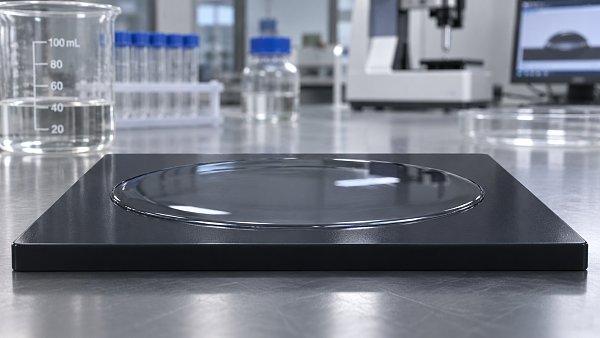
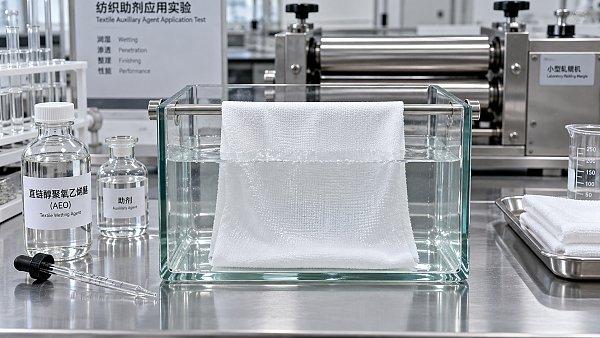
It still cannot replace a textile test. Fabric penetration also depends on pore structure, contact angle, trapped air, and contamination. A standardized skein or canvas wetting test can provide repeatable screening, but the ranking should be checked on representative production fabric.
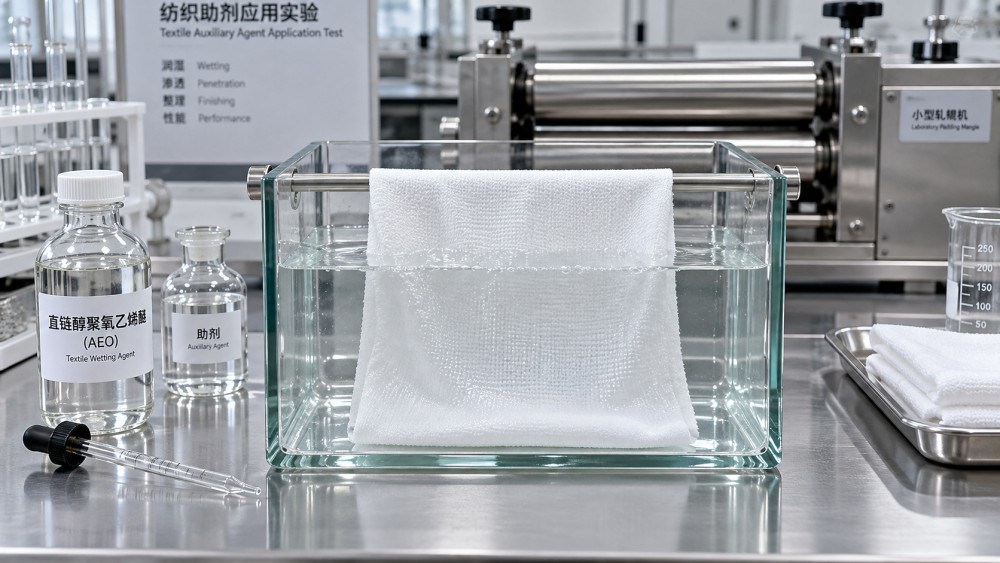
For short-contact padding, assess uptake after the available immersion period and check uniformity across the sample. For scouring, distinguish initial wet-out from absorbency after treatment and rinsing. Improved final absorbency may reflect better wax removal rather than faster initial wetting; both are useful, but they answer different selection questions.
Avoid compensating for slow penetration simply by raising dosage. Once additional surfactant produces little improvement, higher use levels may mainly increase foam, rinse demand, and carryover.
Match foam and compatibility to the equipment
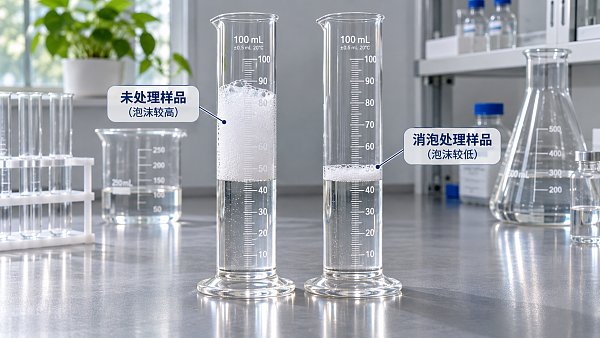
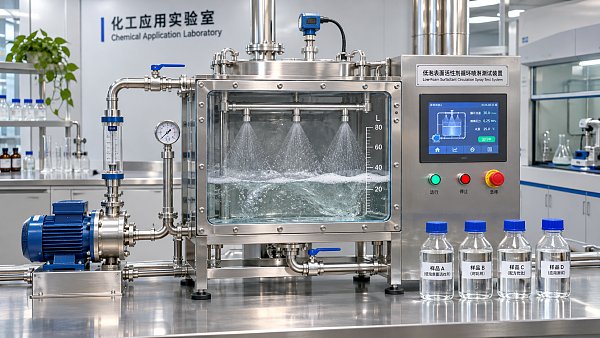
Linear alcohol ethoxylates are not inherently low-foam under every condition. Foam depends on molecular structure, concentration, temperature, bath contamination, and mechanical energy. A quiet beaker may hide problems that appear in jet equipment, pump loops, or spray-assisted systems.
Use a foam test that reproduces the relevant agitation mechanism, and record both foam generation and collapse after agitation stops. Persistent foam can affect circulation, displace working liquor, and contribute to uneven treatment. Low foam measured at the hottest stage does not establish acceptable behavior during cold make-up or rinsing.
Defoamer addition is an option, but it changes the formulation being evaluated. Confirm that the selected defoamer does not slow wetting, create spots, or leave downstream residues. Where supplier terminology includes “low-foam ethoxylate,” establish whether the product contains an EO/PO structure, end-capping, or other modifications rather than assuming it is an unmodified linear alcohol ethoxylate.
Compatibility testing should follow the actual process chemistry. Nonionic character does not guarantee universal compatibility. Strong caustic conditions and high electrolyte loading can reduce aqueous compatibility. Oxidative bleaching requires checks for surfactant stability and any effect on peroxide behavior, particularly where trace-metal contamination is relevant. Enzymatic treatments require confirmation of retained enzyme activity under the intended formulation conditions.
Build a trial that can distinguish chemistry from dosage
A useful comparison keeps fabric source, water quality, addition order, mechanical action, and analytical methods constant. Include the incumbent product and an untreated or surfactant-free control where practical. Compare on active matter, since commercial products may contain different amounts of water or solvent.
- Screen bath compatibility first. Prepare candidates at intended use concentrations in the complete liquor. Observe make-up, heating, holding, and cooling, checking for separation or deposits as well as cloudiness.
- Measure wetting across a small dose range. Use the same fabric lot and conditioning procedure. Record the endpoint clearly, whether it is sinking time, drop absorption, capillary uptake, or another defined measurement.
- Repeat under realistic mechanical conditions. Reproduce circulation, padding, or agitation as closely as available equipment allows. Measure foam alongside penetration rather than in an unrelated formulation.
- Challenge the operating window. Test credible variations in temperature, hardness, alkali, and soil loading. Change one factor at a time initially so that failures remain interpretable.
- Examine the rinsed textile. Check residual absorbency, visible spots, handle, and compatibility with the next operation. Where relevant, run a controlled downstream dyeing or finishing assessment.
Use replicate measurements and report variability, not just the fastest result. A slightly slower candidate with consistent performance may be preferable to one that occasionally wets quickly but fails under modest changes in bath composition.
Representative contamination matters. Fresh laboratory liquor can overstate robustness when production baths accumulate oils, removed size, or other auxiliaries. Introduce a controlled, process-relevant soil load during later screening, without changing several uncontrolled variables simultaneously.
Set approval criteria before the production trial
Reject candidates that fail essential compatibility, foam, or downstream-quality limits before comparing cost. Among the remaining grades, evaluate the minimum effective active dosage and its operating margin. Cost per kilogram is less informative than treatment cost at a validated dosage, including any additional rinsing or foam-control requirement.
Supplier documentation should identify active content, alcohol range, average EO level, cloud-point method, water content, and relevant quality-control limits. Obtain current safety and handling information. Where downstream customer specifications apply, confirm the required evidence for restricted substances, residual ethylene oxide, 1,4-dioxane, or alkylphenol ethoxylates as applicable; the product name alone is not proof of conformity.
For production approval, define a manageable trial with agreed limits for uptake uniformity, foam, bath stability, and post-rinse quality. Retain samples and record the actual chemical addition sequence. Approve the grade against a documented operating window—not merely a successful laboratory wetting time—so that future batches and proposed substitutes can be judged against the same performance requirements.
Facing technical bottlenecks in manufacturing or looking for more efficient industrial solutions? Leave your details below and let the engineering experts at FCAS solve them for you.
We respect your privacy. Your information is strictly confidential.
Related News
 Non-ionic Surfactants & DefoamersHow Do Low Foam Ethoxylated Surfactants Perform in Cleaning?Discover how low foam ethoxylated surfactants balance cleaning power and foam control, and learn what to test before selecting one for your process.MORE+
 Non-ionic Surfactants & DefoamersChoosing Low Residue Surfactants for Hard Surface CleaningLow residue surfactants for hard surface cleaning: discover how to compare cleaning performance, rinseability, residue testing, and total cost.MORE+
 Non-ionic Surfactants & DefoamersEPA Adopts Human Airway Tissue Method for Surfactant Inhalation Risk AssessmentEPA surfactant inhalation risk assessment may use human airway tissue. Explore potential impacts for industrial cleaners and the details still to verify.MORE+
 Non-ionic Surfactants & DefoamersWhy Do Low Foam Linear Alcohol Ethoxylates Still Cause Foam?Why do low foam linear alcohol ethoxylates still foam? Discover common causes and practical troubleshooting tips to restore consistent performance.MORE+
 Non-ionic Surfactants & DefoamersHow to Measure Foam Control Efficiency in Cleaning DefoamersMeasure cleaning defoamers foam control efficiency with practical tests, dose-response analysis, and plant trials to find the right solution for your process.MORE+
 Non-ionic Surfactants & DefoamersWhat to Check Before Choosing a Low Foaming Surfactants FactoryChoosing a low foaming surfactants factory? Discover how to assess foam performance, quality controls, documentation, supply reliability, and true working costs.MORE+
 Non-ionic Surfactants & DefoamersHow Non Ionic Wetting Agents Improve Surface CoverageDiscover how non ionic wetting agents improve surface coverage in coatings, cleaning, and sprays, and learn how to select and test the right formulation.MORE+
 Non-ionic Surfactants & DefoamersDo Industrial Dispersants Require Special Handling During Transport?Do industrial dispersants require special handling during transport? Discover how to protect product quality, meet shipping rules, and prevent costly delays.MORE+
 Non-ionic Surfactants & DefoamersCalifornia OEHHA Proposes Proposition 65 Cancer Listing for PFHxA and Its SaltsPFHxA and its salts face a proposed California Proposition 65 cancer listing. Explore what the OEHHA notice could mean for suppliers and compliance.MORE+
 Non-ionic Surfactants & DefoamersWhat Should a Quote From an Industrial Wetting Agents Exporter Include?Choosing an industrial wetting agents exporter? Learn what a complete quote should include, from product specs and active content to shipping terms, compliance, and true landed costs.MORE+
 Non-ionic Surfactants & DefoamersBASF Starts Up Expanded APG Production in Cincinnati to Serve North American DemandBASF expands APG production in Cincinnati to meet North American demand. Explore how added capacity supports local supply of bio-based, biodegradable surfactants.MORE+
 Non-ionic Surfactants & DefoamersWhat Should You Check When Buying Low-Residue Surfactants in Bulk?Buying low residue surfactants wholesale? Learn how to verify residue claims, assess batch consistency, and compare total costs before your next bulk order.MORE+
 Non-ionic Surfactants & DefoamersBASF Raises Bid for Evonik to €24 a ShareBASF raises its Evonik takeover bid to €24 a share, valuing the offer above €11 billion. Explore the revised terms, German plant pledges and employment guarantees.MORE+
 Non-ionic Surfactants & DefoamersWhen Do High Spreading Adjuvant Systems Improve Leaf Coverage?Discover when high spreading adjuvant systems improve leaf coverage on waxy foliage, and learn how to balance wetting, retention, compatibility, and crop safety for better spray performance.MORE+
 Non-ionic Surfactants & DefoamersHow Do You Evaluate a Low Residue Surfactants Supplier for Cleaning?Evaluate a low residue surfactants supplier with proven residue tests, batch consistency, and rinse performance. Learn how to reduce cleaning risks and choose with confidence.MORE+
 Non-ionic Surfactants & DefoamersHow Do Tank Mix Adjuvant Systems Affect Herbicide Spray Performance?Explore how tank mix adjuvant systems affect herbicide coverage, drift, and uptake. Get practical tips to check compatibility, choose additives, and improve spray performance.MORE+
 Non-ionic Surfactants & DefoamersHow Does Ethoxylation Affect Octylphenol Ethoxylates as Emulsifiers?Choosing an octylphenol ethoxylates emulsifier? Discover how ethoxylation affects HLB, cloud point, and stability to select the right grade for your formulation.MORE+
 Non-ionic Surfactants & DefoamersWhen Do Industrial Wetting Agents Improve Pesticide Spray Coverage?Do industrial wetting agents improve pesticide spray coverage? Discover when they help, how to test retention and compatibility, and what to check for crop safety before selecting an adjuvant.MORE+
 Non-ionic Surfactants & DefoamersHow Do Amine Oxides Affect Foam Stability in Cleaning Formulations?Amine Oxides can enhance foam stability in cleaning formulations. Discover how surfactant blends, pH, and soil affect performance—and learn to balance lasting foam with easy rinsing.MORE+
 Non-ionic Surfactants & DefoamersHow to Choose Linear Alcohol Ethoxylates for Textile WettingChoose linear alcohol ethoxylates for textile wetting with confidence. Compare penetration, foam, and bath compatibility to improve uniformity and find the right grade for your process.MORE+
 Non-ionic Surfactants & DefoamersHow Do You Choose Low Foam Linear Alcohol Ethoxylates for Cleaning?Choose low foam linear alcohol ethoxylates with confidence. Discover how cloud point, foam testing, and rinseability help you achieve reliable cleaning and stable equipment performance.MORE+
 Non-ionic Surfactants & DefoamersHow to Choose Non Ionic Low Foaming Surfactants for CIP CleaningNon ionic low foaming surfactants for CIP cleaning: learn how to balance wetting, foam control, compatibility, and rinseability for reliable cleaning performance.MORE+
 Non-ionic Surfactants & DefoamersWhat Cationic Surfactants Do and Where They Are UsedCationic Surfactants deliver antimicrobial action, conditioning, antistatic control, and surface treatment benefits. Explore key uses, compatibility, and safe selection tips.MORE+
 Non-ionic Surfactants & DefoamersChoosing Defoamers for Agrochemical Formulations Without Reducing EfficacyDefoamers for agrochemical formulations: learn how to control foam while protecting stability, spray performance, and active ingredient efficacy.MORE+
 Non-ionic Surfactants & DefoamersWhy Mild Cocamidopropyl Betaine Matters in Gentle Cleansing FormulasMild cocamidopropyl betaine helps create gentler cleansers with creamy foam, balanced viscosity, and improved surfactant compatibility. Explore its formulation benefits.MORE+
 Non-ionic Surfactants & DefoamersHow to Compare Alkyl Polyglucosides for High-Performance CleanersAlkyl Polyglucosides guide: compare APG grades for wetting, grease removal, foam control, stability, and substrate safety in high-performance cleaners.MORE+
 Non-ionic Surfactants & DefoamersHow Low Residue Wet Cleaning Agents Improve Precision Cleaning ResultsLow residue wet cleaning agents improve precision cleaning with better wetting, efficient rinsing, reduced films, and reliable results for sensitive surfaces.MORE+
 Non-ionic Surfactants & DefoamersHow to Compare Degreasing Surfactants Bulk Price and PerformanceCompare degreasing surfactants bulk price beyond cost per kg. Evaluate dosage, foam, rinse quality, compatibility, and supplier reliability to choose the best-value cleaner.MORE+
 Non-ionic Surfactants & DefoamersWhy Silicone Cleaning Defoamers Prevent Foam-Related Production DelaysSilicone cleaning defoamers prevent foam-related production delays by stabilizing cleaning systems, improving pump performance, and protecting process efficiency.MORE+
 Non-ionic Surfactants & DefoamersHow Non Ionic Intermediates Improve Pesticide Formulation StabilityDiscover how non ionic pesticide formulation intermediates enhance emulsion stability, wetting, hard-water tolerance, and storage performance in crop protection products.MORE+
 Non-ionic Surfactants & DefoamersHow to Choose Low Foam Cleaning Auxiliaries for CIP SystemsLow foam cleaning auxiliaries for CIP systems: learn how to balance foam control, wetting, soil removal, compatibility, and rinseability for reliable cleaning results.MORE+
 Non-ionic Surfactants & DefoamersWhen Silicone Free Industrial Defoaming Agents Solve Process FoamSilicone free industrial defoaming agents control persistent process foam while protecting coating quality, cleaning performance, and downstream compatibility. Explore smarter selection.MORE+
 Non-ionic Surfactants & DefoamersDo Industrial Dispersants Require Special Transport Handling?Do industrial dispersants require special handling during transport? Learn how SDS classification, packaging, temperature control, and freight modes determine safe, compliant delivery.MORE+
 Non-ionic Surfactants & DefoamersAre Cleaning Defoamers Compatible With Acidic Cleaning Solutions?Are cleaning defoamers compatible with acidic cleaning solutions? Discover how to select acid-stable, low-residue defoamers for reliable foam control, cleaner rinsing, and safer industrial performance.MORE+
 Non-ionic Surfactants & DefoamersDo Detergent Builders Improve Cleaning Efficiency in Cold Water?Do detergent builders increase cleaning efficiency in cold water? Discover how they control hardness, reduce redeposition, and optimize cold-water detergent performance.MORE+
 Non-ionic Surfactants & DefoamersHow to Choose Industrial Dispersants for Water-Based CoatingsHow to choose industrial dispersants for water-based coatings? Explore pigment, binder, milling, rheology, VOC, and stability factors for smarter formulation decisions.MORE+
 Non-ionic Surfactants & DefoamersLow-Foaming Nonionic Surfactants for CIP Cleaning: Selection by Soil LoadLow foaming nonionic surfactants for CIP cleaning: learn how to match wetting, emulsification, temperature stability, and rinseability to light, heavy, protein, and mixed soil loads.MORE+
 Non-ionic Surfactants & DefoamersWhat Are Octylphenol Ethoxylates and Where Are They RestrictedOctylphenol Ethoxylates explained: explore their uses, environmental risks, global restrictions, compliance challenges, and practical replacement strategies.MORE+
 Non-ionic Surfactants & DefoamersAre Octylphenol Ethoxylates Still Suitable for Industrial CleanersExplore whether octylphenol ethoxylates for industrial cleaners still deliver reliable performance amid evolving regulations, wastewater demands, and safer formulation alternatives.MORE+
 Non-ionic Surfactants & DefoamersHow Ethoxylated Surfactants Improve Wetting and Cleaning in Textile ProcessingDiscover how ethoxylated surfactants for textile processing enhance wetting, oil removal, foam control, and rinse performance for reliable fabric quality.MORE+