How to Choose Industrial Dispersants for Water-Based Coatings
How to Choose Industrial Dispersants for Water-Based Coatings
Choosing a dispersant for a water-based coating is rarely a matter of picking the product with the strongest lab result on a supplier brochure. A dispersant that gives excellent initial viscosity in a white acrylic primer may cause poor color acceptance in a deep-tone architectural paint. Another may grind an inorganic pigment efficiently but lose control after tinting, freeze-thaw exposure, or several weeks in storage.
That is why the practical question is not simply, “Which dispersant is best?” It is: which dispersant can stabilize this pigment, in this binder system, at this pigment loading, under this production process, while still meeting the coating’s application, cost, safety, and regulatory requirements?
For formulators and purchasing teams, understanding how to choose industrial dispersants for water-based coatings starts with the role the additive actually plays. It must help wet pigment particles during incorporation, break down agglomerates during grinding, and keep those particles separated during storage and application. If one of those stages is weak, the coating may show viscosity drift, flooding and floating, loss of gloss, poor tint strength, rub-out failure, sedimentation, or inconsistent spray behavior.
Start with the Pigment, Not the Dispersant Label
Pigment chemistry is the first filter. Inorganic pigments such as titanium dioxide, iron oxides, calcium carbonate, talc, and barium sulfate have surface characteristics very different from those of organic pigments, carbon black, transparent iron oxides, or specialty effect pigments. A dispersant that anchors well to a hydrophilic mineral surface may not provide sufficient stabilization for a high-surface-area organic red or blue pigment.
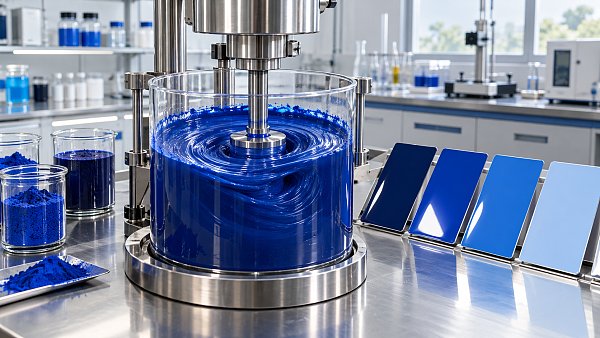
Particle size matters just as much. Fine pigments and carbon black typically present much more surface area for the dispersant to cover. They may demand a more effective polymeric dispersant, a different addition level, or a separate grind-base approach. Under-dosing often shows up as high mill-base viscosity or poor color development. Over-dosing can be less obvious: water sensitivity, reduced water resistance, foam problems, or unwanted changes in rheology may appear only after the full formula is assembled.
It is also worth checking whether the pigment supplier has recommended dispersion conditions or surface-treatment information. A treated titanium dioxide, for example, does not necessarily behave like an untreated grade, even when both are described broadly as TiO2. Procurement teams sometimes treat pigments as interchangeable commodity inputs, then discover that the existing dispersant package no longer controls viscosity or gloss after a supplier change.
Understand the stabilization mechanism
Most water-based coating dispersants work primarily through electrostatic stabilization, steric stabilization, or a combination of both. Electrostatic dispersants create charge-based repulsion between particles. They can work well in systems where pH and ionic conditions remain controlled, but their performance may be sensitive to electrolyte content, hard water, certain preservatives, neutralizing amines, or other ionic additives.
Polymeric dispersants commonly rely more heavily on steric stabilization. Their anchoring groups adsorb onto the pigment surface, while solvated polymer chains extend into the aqueous phase and keep particles apart. This can offer broader formulation tolerance, especially with difficult organic pigments or high-pigment-load concentrates. It is not automatic, however. The polymer must have real affinity for both the pigment surface and the waterborne resin environment. A strong anchor with poor compatibility can still lead to instability later.
The right choice therefore depends on the entire formulation, not only the mill base. In practice, a coating formulator should ask whether the dispersant remains effective after let-down, after pH adjustment, after adding defoamer and thickener, and after contact with the final packaging environment.
Match the Dispersant to the Binder and End-Use
Water-based coatings are not one formulation family. Acrylic emulsions, styrene-acrylic binders, vinyl acetate systems, polyurethane dispersions, epoxy emulsions, alkyd emulsions, and hybrid resins can respond very differently to the same additive. A dispersant that is technically compatible with water may still interfere with film formation, adhesion, corrosion resistance, block resistance, or gloss in a specific binder package.
For interior decorative coatings, the balance may center on tint strength, scrub resistance, low odor, acceptable open time, and stable viscosity after tinting. In a waterborne industrial metal coating, the decision often becomes more demanding: corrosion protection, film clarity, wet adhesion, chemical resistance, and compatibility with flash-rust inhibitors may all be relevant. Water-based wood coatings can be especially sensitive to grain raising, clarity, foam, and tannin-related discoloration. Printing inks and pigment concentrates may prioritize color strength and low viscosity at much higher pigment loadings.
This is where an apparently inexpensive dispersant can become costly. If it requires more defoamer, more thickener adjustment, longer milling time, or creates a rework risk during color matching, its delivered cost is not low. Material price should be considered alongside dosage, grinding efficiency, batch-to-batch consistency, and the likelihood of formulation changes downstream.
Assess the Production Process Before Selecting a Grade
A dispersant needs to work under the actual energy input available in the plant. High-speed dissolvers, bead mills, basket mills, rotor-stator mixers, and low-shear mixing systems do not produce the same pigment deagglomeration. A grade that performs in a highly efficient bead mill may not deliver the same fineness in a plant using only a dissolver. Conversely, a dispersant that creates very low viscosity may allow excessive pigment movement or settling if the rest of the rheology package is not designed around it.
The sequence of addition deserves attention. In many waterborne systems, the dispersant is first diluted in part of the water phase before pigment addition. But exact order can change according to the dispersant type, pigment package, and use of wetting agents or pH adjusters. Adding a pigment too quickly can trap dry agglomerates; correcting the problem later with more dispersant may not fully recover the grind. A routine that works on a small lab batch should also be checked at production scale, where addition speed, tank geometry, temperature rise, and mixing zones are different.
Do not judge milling performance by viscosity alone. A low-viscosity mill base may look promising, yet still contain coarse particles that later affect gloss, hiding, filterability, or spray equipment. Measure what is relevant to the project: fineness of grind, particle-size distribution where available, color strength, rub-out behavior, gloss, and stability after let-down. The best evaluation plan is usually a short comparison under controlled conditions rather than an expansive screening exercise with too many changing variables.
A useful comparative trial
When comparing candidate dispersants, keep pigment, resin, water quality, pH target, milling equipment, and grind time consistent. Test each candidate at a reasonable starting level recommended for the pigment type, then adjust around the point where viscosity and color development are balanced. It is helpful to record both initial values and changes after storage. A coating that looks excellent immediately after manufacture may not be the robust option.
Do Not Separate Dispersion from Rheology and Foam Control
Dispersant selection is closely connected to rheology. A stable dispersion needs particles to remain separated, while a practical coating also needs controlled flow, sag resistance, leveling, and storage stability. Associative thickeners, cellulosic thickeners, alkali-swellable emulsions, and inorganic rheology modifiers may respond differently when the dispersant level changes. Sometimes the “dispersant problem” is actually an interaction between an overly mobile pigment dispersion and an insufficiently structured final coating.
Foam is another familiar trap. The dispersant may improve wetting and milling but increase air entrainment under high-speed agitation. Simply increasing defoamer can introduce craters, poor intercoat adhesion, or gloss variation if the defoamer is not well matched. The right approach is to evaluate the package as a system: dispersant, wetting agent, defoamer, resin, and thickener. This is particularly important in high-gloss, clear, and spray-applied coatings, where small surface defects become visible quickly.
Water quality should not be overlooked. Hardness ions, variable conductivity, and contamination from recycled process water can alter the behavior of ionic dispersants and certain thickeners. If a formula performs inconsistently across sites or seasons, water quality is worth checking before replacing every additive in the formula.
VOC, Documentation, and Supply Reliability Are Part of the Technical Decision
Water-based does not automatically mean low-VOC, low-odor, or suitable for every regulated application. Some dispersant products are supplied in carriers that affect the coating’s volatile profile, odor, flash point, or labeling position. Requirements vary by region and end use, so the relevant safety data sheet, technical data, composition information, and applicable local rules should be reviewed for the actual product grade—not inferred from a general chemistry description.
For coatings used near sensitive manufacturing environments, food-contact adjacent packaging, consumer interiors, or high-purity cleaning areas, buyers may need more detailed documentation on substances of concern, trace components, biocide content, or restricted materials. The correct documentation request depends on the market and application. It should be made early, before a grade becomes embedded in a color formula or customer specification.
Supply continuity is equally practical. A dispersant is usually used at a modest percentage of the total coating, but losing it can force requalification of multiple colors. Confirm package sizes, shelf-life conditions, storage temperature limits, lead times, lot traceability, and change-notification practices. For distributors and procurement groups, receiving a technically equivalent substitute without a controlled comparison can create avoidable quality risk.
Platforms such as the Global Fine Chemicals & Agrochemical Intelligence Network (FCAS) are useful in this stage because dispersant selection often crosses more than one discipline. Formulators need application performance information; purchasing teams need supplier and logistics visibility; regulatory colleagues need clear documentation; and plant teams need a product that behaves consistently in real equipment. Looking at those requirements together is more productive than treating the dispersant as an isolated raw material.
Common Selection Mistakes in Water-Based Coatings
One common mistake is selecting solely on initial viscosity. Low viscosity is useful only when it comes with adequate particle stabilization and acceptable final-film properties. Another is copying a dispersant from a different pigment or resin system without repeating basic compatibility testing. Similar-looking formulations can behave very differently once pigment surface treatment, neutralization level, or thickener chemistry changes.
It is also risky to optimize a single pigment concentrate and assume the result applies to a full tinting range. White, black, yellow oxide, phthalo blue, organic red, and transparent pigments can each require different treatment. In broad color palettes, many manufacturers use more than one dispersion approach rather than forcing every pigment through a single additive package.
Finally, do not overlook the difference between short-term stability and usable stability. A soft sediment that redisperse easily may be acceptable in some products; a hard packed layer that does not recover under normal mixing is not. Define what storage behavior is acceptable for the intended packaging, shipping route, and customer handling practice before finalizing the selection.
Make the Final Choice on Total Formulation Performance
The most suitable industrial dispersant is the one that gives dependable pigment wetting, efficient grinding, stable viscosity, acceptable appearance, and compatible final-film performance within the realities of the plant and supply chain. It may not be the lowest-cost product per kilogram, and it may not be the strongest performer in one isolated laboratory test.
A disciplined selection process usually narrows the field quickly: identify the pigment family and end-use, screen for binder and regulatory fit, test under realistic milling conditions, then confirm storage and final-coating behavior. If results are unclear, investigate interactions with pH, water quality, thickener, defoamer, and pigment treatment before changing the dispersant again. In water-based coatings, a stable dispersion is not an ingredient-level result. It is evidence that the formulation is working as a whole.
Related News
 Antioxidants & Natural PreservativesWhat Quality Checks Matter When Sourcing Butylparaben for Personal CareButylparaben for personal care sourcing guide: compare assay, impurities, physical performance, documentation, traceability, and supplier quality to reduce formulation risk.MORE+
 Nano-microcapsule FormulationsHow Encapsulated Flavors Protect Taste During Processing and StorageEncapsulated Flavors protect taste from heat, oxygen, moisture, and storage loss. Explore smarter release, carrier selection, and processing strategies.MORE+
 Chelated Trace Element FertilizersHow Greenhouse Fertigation Systems Reduce Water and Fertilizer WasteGreenhouse fertigation systems reduce water and fertilizer waste with precise dosing, uniform irrigation, drainage monitoring, and smarter crop-zone control. Learn practical strategies.MORE+
 Supercritical CO2 Essential OilsHow Natural Essential Oil Blends Improve Consistent Product FragranceNatural essential oil blends help brands achieve consistent, appealing fragrance across batches. Explore smart blend design, stability testing, and product compatibility strategies.MORE+
 Non-ionic Surfactants & DefoamersHow to Choose Non Ionic Low Foaming Surfactants for CIP CleaningNon ionic low foaming surfactants for CIP cleaning: learn how to balance wetting, foam control, compatibility, and rinseability for reliable cleaning performance.MORE+
 Nano-microcapsule FormulationsHow Food Grade Cyclodextrin Complexes Protect Sensitive FlavorsFood grade cyclodextrin inclusion complexes help protect sensitive flavors from oxidation, evaporation, and processing loss while supporting controlled release and consistent sensory quality.MORE+
 Polymer-Coated Water Soluble NPKHow Fertilizer Coating Polymers Improve NPK Granule ReleaseFertilizer coating polymers for NPK granules improve controlled nutrient release, reduce loss risks, and enhance product consistency. Discover key selection and process insights.MORE+
 Chelated Trace Element FertilizersWhat Diammonium Phosphate Means for Crop Nutrition PlanningDiammonium Phosphate: learn how DAP supports early phosphorus access, nitrogen budgeting, smart placement, and balanced crop nutrition planning.MORE+
 Maillard Reaction Savory FlavorsHow to Assess a Flavor Bases Supplier List for Reliable SourcingGlobal Fine Chemicals & Agrochemical Intelligence Network flavor bases supplier list: assess specs, samples, supply risk, and true cost to source with confidence.MORE+
 Hydrocolloids & EmulsifiersHow Konjac Gum Powder Improves Texture in Low-Calorie FoodsKonjac gum powder improves body, stability, and mouthfeel in low-calorie foods. Discover practical tips for smoother sauces, beverages, and reduced-fat formulations.MORE+
 Supercritical CO2 Essential OilsWhat to Check Before Choosing a Botanical Essential Oils ManufacturerChoose a botanical essential oils manufacturer with confidence. Explore key checks for purity, traceability, compliance, batch consistency, and reliable supply.MORE+
 Microencapsulated FragrancesHow Fragrance Carriers for Detergents Improve Scent PerformanceFragrance carriers for detergents improve stability, fabric deposition, and long-lasting scent. Explore practical solutions for better wash-to-wear fragrance performance.MORE+
 Antioxidants & Natural PreservativesWhen Propyl Gallate Antioxidant Is the Right Choice for Oil StabilityPropyl gallate antioxidant: learn when it is the right choice for oil stability, shelf-life protection, processing compatibility, and smarter formulation decisions.MORE+
 Antioxidants & Natural PreservativesHow Potassium Sorbate Extends Shelf Life in Food and Beverage ProductsPotassium Sorbate helps food and beverage brands control yeast and mold spoilage. Explore pH, dosage, processing, and packaging strategies for reliable shelf life.MORE+
 Antioxidants & Natural PreservativesHow to Source Bulk Herbal Extracts With Reliable Quality ControlBulk herbal extracts sourcing guide: compare suppliers, verify traceability, review CoAs, and build reliable quality controls for safer, consistent purchasing.MORE+
 Antioxidants & Natural PreservativesWhat to Check Before Sourcing Butylparaben for Personal Care FormulasButylparaben for personal care sourcing guide: check market eligibility, purity, supplier controls, formula compatibility, packaging, and total risk before buying.MORE+
 Targeted Bio-pesticides & APIsChoosing Microbial Fungicides for Foliar Diseases in Integrated Crop ProgramsMicrobial fungicides for foliar diseases: learn how to match biology, formulation, tank compatibility, and timing for stronger integrated crop protection.MORE+
 Targeted Bio-pesticides & APIsHow Microbial Insecticides Control Caterpillars With Lower Crop Residue RiskMicrobial insecticides for caterpillars help protect crops with targeted early-larval control and lower residue-management pressure. Learn timing, coverage, compliance, and scouting essentials.MORE+
 Microencapsulated FragrancesHow to Add Encapsulated Laundry Fragrances Without Weakening Wash ResultsEncapsulated laundry fragrances: learn how to boost long-lasting scent while protecting cleaning power, stability, foam control, and fabric care.MORE+
 Supercritical CO2 Essential OilsHow Aroma Ingredients Shape Lasting and Skin-Safe Personal Care ProductsAroma ingredients for personal care: discover how to achieve lasting scent, formulation stability, skin safety, and confident product performance.MORE+
 Targeted Bio-pesticides & APIsInsecticides Explained Through Labels, Active Ingredients, and SafetyInsecticides explained through labels, active ingredients, formulations, and safety. Learn how to compare products, manage risk, and make informed crop protection decisions.MORE+
 Heavy-duty Industrial DegreasersHow to Select Parts Wash Cleaners for Automotive ComponentsParts wash cleaners for automotive components: learn how to match chemistry, materials, rinsing, safety, and waste controls for reliable cleaning results.MORE+
 Chelated Trace Element FertilizersHow Precision Fertigation Systems Improve Water and Nutrient ControlPrecision fertigation systems improve water and nutrient control with accurate dosing, uniform irrigation, smart monitoring, and reduced waste. Discover how to optimize crop performance.MORE+
 Hydrocolloids & EmulsifiersHow Bulk Price Factors Affect Hydrocolloid Stabilizer Blend SourcingHydrocolloid stabilizer blends bulk price: compare dosage efficiency, quality consistency, logistics, and documentation to reduce total sourcing costs.MORE+
 Zero-Calorie Sweeteners & AcidulantsHow to Choose a Natural Sweeteners Supplier for Clean-Label ProductsNatural sweeteners supplier selection guide for clean-label products: compare formulation fit, traceability, documentation, and supply reliability.MORE+
 Non-ionic Surfactants & DefoamersWhat Cationic Surfactants Do and Where They Are UsedCationic Surfactants deliver antimicrobial action, conditioning, antistatic control, and surface treatment benefits. Explore key uses, compatibility, and safe selection tips.MORE+
 Targeted Bio-pesticides & APIsHow to Evaluate Pesticide Suspension Concentrates for Field StabilityPesticide Suspension Concentrates: learn how to evaluate field stability, redispersibility, dilution, tank-mix compatibility, and spray safety for reliable performance.MORE+
 Hydrocolloids & EmulsifiersHow Hydrocolloid Systems for Meat Products Improve Texture and YieldHydrocolloid systems for meat products improve yield, texture, water retention, and slicing quality. Explore practical formulation strategies for stable, high-performing meat products.MORE+
 Microencapsulated FragrancesHow Laundry Fragrances for Liquid Detergents Improve Scent LongevityLaundry fragrances for liquid detergents: discover how fragrance design, deposition, and encapsulation create lasting fabric freshness and stronger product appeal.MORE+
 Nano-microcapsule FormulationsChoosing Fragrance Preparations That Perform Well in Personal WashFragrance preparations for personal wash: learn how to select options that protect clarity, stability, foam, scent performance, and packaging compatibility.MORE+
 Controlled-Release ThermodynamicsModified Cyclodextrins Explained for Controlled Fragrance ReleaseModified cyclodextrins enable controlled fragrance release, odor control, and volatile-note protection. Explore how they optimize performance in detergents, fabric care, and more.MORE+
 Microencapsulated FragrancesHow Fragrance Delivery Systems Improve Fabric Softener LongevityFragrance delivery systems for fabric softeners improve scent longevity through smart protection, reliable deposition, and controlled release for lasting freshness.MORE+
 Supercritical CO2 Essential OilsHow to Evaluate a Natural Cardamom Oil Supplier for Reliable SupplyNatural cardamom oil supplier evaluation guide: verify botanical origin, purity, batch consistency, documentation, packaging, and delivery reliability for confident sourcing.MORE+
 Maillard Reaction Savory FlavorsHow Ethyl Maltol Purity Testing Supports Flavor Safety ComplianceEthyl Maltol purity testing strengthens flavor safety compliance through identity checks, impurity profiling, supplier verification, and audit-ready documentation.MORE+
 Microencapsulated FragrancesEssential Oil Extracts Compared for Fragrance and Wellness UsesEssential Oil Extracts compared for fragrance and wellness: explore scent profiles, extraction methods, stability, safety, and sourcing insights for smarter formulation choices.MORE+
 Zero-Calorie Sweeteners & AcidulantsWhat Drives Zero Calorie Sweeteners Bulk Price in 2026Zero calorie sweeteners bulk price in 2026: compare specifications, dosage, quality, freight, and supply risk to make smarter sourcing decisions.MORE+
 EPA FIFRA & FDA GRAS RegsSynthetic Food Preservatives Rules That Support Safer FormulasSynthetic Food Preservatives: learn the rules for safer formulas, compliant use levels, validated shelf life, labeling, and reliable microbial control.MORE+
 Micelle Fluidics & ChelationHow Anionic Industrial Dispersants Improve Coating StabilityAnionic industrial dispersants improve coating stability, pigment wetting, viscosity control, gloss, and storage performance. Learn how to select and test the right solution.MORE+
 Supercritical CO2 Essential OilsHow to Choose Eucalyptus Oil Grades for Clean, Consistent ProductsChoose the right Eucalyptus Oil grade with confidence. Compare cineole content, purity, origin, processing, documentation, and application fit for consistent products.MORE+
 Micelle Fluidics & ChelationWhat Are Cationic Surfactants and Where Are They Commonly Used?Cationic Surfactants deliver powerful surface affinity for disinfection, fabric softening, hair conditioning, antistatic control, and industrial treatments. Explore key uses and selection factors.MORE+