How Do Amine Oxides Affect Foam Stability in Cleaning Formulations?
Amine oxides can help cleaning formulations maintain foam by forming mixed surfactant films that resist thinning and rupture. They often work well alongside anionic surfactants, supporting persistent foam when grease, dilution, or agitation would otherwise change its behavior. The effect depends on the complete formulation: adding more amine oxide does not automatically produce more useful or more stable foam.
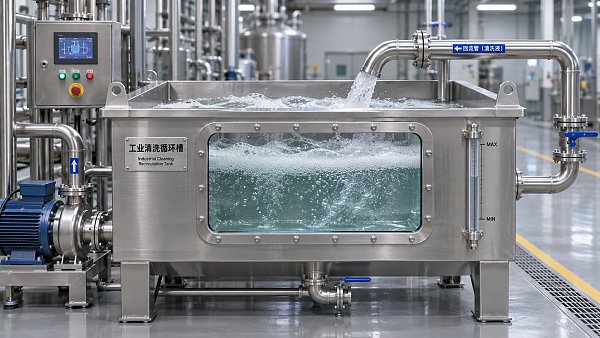
The practical question is whether that persistence improves the cleaning process. A hand dishwashing liquid may benefit from foam that survives repeated soil additions. A recirculating cleaner may become harder to operate if the same persistence causes tank overflow or delays rinsing. Evaluating amine oxides therefore requires separate judgments about foam generation, foam stability, and cleaning performance.
How amine oxides help bubbles survive
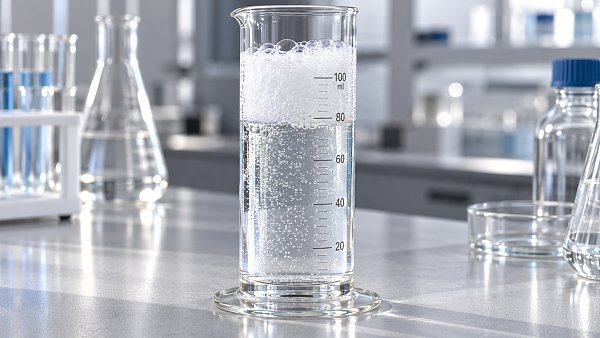
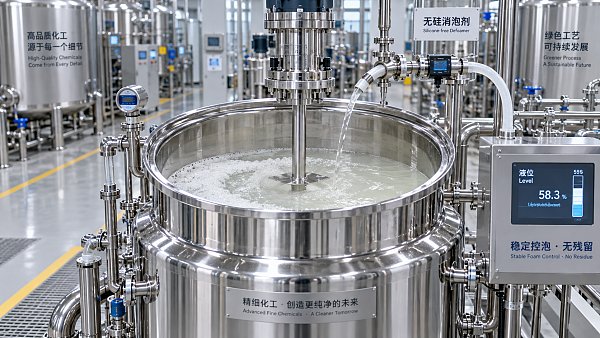
Foam consists of gas bubbles separated by thin liquid films. Surfactants adsorb at the air–water interfaces, allowing bubbles to form and helping protect them against collapse. After foam forms, liquid drains through the films and channels between bubbles. Films can become thin enough to rupture, allowing bubbles to merge. Gas also moves between bubbles, changing their size distribution over time.
Amine oxides influence these processes through their hydrophobic chain and highly polar amine oxide headgroup. In suitable surfactant mixtures, they can change how molecules pack at the interface and how that interface responds when stretched. This matters because bubble surfaces constantly expand and contract during pouring, brushing, spraying, and soil contact.
A useful film must respond to local disturbances. When part of a film stretches, differences in surfactant concentration can create surface-tension gradients that help oppose further thinning. Amine oxides can contribute to this restoring behavior, depending on the other surfactants present and how quickly molecules move between the liquid and the interface.
They may also change the viscosity and structure of the liquid surrounding the bubbles. Slower liquid drainage can extend foam life, although bulk viscosity alone cannot explain foam stability. A thick product can still produce fragile foam, and a relatively thin solution can generate persistent bubbles if its interfacial properties are favorable.
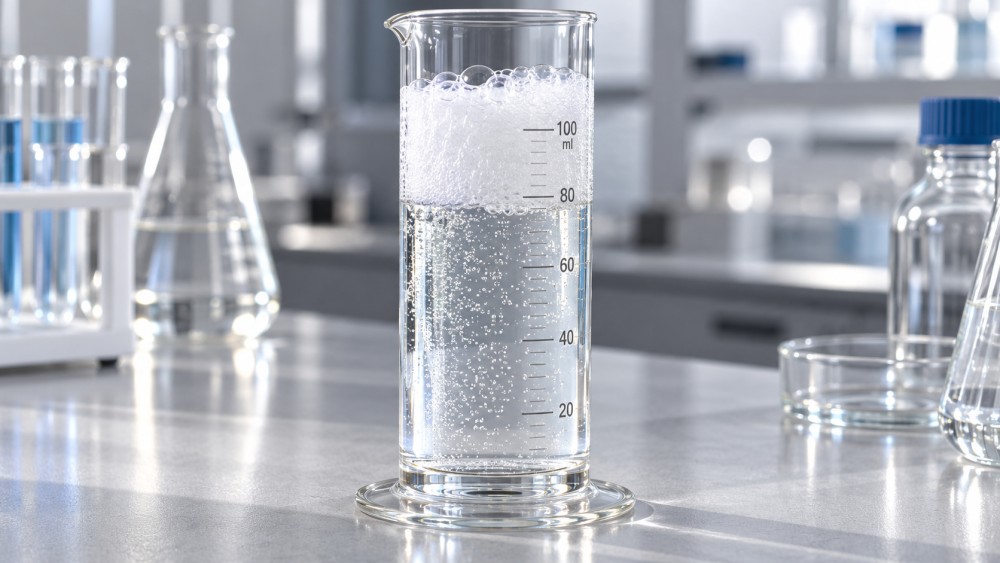
These mechanisms explain why initial foam height is an incomplete measure. Two formulations can generate similar volumes immediately after agitation, yet differ substantially in drainage, bubble coalescence, and resistance to oily soil.
Why the surrounding surfactant system matters
Amine oxides are commonly evaluated as co-surfactants rather than as isolated foam boosters. Their interactions with anionic surfactants can alter interfacial packing, micelle structure, viscosity, and foam behavior. A blend may perform differently from either ingredient alone, but the benefit depends on its composition and use conditions.
Changing the ratio between an amine oxide and an anionic surfactant can improve foam persistence within one composition range and produce little additional benefit elsewhere. A ratio selected for concentrate viscosity may also differ from the ratio that performs best after dilution. This distinction matters for products that appear satisfactory in the bottle but deliver inconsistent foam during use.
Other ingredients can shift the result. Low-foaming nonionic surfactants may improve grease removal while reducing foam persistence. Hydrotropes, solvents, fragrances, and solubilizers can change surfactant organization or interfacial behavior. A fragrance substitution may therefore affect foam even when the main surfactant package remains unchanged.
Comparisons should distinguish an ingredient substitution from a change in total surfactant content. If one trial simply adds amine oxide to an existing formula, improved foam may partly reflect the higher active concentration. Testing at equal total surfactant active matter gives a clearer picture of whether the blend itself offers an advantage.
The formulation variables that change the result
Molecular structure and active concentration
“Amine oxide” describes a chemical family, not a single performance profile. Alkyl dimethyl amine oxides and amidopropyl amine oxides differ in structure, while commercial grades may contain different chain-length distributions. These differences influence water solubility, adsorption, micelle formation, viscosity response, and foam characteristics.
Longer hydrophobic chains generally increase hydrophobic association, but solubility and temperature behavior can limit their usefulness. A grade that supports persistent foam under one condition may dissolve less readily or behave differently in a cold, concentrated formulation. Selection should consider the whole operating range rather than a single room-temperature observation.
Compare dosage on an active-matter basis. Equal weights of two commercial solutions do not represent equal surfactant additions if their active contents differ. Once active matter is normalized, evaluate several blend ratios at the intended use dilution. Foam response need not rise proportionally with dosage, especially once interfaces are well supplied with surfactant.
pH changes the interaction with other ingredients
Amine oxides are often described as nonionic surfactants, but their behavior depends on pH. Under acidic conditions, protonation gives them greater cationic character. This can alter their association with anionic surfactants and change foam, viscosity, solubility, or phase behavior.
Consequently, a blend developed for a neutral cleaner should not be transferred unchanged into an acidic descaler. Stronger association may be useful in one composition but cause haze or instability in another. The transition depends on molecular structure and formulation conditions; there is no single pH boundary that predicts every product’s behavior.
Measure pH in both the concentrate and the working solution. Dilution water and buffering capacity can shift the conditions experienced during cleaning, so concentrate pH alone may not explain use-stage performance.
Electrolytes, hardness, and temperature
Electrolytes can modify micellar structure and viscosity in mixed surfactant systems. A salt addition may initially thicken a formulation, then reduce viscosity or cause phase instability as concentration increases. Its effect on foam is similarly dependent on composition.
Although amine oxides are often useful in hard-water formulations, they do not make every ingredient resistant to hardness. Calcium and magnesium can still interact with other surfactants or formulation components. Test the complete cleaner in representative water, including its builders and chelants.
Temperature changes liquid viscosity, drainage, surfactant solubility, and soil behavior. Grease may soften as temperature rises, changing how it enters and destabilizes foam. A result obtained in clean, cool laboratory water therefore provides limited guidance for warm cleaning under heavy soil loading.
Soil resistance reveals more than clean-water foam
Oils and fats can destabilize foam when droplets enter the films and promote rupture. The outcome depends on the oil’s properties, droplet size, and how effectively the surfactant system disperses or solubilizes it. Fine particles may also affect stability, with behavior influenced by their surface properties.
An amine oxide blend may improve foam persistence partly by changing how the formulation handles soil. However, foam can still collapse when the soil load exceeds the system’s capacity. That collapse does not, by itself, prove that cleaning has stopped. Equally, persistent foam does not prove that a surface is clean.
For a hand dishwashing liquid, repeated additions of representative food soil can reveal whether foam survives continued use. For a foaming degreaser, assess foam coverage alongside grease removal and runoff. A very persistent foam layer offers limited value if it retains dirty liquid or requires excessive rinse water.
Use soils that reflect the application. Cooking oil, mineral oil, and protein-rich residues challenge formulations differently. A single generic oil test can rank candidates in an order that does not hold under actual cleaning conditions.
Build a test that separates useful persistence from excessive foam
A meaningful comparison starts with the intended process: dilution, water quality, temperature, agitation, soil type, and acceptable rinse behavior. Use the same preparation and measurement procedure for each candidate, and include the current formulation as a reference.
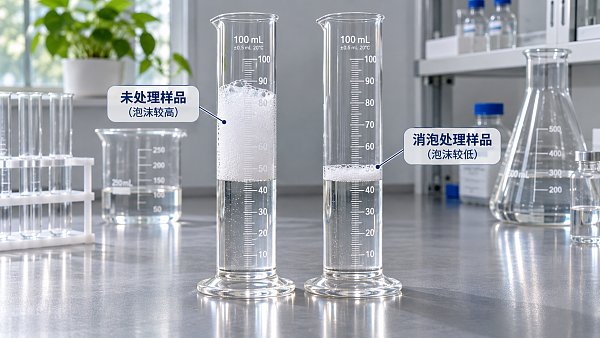
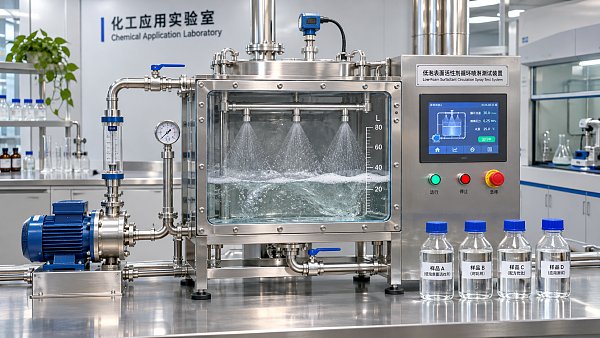
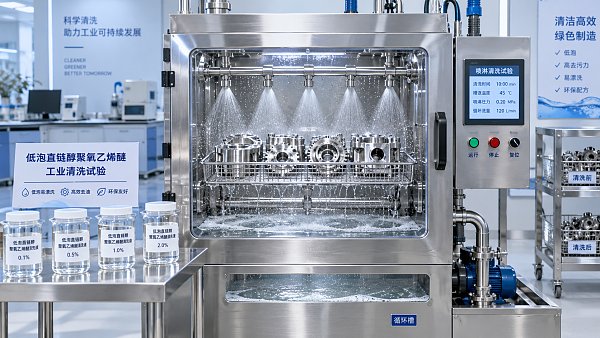
Standardized foam-height methods, including Ross–Miles-type testing, can support controlled comparisons. They provide information about foam generation and decay under defined conditions, but they do not reproduce every cleaning process. Cylinder agitation, dynamic foam analysis, spray tests, or circulation rigs may provide more relevant evidence for particular applications.
Keep foam-generation energy consistent. Shaking intensity, air injection, mixing time, and vessel cleanliness can all influence results. Residual defoamer, oil, or detergent in test equipment can obscure differences between formulations. Repeat measurements sufficiently to distinguish a consistent formulation effect from test variation.
Inspect the concentrate as well. Improved use-stage foam does not compensate for phase separation, unacceptable viscosity drift, or poor dispensing after storage. Conversely, an attractive concentrate viscosity should not outweigh weak performance at the working dilution.
Match the foam profile to the cleaning task
Manual dishwashing and some hand-applied cleaners often benefit from persistent foam because it supports product distribution and the user’s perception of continued activity. Even here, foam should clear within an acceptable rinse cycle, and cleaning performance needs independent measurement.
Foam-applied cleaners for vertical surfaces need coverage and drainage behavior suited to the required contact time. Maximum foam volume may produce a light layer with limited liquid delivery. Assess coverage, runoff, wet contact, and soil removal together.
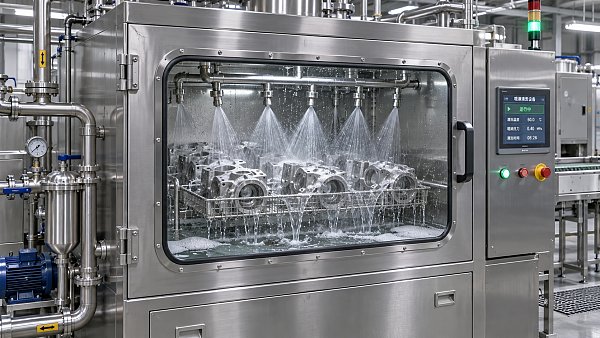
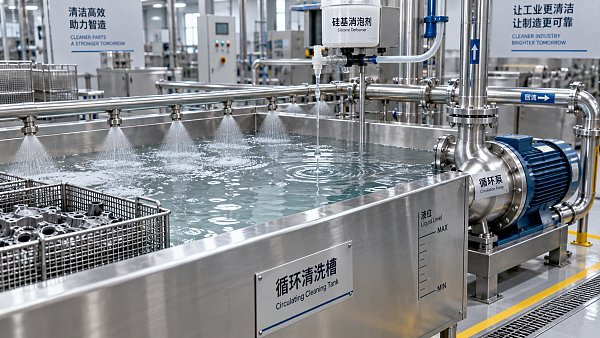
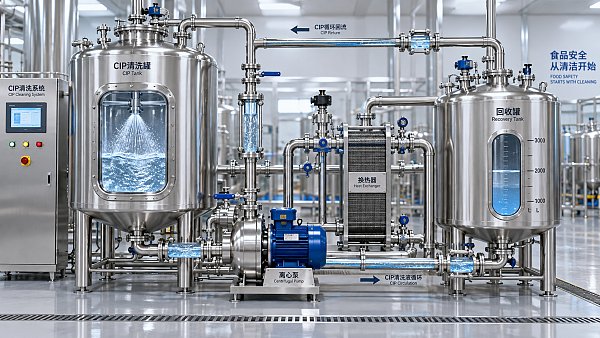
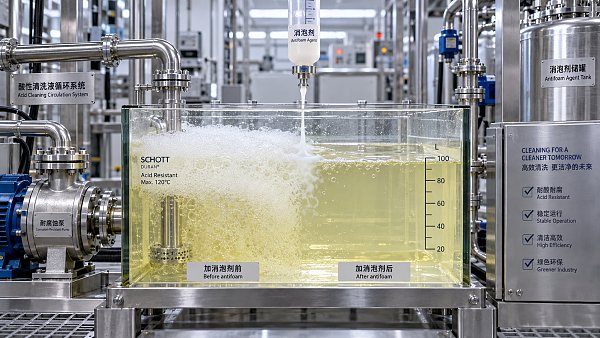
Automatic dishwashers, extraction equipment, and recirculating cleaning systems commonly require low foam. In these applications, an amine oxide grade or blend that strongly stabilizes bubbles may create operational problems. Adding a defoamer later can introduce another compatibility variable; choosing a surfactant system aligned with the process is usually a more direct development route.
What to establish before selecting a grade
A useful supplier discussion starts with chemical identity, chain distribution, active content, and the intended formulation conditions. Product specifications and technical documentation should also address relevant residual materials and batch consistency, particularly where oxidizing chemistry or sensitive applications make those properties consequential.
Where amine oxides are considered for hypochlorite cleaners, compatibility is a separate requirement from foam performance. Some grades are used in these systems, but suitability depends on grade quality, the complete formula, packaging, and storage conditions. Foam persistence cannot establish chemical storage stability.
Screen candidate grades at equal active matter, then adjust blend ratio and electrolyte content within the intended formulation. Advance candidates that combine reproducible foam behavior with acceptable cleaning, rinsing, and storage performance. The useful endpoint is a foam profile that supports the job: persistent enough during cleaning, responsive to the expected soil load, and able to clear when the process requires it.
Facing technical bottlenecks in manufacturing or looking for more efficient industrial solutions? Leave your details below and let the engineering experts at FCAS solve them for you.
We respect your privacy. Your information is strictly confidential.
Related News
 Non-ionic Surfactants & DefoamersHow Do Low Foam Ethoxylated Surfactants Perform in Cleaning?Discover how low foam ethoxylated surfactants balance cleaning power and foam control, and learn what to test before selecting one for your process.MORE+
 Non-ionic Surfactants & DefoamersChoosing Low Residue Surfactants for Hard Surface CleaningLow residue surfactants for hard surface cleaning: discover how to compare cleaning performance, rinseability, residue testing, and total cost.MORE+
 Non-ionic Surfactants & DefoamersEPA Adopts Human Airway Tissue Method for Surfactant Inhalation Risk AssessmentEPA surfactant inhalation risk assessment may use human airway tissue. Explore potential impacts for industrial cleaners and the details still to verify.MORE+
 Non-ionic Surfactants & DefoamersWhy Do Low Foam Linear Alcohol Ethoxylates Still Cause Foam?Why do low foam linear alcohol ethoxylates still foam? Discover common causes and practical troubleshooting tips to restore consistent performance.MORE+
 Non-ionic Surfactants & DefoamersHow to Measure Foam Control Efficiency in Cleaning DefoamersMeasure cleaning defoamers foam control efficiency with practical tests, dose-response analysis, and plant trials to find the right solution for your process.MORE+
 Non-ionic Surfactants & DefoamersWhat to Check Before Choosing a Low Foaming Surfactants FactoryChoosing a low foaming surfactants factory? Discover how to assess foam performance, quality controls, documentation, supply reliability, and true working costs.MORE+
 Non-ionic Surfactants & DefoamersHow Non Ionic Wetting Agents Improve Surface CoverageDiscover how non ionic wetting agents improve surface coverage in coatings, cleaning, and sprays, and learn how to select and test the right formulation.MORE+
 Non-ionic Surfactants & DefoamersDo Industrial Dispersants Require Special Handling During Transport?Do industrial dispersants require special handling during transport? Discover how to protect product quality, meet shipping rules, and prevent costly delays.MORE+
 Non-ionic Surfactants & DefoamersCalifornia OEHHA Proposes Proposition 65 Cancer Listing for PFHxA and Its SaltsPFHxA and its salts face a proposed California Proposition 65 cancer listing. Explore what the OEHHA notice could mean for suppliers and compliance.MORE+
 Non-ionic Surfactants & DefoamersWhat Should a Quote From an Industrial Wetting Agents Exporter Include?Choosing an industrial wetting agents exporter? Learn what a complete quote should include, from product specs and active content to shipping terms, compliance, and true landed costs.MORE+
 Non-ionic Surfactants & DefoamersBASF Starts Up Expanded APG Production in Cincinnati to Serve North American DemandBASF expands APG production in Cincinnati to meet North American demand. Explore how added capacity supports local supply of bio-based, biodegradable surfactants.MORE+
 Non-ionic Surfactants & DefoamersWhat Should You Check When Buying Low-Residue Surfactants in Bulk?Buying low residue surfactants wholesale? Learn how to verify residue claims, assess batch consistency, and compare total costs before your next bulk order.MORE+
 Non-ionic Surfactants & DefoamersBASF Raises Bid for Evonik to €24 a ShareBASF raises its Evonik takeover bid to €24 a share, valuing the offer above €11 billion. Explore the revised terms, German plant pledges and employment guarantees.MORE+
 Non-ionic Surfactants & DefoamersWhen Do High Spreading Adjuvant Systems Improve Leaf Coverage?Discover when high spreading adjuvant systems improve leaf coverage on waxy foliage, and learn how to balance wetting, retention, compatibility, and crop safety for better spray performance.MORE+
 Non-ionic Surfactants & DefoamersHow Do You Evaluate a Low Residue Surfactants Supplier for Cleaning?Evaluate a low residue surfactants supplier with proven residue tests, batch consistency, and rinse performance. Learn how to reduce cleaning risks and choose with confidence.MORE+
 Non-ionic Surfactants & DefoamersHow Do Tank Mix Adjuvant Systems Affect Herbicide Spray Performance?Explore how tank mix adjuvant systems affect herbicide coverage, drift, and uptake. Get practical tips to check compatibility, choose additives, and improve spray performance.MORE+
 Non-ionic Surfactants & DefoamersHow Does Ethoxylation Affect Octylphenol Ethoxylates as Emulsifiers?Choosing an octylphenol ethoxylates emulsifier? Discover how ethoxylation affects HLB, cloud point, and stability to select the right grade for your formulation.MORE+
 Non-ionic Surfactants & DefoamersWhen Do Industrial Wetting Agents Improve Pesticide Spray Coverage?Do industrial wetting agents improve pesticide spray coverage? Discover when they help, how to test retention and compatibility, and what to check for crop safety before selecting an adjuvant.MORE+
 Non-ionic Surfactants & DefoamersHow Do Amine Oxides Affect Foam Stability in Cleaning Formulations?Amine Oxides can enhance foam stability in cleaning formulations. Discover how surfactant blends, pH, and soil affect performance—and learn to balance lasting foam with easy rinsing.MORE+
 Non-ionic Surfactants & DefoamersHow to Choose Linear Alcohol Ethoxylates for Textile WettingChoose linear alcohol ethoxylates for textile wetting with confidence. Compare penetration, foam, and bath compatibility to improve uniformity and find the right grade for your process.MORE+
 Non-ionic Surfactants & DefoamersHow Do You Choose Low Foam Linear Alcohol Ethoxylates for Cleaning?Choose low foam linear alcohol ethoxylates with confidence. Discover how cloud point, foam testing, and rinseability help you achieve reliable cleaning and stable equipment performance.MORE+
 Non-ionic Surfactants & DefoamersHow to Choose Non Ionic Low Foaming Surfactants for CIP CleaningNon ionic low foaming surfactants for CIP cleaning: learn how to balance wetting, foam control, compatibility, and rinseability for reliable cleaning performance.MORE+
 Non-ionic Surfactants & DefoamersWhat Cationic Surfactants Do and Where They Are UsedCationic Surfactants deliver antimicrobial action, conditioning, antistatic control, and surface treatment benefits. Explore key uses, compatibility, and safe selection tips.MORE+
 Non-ionic Surfactants & DefoamersChoosing Defoamers for Agrochemical Formulations Without Reducing EfficacyDefoamers for agrochemical formulations: learn how to control foam while protecting stability, spray performance, and active ingredient efficacy.MORE+
 Non-ionic Surfactants & DefoamersWhy Mild Cocamidopropyl Betaine Matters in Gentle Cleansing FormulasMild cocamidopropyl betaine helps create gentler cleansers with creamy foam, balanced viscosity, and improved surfactant compatibility. Explore its formulation benefits.MORE+
 Non-ionic Surfactants & DefoamersHow to Compare Alkyl Polyglucosides for High-Performance CleanersAlkyl Polyglucosides guide: compare APG grades for wetting, grease removal, foam control, stability, and substrate safety in high-performance cleaners.MORE+
 Non-ionic Surfactants & DefoamersHow Low Residue Wet Cleaning Agents Improve Precision Cleaning ResultsLow residue wet cleaning agents improve precision cleaning with better wetting, efficient rinsing, reduced films, and reliable results for sensitive surfaces.MORE+
 Non-ionic Surfactants & DefoamersHow to Compare Degreasing Surfactants Bulk Price and PerformanceCompare degreasing surfactants bulk price beyond cost per kg. Evaluate dosage, foam, rinse quality, compatibility, and supplier reliability to choose the best-value cleaner.MORE+
 Non-ionic Surfactants & DefoamersWhy Silicone Cleaning Defoamers Prevent Foam-Related Production DelaysSilicone cleaning defoamers prevent foam-related production delays by stabilizing cleaning systems, improving pump performance, and protecting process efficiency.MORE+
 Non-ionic Surfactants & DefoamersHow Non Ionic Intermediates Improve Pesticide Formulation StabilityDiscover how non ionic pesticide formulation intermediates enhance emulsion stability, wetting, hard-water tolerance, and storage performance in crop protection products.MORE+
 Non-ionic Surfactants & DefoamersHow to Choose Low Foam Cleaning Auxiliaries for CIP SystemsLow foam cleaning auxiliaries for CIP systems: learn how to balance foam control, wetting, soil removal, compatibility, and rinseability for reliable cleaning results.MORE+
 Non-ionic Surfactants & DefoamersWhen Silicone Free Industrial Defoaming Agents Solve Process FoamSilicone free industrial defoaming agents control persistent process foam while protecting coating quality, cleaning performance, and downstream compatibility. Explore smarter selection.MORE+
 Non-ionic Surfactants & DefoamersDo Industrial Dispersants Require Special Transport Handling?Do industrial dispersants require special handling during transport? Learn how SDS classification, packaging, temperature control, and freight modes determine safe, compliant delivery.MORE+
 Non-ionic Surfactants & DefoamersAre Cleaning Defoamers Compatible With Acidic Cleaning Solutions?Are cleaning defoamers compatible with acidic cleaning solutions? Discover how to select acid-stable, low-residue defoamers for reliable foam control, cleaner rinsing, and safer industrial performance.MORE+
 Non-ionic Surfactants & DefoamersDo Detergent Builders Improve Cleaning Efficiency in Cold Water?Do detergent builders increase cleaning efficiency in cold water? Discover how they control hardness, reduce redeposition, and optimize cold-water detergent performance.MORE+
 Non-ionic Surfactants & DefoamersHow to Choose Industrial Dispersants for Water-Based CoatingsHow to choose industrial dispersants for water-based coatings? Explore pigment, binder, milling, rheology, VOC, and stability factors for smarter formulation decisions.MORE+
 Non-ionic Surfactants & DefoamersLow-Foaming Nonionic Surfactants for CIP Cleaning: Selection by Soil LoadLow foaming nonionic surfactants for CIP cleaning: learn how to match wetting, emulsification, temperature stability, and rinseability to light, heavy, protein, and mixed soil loads.MORE+
 Non-ionic Surfactants & DefoamersWhat Are Octylphenol Ethoxylates and Where Are They RestrictedOctylphenol Ethoxylates explained: explore their uses, environmental risks, global restrictions, compliance challenges, and practical replacement strategies.MORE+
 Non-ionic Surfactants & DefoamersAre Octylphenol Ethoxylates Still Suitable for Industrial CleanersExplore whether octylphenol ethoxylates for industrial cleaners still deliver reliable performance amid evolving regulations, wastewater demands, and safer formulation alternatives.MORE+
 Non-ionic Surfactants & DefoamersHow Ethoxylated Surfactants Improve Wetting and Cleaning in Textile ProcessingDiscover how ethoxylated surfactants for textile processing enhance wetting, oil removal, foam control, and rinse performance for reliable fabric quality.MORE+