What to Compare When Selecting a Cleaning Chemicals Manufacturer
A low drum price can be reassuring at the start of a sourcing project. It can also become expensive very quickly when the cleaner leaves film on a metal part, destabilizes a dilution tank, damages a sensitive substrate, or arrives without the documents needed for site approval. For procurement teams, selecting a cleaning chemicals manufacturer is not a simple comparison of product catalogues. It is a decision about operational continuity, compliance exposure, process performance, and total cost.
This matters across industrial maintenance, food and beverage processing, automotive parts washing, electronics assembly, institutional hygiene, metal treatment, and high-purity cleaning environments. Each application has its own soils, water conditions, equipment limits, safety expectations, and rinse requirements. A product that works well in one setting may be unsuitable in another.
The most useful supplier evaluation starts with a practical question: What must this chemical accomplish in our real process, and what could go wrong if it does not? The answer should guide every comparison that follows.
Begin with the cleaning task, not the manufacturer’s general claims
“Degreaser,” “industrial cleaner,” and “multi-purpose detergent” are broad commercial descriptions. They do not tell a buyer whether a formulation can remove machining oil at a low operating temperature, lift carbonized residues from equipment, control foam in a spray washer, or rinse cleanly from a polished stainless-steel surface.
Before requesting quotations, define the duty in enough detail for suppliers to respond meaningfully. A concise internal brief should cover the soil type, substrate, cleaning method, operating temperature, contact time, water quality, desired dilution range, rinse process, and disposal constraints. Include the consequences of failure. For example, a maintenance cleaner may need strong soil removal and corrosion control, while an electronics-related cleaning process may place far greater weight on ionic residue, low non-volatile content, and material compatibility.
That level of clarity prevents a common procurement mistake: comparing prices for products that are not genuinely equivalent.
- Soils: mineral oil, grease, wax, pigment, carbon deposits, protein, starch, scale, adhesive residue, particulate matter, or mixed contamination.
- Substrates: mild steel, aluminum, copper, plastics, painted surfaces, glass, rubber seals, coated parts, or sensitive electronic materials.
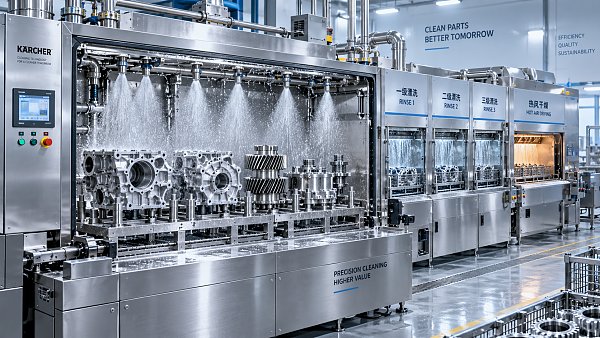
- Process conditions: immersion, manual wipe, foam cleaning, CIP, ultrasonic cleaning, pressure spray, floor scrubbing, or automated parts washing.
- Performance limits: foam profile, rinseability, odor, drying behavior, corrosion protection, residue threshold, and compatibility with downstream coating, bonding, or packaging.
Compare performance on a usable basis
A cleaning chemicals manufacturer should be able to explain not only what is in a product category, but why the formulation behaves as it does. Surfactant selection, alkalinity, solvent system, chelating agents, dispersants, defoamers, corrosion inhibitors, and preservatives all influence the final result. A strong cleaner is not automatically a better cleaner if it attacks aluminum, leaves residue, produces excessive foam, or creates difficult wastewater conditions.
Ask suppliers to provide recommended operating parameters rather than a single, idealized performance statement. These normally include concentration, temperature, dwell time, mechanical action, and rinse requirements. When possible, request representative samples and arrange trials under actual operating conditions. A small line test may reveal issues that bench testing misses, such as foam buildup in recirculation systems, inconsistent emulsion breaking, nozzle blockage, or odor concerns for operators.
Performance comparisons should also account for the working solution, not only the concentrated product. A concentrated formulation may cost more per kilogram but require a much lower use rate. Another product may appear economical until frequent bath replacement, high rinse-water consumption, or additional defoamer is factored in.
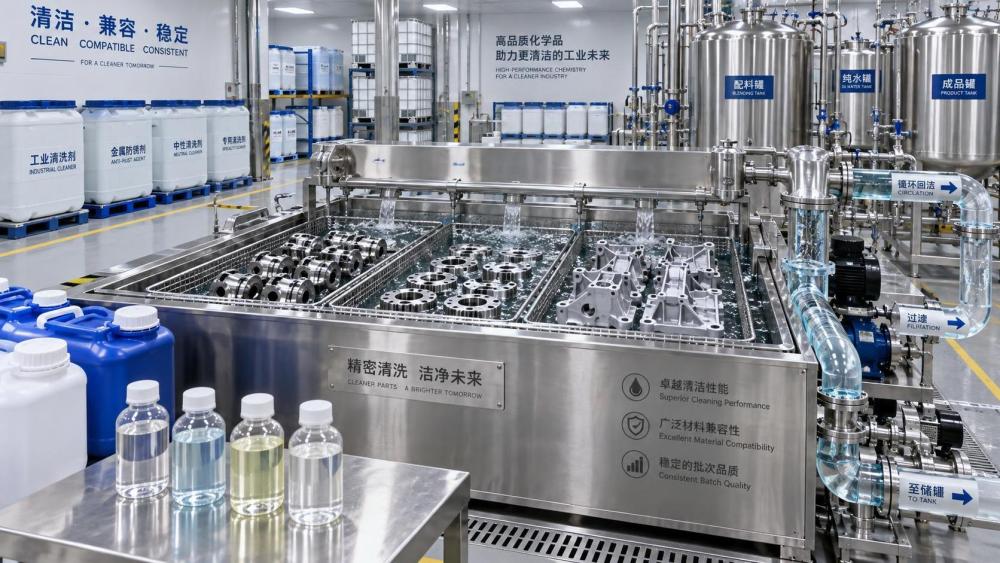
A practical comparison framework
Batch consistency is a procurement issue, not just a quality-control issue
Cleaning results can drift when raw materials, surfactant ratios, solvent content, pH, active matter, or impurity levels vary from one batch to another. The variation may be subtle, but operators often notice it first: a familiar product suddenly foams differently, needs more dosage, separates in storage, or leaves a visible haze after rinsing.
When evaluating a cleaning chemicals manufacturer, ask how critical parameters are controlled and what appears on the certificate of analysis. The exact parameters depend on the product, but typical points include appearance, pH, density, active content, water content, viscosity, alkalinity, color, and relevant impurity limits. For high-purity or sensitive cleaning applications, the discussion may need to go further into trace residues, particle control, ionic contamination, or non-volatile residue.
Consistency also includes formulation stability. Buyers should understand expected shelf life, preferred storage conditions, freeze-thaw sensitivity where relevant, and whether the product may stratify or settle during transport. A stable formulation is easier to dose, safer to handle, and less likely to create disputes between receiving, operations, and suppliers.
Documentation should match the destination market and application risk
Documentation is often treated as an administrative checkpoint near the end of supplier selection. In reality, it can determine whether a product can be received, stored, approved by EHS teams, or used in a regulated production environment. The document package should be reviewed before a purchase decision is finalized—not after the first shipment is on the water.
At minimum, buyers generally need an up-to-date safety data sheet, technical data sheet, product specification, transport classification information where applicable, and batch documentation. Depending on the geography, end-use sector, and chemical profile, teams may also need information on chemical inventory status, restricted substances, ingredient declarations, food-contact considerations, biodegradability claims, or wastewater-related characteristics.
Do not assume that a generic document is enough. Check whether the safety data sheet reflects the product name, manufacturer identity, intended region, current hazard classification, and realistic handling guidance. If cleaning chemicals will be used in food processing, healthcare-adjacent environments, electronics, or export-oriented manufacturing, regulatory affairs and quality teams should be involved early. Their questions may be more demanding than the purchasing specification, and discovering that gap late can delay a project.
Look beyond “compatible” and examine the actual surfaces in contact
Material compatibility deserves more attention than it usually receives. Cleaning chemistry can contact much more than the part being cleaned: pumps, seals, spray nozzles, tank linings, hoses, filters, measuring devices, labels, floor coatings, and wastewater equipment may all be exposed.
An alkaline cleaner may be appropriate for steel components yet unsuitable for aluminum or zinc-containing alloys. A solvent-containing system may affect certain plastics, coatings, or elastomers. Acidic scale removers can be effective but require thoughtful evaluation of corrosion risk, ventilation, and operator procedures. Even a mild-looking formulation can cause operational trouble if it is used at an excessive concentration or temperature.
Request compatibility guidance that is specific enough to act on. If the manufacturer only offers broad assurances, share the actual material list and ask for a reasoned recommendation. Where the cost of damage is high, conduct a controlled exposure test before full-scale approval.
Calculate total applied cost instead of chasing the lowest quoted price
For cleaning chemicals, the invoice price is only one part of the economic picture. Procurement teams should calculate cost per cleaning cycle, per square meter, per production batch, or per part processed—whichever measure reflects the operation. This shifts the conversation from “Which drum is cheaper?” to “Which option produces the required result with the lowest controllable cost?”
A useful total-cost review can include concentrate price, dosage, bath life, replenishment rate, water demand, energy demand, wastewater treatment burden, labor for tank maintenance, storage space, packaging disposal, and the cost of production interruptions. It should also reflect logistics realities such as minimum order quantities, delivery lead time, hazardous-goods handling, and the risk of emergency freight.
Some expenses are harder to quantify but still matter. A supplier that provides reliable dosing guidance, helps resolve foam or residue problems, and communicates clearly during a quality deviation can protect valuable production time. That support should not be confused with marketing language; it should be tested through technical conversations, sample handling, and responsiveness during the evaluation stage.
Assess manufacturing and supply reliability with evidence
Supply continuity has become a core sourcing concern for specialty chemicals. A manufacturer may have an attractive formulation but limited ability to maintain supply when demand changes, a key feedstock becomes constrained, or export schedules shift. Procurement should understand whether the supplier manufactures the product directly, formulates from purchased components, or primarily trades a third-party material.
There is no single “right” model, but transparency matters. Direct manufacturers may offer better process knowledge and more control over formulation changes. Formulators can be highly capable when they manage raw-material qualification and blending discipline well. Distributors may add value through local stock and faster service. The important point is to know where accountability sits when quality or delivery issues arise.
Questions worth asking include:
- Where is the product manufactured and where is it packaged?
- Are alternative raw materials or production lines available if supply is disrupted?
- How are formulation changes, packaging changes, or specification updates communicated?
- What lot traceability can be provided from finished product to key raw materials?
- What packaging formats are available, and are they suitable for the site’s handling equipment?
Packaging is not a minor detail. A technically sound cleaner can become a safety and efficiency problem if its container is difficult to pour, poorly sealed, incompatible with the product, or impractical for automated dosing. Consider drum, pail, IBC, bulk, and returnable packaging options in relation to consumption volume, storage limits, spill prevention, and waste management.
Technical support becomes visible when the process is imperfect
Most products look acceptable when conditions are stable. The value of a capable manufacturer becomes clearer when water hardness changes, soil loading rises, foam appears unexpectedly, or a new substrate enters the line. Buyers should look for a supplier that can discuss root causes rather than simply recommend increasing dosage.
Useful technical support may include application guidance, dilution control, troubleshooting, compatibility review, sample evaluation, and advice on maintaining cleaner baths. For industrial cleaning systems, a supplier’s ability to explain wetting, emulsification, dispersion, defoaming, corrosion protection, and rinse behavior is often more valuable than a polished brochure.
During supplier assessment, involve the people who will live with the product every day: production supervisors, maintenance staff, quality personnel, EHS representatives, and wastewater teams. Procurement can lead the commercial evaluation, but cross-functional input prevents a narrow decision based on price and paperwork alone.
A disciplined way to make the final selection
Rather than scoring every supplier against an overly long checklist, separate requirements into three groups: non-negotiables, performance differentiators, and commercial preferences. Non-negotiables may include regulatory documentation, substrate safety, required residue performance, and minimum delivery capability. Performance differentiators may include bath life, foam control, technical support, and ease of use. Commercial preferences include payment terms, order flexibility, and price structure.
This approach keeps the decision honest. A low-cost offer should not compensate for a missing safety document or an unresolved compatibility risk. Likewise, a technically impressive product should be reconsidered if its supply path is fragile or its total applied cost cannot be justified.
For buyers comparing a cleaning chemicals manufacturer, the best choice is rarely the supplier with the longest product list or the lowest initial quote. It is the partner whose formulation fits the actual cleaning duty, whose batches remain predictable, whose documentation stands up to review, and whose supply and technical response can support the realities of day-to-day operations. That is the comparison that turns chemical purchasing into a more controlled, defensible business decision.
Related News
 Antioxidants & Natural PreservativesWhat Quality Checks Matter When Sourcing Butylparaben for Personal CareButylparaben for personal care sourcing guide: compare assay, impurities, physical performance, documentation, traceability, and supplier quality to reduce formulation risk.MORE+
 Nano-microcapsule FormulationsHow Encapsulated Flavors Protect Taste During Processing and StorageEncapsulated Flavors protect taste from heat, oxygen, moisture, and storage loss. Explore smarter release, carrier selection, and processing strategies.MORE+
 Chelated Trace Element FertilizersHow Greenhouse Fertigation Systems Reduce Water and Fertilizer WasteGreenhouse fertigation systems reduce water and fertilizer waste with precise dosing, uniform irrigation, drainage monitoring, and smarter crop-zone control. Learn practical strategies.MORE+
 Supercritical CO2 Essential OilsHow Natural Essential Oil Blends Improve Consistent Product FragranceNatural essential oil blends help brands achieve consistent, appealing fragrance across batches. Explore smart blend design, stability testing, and product compatibility strategies.MORE+
 Non-ionic Surfactants & DefoamersHow to Choose Non Ionic Low Foaming Surfactants for CIP CleaningNon ionic low foaming surfactants for CIP cleaning: learn how to balance wetting, foam control, compatibility, and rinseability for reliable cleaning performance.MORE+
 Nano-microcapsule FormulationsHow Food Grade Cyclodextrin Complexes Protect Sensitive FlavorsFood grade cyclodextrin inclusion complexes help protect sensitive flavors from oxidation, evaporation, and processing loss while supporting controlled release and consistent sensory quality.MORE+
 Polymer-Coated Water Soluble NPKHow Fertilizer Coating Polymers Improve NPK Granule ReleaseFertilizer coating polymers for NPK granules improve controlled nutrient release, reduce loss risks, and enhance product consistency. Discover key selection and process insights.MORE+
 Chelated Trace Element FertilizersWhat Diammonium Phosphate Means for Crop Nutrition PlanningDiammonium Phosphate: learn how DAP supports early phosphorus access, nitrogen budgeting, smart placement, and balanced crop nutrition planning.MORE+
 Maillard Reaction Savory FlavorsHow to Assess a Flavor Bases Supplier List for Reliable SourcingGlobal Fine Chemicals & Agrochemical Intelligence Network flavor bases supplier list: assess specs, samples, supply risk, and true cost to source with confidence.MORE+
 Hydrocolloids & EmulsifiersHow Konjac Gum Powder Improves Texture in Low-Calorie FoodsKonjac gum powder improves body, stability, and mouthfeel in low-calorie foods. Discover practical tips for smoother sauces, beverages, and reduced-fat formulations.MORE+
 Supercritical CO2 Essential OilsWhat to Check Before Choosing a Botanical Essential Oils ManufacturerChoose a botanical essential oils manufacturer with confidence. Explore key checks for purity, traceability, compliance, batch consistency, and reliable supply.MORE+
 Microencapsulated FragrancesHow Fragrance Carriers for Detergents Improve Scent PerformanceFragrance carriers for detergents improve stability, fabric deposition, and long-lasting scent. Explore practical solutions for better wash-to-wear fragrance performance.MORE+
 Antioxidants & Natural PreservativesWhen Propyl Gallate Antioxidant Is the Right Choice for Oil StabilityPropyl gallate antioxidant: learn when it is the right choice for oil stability, shelf-life protection, processing compatibility, and smarter formulation decisions.MORE+
 Antioxidants & Natural PreservativesHow Potassium Sorbate Extends Shelf Life in Food and Beverage ProductsPotassium Sorbate helps food and beverage brands control yeast and mold spoilage. Explore pH, dosage, processing, and packaging strategies for reliable shelf life.MORE+
 Antioxidants & Natural PreservativesHow to Source Bulk Herbal Extracts With Reliable Quality ControlBulk herbal extracts sourcing guide: compare suppliers, verify traceability, review CoAs, and build reliable quality controls for safer, consistent purchasing.MORE+
 Antioxidants & Natural PreservativesWhat to Check Before Sourcing Butylparaben for Personal Care FormulasButylparaben for personal care sourcing guide: check market eligibility, purity, supplier controls, formula compatibility, packaging, and total risk before buying.MORE+
 Targeted Bio-pesticides & APIsChoosing Microbial Fungicides for Foliar Diseases in Integrated Crop ProgramsMicrobial fungicides for foliar diseases: learn how to match biology, formulation, tank compatibility, and timing for stronger integrated crop protection.MORE+
 Targeted Bio-pesticides & APIsHow Microbial Insecticides Control Caterpillars With Lower Crop Residue RiskMicrobial insecticides for caterpillars help protect crops with targeted early-larval control and lower residue-management pressure. Learn timing, coverage, compliance, and scouting essentials.MORE+
 Microencapsulated FragrancesHow to Add Encapsulated Laundry Fragrances Without Weakening Wash ResultsEncapsulated laundry fragrances: learn how to boost long-lasting scent while protecting cleaning power, stability, foam control, and fabric care.MORE+
 Supercritical CO2 Essential OilsHow Aroma Ingredients Shape Lasting and Skin-Safe Personal Care ProductsAroma ingredients for personal care: discover how to achieve lasting scent, formulation stability, skin safety, and confident product performance.MORE+
 Targeted Bio-pesticides & APIsInsecticides Explained Through Labels, Active Ingredients, and SafetyInsecticides explained through labels, active ingredients, formulations, and safety. Learn how to compare products, manage risk, and make informed crop protection decisions.MORE+
 Heavy-duty Industrial DegreasersHow to Select Parts Wash Cleaners for Automotive ComponentsParts wash cleaners for automotive components: learn how to match chemistry, materials, rinsing, safety, and waste controls for reliable cleaning results.MORE+
 Chelated Trace Element FertilizersHow Precision Fertigation Systems Improve Water and Nutrient ControlPrecision fertigation systems improve water and nutrient control with accurate dosing, uniform irrigation, smart monitoring, and reduced waste. Discover how to optimize crop performance.MORE+
 Hydrocolloids & EmulsifiersHow Bulk Price Factors Affect Hydrocolloid Stabilizer Blend SourcingHydrocolloid stabilizer blends bulk price: compare dosage efficiency, quality consistency, logistics, and documentation to reduce total sourcing costs.MORE+
 Zero-Calorie Sweeteners & AcidulantsHow to Choose a Natural Sweeteners Supplier for Clean-Label ProductsNatural sweeteners supplier selection guide for clean-label products: compare formulation fit, traceability, documentation, and supply reliability.MORE+
 Non-ionic Surfactants & DefoamersWhat Cationic Surfactants Do and Where They Are UsedCationic Surfactants deliver antimicrobial action, conditioning, antistatic control, and surface treatment benefits. Explore key uses, compatibility, and safe selection tips.MORE+
 Targeted Bio-pesticides & APIsHow to Evaluate Pesticide Suspension Concentrates for Field StabilityPesticide Suspension Concentrates: learn how to evaluate field stability, redispersibility, dilution, tank-mix compatibility, and spray safety for reliable performance.MORE+
 Hydrocolloids & EmulsifiersHow Hydrocolloid Systems for Meat Products Improve Texture and YieldHydrocolloid systems for meat products improve yield, texture, water retention, and slicing quality. Explore practical formulation strategies for stable, high-performing meat products.MORE+
 Microencapsulated FragrancesHow Laundry Fragrances for Liquid Detergents Improve Scent LongevityLaundry fragrances for liquid detergents: discover how fragrance design, deposition, and encapsulation create lasting fabric freshness and stronger product appeal.MORE+
 Nano-microcapsule FormulationsChoosing Fragrance Preparations That Perform Well in Personal WashFragrance preparations for personal wash: learn how to select options that protect clarity, stability, foam, scent performance, and packaging compatibility.MORE+
 Controlled-Release ThermodynamicsModified Cyclodextrins Explained for Controlled Fragrance ReleaseModified cyclodextrins enable controlled fragrance release, odor control, and volatile-note protection. Explore how they optimize performance in detergents, fabric care, and more.MORE+
 Microencapsulated FragrancesHow Fragrance Delivery Systems Improve Fabric Softener LongevityFragrance delivery systems for fabric softeners improve scent longevity through smart protection, reliable deposition, and controlled release for lasting freshness.MORE+
 Supercritical CO2 Essential OilsHow to Evaluate a Natural Cardamom Oil Supplier for Reliable SupplyNatural cardamom oil supplier evaluation guide: verify botanical origin, purity, batch consistency, documentation, packaging, and delivery reliability for confident sourcing.MORE+
 Maillard Reaction Savory FlavorsHow Ethyl Maltol Purity Testing Supports Flavor Safety ComplianceEthyl Maltol purity testing strengthens flavor safety compliance through identity checks, impurity profiling, supplier verification, and audit-ready documentation.MORE+
 Microencapsulated FragrancesEssential Oil Extracts Compared for Fragrance and Wellness UsesEssential Oil Extracts compared for fragrance and wellness: explore scent profiles, extraction methods, stability, safety, and sourcing insights for smarter formulation choices.MORE+
 Zero-Calorie Sweeteners & AcidulantsWhat Drives Zero Calorie Sweeteners Bulk Price in 2026Zero calorie sweeteners bulk price in 2026: compare specifications, dosage, quality, freight, and supply risk to make smarter sourcing decisions.MORE+
 EPA FIFRA & FDA GRAS RegsSynthetic Food Preservatives Rules That Support Safer FormulasSynthetic Food Preservatives: learn the rules for safer formulas, compliant use levels, validated shelf life, labeling, and reliable microbial control.MORE+
 Micelle Fluidics & ChelationHow Anionic Industrial Dispersants Improve Coating StabilityAnionic industrial dispersants improve coating stability, pigment wetting, viscosity control, gloss, and storage performance. Learn how to select and test the right solution.MORE+
 Supercritical CO2 Essential OilsHow to Choose Eucalyptus Oil Grades for Clean, Consistent ProductsChoose the right Eucalyptus Oil grade with confidence. Compare cineole content, purity, origin, processing, documentation, and application fit for consistent products.MORE+
 Micelle Fluidics & ChelationWhat Are Cationic Surfactants and Where Are They Commonly Used?Cationic Surfactants deliver powerful surface affinity for disinfection, fabric softening, hair conditioning, antistatic control, and industrial treatments. Explore key uses and selection factors.MORE+