
What to Compare When Buying Degreasing Solvents Wholesale in 2026
Wholesale solvent buying becomes expensive when the purchasing decision is made on price per drum, litre, or kilogram alone. A degreaser that appears cheaper can consume more material per part, slow the drying cycle, attack a substrate, create higher ventilation costs, or become difficult to transport and store. In 2026, the useful comparison is not “which solvent is lowest priced?” but “which solvent system delivers the required cleanliness at the lowest controlled operating cost and compliance risk?”
That distinction matters because “degreasing solvent” covers chemically and commercially different materials: hydrocarbons, alcohols, ketones, esters, glycol ethers, chlorinated solvents, fluorinated alternatives, and formulated blends. Two products with similar advertised purity may behave very differently in removing machining oil, buffing compounds, waxes, fingerprints, uncured resins, adhesives, or particulate-bound soils.
Start with the soil, the substrate, and the cleaning process
A solvent cannot be evaluated independently of the contaminant and the part being cleaned. Mineral oils, synthetic lubricants, silicone residues, drawing compounds, heavy greases, polar residues, and flux-related contamination do not respond in the same way to solvent chemistry. The relevant issue is solvency for the actual soil, not the broad label “industrial degreaser.”
For example, a non-polar hydrocarbon solvent may dissolve petroleum-based oils effectively but perform poorly against polar contaminants. An alcohol or ketone may cut through certain polar residues quickly, while posing different concerns around flash point, evaporation, coating compatibility, and worker exposure. A blended solvent may offer broader soil removal, but its composition must be stable enough that each delivery behaves consistently.
Substrate sensitivity should be defined before requesting quotations. Bare steel, stainless steel, aluminium, copper alloys, coated metal, glass, engineered plastics, elastomers, printed components, and composite materials can each introduce different restrictions. A solvent that cleans well may cause stress cracking in some plastics, swelling in seals, staining on certain metals, or dulling of painted and coated surfaces.
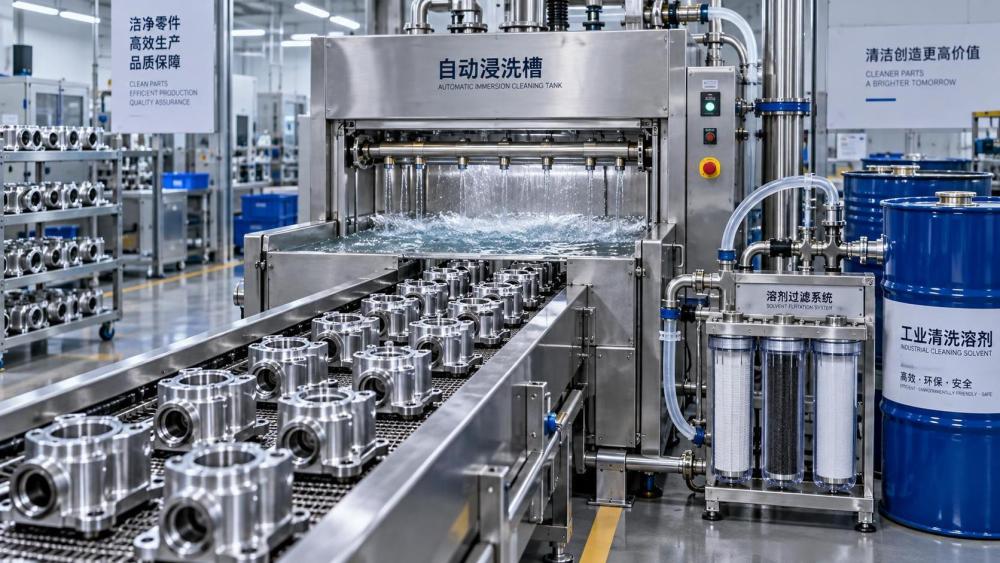
The cleaning method changes the decision as well. Wipe cleaning, immersion tanks, spray systems, ultrasonic units, vapour degreasing, and automated closed-loop equipment place different demands on evaporation, flash point, bath life, filtration, residue level, and vapour control. A fast-drying wipe solvent is not automatically suitable for an immersion process, where controlled evaporation and bath stability may matter more than immediate dry time.
Before comparing suppliers, the internal specification should state:
- the soil or mixture of soils to be removed;
- the substrate, including coatings, adhesives, seals, and sensitive assemblies;
- the required cleanliness endpoint, such as visibly oil-free, water-break-free, coating-ready, or low-residue;
- the cleaning equipment and operating temperature;
- drying-time limits and allowable residue;
- the destination market and site-level safety or environmental restrictions.
Without this definition, supplier quotations are rarely comparable. They merely describe different chemicals sold under a similar commercial purpose.
Compare cleaning yield, not only solvent strength
High solvency can be valuable, but it is not a complete performance measure. A practical wholesale comparison asks how much contaminant a solvent can remove before replacement, whether it redistributes oil onto cleaned parts, how easily it separates from water or displaced soils, and whether it remains effective as the bath ages.
For recirculated systems, oil loading and filtration behaviour can materially affect consumption. Some solvents hold dissolved soils effectively but retain contamination in the working bath, eventually reducing cleaning consistency. Others can be managed more easily through settling, decanting, filtration, or oil separation. The best choice depends on the process design rather than a universal solvent ranking.
Residue should receive equal attention. A slow-evaporating material can provide useful contact time but may leave a film that interferes with painting, bonding, plating, inspection, or electrical performance. Conversely, a highly volatile solvent can shorten cycle time but may generate excessive losses in open equipment. For precision or high-purity applications, specify non-volatile residue limits and, where relevant, water content, particle control, ionic contamination, and packaging cleanliness.
Trial criteria should be measurable. Visual inspection alone is often insufficient for parts destined for coating, assembly, or electronic use. Depending on the process, the acceptance method may involve water-break testing, gravimetric residue measurement, contact-angle assessment, extractable residue testing, or a downstream adhesion and coating test. The procurement specification does not need to prescribe one universal test, but it should identify who defines acceptance and what result constitutes a pass.
Evaporation rate is a cost and process variable
Fast evaporation is frequently mistaken for better efficiency. It can be beneficial when a manual operation needs rapid turnaround or when trapped solvent is unacceptable. It can also increase vapour loss, make wipe processes less forgiving, and create cooling effects that lead to moisture condensation on parts.
Slower solvents may provide better wetting and longer dwell time, but they can extend drying and require additional energy, extraction, or handling time. In an automated process, this may become the dominant cost even when the purchase price is favourable.
Suppliers should be asked for an evaporation-rate reference method, not just qualitative terms such as “fast” or “medium drying.” Values measured under different methods should not be treated as directly interchangeable. Boiling range, flash point, vapour pressure, and composition are also useful because they indicate how the product may behave in storage, in open tanks, and under heated processing conditions.
A narrow boiling range can support more predictable evaporation and bath management. A broad-range blend may be acceptable or even useful in some applications, but its lighter fractions can be lost preferentially during use. If that occurs, the remaining bath may change in cleaning power, dry time, or flash point. This is a particular reason to ask how a supplier controls blend composition across batches.
Safety and VOC status must be assessed at the delivered-use level
“Low odour,” “safer,” “non-toxic,” and “eco-friendly” are not adequate purchasing specifications. Solvents should be assessed through their Safety Data Sheet (SDS), technical data sheet, classification information, intended use conditions, and applicable local requirements. Hazard classification, occupational exposure controls, flammability, aspiration hazard, skin effects, and waste characteristics may differ significantly among products that remove the same soil.
Flash point should be considered with the real process temperature, not in isolation. A product with a nominally favourable flash point may still require strict controls if it is sprayed, heated, atomised, or used near ignition sources. Conversely, a non-flammable alternative may carry different health, environmental, cost, or cleaning-performance trade-offs.
VOC considerations require similar discipline. The relevant regulatory definition and allowable use can differ by jurisdiction, industrial sector, installation permit, and product category. A solvent described as low-VOC by one supplier may not satisfy the operating or reporting requirements at the destination site. Procurement documents should require suppliers to identify the basis for any VOC claim, the test method or calculation approach used, and the product composition range relevant to that claim.
For cross-border purchasing, confirm that the SDS is available in the required language and formatted for the destination market where necessary. Also verify whether the product is subject to chemical inventory, labelling, transport, or restricted-substance obligations applicable to the intended import and use. These checks should occur before a purchase commitment, not after goods have been packed for export.
Wholesale cost should be calculated per cleaned output
Unit price is only one component of the cost equation. A more useful internal comparison converts the offer into cost per cleaned part, square metre, production batch, or operating hour. The calculation should include expected consumption, losses from evaporation or drag-out, bath replacement frequency, cleaning rejects, drying time, waste treatment, transport charges, storage controls, and the labour required to manage the process.
Bulk format deserves separate evaluation. Drums, pails, IBCs, tank deliveries, and returnable packaging each change handling risk, storage needs, residual product loss, and freight efficiency. An IBC can reduce packaging cost per litre, but only if the site has suitable unloading, bunding, inventory turnover, and contamination-control practices. Buying a large quantity simply to obtain a price break can be counterproductive when shelf life, formulation stability, or storage restrictions create avoidable stock risk.
Specification control is more important than a generic purity claim
Purity is meaningful only when linked to the product’s intended function. For a simple maintenance degreasing application, a general assay value may be less important than flash point, distillation range, water content, non-volatile residue, odour, and consistency. For a precision-cleaning application, trace residues and contamination profiles can be decisive even where the nominal purity looks high.
A purchase specification should identify the critical-to-use properties and their acceptable ranges. It should also state the test methods, where they are relevant to release decisions. “Equivalent to sample” is weak language unless the sample itself has been characterised and retained as a reference. A supplier’s certificate of analysis is valuable only if it reports the properties that control performance and if those properties are measured consistently.
For formulated degreasers, request disclosure sufficient to assess compatibility, transport status, regulatory treatment, and change risk. Full proprietary formulation disclosure may not be commercially available, but a supplier should be able to provide a defined product identity, SDS, key physical properties, declared hazardous constituents where required, and notification procedures for material changes.
Supplier reliability is part of the technical decision
Wholesale solvent supply can be disrupted by feedstock availability, transport restrictions, production scheduling, packaging shortages, and changes in export documentation. A technically acceptable solvent remains a poor choice if batch consistency or delivery reliability cannot support production.
Evaluation should therefore include the manufacturing source, whether the supplier is a producer or distributor, batch traceability, normal lead time, minimum order quantity, packaging availability, and contingency arrangements. A distributor can be a practical source when it maintains local inventory and technical support, but the approval process should still establish the actual producer, the approved grade, and whether substitution is permitted.
Change control is frequently overlooked. Suppliers should notify the buyer before changes to manufacturing location, feedstock route, formulation, specification limits, packaging material, or testing methods that may affect performance, safety, or compliance. This is particularly important where a solvent is used before painting, bonding, coating, or sensitive assembly; an unnoticed change can emerge later as a downstream quality failure.
Use samples to validate the exact commercial grade
Testing should use the same grade, package type, and expected manufacturing source proposed for the wholesale contract. A laboratory sample that is not representative of production supply provides limited assurance. The evaluation should include the intended process conditions: soil loading, dwell time, temperature, agitation, rinse or drying conditions, and downstream operation.
A disciplined sample protocol also prevents disputes. Record the batch number, test method, observed result, acceptance criteria, and any operating adjustments required to achieve the result. If a solvent works only after a process modification, the modification needs to be costed and formally accepted rather than assumed to be free.
The strongest wholesale choice is rarely the product with the lowest quoted price or the most impressive generic performance claim. It is the grade with a controlled specification, demonstrated cleaning fit, manageable safety and VOC position, predictable delivered cost, and a supply arrangement that remains stable after the first order. That standard of comparison turns degreasing solvents wholesale from a commodity purchase into a controlled production input.
Related News
 Antioxidants & Natural PreservativesWhat Quality Checks Matter When Sourcing Butylparaben for Personal CareButylparaben for personal care sourcing guide: compare assay, impurities, physical performance, documentation, traceability, and supplier quality to reduce formulation risk.MORE+
 Nano-microcapsule FormulationsHow Encapsulated Flavors Protect Taste During Processing and StorageEncapsulated Flavors protect taste from heat, oxygen, moisture, and storage loss. Explore smarter release, carrier selection, and processing strategies.MORE+
 Chelated Trace Element FertilizersHow Greenhouse Fertigation Systems Reduce Water and Fertilizer WasteGreenhouse fertigation systems reduce water and fertilizer waste with precise dosing, uniform irrigation, drainage monitoring, and smarter crop-zone control. Learn practical strategies.MORE+
 Supercritical CO2 Essential OilsHow Natural Essential Oil Blends Improve Consistent Product FragranceNatural essential oil blends help brands achieve consistent, appealing fragrance across batches. Explore smart blend design, stability testing, and product compatibility strategies.MORE+
 Non-ionic Surfactants & DefoamersHow to Choose Non Ionic Low Foaming Surfactants for CIP CleaningNon ionic low foaming surfactants for CIP cleaning: learn how to balance wetting, foam control, compatibility, and rinseability for reliable cleaning performance.MORE+
 Nano-microcapsule FormulationsHow Food Grade Cyclodextrin Complexes Protect Sensitive FlavorsFood grade cyclodextrin inclusion complexes help protect sensitive flavors from oxidation, evaporation, and processing loss while supporting controlled release and consistent sensory quality.MORE+
 Polymer-Coated Water Soluble NPKHow Fertilizer Coating Polymers Improve NPK Granule ReleaseFertilizer coating polymers for NPK granules improve controlled nutrient release, reduce loss risks, and enhance product consistency. Discover key selection and process insights.MORE+
 Chelated Trace Element FertilizersWhat Diammonium Phosphate Means for Crop Nutrition PlanningDiammonium Phosphate: learn how DAP supports early phosphorus access, nitrogen budgeting, smart placement, and balanced crop nutrition planning.MORE+
 Maillard Reaction Savory FlavorsHow to Assess a Flavor Bases Supplier List for Reliable SourcingGlobal Fine Chemicals & Agrochemical Intelligence Network flavor bases supplier list: assess specs, samples, supply risk, and true cost to source with confidence.MORE+
 Hydrocolloids & EmulsifiersHow Konjac Gum Powder Improves Texture in Low-Calorie FoodsKonjac gum powder improves body, stability, and mouthfeel in low-calorie foods. Discover practical tips for smoother sauces, beverages, and reduced-fat formulations.MORE+
 Supercritical CO2 Essential OilsWhat to Check Before Choosing a Botanical Essential Oils ManufacturerChoose a botanical essential oils manufacturer with confidence. Explore key checks for purity, traceability, compliance, batch consistency, and reliable supply.MORE+
 Microencapsulated FragrancesHow Fragrance Carriers for Detergents Improve Scent PerformanceFragrance carriers for detergents improve stability, fabric deposition, and long-lasting scent. Explore practical solutions for better wash-to-wear fragrance performance.MORE+
 Antioxidants & Natural PreservativesWhen Propyl Gallate Antioxidant Is the Right Choice for Oil StabilityPropyl gallate antioxidant: learn when it is the right choice for oil stability, shelf-life protection, processing compatibility, and smarter formulation decisions.MORE+
 Antioxidants & Natural PreservativesHow Potassium Sorbate Extends Shelf Life in Food and Beverage ProductsPotassium Sorbate helps food and beverage brands control yeast and mold spoilage. Explore pH, dosage, processing, and packaging strategies for reliable shelf life.MORE+
 Antioxidants & Natural PreservativesHow to Source Bulk Herbal Extracts With Reliable Quality ControlBulk herbal extracts sourcing guide: compare suppliers, verify traceability, review CoAs, and build reliable quality controls for safer, consistent purchasing.MORE+
 Antioxidants & Natural PreservativesWhat to Check Before Sourcing Butylparaben for Personal Care FormulasButylparaben for personal care sourcing guide: check market eligibility, purity, supplier controls, formula compatibility, packaging, and total risk before buying.MORE+
 Targeted Bio-pesticides & APIsChoosing Microbial Fungicides for Foliar Diseases in Integrated Crop ProgramsMicrobial fungicides for foliar diseases: learn how to match biology, formulation, tank compatibility, and timing for stronger integrated crop protection.MORE+
 Targeted Bio-pesticides & APIsHow Microbial Insecticides Control Caterpillars With Lower Crop Residue RiskMicrobial insecticides for caterpillars help protect crops with targeted early-larval control and lower residue-management pressure. Learn timing, coverage, compliance, and scouting essentials.MORE+
 Microencapsulated FragrancesHow to Add Encapsulated Laundry Fragrances Without Weakening Wash ResultsEncapsulated laundry fragrances: learn how to boost long-lasting scent while protecting cleaning power, stability, foam control, and fabric care.MORE+
 Supercritical CO2 Essential OilsHow Aroma Ingredients Shape Lasting and Skin-Safe Personal Care ProductsAroma ingredients for personal care: discover how to achieve lasting scent, formulation stability, skin safety, and confident product performance.MORE+
 Targeted Bio-pesticides & APIsInsecticides Explained Through Labels, Active Ingredients, and SafetyInsecticides explained through labels, active ingredients, formulations, and safety. Learn how to compare products, manage risk, and make informed crop protection decisions.MORE+
 Heavy-duty Industrial DegreasersHow to Select Parts Wash Cleaners for Automotive ComponentsParts wash cleaners for automotive components: learn how to match chemistry, materials, rinsing, safety, and waste controls for reliable cleaning results.MORE+
 Chelated Trace Element FertilizersHow Precision Fertigation Systems Improve Water and Nutrient ControlPrecision fertigation systems improve water and nutrient control with accurate dosing, uniform irrigation, smart monitoring, and reduced waste. Discover how to optimize crop performance.MORE+
 Hydrocolloids & EmulsifiersHow Bulk Price Factors Affect Hydrocolloid Stabilizer Blend SourcingHydrocolloid stabilizer blends bulk price: compare dosage efficiency, quality consistency, logistics, and documentation to reduce total sourcing costs.MORE+
 Zero-Calorie Sweeteners & AcidulantsHow to Choose a Natural Sweeteners Supplier for Clean-Label ProductsNatural sweeteners supplier selection guide for clean-label products: compare formulation fit, traceability, documentation, and supply reliability.MORE+
 Non-ionic Surfactants & DefoamersWhat Cationic Surfactants Do and Where They Are UsedCationic Surfactants deliver antimicrobial action, conditioning, antistatic control, and surface treatment benefits. Explore key uses, compatibility, and safe selection tips.MORE+
 Targeted Bio-pesticides & APIsHow to Evaluate Pesticide Suspension Concentrates for Field StabilityPesticide Suspension Concentrates: learn how to evaluate field stability, redispersibility, dilution, tank-mix compatibility, and spray safety for reliable performance.MORE+
 Hydrocolloids & EmulsifiersHow Hydrocolloid Systems for Meat Products Improve Texture and YieldHydrocolloid systems for meat products improve yield, texture, water retention, and slicing quality. Explore practical formulation strategies for stable, high-performing meat products.MORE+
 Microencapsulated FragrancesHow Laundry Fragrances for Liquid Detergents Improve Scent LongevityLaundry fragrances for liquid detergents: discover how fragrance design, deposition, and encapsulation create lasting fabric freshness and stronger product appeal.MORE+
 Nano-microcapsule FormulationsChoosing Fragrance Preparations That Perform Well in Personal WashFragrance preparations for personal wash: learn how to select options that protect clarity, stability, foam, scent performance, and packaging compatibility.MORE+
 Controlled-Release ThermodynamicsModified Cyclodextrins Explained for Controlled Fragrance ReleaseModified cyclodextrins enable controlled fragrance release, odor control, and volatile-note protection. Explore how they optimize performance in detergents, fabric care, and more.MORE+
 Microencapsulated FragrancesHow Fragrance Delivery Systems Improve Fabric Softener LongevityFragrance delivery systems for fabric softeners improve scent longevity through smart protection, reliable deposition, and controlled release for lasting freshness.MORE+
 Supercritical CO2 Essential OilsHow to Evaluate a Natural Cardamom Oil Supplier for Reliable SupplyNatural cardamom oil supplier evaluation guide: verify botanical origin, purity, batch consistency, documentation, packaging, and delivery reliability for confident sourcing.MORE+
 Maillard Reaction Savory FlavorsHow Ethyl Maltol Purity Testing Supports Flavor Safety ComplianceEthyl Maltol purity testing strengthens flavor safety compliance through identity checks, impurity profiling, supplier verification, and audit-ready documentation.MORE+
 Microencapsulated FragrancesEssential Oil Extracts Compared for Fragrance and Wellness UsesEssential Oil Extracts compared for fragrance and wellness: explore scent profiles, extraction methods, stability, safety, and sourcing insights for smarter formulation choices.MORE+
 Zero-Calorie Sweeteners & AcidulantsWhat Drives Zero Calorie Sweeteners Bulk Price in 2026Zero calorie sweeteners bulk price in 2026: compare specifications, dosage, quality, freight, and supply risk to make smarter sourcing decisions.MORE+
 EPA FIFRA & FDA GRAS RegsSynthetic Food Preservatives Rules That Support Safer FormulasSynthetic Food Preservatives: learn the rules for safer formulas, compliant use levels, validated shelf life, labeling, and reliable microbial control.MORE+
 Micelle Fluidics & ChelationHow Anionic Industrial Dispersants Improve Coating StabilityAnionic industrial dispersants improve coating stability, pigment wetting, viscosity control, gloss, and storage performance. Learn how to select and test the right solution.MORE+
 Supercritical CO2 Essential OilsHow to Choose Eucalyptus Oil Grades for Clean, Consistent ProductsChoose the right Eucalyptus Oil grade with confidence. Compare cineole content, purity, origin, processing, documentation, and application fit for consistent products.MORE+
 Micelle Fluidics & ChelationWhat Are Cationic Surfactants and Where Are They Commonly Used?Cationic Surfactants deliver powerful surface affinity for disinfection, fabric softening, hair conditioning, antistatic control, and industrial treatments. Explore key uses and selection factors.MORE+







































