
How to Select Parts Wash Cleaners for Automotive Components
A parts washer can appear to be working well while still creating a quality or safety problem downstream. Components may look clean but retain oily films that interfere with coatings, bonding, assembly lubricants, or inspection. A cleaner may remove grease from steel brackets yet stain aluminum housings, embrittle certain plastics, or leave residues inside narrow passages. In a production environment, these failures are often discovered only after corrosion, poor adhesion, inconsistent torque behavior, sensor contamination, or worker complaints begin to appear.
When selecting parts wash cleaners for automotive components, start with the component, the soil, and the next process—not with degreasing strength alone. The best choice is the cleaner that reliably removes the relevant contamination at the available wash conditions while protecting materials, meeting rinse requirements, limiting exposure risks, and fitting the site’s waste-handling capability. A highly aggressive product is not automatically the safer or more effective option.
Define what “clean” must mean for the component
Cleaning specifications should reflect the function of the part after washing. A stamped steel cover going into temporary storage has a different cleanliness requirement from a fuel-system component, machined transmission part, painted trim piece, or electronic connector housing. Before comparing cleaner types, identify what must be removed and what failure the wash step is intended to prevent.
Typical contaminants include drawing compounds, machining oils, rust-preventive films, polishing residues, carbonaceous deposits, assembly greases, coolant residues, road soil, adhesive traces, and fingerprints. These soils behave differently. A low-viscosity machining oil may release readily in a mildly alkaline aqueous wash, while a tenacious wax, carbon deposit, or dried lubricant may need more time, heat, mechanical action, or a different chemistry.
The next operation gives the cleaning target practical meaning. Ask whether the part will be:
- coated, painted, plated, bonded, welded, or sealed;
- assembled with tight tolerances or fluid passages;
- placed into storage before further processing;
- inspected visually, gravimetrically, or by residue-sensitive methods;
- used in an area where residual cleaner could affect electrical, optical, or fluid-system performance.
A visual pass/fail standard alone is rarely enough for sensitive components. Some residues are nearly invisible but can disrupt adhesion, attract dust, create water spotting, or react with subsequent processing fluids. The cleaning evaluation should therefore distinguish between visible soil removal, water-break behavior, nonvolatile residue, particulate control, and drying quality where relevant.
Map the component materials before choosing chemistry
Automotive assemblies increasingly combine metals, elastomers, engineered plastics, adhesives, coatings, and electronic elements. A cleaner suitable for cast iron is not automatically suitable for aluminum, zinc-coated steel, magnesium-containing alloys, copper-based materials, polyamide, polycarbonate, acrylic, rubber seals, or bonded assemblies.
Material compatibility must include both the base material and its surface condition. Freshly machined aluminum may be more vulnerable to discoloration or etching than a protected aluminum component. A steel part may tolerate a stronger alkaline cleaner but flash-rust after washing if the rinse water, drying cycle, or corrosion inhibitor is poorly controlled. Plastics can show swelling, stress cracking, dulling, or loss of dimensional stability when exposed to incompatible solvents or elevated wash temperatures.
Compatibility screening should be performed on representative production parts, not only on flat test coupons. Real components include blind holes, sharp edges, threaded areas, mixed materials, welds, seals, surface treatments, and crevices where chemistry can concentrate. The test should also reflect the intended exposure time and operating temperature, including unplanned delays that can occur during a line stoppage.
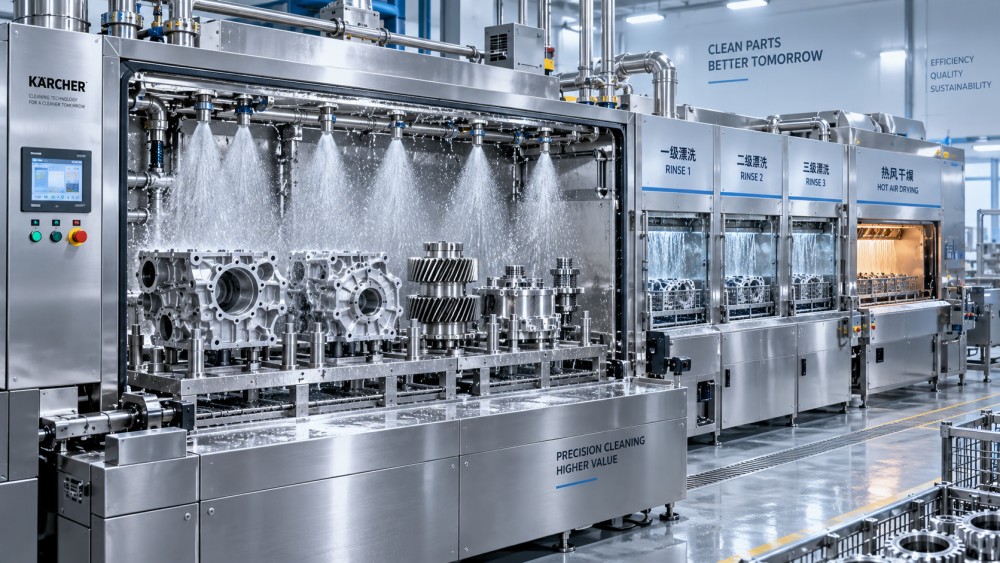
Choose between aqueous, solvent-based, and hybrid cleaning approaches
The main cleaner category should be selected according to soil type, materials, equipment, and environmental controls. Each approach has useful applications and limitations.
Aqueous cleaners
Aqueous systems commonly use surfactants, builders, alkalinity or acidity controls, corrosion inhibitors, chelants, and additives that help lift and disperse soils. They are often well suited to machining fluids, oils, light grease, particulate soils, and many general manufacturing contaminants. Their performance depends heavily on concentration, temperature, impingement, bath condition, and rinse design.
An aqueous cleaner can be a strong choice where automated spray washing, immersion, ultrasonic action, or multi-stage rinsing is available. However, it requires attention to water quality, bath loading, foam behavior, drying capacity, and corrosion control. Poorly managed rinse stages can redeposit soil or leave mineral spots that undermine otherwise good wash performance.
Solvent-based cleaners
Solvent systems may be considered for water-sensitive parts, certain heavy oils, waxy contaminants, or applications where rapid drying is important. Their suitability depends on flash point, vapor control, ventilation, worker exposure potential, plastic and elastomer compatibility, and local requirements for storage, handling, emissions, and waste.
Solvents can remove oily contamination efficiently, but they may not remove salts, inorganic residues, or fine particles as effectively without a complementary process. They can also dissolve soils and redistribute them if filtration, bath maintenance, or drying controls are inadequate. A part that emerges dry is not necessarily residue-free.
Emulsion and semi-aqueous systems
Some operations need a balance between solvent-like oil removal and water-rinsable processing. Semi-aqueous or emulsion-based systems may provide that balance, but they require careful control of emulsion stability, carryover, rinse compatibility, and waste separation. These systems should be evaluated as a complete process rather than as a chemical substitute dropped into an existing washer.
Evaluate the wash process, not just the product sample
A laboratory wipe test or short soak test can identify obvious incompatibilities, but it cannot predict line performance by itself. Parts washing depends on four linked factors: chemistry, time, temperature, and mechanical action. Reducing one factor often requires adjustment in another. A lower-temperature process may need longer exposure, stronger impingement, improved surfactant action, or more frequent bath maintenance.
Review the actual washer configuration before making a selection. Important questions include whether the machine uses spray, immersion, ultrasonic energy, agitation, brushing, or a combination of methods; how consistently it controls temperature; whether filters remove fines; how oil is separated; and whether nozzles can reach recessed areas. A cleaner that performs well in an immersion tank may fail in a spray cabinet with insufficient contact time.
Geometry is especially important for automotive components. Deep bores, oil galleries, threaded holes, folded seams, porous castings, and enclosed channels can trap both contamination and wash solution. In these cases, evaluate drainage orientation, part fixturing, spray coverage, rinse flow, and drying airflow together. Cleaning chemistry cannot compensate indefinitely for poor access.
Do not treat rinse quality as a secondary issue
The rinse stage often determines whether a cleaned part remains acceptable. Residual cleaner can cause water spotting, interfere with coatings, leave ionic deposits, promote corrosion, or create foaming in a subsequent process. Rinse water may also become contaminated through carryover from the wash tank, especially when parts have complex geometry or high surface area.
For parts moving into painting, bonding, precision assembly, or fluid-contact service, define how rinse performance will be checked. Depending on the process, this may include visual inspection under controlled lighting, water-break observation, conductivity monitoring, residue measurement, or a downstream process-specific evaluation. The method should relate to the actual failure risk rather than being selected only because it is easy to perform.
Drying deserves the same level of review. Water retained in seams or cavities can cause flash rust, mineral spotting, microbial growth in some systems, or packaging moisture. Hot-air drying, vacuum drying, blow-off, and drainage time each have different implications for energy use, component temperature, and internal passage clearance.
Build safety review into the selection stage
Cleaner selection affects daily handling, not just final part quality. Safety review should consider concentrate handling, dilution, charging the washer, splash potential, vapor generation, aerosol formation from spray equipment, maintenance activities, spill response, and emergency access. The hazard profile may change after the cleaner has collected oils, metals, and other process soils.
Request and review current safety documentation for the intended product and concentration. Pay attention to corrosivity, skin and eye hazards, inhalation concerns, flammability, incompatibilities, recommended protective equipment, ventilation needs, and storage conditions. A cleaner that is manageable in a closed automated system may present a different risk in manual brush washing or open-tank immersion.
Temperature can change the exposure profile substantially. Heating may improve cleaning speed but can increase vapor release, misting, odor, or worker contact risk. High-pressure spray can create aerosols even from products that appear low-risk in static use. Controls should therefore be matched to the equipment and task, including enclosure, local exhaust, automated dosing, splash guarding, and clear maintenance procedures.
Plan for bath life, soil loading, and waste before approval
A cleaner should not be approved only because a fresh bath performs well. As soil accumulates, the bath can lose detergency, become overloaded with oil, deposit fines, foam excessively, or transfer contamination back to parts. The realistic selection question is how performance changes over the expected operating cycle and what controls are available to maintain it.
Useful operating indicators may include concentration, temperature, pH where relevant, soil loading, oil separation performance, filtration condition, conductivity in rinse stages, foam level, and visible bath contamination. The appropriate parameters depend on the chemistry and process, but the operating team should be able to measure them consistently and act when results drift.
Waste handling must be considered early because spent wash solutions can contain oils, metal fines, dissolved metals, additives, and other process-derived contaminants. Compatibility with existing oil separation, wastewater treatment, sludge handling, containerization, and disposal procedures can influence the practical suitability of a cleaner. Do not assume that a product described as water-based will be simple to discharge after use; the waste stream is defined by both the product and the soils removed.
A practical approval sequence
A controlled selection process reduces the chance of changing chemistry only to move the problem downstream. Start by documenting the component materials, contamination sources, current cleaning defects, equipment limits, required cleanliness level, and next processing step. Then narrow the options by material compatibility and safety constraints before conducting process-representative trials.
- Collect representative dirty parts, including difficult geometries and the highest expected soil condition.
- Test candidate cleaners at realistic concentration, temperature, contact time, and mechanical action.
- Inspect for soil removal, staining, corrosion, residue, drainage, drying, and any damage to plastics, seals, or coatings.
- Run a longer trial that reflects bath aging and carryover rather than relying only on fresh-solution results.
- Confirm that rinse, drying, ventilation, personal protection, and waste controls remain suitable for normal operation and maintenance.
- Set acceptance criteria and routine monitoring methods before full implementation.
When a component is safety-critical, residue-sensitive, or made from several vulnerable materials, the final decision should be supported by documented compatibility and process validation. The objective is not to select the strongest cleaner on paper, but to establish a stable cleaning condition that protects the part, the people handling it, and the next stage of automotive production.
Related News
 Antioxidants & Natural PreservativesWhat Quality Checks Matter When Sourcing Butylparaben for Personal CareButylparaben for personal care sourcing guide: compare assay, impurities, physical performance, documentation, traceability, and supplier quality to reduce formulation risk.MORE+
 Nano-microcapsule FormulationsHow Encapsulated Flavors Protect Taste During Processing and StorageEncapsulated Flavors protect taste from heat, oxygen, moisture, and storage loss. Explore smarter release, carrier selection, and processing strategies.MORE+
 Chelated Trace Element FertilizersHow Greenhouse Fertigation Systems Reduce Water and Fertilizer WasteGreenhouse fertigation systems reduce water and fertilizer waste with precise dosing, uniform irrigation, drainage monitoring, and smarter crop-zone control. Learn practical strategies.MORE+
 Supercritical CO2 Essential OilsHow Natural Essential Oil Blends Improve Consistent Product FragranceNatural essential oil blends help brands achieve consistent, appealing fragrance across batches. Explore smart blend design, stability testing, and product compatibility strategies.MORE+
 Non-ionic Surfactants & DefoamersHow to Choose Non Ionic Low Foaming Surfactants for CIP CleaningNon ionic low foaming surfactants for CIP cleaning: learn how to balance wetting, foam control, compatibility, and rinseability for reliable cleaning performance.MORE+
 Nano-microcapsule FormulationsHow Food Grade Cyclodextrin Complexes Protect Sensitive FlavorsFood grade cyclodextrin inclusion complexes help protect sensitive flavors from oxidation, evaporation, and processing loss while supporting controlled release and consistent sensory quality.MORE+
 Polymer-Coated Water Soluble NPKHow Fertilizer Coating Polymers Improve NPK Granule ReleaseFertilizer coating polymers for NPK granules improve controlled nutrient release, reduce loss risks, and enhance product consistency. Discover key selection and process insights.MORE+
 Chelated Trace Element FertilizersWhat Diammonium Phosphate Means for Crop Nutrition PlanningDiammonium Phosphate: learn how DAP supports early phosphorus access, nitrogen budgeting, smart placement, and balanced crop nutrition planning.MORE+
 Maillard Reaction Savory FlavorsHow to Assess a Flavor Bases Supplier List for Reliable SourcingGlobal Fine Chemicals & Agrochemical Intelligence Network flavor bases supplier list: assess specs, samples, supply risk, and true cost to source with confidence.MORE+
 Hydrocolloids & EmulsifiersHow Konjac Gum Powder Improves Texture in Low-Calorie FoodsKonjac gum powder improves body, stability, and mouthfeel in low-calorie foods. Discover practical tips for smoother sauces, beverages, and reduced-fat formulations.MORE+
 Supercritical CO2 Essential OilsWhat to Check Before Choosing a Botanical Essential Oils ManufacturerChoose a botanical essential oils manufacturer with confidence. Explore key checks for purity, traceability, compliance, batch consistency, and reliable supply.MORE+
 Microencapsulated FragrancesHow Fragrance Carriers for Detergents Improve Scent PerformanceFragrance carriers for detergents improve stability, fabric deposition, and long-lasting scent. Explore practical solutions for better wash-to-wear fragrance performance.MORE+
 Antioxidants & Natural PreservativesWhen Propyl Gallate Antioxidant Is the Right Choice for Oil StabilityPropyl gallate antioxidant: learn when it is the right choice for oil stability, shelf-life protection, processing compatibility, and smarter formulation decisions.MORE+
 Antioxidants & Natural PreservativesHow Potassium Sorbate Extends Shelf Life in Food and Beverage ProductsPotassium Sorbate helps food and beverage brands control yeast and mold spoilage. Explore pH, dosage, processing, and packaging strategies for reliable shelf life.MORE+
 Antioxidants & Natural PreservativesHow to Source Bulk Herbal Extracts With Reliable Quality ControlBulk herbal extracts sourcing guide: compare suppliers, verify traceability, review CoAs, and build reliable quality controls for safer, consistent purchasing.MORE+
 Antioxidants & Natural PreservativesWhat to Check Before Sourcing Butylparaben for Personal Care FormulasButylparaben for personal care sourcing guide: check market eligibility, purity, supplier controls, formula compatibility, packaging, and total risk before buying.MORE+
 Targeted Bio-pesticides & APIsChoosing Microbial Fungicides for Foliar Diseases in Integrated Crop ProgramsMicrobial fungicides for foliar diseases: learn how to match biology, formulation, tank compatibility, and timing for stronger integrated crop protection.MORE+
 Targeted Bio-pesticides & APIsHow Microbial Insecticides Control Caterpillars With Lower Crop Residue RiskMicrobial insecticides for caterpillars help protect crops with targeted early-larval control and lower residue-management pressure. Learn timing, coverage, compliance, and scouting essentials.MORE+
 Microencapsulated FragrancesHow to Add Encapsulated Laundry Fragrances Without Weakening Wash ResultsEncapsulated laundry fragrances: learn how to boost long-lasting scent while protecting cleaning power, stability, foam control, and fabric care.MORE+
 Supercritical CO2 Essential OilsHow Aroma Ingredients Shape Lasting and Skin-Safe Personal Care ProductsAroma ingredients for personal care: discover how to achieve lasting scent, formulation stability, skin safety, and confident product performance.MORE+
 Targeted Bio-pesticides & APIsInsecticides Explained Through Labels, Active Ingredients, and SafetyInsecticides explained through labels, active ingredients, formulations, and safety. Learn how to compare products, manage risk, and make informed crop protection decisions.MORE+
 Heavy-duty Industrial DegreasersHow to Select Parts Wash Cleaners for Automotive ComponentsParts wash cleaners for automotive components: learn how to match chemistry, materials, rinsing, safety, and waste controls for reliable cleaning results.MORE+
 Chelated Trace Element FertilizersHow Precision Fertigation Systems Improve Water and Nutrient ControlPrecision fertigation systems improve water and nutrient control with accurate dosing, uniform irrigation, smart monitoring, and reduced waste. Discover how to optimize crop performance.MORE+
 Hydrocolloids & EmulsifiersHow Bulk Price Factors Affect Hydrocolloid Stabilizer Blend SourcingHydrocolloid stabilizer blends bulk price: compare dosage efficiency, quality consistency, logistics, and documentation to reduce total sourcing costs.MORE+
 Zero-Calorie Sweeteners & AcidulantsHow to Choose a Natural Sweeteners Supplier for Clean-Label ProductsNatural sweeteners supplier selection guide for clean-label products: compare formulation fit, traceability, documentation, and supply reliability.MORE+
 Non-ionic Surfactants & DefoamersWhat Cationic Surfactants Do and Where They Are UsedCationic Surfactants deliver antimicrobial action, conditioning, antistatic control, and surface treatment benefits. Explore key uses, compatibility, and safe selection tips.MORE+
 Targeted Bio-pesticides & APIsHow to Evaluate Pesticide Suspension Concentrates for Field StabilityPesticide Suspension Concentrates: learn how to evaluate field stability, redispersibility, dilution, tank-mix compatibility, and spray safety for reliable performance.MORE+
 Hydrocolloids & EmulsifiersHow Hydrocolloid Systems for Meat Products Improve Texture and YieldHydrocolloid systems for meat products improve yield, texture, water retention, and slicing quality. Explore practical formulation strategies for stable, high-performing meat products.MORE+
 Microencapsulated FragrancesHow Laundry Fragrances for Liquid Detergents Improve Scent LongevityLaundry fragrances for liquid detergents: discover how fragrance design, deposition, and encapsulation create lasting fabric freshness and stronger product appeal.MORE+
 Nano-microcapsule FormulationsChoosing Fragrance Preparations That Perform Well in Personal WashFragrance preparations for personal wash: learn how to select options that protect clarity, stability, foam, scent performance, and packaging compatibility.MORE+
 Controlled-Release ThermodynamicsModified Cyclodextrins Explained for Controlled Fragrance ReleaseModified cyclodextrins enable controlled fragrance release, odor control, and volatile-note protection. Explore how they optimize performance in detergents, fabric care, and more.MORE+
 Microencapsulated FragrancesHow Fragrance Delivery Systems Improve Fabric Softener LongevityFragrance delivery systems for fabric softeners improve scent longevity through smart protection, reliable deposition, and controlled release for lasting freshness.MORE+
 Supercritical CO2 Essential OilsHow to Evaluate a Natural Cardamom Oil Supplier for Reliable SupplyNatural cardamom oil supplier evaluation guide: verify botanical origin, purity, batch consistency, documentation, packaging, and delivery reliability for confident sourcing.MORE+
 Maillard Reaction Savory FlavorsHow Ethyl Maltol Purity Testing Supports Flavor Safety ComplianceEthyl Maltol purity testing strengthens flavor safety compliance through identity checks, impurity profiling, supplier verification, and audit-ready documentation.MORE+
 Microencapsulated FragrancesEssential Oil Extracts Compared for Fragrance and Wellness UsesEssential Oil Extracts compared for fragrance and wellness: explore scent profiles, extraction methods, stability, safety, and sourcing insights for smarter formulation choices.MORE+
 Zero-Calorie Sweeteners & AcidulantsWhat Drives Zero Calorie Sweeteners Bulk Price in 2026Zero calorie sweeteners bulk price in 2026: compare specifications, dosage, quality, freight, and supply risk to make smarter sourcing decisions.MORE+
 EPA FIFRA & FDA GRAS RegsSynthetic Food Preservatives Rules That Support Safer FormulasSynthetic Food Preservatives: learn the rules for safer formulas, compliant use levels, validated shelf life, labeling, and reliable microbial control.MORE+
 Micelle Fluidics & ChelationHow Anionic Industrial Dispersants Improve Coating StabilityAnionic industrial dispersants improve coating stability, pigment wetting, viscosity control, gloss, and storage performance. Learn how to select and test the right solution.MORE+
 Supercritical CO2 Essential OilsHow to Choose Eucalyptus Oil Grades for Clean, Consistent ProductsChoose the right Eucalyptus Oil grade with confidence. Compare cineole content, purity, origin, processing, documentation, and application fit for consistent products.MORE+
 Micelle Fluidics & ChelationWhat Are Cationic Surfactants and Where Are They Commonly Used?Cationic Surfactants deliver powerful surface affinity for disinfection, fabric softening, hair conditioning, antistatic control, and industrial treatments. Explore key uses and selection factors.MORE+







































