
How to Evaluate a Degreasing Surfactants Factory for Industrial Cleaning
A cleaning formulation may look acceptable on paper yet fail once it reaches a parts washer, spray line, maintenance operation, or precision cleaning process. Oil remains in threaded areas, foam overwhelms a recirculating tank, aluminum dulls after repeated exposure, or rinse water carries a visible film into the next production step. In these situations, the purchasing issue is not simply whether a surfactant has a stated active-content range. It is whether the manufacturer can repeatedly supply a material that performs within the operating limits of the cleaning system.
To evaluate a degreasing surfactants factory, start with application fit and production control rather than unit price. A suitable supplier should be able to explain the surfactant chemistry, identify its behavior in the intended formulation, provide batch-level documentation, discuss material compatibility, and show how it manages changes in raw materials, specifications, packaging, and lead time. The best factory is not necessarily the one offering the lowest quoted price; it is the one that creates the lowest risk of cleaning failure, reformulation work, rejected parts, and supply interruption.
Begin with the actual soil and cleaning process
“Degreasing” covers very different conditions. A surfactant that removes light machining oil from steel at moderate temperature may not be appropriate for burnt lubricants, stamping compounds, waxy protective films, carbonaceous soil, or mixed oil-and-particle contamination. Before requesting quotations, define what must be removed and how the cleaner will be used.
Procurement teams should collect information from production, quality, and formulation personnel before approaching suppliers. Useful details include the substrate, soil type, cleaning method, operating temperature, contact time, water quality, rinse sequence, and required post-cleanliness condition. A supplier cannot give a technically meaningful recommendation if the request only says “industrial degreaser surfactant.”
- Substrate: carbon steel, stainless steel, aluminum, copper alloys, plastics, painted surfaces, glass, or electronic assemblies.
- Soil: mineral oil, synthetic lubricant, grease, polishing compound, drawing oil, fingerprints, particulate matter, or a combination of contaminants.
- Process: immersion, ultrasonic cleaning, spray washing, manual wiping, foam cleaning, low-pressure wash, or circulation cleaning.
- Operating conditions: temperature, water hardness, pH range, agitation, tank turnover, and expected bath life.
- Downstream requirement: coating adhesion, welding, plating, painting, assembly, food-contact handling, drying appearance, or residue-sensitive processing.
A capable manufacturer will use these details to ask further questions rather than immediately naming a “universal” product. That response is useful evidence of technical discipline. It also helps distinguish a factory that understands industrial cleaning formulations from a trader repeating generic product descriptions.
Assess performance as a system, not a single specification
Surfactant active content, cloud point, HLB value, pH, and appearance are relevant, but none of them alone predicts cleaning performance. Degreasing depends on wetting, emulsification, soil lift, dispersion, tolerance to salts and alkali, foam behavior, rinsing, and interaction with builders, solvents, corrosion inhibitors, and defoamers. A nonionic surfactant may have strong oil-emulsifying properties but create persistent foam in a spray washer. Another may rinse cleanly but lose efficiency in hard water or high-electrolyte formulations.
Ask the factory how it evaluates its material in use conditions. The answer does not need to include proprietary formulas, but it should identify the parameters the supplier monitors and the limitations it recognizes. For example, the factory should be able to discuss whether the surfactant is better suited to low-foam spray cleaning, alkaline immersion cleaning, solvent-assisted degreasing, or neutral maintenance products.
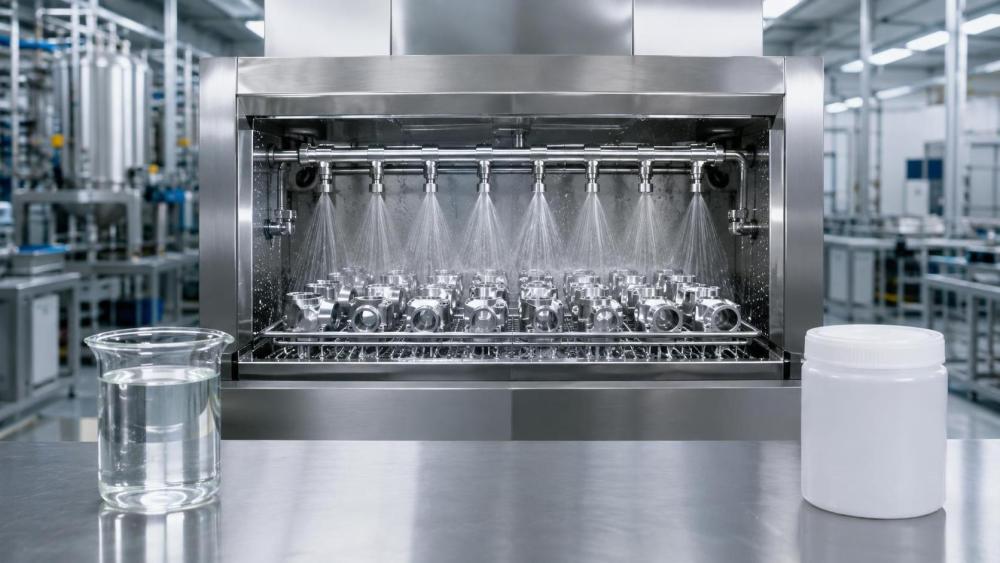
Request a representative sample for controlled evaluation before approving a commercial order. The trial should compare the candidate with the current material or a defined internal benchmark under realistic conditions. Avoid testing only at a convenient concentration in a laboratory beaker. Where possible, test the planned water source, intended pH, actual temperature, realistic soil load, and expected rinse conditions. Observe not only initial cleaning but also foam accumulation, bath stability, residue after drying, and changes in performance as oil builds up.
Questions that reveal whether performance claims are usable
- What surfactant type is supplied, and what role is it intended to play: wetting, emulsification, detergency, dispersion, or low-foam control?
- At what temperature range does the material remain effective and stable?
- How does it behave in alkaline, neutral, or mildly acidic systems?
- Does performance change in hard water, high-salt formulations, or in the presence of hydrotropes and solvents?
- What foam behavior should be expected under spray, recirculation, and agitation?
- Are there known incompatibilities with common builders, corrosion inhibitors, preservatives, or defoamers?
- What test methods support the stated specifications and application guidance?
Vague answers such as “good degreasing ability” or “suitable for all industrial cleaners” should trigger further investigation. Industrial cleaning is highly condition-dependent. A responsible supplier will state the boundaries of a product as clearly as its strengths.
Look beyond the sample: can the factory reproduce it?
A sample may perform well while later deliveries vary in color, odor, water content, active matter, cloud point, or impurity profile. Even modest variation can affect foam, clarity, dosing, viscosity, and cleaning consistency in a finished detergent. This is especially important when the surfactant is used in a tightly controlled formulation or where customers validate a cleaner before use.
Evaluate manufacturing consistency through documentation and discussion. Ask whether the factory maintains defined incoming-material requirements, in-process controls, finished-product release checks, and retained samples. The goal is not to demand every internal production detail. It is to understand whether the supplier has a repeatable quality system that can identify deviations before product is shipped.
It is reasonable to ask whether the commercial material will be produced by the same route and under the same quality requirements as the evaluation sample. A factory may supply a development sample from a different batch scale or blend. Clarifying this early prevents disputes when the first production delivery differs from what was tested.
Foam, rinse behavior, and residue often decide the real cost
In industrial cleaning, excessive foam can be more expensive than a slightly higher raw-material price. It may slow spray pressure, interfere with pumps, cause carryover, complicate wastewater treatment, or force the use of additional defoamer. Conversely, a very low-foam surfactant may not provide enough wetting or emulsification in a manual or immersion process. The right choice depends on equipment and process tolerance.
Rinse behavior deserves the same attention. A surfactant that removes oil effectively but leaves a hydrophilic film can affect coating adhesion, create water-break failures, or leave visible marks after drying. On precision components, a residue that is harmless in general-purpose maintenance cleaning may be unacceptable. Ask the factory whether the product is designed to be readily rinsed and whether its use requires a specific rinse sequence or concentration window.
Cleaning chemistry should also be assessed after the bath has been exposed to soil. Fresh-solution performance is only one part of the decision. The surfactant may emulsify oil so effectively that the bath becomes difficult to split, filter, skim, or maintain. In another system, controlled demulsification may be more valuable because it allows separated oil to be removed. The supplier should understand whether the intended process needs stable emulsification or easier oil separation.
Confirm compatibility before approving a formulation route
Material compatibility failures often appear after a cleaner has been scaled up. Aluminum may discolor in a high-alkaline blend, certain plastics can swell in solvent-containing systems, and sensitive coatings can lose gloss or adhesion. The surfactant itself may not be the only cause, but its interaction with the complete formulation can change wetting and chemical contact at the surface.
Ask for compatibility guidance, then verify it with application-specific testing. This is particularly important for mixed-metal assemblies, plated parts, painted equipment, elastomer seals, optical surfaces, and electronic components. A factory should not promise universal compatibility, but it should provide enough technical information to identify where testing is necessary.
Also review storage stability. Some surfactants become hazy, separate, crystallize, or change viscosity at low temperature. Others can darken or develop odor over time. These changes may not always reduce performance immediately, but they can disrupt automated dosing and alter the appearance of a formulated cleaning product. Clarify storage temperature, shelf-life conditions, freezing behavior, and any re-homogenization procedure needed after transport.
Documentation is part of the product
For purchasing teams, incomplete paperwork can delay qualification even when the material is technically acceptable. At minimum, determine whether the supplier can provide a current technical data sheet, safety data sheet, certificate of analysis, transport classification information where applicable, ingredient or composition support at the level required for your internal review, and packing details. The documents should be internally consistent: product name, grade, batch identifiers, test units, and storage information should not conflict.
Regulatory needs vary by market and end use. Rather than assuming that a surfactant is acceptable because it is widely used in cleaning products, define the documentation and restricted-substance information required by your organization and customers. This may include information related to worker safety, environmental handling, product labeling, wastewater constraints, or restricted ingredients. A reliable factory will be clear about what it can confirm, what must be assessed by the formulator, and what information requires a formal technical request.
Compare delivered cost and supply resilience
A low ex-works price can conceal high costs from packaging losses, unstable lead times, inconvenient minimum order quantities, inconsistent freight preparation, or limited response when a batch is questioned. Compare suppliers on the commercial conditions that affect day-to-day operations: available pack sizes, pallet configuration, container compatibility, labeling, lead-time communication, order flexibility, and the ability to support forecast changes.
Packaging is not an administrative detail. Surfactants may be supplied in drums, intermediate bulk containers, or bulk shipments, and each format affects handling, contamination risk, residual product loss, and storage space. Confirm whether the material can be pumped at site temperature, whether it requires heating, and whether seals, hoses, and transfer equipment are compatible. A product that is difficult to unload or dose reliably can create labor and safety issues long after the purchase order is closed.
Supply resilience should be examined without relying on unsupported assurances. Ask practical questions: Is the grade routinely produced or made only against order? Are there defined lead times for regular and urgent orders? How are production delays communicated? Can batch records and investigation support be provided promptly if a quality concern occurs? The quality of these answers often indicates how manageable the supplier relationship will be during a disruption.
Use a staged approval rather than a single purchasing decision
For a new source, approval is safer when divided into distinct gates. First, screen the factory’s technical response and documents. Next, evaluate a sample in the intended formulation or cleaning process. Then review a pilot or initial commercial batch against the approved sample, agreed specifications, packaging condition, and processing behavior. Only after these stages should the material move into routine purchasing.
Keep the approved sample, test observations, and final specification accessible to both procurement and technical teams. When a later issue arises, this record makes it easier to determine whether the change came from the surfactant batch, the broader formulation, operating conditions, water quality, soil load, or equipment maintenance. It also prevents the discussion from becoming a subjective argument about whether the material “seems different.”
A degreasing surfactants factory should ultimately be evaluated as a controlled source of application-critical material, not as a catalogue entry. When the supplier can connect product chemistry to soil removal, foam limits, rinse performance, compatibility, documentation, and repeatable supply, purchasing decisions become more defensible and cleaning operations become easier to control.
Related News
 Antioxidants & Natural PreservativesWhat Quality Checks Matter When Sourcing Butylparaben for Personal CareButylparaben for personal care sourcing guide: compare assay, impurities, physical performance, documentation, traceability, and supplier quality to reduce formulation risk.MORE+
 Nano-microcapsule FormulationsHow Encapsulated Flavors Protect Taste During Processing and StorageEncapsulated Flavors protect taste from heat, oxygen, moisture, and storage loss. Explore smarter release, carrier selection, and processing strategies.MORE+
 Chelated Trace Element FertilizersHow Greenhouse Fertigation Systems Reduce Water and Fertilizer WasteGreenhouse fertigation systems reduce water and fertilizer waste with precise dosing, uniform irrigation, drainage monitoring, and smarter crop-zone control. Learn practical strategies.MORE+
 Supercritical CO2 Essential OilsHow Natural Essential Oil Blends Improve Consistent Product FragranceNatural essential oil blends help brands achieve consistent, appealing fragrance across batches. Explore smart blend design, stability testing, and product compatibility strategies.MORE+
 Non-ionic Surfactants & DefoamersHow to Choose Non Ionic Low Foaming Surfactants for CIP CleaningNon ionic low foaming surfactants for CIP cleaning: learn how to balance wetting, foam control, compatibility, and rinseability for reliable cleaning performance.MORE+
 Nano-microcapsule FormulationsHow Food Grade Cyclodextrin Complexes Protect Sensitive FlavorsFood grade cyclodextrin inclusion complexes help protect sensitive flavors from oxidation, evaporation, and processing loss while supporting controlled release and consistent sensory quality.MORE+
 Polymer-Coated Water Soluble NPKHow Fertilizer Coating Polymers Improve NPK Granule ReleaseFertilizer coating polymers for NPK granules improve controlled nutrient release, reduce loss risks, and enhance product consistency. Discover key selection and process insights.MORE+
 Chelated Trace Element FertilizersWhat Diammonium Phosphate Means for Crop Nutrition PlanningDiammonium Phosphate: learn how DAP supports early phosphorus access, nitrogen budgeting, smart placement, and balanced crop nutrition planning.MORE+
 Maillard Reaction Savory FlavorsHow to Assess a Flavor Bases Supplier List for Reliable SourcingGlobal Fine Chemicals & Agrochemical Intelligence Network flavor bases supplier list: assess specs, samples, supply risk, and true cost to source with confidence.MORE+
 Hydrocolloids & EmulsifiersHow Konjac Gum Powder Improves Texture in Low-Calorie FoodsKonjac gum powder improves body, stability, and mouthfeel in low-calorie foods. Discover practical tips for smoother sauces, beverages, and reduced-fat formulations.MORE+
 Supercritical CO2 Essential OilsWhat to Check Before Choosing a Botanical Essential Oils ManufacturerChoose a botanical essential oils manufacturer with confidence. Explore key checks for purity, traceability, compliance, batch consistency, and reliable supply.MORE+
 Microencapsulated FragrancesHow Fragrance Carriers for Detergents Improve Scent PerformanceFragrance carriers for detergents improve stability, fabric deposition, and long-lasting scent. Explore practical solutions for better wash-to-wear fragrance performance.MORE+
 Antioxidants & Natural PreservativesWhen Propyl Gallate Antioxidant Is the Right Choice for Oil StabilityPropyl gallate antioxidant: learn when it is the right choice for oil stability, shelf-life protection, processing compatibility, and smarter formulation decisions.MORE+
 Antioxidants & Natural PreservativesHow Potassium Sorbate Extends Shelf Life in Food and Beverage ProductsPotassium Sorbate helps food and beverage brands control yeast and mold spoilage. Explore pH, dosage, processing, and packaging strategies for reliable shelf life.MORE+
 Antioxidants & Natural PreservativesHow to Source Bulk Herbal Extracts With Reliable Quality ControlBulk herbal extracts sourcing guide: compare suppliers, verify traceability, review CoAs, and build reliable quality controls for safer, consistent purchasing.MORE+
 Antioxidants & Natural PreservativesWhat to Check Before Sourcing Butylparaben for Personal Care FormulasButylparaben for personal care sourcing guide: check market eligibility, purity, supplier controls, formula compatibility, packaging, and total risk before buying.MORE+
 Targeted Bio-pesticides & APIsChoosing Microbial Fungicides for Foliar Diseases in Integrated Crop ProgramsMicrobial fungicides for foliar diseases: learn how to match biology, formulation, tank compatibility, and timing for stronger integrated crop protection.MORE+
 Targeted Bio-pesticides & APIsHow Microbial Insecticides Control Caterpillars With Lower Crop Residue RiskMicrobial insecticides for caterpillars help protect crops with targeted early-larval control and lower residue-management pressure. Learn timing, coverage, compliance, and scouting essentials.MORE+
 Microencapsulated FragrancesHow to Add Encapsulated Laundry Fragrances Without Weakening Wash ResultsEncapsulated laundry fragrances: learn how to boost long-lasting scent while protecting cleaning power, stability, foam control, and fabric care.MORE+
 Supercritical CO2 Essential OilsHow Aroma Ingredients Shape Lasting and Skin-Safe Personal Care ProductsAroma ingredients for personal care: discover how to achieve lasting scent, formulation stability, skin safety, and confident product performance.MORE+
 Targeted Bio-pesticides & APIsInsecticides Explained Through Labels, Active Ingredients, and SafetyInsecticides explained through labels, active ingredients, formulations, and safety. Learn how to compare products, manage risk, and make informed crop protection decisions.MORE+
 Heavy-duty Industrial DegreasersHow to Select Parts Wash Cleaners for Automotive ComponentsParts wash cleaners for automotive components: learn how to match chemistry, materials, rinsing, safety, and waste controls for reliable cleaning results.MORE+
 Chelated Trace Element FertilizersHow Precision Fertigation Systems Improve Water and Nutrient ControlPrecision fertigation systems improve water and nutrient control with accurate dosing, uniform irrigation, smart monitoring, and reduced waste. Discover how to optimize crop performance.MORE+
 Hydrocolloids & EmulsifiersHow Bulk Price Factors Affect Hydrocolloid Stabilizer Blend SourcingHydrocolloid stabilizer blends bulk price: compare dosage efficiency, quality consistency, logistics, and documentation to reduce total sourcing costs.MORE+
 Zero-Calorie Sweeteners & AcidulantsHow to Choose a Natural Sweeteners Supplier for Clean-Label ProductsNatural sweeteners supplier selection guide for clean-label products: compare formulation fit, traceability, documentation, and supply reliability.MORE+
 Non-ionic Surfactants & DefoamersWhat Cationic Surfactants Do and Where They Are UsedCationic Surfactants deliver antimicrobial action, conditioning, antistatic control, and surface treatment benefits. Explore key uses, compatibility, and safe selection tips.MORE+
 Targeted Bio-pesticides & APIsHow to Evaluate Pesticide Suspension Concentrates for Field StabilityPesticide Suspension Concentrates: learn how to evaluate field stability, redispersibility, dilution, tank-mix compatibility, and spray safety for reliable performance.MORE+
 Hydrocolloids & EmulsifiersHow Hydrocolloid Systems for Meat Products Improve Texture and YieldHydrocolloid systems for meat products improve yield, texture, water retention, and slicing quality. Explore practical formulation strategies for stable, high-performing meat products.MORE+
 Microencapsulated FragrancesHow Laundry Fragrances for Liquid Detergents Improve Scent LongevityLaundry fragrances for liquid detergents: discover how fragrance design, deposition, and encapsulation create lasting fabric freshness and stronger product appeal.MORE+
 Nano-microcapsule FormulationsChoosing Fragrance Preparations That Perform Well in Personal WashFragrance preparations for personal wash: learn how to select options that protect clarity, stability, foam, scent performance, and packaging compatibility.MORE+
 Controlled-Release ThermodynamicsModified Cyclodextrins Explained for Controlled Fragrance ReleaseModified cyclodextrins enable controlled fragrance release, odor control, and volatile-note protection. Explore how they optimize performance in detergents, fabric care, and more.MORE+
 Microencapsulated FragrancesHow Fragrance Delivery Systems Improve Fabric Softener LongevityFragrance delivery systems for fabric softeners improve scent longevity through smart protection, reliable deposition, and controlled release for lasting freshness.MORE+
 Supercritical CO2 Essential OilsHow to Evaluate a Natural Cardamom Oil Supplier for Reliable SupplyNatural cardamom oil supplier evaluation guide: verify botanical origin, purity, batch consistency, documentation, packaging, and delivery reliability for confident sourcing.MORE+
 Maillard Reaction Savory FlavorsHow Ethyl Maltol Purity Testing Supports Flavor Safety ComplianceEthyl Maltol purity testing strengthens flavor safety compliance through identity checks, impurity profiling, supplier verification, and audit-ready documentation.MORE+
 Microencapsulated FragrancesEssential Oil Extracts Compared for Fragrance and Wellness UsesEssential Oil Extracts compared for fragrance and wellness: explore scent profiles, extraction methods, stability, safety, and sourcing insights for smarter formulation choices.MORE+
 Zero-Calorie Sweeteners & AcidulantsWhat Drives Zero Calorie Sweeteners Bulk Price in 2026Zero calorie sweeteners bulk price in 2026: compare specifications, dosage, quality, freight, and supply risk to make smarter sourcing decisions.MORE+
 EPA FIFRA & FDA GRAS RegsSynthetic Food Preservatives Rules That Support Safer FormulasSynthetic Food Preservatives: learn the rules for safer formulas, compliant use levels, validated shelf life, labeling, and reliable microbial control.MORE+
 Micelle Fluidics & ChelationHow Anionic Industrial Dispersants Improve Coating StabilityAnionic industrial dispersants improve coating stability, pigment wetting, viscosity control, gloss, and storage performance. Learn how to select and test the right solution.MORE+
 Supercritical CO2 Essential OilsHow to Choose Eucalyptus Oil Grades for Clean, Consistent ProductsChoose the right Eucalyptus Oil grade with confidence. Compare cineole content, purity, origin, processing, documentation, and application fit for consistent products.MORE+
 Micelle Fluidics & ChelationWhat Are Cationic Surfactants and Where Are They Commonly Used?Cationic Surfactants deliver powerful surface affinity for disinfection, fabric softening, hair conditioning, antistatic control, and industrial treatments. Explore key uses and selection factors.MORE+







































