How to Choose Metal Degreasing Cleaners for Different Soils
Choosing the right metal degreasing cleaner starts with identifying the soil on the surface. Light machining oils, heavy grease, waxes, and carbonized residues respond differently to aqueous, solvent-based, and alkaline formulations. For operators, the choice also depends on the metal, cleaning method, rinse requirements, and safe handling conditions. This guide explains how to match Metal Degreasing Cleaners to common soils while protecting components, improving cleaning efficiency, and reducing the risk of corrosion or unwanted residue.
Start with the soil, not the strongest cleaner
A dark film on a component does not necessarily mean heavy grease. It could be cutting fluid mixed with fine metal particles, oxidized oil, or a thin layer of corrosion. These soils behave differently, and the wrong treatment can leave a surface that looks cleaner without being ready for the next operation.
Trace the contamination back to its source where possible. Ask what lubricant, coolant, rust preventive, or protective coating was used, and whether the part has been heated or stored for an extended period. Fresh oil is usually easier to remove than the same oil after oxidation or baking. Also check recessed areas, threads, and blind holes: what remains there may matter more than what is visible on an open surface.
The next operation sets the cleanliness target. A maintenance component returning to service may tolerate a light protective film; a part going to coating, bonding, or precision assembly may not. Define that requirement before comparing cleaners.
Match the cleaner to the contamination
Aqueous cleaners use water as the carrier and may contain surfactants, builders, corrosion inhibitors, and other ingredients. Alkaline cleaners are a subset of aqueous formulations, although their alkalinity and suitability for different metals vary. Solvent-based cleaners work differently: they rely largely on dissolving compatible soils and may be useful where water is difficult to remove. Neither category is automatically suitable for every application.
Light machining oils and cutting fluids
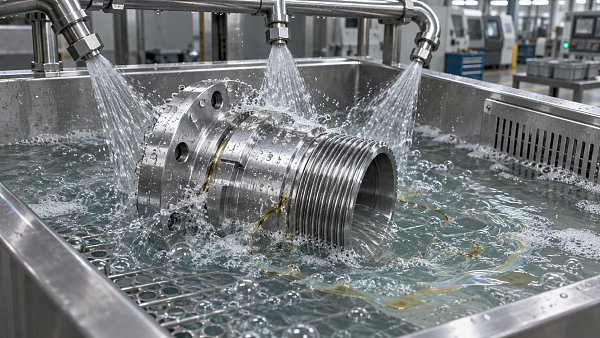
For fresh, light oils, a mild aqueous cleaner is often a sensible starting point. Its surfactants help wet the surface and lift or emulsify oil, while agitation or spray impact helps remove the loosened film. If the fluid contains fine swarf or abrasive particles, the cleaning process must also carry those solids away rather than redeposit them.
Check how the cleaner handles the specific cutting fluid. Some fluids form stubborn residues as water evaporates or the bath ages. If a part is oily after cleaning, the issue may be bath loading, poor spray coverage, or inadequate rinsing—not necessarily insufficient chemical strength.
Heavy grease and drawing compounds
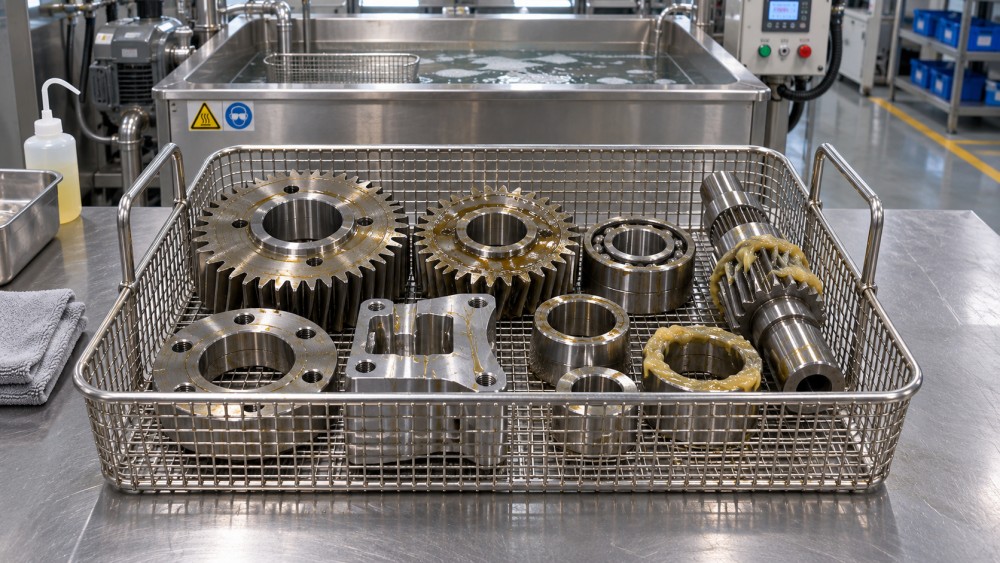
Thick grease is harder to penetrate, especially around bearings, joints, and tightly packed assemblies. Remove excessive deposits mechanically where safe and practical, then evaluate an alkaline aqueous cleaner or a compatible solvent-based degreaser. Aqueous systems may need heat, longer contact, or stronger agitation; solvent systems may dissolve some greases effectively but introduce different exposure, fire, or residue concerns.
Drawing and stamping compounds deserve a separate trial. Their additives can make them more persistent than ordinary oil, and a cleaner that works on one compound may struggle with another. Provide the cleaner supplier with the lubricant name or safety data sheet when available.
Waxes and rust-preventive films
Protective films are designed to stay on metal during storage or transport. Depending on their chemistry, they may require a formulation intended for waxes or rust preventives, rather than a general-purpose degreaser. Controlled heat can help soften some films, but only within the limits of the cleaner, equipment, and component.
Removing the film also removes protection. Plan the time between cleaning and the next process, particularly for steel parts that will be stored or handled in humid conditions. A temporary corrosion inhibitor may be appropriate, but confirm that it is compatible with any later coating or bonding step.
Baked-on oil and carbonized deposits
Heat-aged residues can be partly oxidized, polymerized, or carbonized. A normal degreaser may remove the oily portion while leaving a hard deposit behind. Specialized chemistry, longer treatment, or an approved mechanical method may be needed. Do not assume that simply increasing concentration or temperature will solve the problem: it can damage the part or create an unsafe process without removing the residue.
If the deposit is actually rust or scale, degreasing alone will not remove it. Descaling is a separate operation that requires its own compatibility and safety assessment.
Check the metal and the whole assembly
A cleaner that works well on carbon steel can stain or attack aluminum, zinc, or other sensitive metals. Strong alkalinity is a particular concern for some nonferrous surfaces, but the formulation, exposure time, temperature, and alloy all matter. Look for explicit compatibility guidance and test on a representative part, including areas where appearance or dimensions are critical.
Stainless steel is not a license to ignore chemistry either. Surface finish, crevices, contaminants, and exposure conditions can affect the outcome. Ask about restrictions on ingredients or residues when the part has a demanding downstream specification.
Assemblies add another layer of risk. Seals, adhesives, plastics, painted surfaces, labels, and electrical components may react differently from the metal. A solvent that dissolves grease may also swell an elastomer or damage a coating. Verify every exposed material, not just the main substrate, and avoid immersion if trapped liquid cannot be removed safely.
Fit the formulation to the cleaning equipment
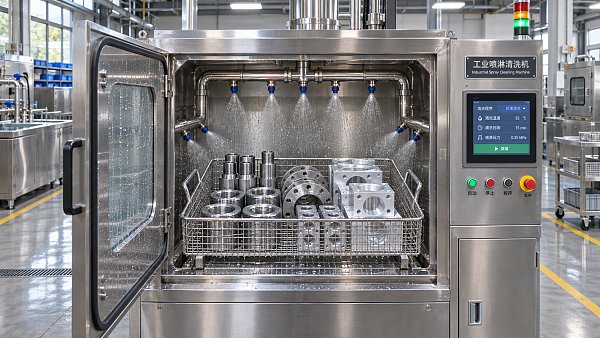
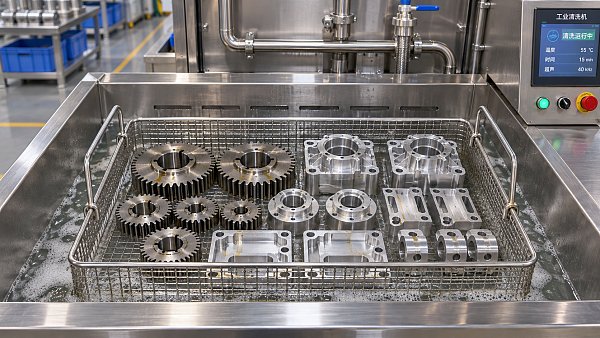
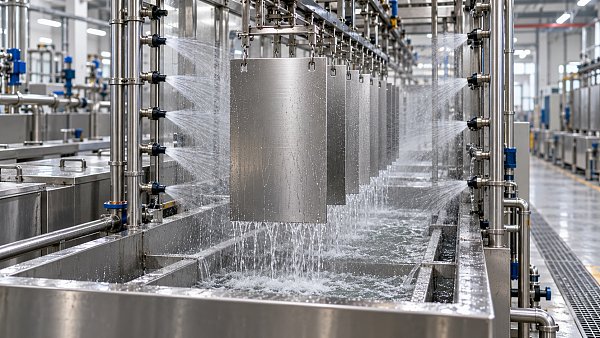
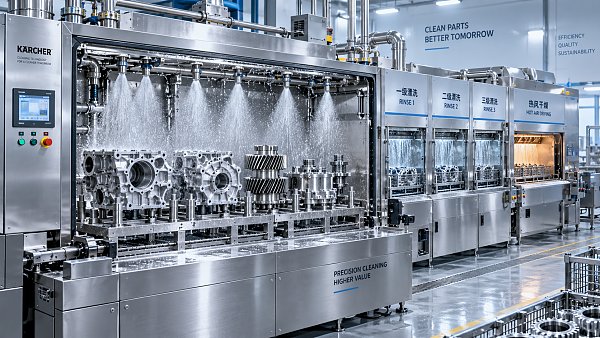
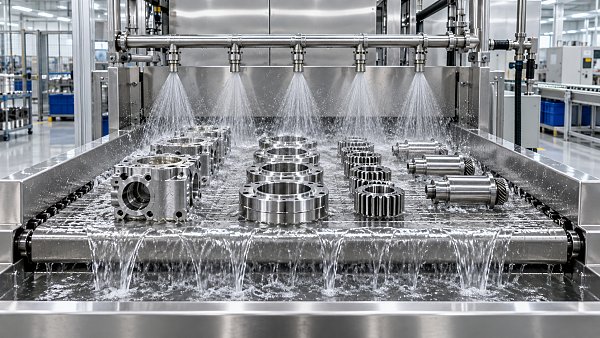
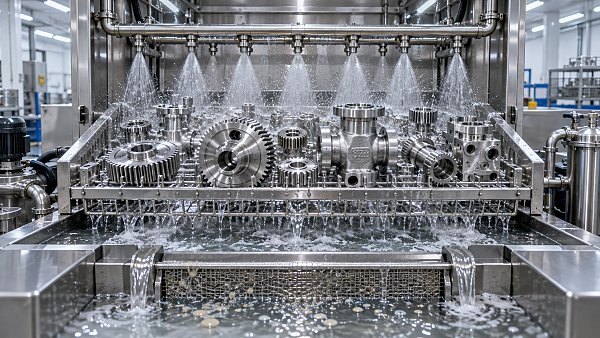
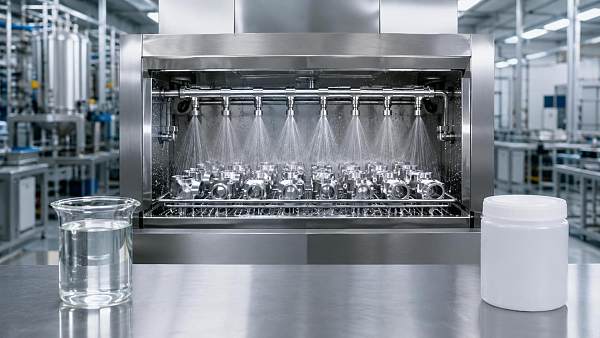
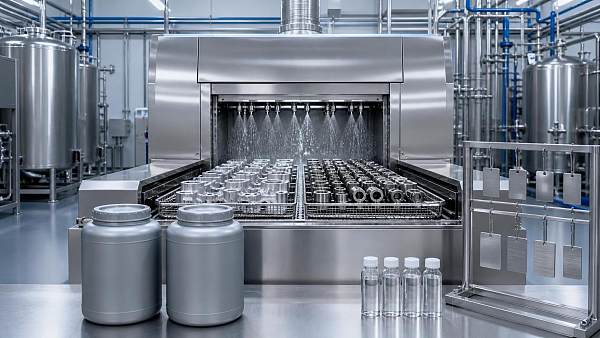
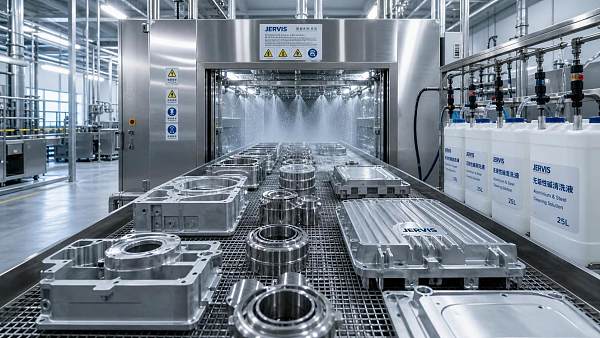
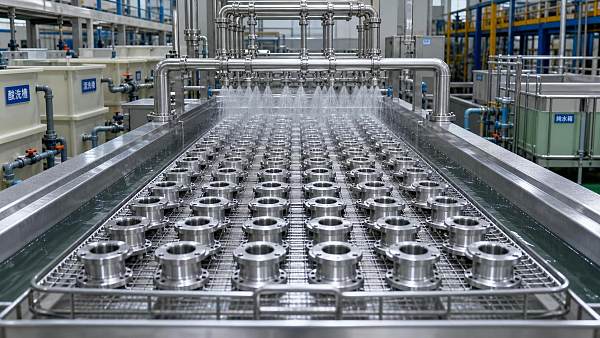
The same chemistry can behave differently in a wipe station, immersion tank, ultrasonic unit, or spray washer. In a spray machine, excessive foam can interfere with pump performance and coverage, so a low-foam formulation designed for the operating temperature is often preferable. In an immersion tank, contact time and agitation become more important, particularly for dense loads or parts that nest together.
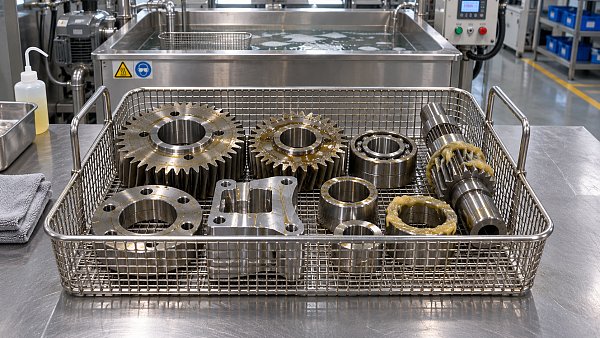
Ultrasonic cleaning can help reach complex geometries, but it still depends on chemistry reaching the soil. Part orientation, basket loading, and trapped air can prevent liquid from entering blind holes. Confirm that both the equipment and the cleaner are suitable for ultrasonic use; delicate finishes and components may need special handling.
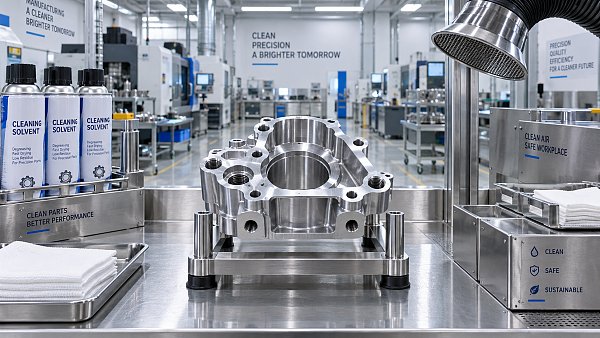
For manual wiping, consider evaporation, worker exposure, and how often wipes need replacing. A dirty wipe can spread oil across a larger area. Solvent use also calls for controls appropriate to the product and workplace, including ignition-source control where relevant. Do not use a flammable solvent in heated or ultrasonic equipment unless the equipment and process are specifically designed and approved for it.
Rinsing and drying are part of the selection
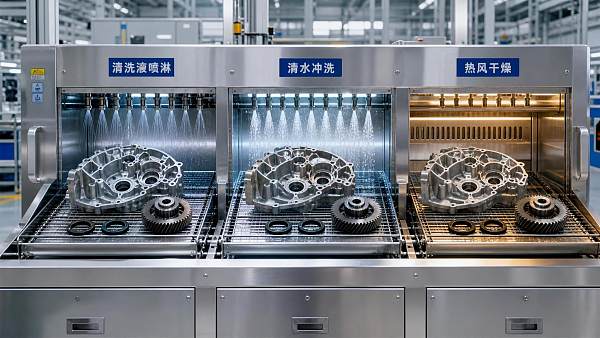
A cleaner has not completed its job if loosened soil or cleaning chemistry remains on the part. Many aqueous processes require a rinse, and water quality can affect spotting or residues. For demanding coating, electronics, or precision applications, the appropriate final rinse and cleanliness criteria should be established with the downstream process owner.
Drying deserves equal attention. Water trapped in threads or cavities can cause corrosion or interfere with assembly. Part orientation, drainage time, filtered air, or controlled drying may help, provided they suit the component. Solvent-based products may reduce water-related concerns in some applications, but evaporation alone does not prove that the surface is residue-free.
A water-break observation can be a useful screening check on suitable surfaces: uneven water beading may indicate contamination. It is not a universal acceptance test, however. Surface chemistry and prior treatments also affect wetting, and critical work may require a specified analytical or process test.
Run a practical trial before changing the process
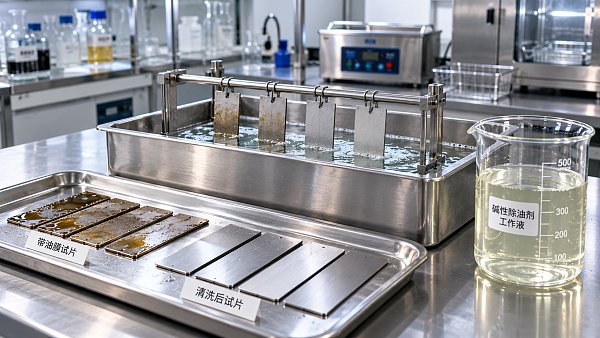
A useful trial compares candidates on actual parts with representative soil, not just on a clean coupon with fresh oil applied to it. Use the supplier’s recommended operating window and record the conditions. Change one major variable at a time where practical, so the result can be interpreted.
- Document the starting condition: metal and finish, soil source, age, and any heat exposure.
- Record the process: concentration, temperature, contact time, agitation, load arrangement, rinse, and drying method.
- Inspect difficult areas: threads, joints, holes, and surfaces shielded from spray or flow.
- Check the result that matters: visible soil, corrosion or discoloration, residue, and acceptance by the next process.
- Repeat under working conditions: a fresh bath may perform differently after oil and solids accumulate.
If cleaning deteriorates during production, investigate bath concentration, temperature, filtration, oil accumulation, and rinse condition before adding more chemistry. Follow the supplier’s recommended monitoring method: a simple pH reading alone may not show whether an aqueous bath has enough active cleaner or has become overloaded with soil.
Review handling and disposal before approval
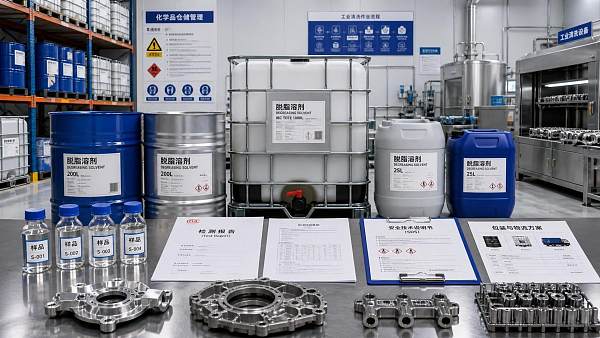
Obtain the current safety data sheet and technical guidance for each candidate. Confirm required protective equipment, ventilation, storage compatibility, dilution procedure, and emergency measures. Never mix cleaning products unless the supplier explicitly permits it; incompatible chemicals can produce dangerous reactions.
Spent cleaner contains more than the original formulation. Removed oils, metal fines, and other contaminants can affect waste handling and wastewater treatment. Whether a bath separates oil or holds it in an emulsion also matters to the site’s treatment system. Check disposal and discharge requirements with the responsible local team rather than assuming that a water-based cleaner can go directly to drain.
Make the decision around the complete process
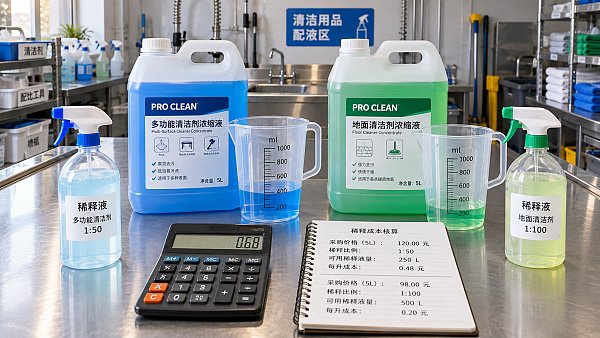
The lowest-priced concentrate is not necessarily the lowest-cost choice. Compare working concentration, bath life, energy use, labor, rinse demand, waste handling, and the risk of rejected parts. A cleaner that removes oil quickly but leaves a film before painting may cost more in rework than it saves in the wash tank.
Global Fine Chemicals & Agrochemical Intelligence Network (FCAS) covers industrial surfactants and specialty cleaning chemistry in this broader application context. For a productive technical discussion, bring the soil description, material list, equipment conditions, downstream cleanliness requirement, and trial results. Those details make it easier to distinguish a cleaner that works in principle from one that will work reliably on the line.
Facing technical bottlenecks in manufacturing or looking for more efficient industrial solutions? Leave your details below and let the engineering experts at FCAS solve them for you.
We respect your privacy. Your information is strictly confidential.
Related News
 Heavy-duty Industrial DegreasersHow Do Water Based Degreasing Surfactants Remove Industrial Grease?Water based degreasing surfactants lift industrial grease and help prevent redeposition. Learn how to select and test an effective cleaning process.MORE+
 Heavy-duty Industrial DegreasersHow to Choose Parts Wash Cleaners for Spray WashersChoose parts wash cleaners for spray washers with confidence. Compare cleaning power, material compatibility, foam control, safety, and supplier support.MORE+
 Heavy-duty Industrial DegreasersHow to Choose Industrial Metal Degreasers for Your ProcessChoose industrial metal degreasers with confidence. Compare cleaning chemistries, metal compatibility, equipment needs and trial methods for reliable results.MORE+
 Heavy-duty Industrial DegreasersChina to Continue Countervailing Duties on US-Origin n-PropanolChina extends countervailing duties on US-origin n-propanol for five years from November 6, 2026. Explore the rates and potential sourcing implications.MORE+
 Heavy-duty Industrial DegreasersHow to Choose Metal Degreasing Cleaners for Different SoilsChoose Metal Degreasing Cleaners for oils, grease, waxes and baked-on soils. Discover how to protect components, improve cleaning and avoid costly residue.MORE+
 Heavy-duty Industrial DegreasersHow to Compare Cleaner Concentrates Wholesale by Cost per UseCompare cleaner concentrates wholesale by true cost per use—not drum price. Learn how dilution, labor, and waste affect savings so you can choose the best-value supplier.MORE+
 Heavy-duty Industrial DegreasersShrieve Chemical Acquires Alabama-Based RSG to Expand US Southeast ReachShrieve Chemical acquires Alabama-based RSG to expand its US Southeast reach. Explore what the deal could mean for specialty chemical supply and regional customer service.MORE+
 Heavy-duty Industrial DegreasersWhich Quality Checks Matter When Sourcing Alkaline Degreasers?Evaluating an alkaline degreasers manufacturer? Discover key quality checks for cleaning performance, material compatibility, and batch consistency to source confidently and cut costs.MORE+
 Heavy-duty Industrial DegreasersHow to Choose Metal Cleaning Chemicals for Pretreatment Before CoatingChoose metal cleaning chemicals for pretreatment that match your substrate, soils, and coating line. Learn how to validate performance, reduce defects, and lower cost per accepted part.MORE+
 Heavy-duty Industrial DegreasersHow to Select Parts Wash Cleaners for Automotive ComponentsParts wash cleaners for automotive components: learn how to match chemistry, materials, rinsing, safety, and waste controls for reliable cleaning results.MORE+
 Heavy-duty Industrial DegreasersHow to Qualify a Solvent Degreasers Manufacturer for Industrial CleaningQualify a solvent degreasers manufacturer with proven batch control, safety documentation, compatibility testing, and process-specific cleaning performance.MORE+
 Heavy-duty Industrial DegreasersHow Zeolite Detergent Builders Improve Cleaning at Lower DosageZeolite detergent builders help improve hardness control, protect surfactant efficiency, and support effective cleaning at lower detergent dosage. Explore key formulation factors and testing insights.MORE+
 Heavy-duty Industrial DegreasersHow Fast Drying Degreasing Solvents Reduce Cleaning Cycle TimesFast drying degreasing solvents cut cleaning cycle times by improving evaporation, reducing residue risks, and enabling faster production handoffs. Learn how to choose the right solution.MORE+
 Heavy-duty Industrial DegreasersSelecting Degreasing Surfactants for Hard Surface CleanersDegreasing surfactants for hard surface cleaners: learn how to match soil, foam, rinseability, and material compatibility for reliable cleaning performance.MORE+
 Heavy-duty Industrial DegreasersHow Degreasing Surfactants Improve Performance in Heavy-Duty CleaningDegreasing Surfactants improve heavy-duty cleaning by lifting oils, controlling redeposition, and supporting cleaner rinses. Explore practical selection and process tips.MORE+
 Heavy-duty Industrial DegreasersHow to Evaluate an Industrial Cleaning Auxiliaries ManufacturerEvaluate an industrial cleaning auxiliaries manufacturer by performance, batch consistency, documentation, technical support, and supply reliability.MORE+
 Heavy-duty Industrial DegreasersWhat to Compare When Selecting a Cleaning Chemicals ManufacturerCompare a cleaning chemicals manufacturer by performance, compliance, batch consistency, technical support, and total applied cost to choose a reliable supplier.MORE+
 Heavy-duty Industrial DegreasersWhat to Compare When Buying Degreasing Solvents Wholesale in 2026Degreasing solvents wholesale guide for 2026: compare cleaning yield, safety, VOC status, total operating cost, specifications, and supplier reliability before buying.MORE+
 Heavy-duty Industrial DegreasersHow to Evaluate a Degreasing Surfactants Factory for Industrial CleaningDegreasing surfactants factory evaluation guide: compare cleaning performance, foam control, quality consistency, documentation, compatibility, and supply reliability.MORE+
 Heavy-duty Industrial DegreasersHow to Choose Parts Wash Cleaners for Automotive Components Without DamageParts wash cleaners for automotive components: learn how to remove oils and residues while protecting metals, plastics, seals, coatings, and downstream assembly performance.MORE+
 Heavy-duty Industrial DegreasersWhat to Check Before Choosing a Metal Degreasers SupplierChoose a reliable metal degreasers supplier with confidence. Learn what to assess in performance, compatibility, corrosion control, SDS, and support.MORE+
 Heavy-duty Industrial DegreasersHow to Evaluate a Solvent Degreasers Manufacturer Before OrderingSolvent degreasers manufacturer evaluation guide: assess cleaning performance, batch consistency, compliance, packaging, and supply reliability before ordering.MORE+
 Heavy-duty Industrial DegreasersHow to Evaluate a Metal Degreasers Manufacturer for Reliable SupplyMetal degreasers manufacturer evaluation guide: compare formulation control, material compatibility, compliance, supply reliability, and total cost to choose a dependable industrial cleaning partner.MORE+
 Heavy-duty Industrial DegreasersHow to Evaluate Degreasing Solvents Bulk Price Without Hidden Cost SurprisesDegreasing solvents bulk price is only part of the real cost. Learn how to compare purity, logistics, compliance, and supplier reliability to avoid hidden expenses and buy with confidence.MORE+
 Heavy-duty Industrial DegreasersHow Caustic Free Alkaline Degreasers Improve Safety and CleaningCaustic free alkaline degreasers improve safety while delivering reliable grease removal. Learn how they reduce handling risks, protect surfaces, and support cleaner, more consistent industrial processes.MORE+
 Heavy-duty Industrial DegreasersHow Acidic Metal Cleaning Chemicals Reduce Rework and Maintenance CostsAcidic metal cleaning chemicals help cut rework and maintenance costs by removing oxides, scale, and residues more effectively, improving process stability and reducing downstream defects.MORE+