How to Choose Metal Cleaning Chemicals for Pretreatment Before Coating
Choose metal cleaning chemicals for pretreatment by matching the cleaner to the substrate, the actual contamination, and the coating line’s operating conditions. Then confirm that the cleaned surface accepts the specified conversion treatment and coating without harmful residues or metal attack. A cleaner that removes oil quickly can still be unsuitable if it stains aluminum, produces excessive spray foam, or leaves a film that disrupts downstream treatment.
The strongest comparison starts with representative parts and agreed acceptance criteria. Concentrate price, product pH, and a visually bright surface provide incomplete evidence. Cleaning performance must hold through realistic soil loading, rinsing, production interruptions, and the time between pretreatment and coating.
Define the surface and contamination before comparing chemistry
Identify the exact materials entering the line, including alloy grades, galvanized surfaces, welds, brazed joints, and mixed-metal assemblies. “Suitable for metal” is too broad a specification. A formulation compatible with steel can attack zinc or aluminum, while a cleaner approved for one aluminum alloy may produce unacceptable discoloration on another.
The contamination profile deserves equal attention. Drawing compounds, machining coolants, rust preventives, polishing residues, and heat-aged oils respond differently to cleaning. Record the actual process fluids used upstream, including changes in lubricant suppliers. Silicone-containing contamination deserves separate investigation because a general degreaser may leave traces that cause coating craters.
Oil removal and oxide removal also require different decisions. An alkaline cleaner can remove grease effectively while leaving rust, laser-cut oxide, or welding scale. Increasing its concentration to solve an oxide problem can increase carryover and material attack without producing a coating-ready surface. Where oxides are present, define a separate removal stage or validate a combined process for the specific surface condition.
Part geometry changes the requirement. Blind holes, overlapping joints, and tubular sections retain solution and rinse water. Test these features directly; a flat panel cannot establish whether cleaner will drain from an assembled component.
Choose a cleaner family within those constraints
The following comparison provides a starting point. Commercial formulations contain surfactants, builders, inhibitors, and other components that substantially change their behavior, so chemistry family alone cannot establish suitability.
For mixed-metal production, the most chemically sensitive surface often limits the usable process window. A steel-only line can tolerate conditions that would damage zinc-coated components. If one formulation cannot meet both cleanliness and compatibility requirements, separate processing routes may be more reliable than a compromise bath.
Combined cleaner-conversion products require evaluation as an integrated treatment. Their cleaning capacity and conversion performance must both remain acceptable as contamination accumulates. A combined stage suitable for lightly soiled parts should not automatically replace separate degreasing on heavily oiled fabrication.
Match the formulation to the equipment and downstream stages
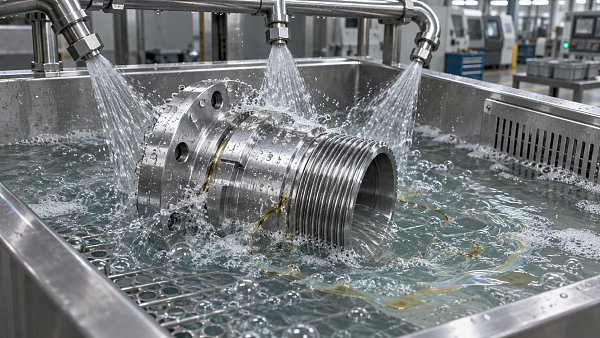
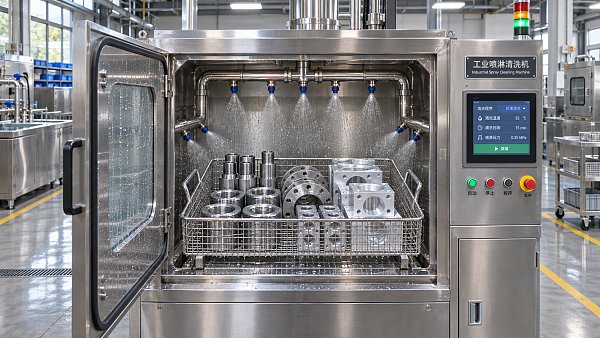
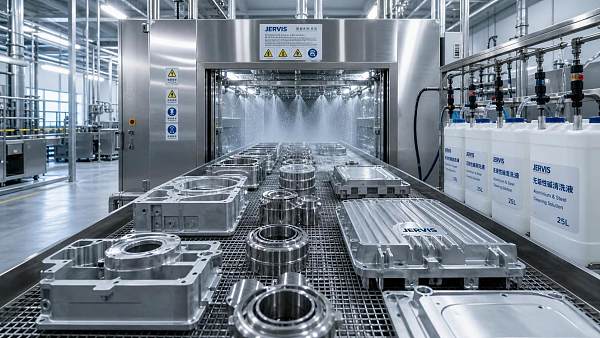
Spray systems need foam behavior suited to recirculation, pressure, and operating temperature. Foam reduces effective impingement and complicates pumping and level control. A product described as low-foaming should be demonstrated in the intended spray conditions, including cooler startup periods when its behavior can differ.
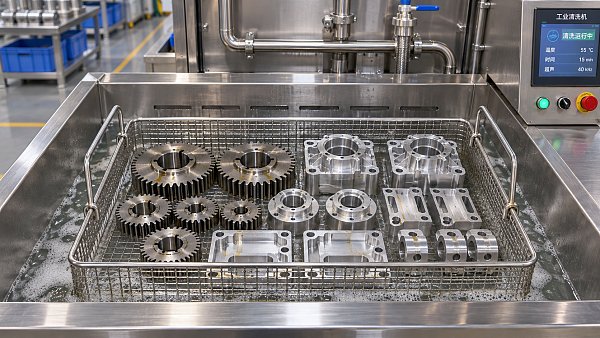
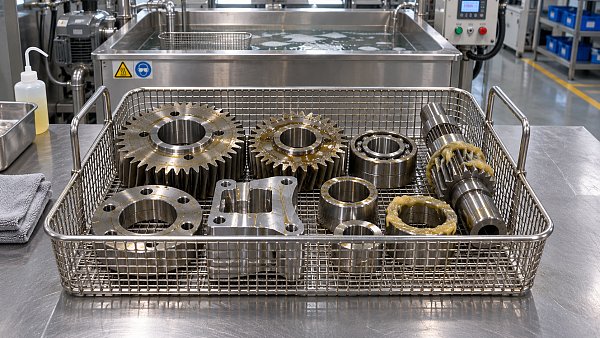
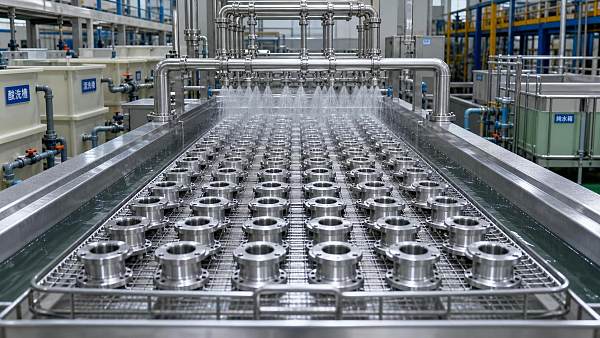
Immersion cleaning relies on adequate contact, agitation, drainage, and solution access. Floating oil can redeposit as parts leave the tank. Ultrasonic cleaning adds another compatibility requirement: the formulation must work with the equipment and cavitation conditions without damaging the surface.
Evaluate concentration, temperature, and contact time together. A laboratory result achieved with prolonged immersion does not establish performance on a short spray stage. Likewise, higher temperature can improve soil removal while increasing evaporation, energy use, or attack on sensitive metals. Require an operating window that fits the existing equipment, including its practical control limits.
Oil management changes bath economics and consistency. An oil-rejecting cleaner can support skimming or separation when the soil and equipment allow it. An emulsifying cleaner holds oil in the bath, which can be useful for removal but complicates conventional oil separation. Neither behavior is universally preferable; the choice must match contamination loading and the installed treatment system.
Rinsing is part of the chemical selection. Retained alkalinity, surfactants, or builders can interfere with phosphate, zirconium-based, or other conversion processes. Silicate-containing cleaners, for example, require careful assessment of rinse performance and downstream compatibility. Confirm the complete stage sequence with the pretreatment chemistry supplier.
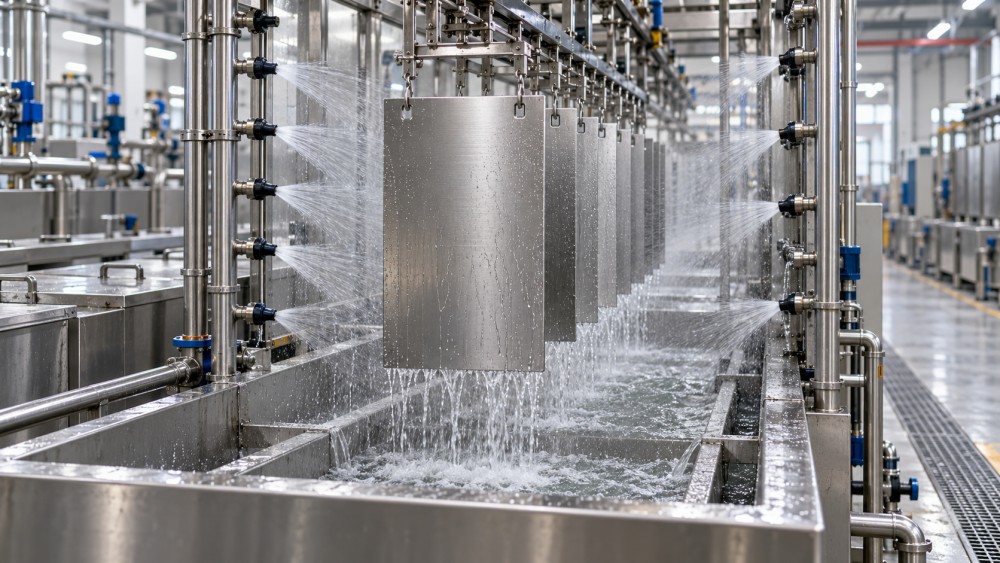
Water quality also affects the result. Hardness can promote deposits or consume formulation capacity, while dissolved salts carried into later stages can affect coating performance. Specify the water used for bath makeup and each rinse, especially the final rinse, rather than assuming the same cleaner will behave identically at different facilities.
Require evidence that describes the working bath
A technical data sheet should identify compatible substrates, application method, concentration range, temperature range, contact time, rinsing requirements, and relevant restrictions. The safety data sheet supports hazard assessment and handling controls; it does not establish cleaning performance or coating compatibility.
Ask for the bath-control method alongside the product specification. pH alone is inadequate for controlling many formulated cleaners. Buffered solutions can maintain a similar pH while useful cleaning capacity declines. Titration, conductivity, or other measurements need a documented relationship to the formulation, with interference from contamination and water chemistry understood.
Useful supplier documentation should also address:
- Replenishment and bath retirement: distinguish additions needed to restore chemical concentration from the point at which accumulated soil or salts require treatment or replacement.
- Compatibility evidence for the actual alloys and surface finishes, including observations of etching, staining, and dimensional effects where relevant.
- Residue and downstream treatment: explain the required rinsing sequence and identify restrictions affecting conversion coatings or the intended paint system.
- Storage stability, dilution procedure, packaging compatibility, and the practical handling controls needed for the concentrate and working solution.
Descriptions such as “biodegradable” or “phosphate-free” do not establish whether a spent bath fits the site’s wastewater process. Chelating agents, emulsified oils, dissolved metals, and surfactants can affect treatment. Evaluate the contaminated working solution against the actual discharge or waste-handling route.
Validate the complete coating process, including an aged bath
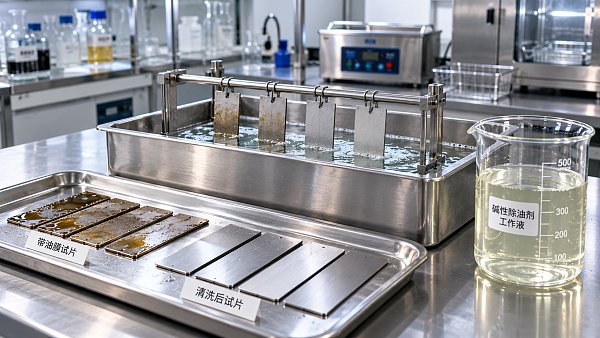
Use production parts carrying representative contamination. Include the hardest-to-clean lubricant, the most sensitive substrate, and geometries that retain liquid. Fresh, lightly oiled test panels are useful for screening, but they rarely represent the full production challenge.
Run candidates within the available line conditions. Keep the downstream conversion treatment, coating, and cure controlled so that differences remain interpretable. Document chemical concentration, actual part contact time, bath temperature, rinse condition, and the delay before coating.
A water-break assessment provides a quick indication of surface wetting on appropriate surfaces. Persistent beading can indicate contamination, but continuous wetting does not prove freedom from every harmful residue. Surfactant carryover can improve apparent wetting while leaving an unsuitable surface. Use this observation alongside coating results and any surface-residue assessment justified by the application.
Inspect cleaned parts for remaining oil, particulate material, smut, staining, and attack. Then assess the finished coating using the adhesion and corrosion tests required by the coating specification or service conditions. Initial adhesion alone does not establish resistance to moisture-driven failure.
Repeat the evaluation after representative soil loading. A fresh bath can conceal weak oil-handling capacity, redeposition, or declining rinse performance. Establish how bath condition will be measured during the trial, and agree how the endpoint will be judged. Laboratory loading helps compare candidates, but production validation is still needed because actual carryover and soil mixtures vary.
Include a realistic interruption where relevant. Parts waiting between stages can flash-rust, dry with residues, or develop stains. A temporary protective film may suit storage before a later cleaning step, yet interfere with immediate conversion treatment. Protection claims therefore need validation within the intended sequence.
Compare cost per accepted part
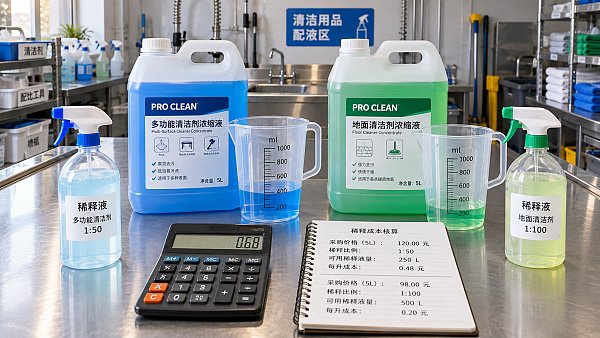
Compare commercial offers at the demonstrated working concentration and bath life. A lower concentrate price loses its advantage if it requires more frequent dumping, extra rinsing, higher temperature, or additional rework. A higher-priced cleaner only earns its premium when the trial establishes a measurable process benefit.
Use the same cost boundary for every candidate: chemical makeup and replenishment, water, heating, waste treatment, bath changes, maintenance, and rejected or reworked parts. Divide those costs by the number of accepted parts processed over the evaluation period. Keep assumptions visible when production data are unavailable.
Carryover deserves particular attention. Poor drainage transfers cleaner into rinses and later stages, increasing both chemical consumption and contamination. A chemistry change cannot fully compensate for trapped liquid, unsuitable rack orientation, or insufficient drain time. Separate these equipment effects from formulation performance when interpreting the trial.
Make the purchase specification reflect the trial
Translate the successful trial into a purchasing and process specification. Record the approved substrates and soils, chemical identity, working limits, bath-control method, rinse requirements, and coating acceptance criteria. Include any restrictions, such as excluding a particular alloy or requiring separate oxide removal.
Define how formulation changes will be communicated and when requalification is required. Changes to upstream lubricants, substrate finish, rinse water, or coating chemistry can alter the result even when the cleaner remains unchanged. Retain trial records and reference parts where practical, so future deviations can be investigated against the conditions that actually passed.
Facing technical bottlenecks in manufacturing or looking for more efficient industrial solutions? Leave your details below and let the engineering experts at FCAS solve them for you.
We respect your privacy. Your information is strictly confidential.
Related News
 Heavy-duty Industrial DegreasersHow Do Water Based Degreasing Surfactants Remove Industrial Grease?Water based degreasing surfactants lift industrial grease and help prevent redeposition. Learn how to select and test an effective cleaning process.MORE+
 Heavy-duty Industrial DegreasersHow to Choose Parts Wash Cleaners for Spray WashersChoose parts wash cleaners for spray washers with confidence. Compare cleaning power, material compatibility, foam control, safety, and supplier support.MORE+
 Heavy-duty Industrial DegreasersHow to Choose Industrial Metal Degreasers for Your ProcessChoose industrial metal degreasers with confidence. Compare cleaning chemistries, metal compatibility, equipment needs and trial methods for reliable results.MORE+
 Heavy-duty Industrial DegreasersChina to Continue Countervailing Duties on US-Origin n-PropanolChina extends countervailing duties on US-origin n-propanol for five years from November 6, 2026. Explore the rates and potential sourcing implications.MORE+
 Heavy-duty Industrial DegreasersHow to Choose Metal Degreasing Cleaners for Different SoilsChoose Metal Degreasing Cleaners for oils, grease, waxes and baked-on soils. Discover how to protect components, improve cleaning and avoid costly residue.MORE+
 Heavy-duty Industrial DegreasersHow to Compare Cleaner Concentrates Wholesale by Cost per UseCompare cleaner concentrates wholesale by true cost per use—not drum price. Learn how dilution, labor, and waste affect savings so you can choose the best-value supplier.MORE+
 Heavy-duty Industrial DegreasersShrieve Chemical Acquires Alabama-Based RSG to Expand US Southeast ReachShrieve Chemical acquires Alabama-based RSG to expand its US Southeast reach. Explore what the deal could mean for specialty chemical supply and regional customer service.MORE+
 Heavy-duty Industrial DegreasersWhich Quality Checks Matter When Sourcing Alkaline Degreasers?Evaluating an alkaline degreasers manufacturer? Discover key quality checks for cleaning performance, material compatibility, and batch consistency to source confidently and cut costs.MORE+
 Heavy-duty Industrial DegreasersHow to Choose Metal Cleaning Chemicals for Pretreatment Before CoatingChoose metal cleaning chemicals for pretreatment that match your substrate, soils, and coating line. Learn how to validate performance, reduce defects, and lower cost per accepted part.MORE+
 Heavy-duty Industrial DegreasersHow to Select Parts Wash Cleaners for Automotive ComponentsParts wash cleaners for automotive components: learn how to match chemistry, materials, rinsing, safety, and waste controls for reliable cleaning results.MORE+
 Heavy-duty Industrial DegreasersHow to Qualify a Solvent Degreasers Manufacturer for Industrial CleaningQualify a solvent degreasers manufacturer with proven batch control, safety documentation, compatibility testing, and process-specific cleaning performance.MORE+
 Heavy-duty Industrial DegreasersHow Zeolite Detergent Builders Improve Cleaning at Lower DosageZeolite detergent builders help improve hardness control, protect surfactant efficiency, and support effective cleaning at lower detergent dosage. Explore key formulation factors and testing insights.MORE+
 Heavy-duty Industrial DegreasersHow Fast Drying Degreasing Solvents Reduce Cleaning Cycle TimesFast drying degreasing solvents cut cleaning cycle times by improving evaporation, reducing residue risks, and enabling faster production handoffs. Learn how to choose the right solution.MORE+
 Heavy-duty Industrial DegreasersSelecting Degreasing Surfactants for Hard Surface CleanersDegreasing surfactants for hard surface cleaners: learn how to match soil, foam, rinseability, and material compatibility for reliable cleaning performance.MORE+
 Heavy-duty Industrial DegreasersHow Degreasing Surfactants Improve Performance in Heavy-Duty CleaningDegreasing Surfactants improve heavy-duty cleaning by lifting oils, controlling redeposition, and supporting cleaner rinses. Explore practical selection and process tips.MORE+
 Heavy-duty Industrial DegreasersHow to Evaluate an Industrial Cleaning Auxiliaries ManufacturerEvaluate an industrial cleaning auxiliaries manufacturer by performance, batch consistency, documentation, technical support, and supply reliability.MORE+
 Heavy-duty Industrial DegreasersWhat to Compare When Selecting a Cleaning Chemicals ManufacturerCompare a cleaning chemicals manufacturer by performance, compliance, batch consistency, technical support, and total applied cost to choose a reliable supplier.MORE+
 Heavy-duty Industrial DegreasersWhat to Compare When Buying Degreasing Solvents Wholesale in 2026Degreasing solvents wholesale guide for 2026: compare cleaning yield, safety, VOC status, total operating cost, specifications, and supplier reliability before buying.MORE+
 Heavy-duty Industrial DegreasersHow to Evaluate a Degreasing Surfactants Factory for Industrial CleaningDegreasing surfactants factory evaluation guide: compare cleaning performance, foam control, quality consistency, documentation, compatibility, and supply reliability.MORE+
 Heavy-duty Industrial DegreasersHow to Choose Parts Wash Cleaners for Automotive Components Without DamageParts wash cleaners for automotive components: learn how to remove oils and residues while protecting metals, plastics, seals, coatings, and downstream assembly performance.MORE+
 Heavy-duty Industrial DegreasersWhat to Check Before Choosing a Metal Degreasers SupplierChoose a reliable metal degreasers supplier with confidence. Learn what to assess in performance, compatibility, corrosion control, SDS, and support.MORE+
 Heavy-duty Industrial DegreasersHow to Evaluate a Solvent Degreasers Manufacturer Before OrderingSolvent degreasers manufacturer evaluation guide: assess cleaning performance, batch consistency, compliance, packaging, and supply reliability before ordering.MORE+
 Heavy-duty Industrial DegreasersHow to Evaluate a Metal Degreasers Manufacturer for Reliable SupplyMetal degreasers manufacturer evaluation guide: compare formulation control, material compatibility, compliance, supply reliability, and total cost to choose a dependable industrial cleaning partner.MORE+
 Heavy-duty Industrial DegreasersHow to Evaluate Degreasing Solvents Bulk Price Without Hidden Cost SurprisesDegreasing solvents bulk price is only part of the real cost. Learn how to compare purity, logistics, compliance, and supplier reliability to avoid hidden expenses and buy with confidence.MORE+
 Heavy-duty Industrial DegreasersHow Caustic Free Alkaline Degreasers Improve Safety and CleaningCaustic free alkaline degreasers improve safety while delivering reliable grease removal. Learn how they reduce handling risks, protect surfaces, and support cleaner, more consistent industrial processes.MORE+
 Heavy-duty Industrial DegreasersHow Acidic Metal Cleaning Chemicals Reduce Rework and Maintenance CostsAcidic metal cleaning chemicals help cut rework and maintenance costs by removing oxides, scale, and residues more effectively, improving process stability and reducing downstream defects.MORE+